Assets, Liabilities, and Equity: The Building Blocks of Finance
G
GeoRenus Editorial Team
920 views
GeoRenus Editorial Team
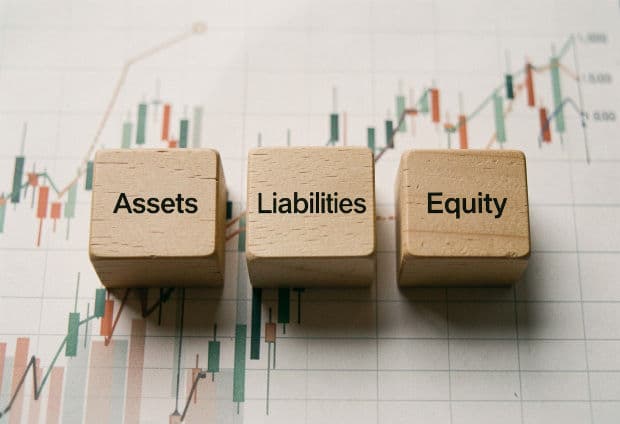
Assets, liabilities, and equity are the three fundamental building blocks of any company's financial structure. Assets are what a company owns, liabilities are what it owes, and equity is what is left over after subtracting liabilities from assets. Together, they form the accounting equation: Assets = Liabilities + Equity. Understanding these three concepts is essential for reading a balance sheet and making smart financial decisions.
If you want to understand how any business works financially, you need to know three things — assets, liabilities, and equity. These are the building blocks of every company's financial structure. Think of them as the foundation of accounting.
Assets are what a company owns — things like cash, land, equipment, and inventory. Liabilities are what the company owes — loans, bills, taxes, and other debts. And equity? That is what is left over when you subtract all the liabilities from the assets. It represents the true ownership value of the business.
These three components are connected by a simple but powerful equation: Assets = Liabilities + Equity. This is called the accounting equation, and it is the backbone of every balance sheet. If you understand this equation, you can read any company's financial statements and figure out whether the business is in good shape or not.
An asset is anything that you own and that gives you some kind of benefit — either right now or in the future. Cash is the most obvious example. You can use it to buy things, pay bills, or invest. But assets go far beyond just cash.
Let us say you have a shop. The shop itself is an asset because you use it to run your business and earn money. The products sitting on your shelves waiting to be sold? Those are assets too — we call them inventory. Even money that your customers owe you for products they already bought on credit is an asset. We call that accounts receivable.
There are many different types of assets, and each one works a little differently. Here are the most common ones:
Inventory — These are the goods stored in your warehouse or shop that you plan to sell in the future. Until they are sold, they are considered an asset.
Accounts Receivable — This is money that other people or businesses owe you. If you sold something on credit and have not been paid yet, that amount is your receivable.
Land and Property — Real estate that you own, whether it is land, a building, or a warehouse. These can generate income through rent or increase in value over time.
Equipment and Supplies — Machines, tools, and materials that you use to run your business or produce goods for sale.
Patents and Copyrights — These are intangible assets. If you have invented something or created original work, a patent or copyright protects it from being copied. Pharmaceutical companies and authors use these a lot.
Insurance — A life insurance policy or business insurance is also considered an asset because it provides financial protection against future losses.
Prepaid Expenses — When you pay for something in advance — like insurance premiums or a mobile recharge — you get the benefit later. Until you use that benefit, it counts as an asset.
Assets can be divided into two broad categories based on how quickly they can be converted into cash.
Current assets are things that can be turned into cash within one year. Cash itself, inventory, accounts receivable, and short-term investments all fall into this category. If you run a shop and your products sell within a month or two, your inventory is a current asset.
Fixed assets, also called non-current assets, are things that take longer than one year to provide returns. Land, buildings, vehicles, heavy machinery, and long-term investments are all fixed assets. You do not expect to convert these into cash anytime soon — they provide value over a longer period.
A liability is anything you owe to someone else. It is a debt or obligation that you are responsible for paying. If you borrow money from a bank, you owe them that money plus interest. That makes you liable to the bank. Simple as that.
Liabilities are not always bad, though. Most businesses use loans and credit to grow. The key is making sure your assets are always greater than your liabilities. If they are not, the business is in trouble.
Unearned Revenue — When someone pays you before you have done the work or delivered the product. You have the money, but you still owe them the service. Until you deliver, it is a liability.
Notes Payable — Long-term loans from a bank or financial institution. If you borrow money to buy equipment or expand your business, that loan is a note payable.
Accounts Payable — Short-term debts to suppliers or individuals. If you buy goods on credit from a supplier and agree to pay them next month, that is accounts payable.
Tax Payable — The tax you owe to the government. Whether it is income tax, sales tax, or corporate tax, it is a liability until you actually pay it.
Bonds Payable — When a government or corporation issues bonds, they are essentially borrowing money from the public and promising to pay interest on it. That obligation is a bond payable.
Accrued Liabilities — These are expenses you have already used but have not paid for yet. Your electricity bill is a perfect example — you use electricity all month and pay the bill at the end.
Just like assets, liabilities are also divided into two categories.
Current liabilities are debts that must be paid within one year. If you borrow money from a friend and promise to return it in two or three months, that is a current liability. Accounts payable, accrued expenses, and short-term loans all fall here.
Long-term liabilities are debts that you have more than one year to pay off. When countries borrow from the IMF or World Bank, they get many years to repay — so those are long-term liabilities. Bank mortgages, long-term bonds, and multi-year loans are all examples.
If you go back to the accounting equation — Assets = Liabilities + Equity — you can rearrange it to find equity: Equity = Assets - Liabilities. In other words, equity is what is left after a company pays off all its debts.
Think of it this way. At the end of the year, after a company earns its revenue and pays off all its obligations, whatever is left belongs to the owners or shareholders. That leftover amount is equity. It is also called stockholder equity or owner equity.
Equity is used to determine how much a company is truly worth. A company with high equity relative to its liabilities is considered financially healthy. A company with shrinking equity could be heading toward trouble.
Retained Earnings — This is the accumulated net profit that a company has saved over the years instead of distributing it to shareholders as dividends. It is reinvested back into the business for growth.
Common Stock — When a company divides its ownership into shares and sells them to the public, the money raised from those sales becomes common stock. Buyers of common stock become part-owners of the company.
Preferred Stock — Similar to common stock, but preferred stockholders get some special privileges — like guaranteed dividends. However, they usually do not get voting rights in company decisions.
Treasury Stock — Sometimes companies buy back their own shares from the market. These repurchased shares are held in the company's treasury and are called treasury stock.
Assets, liabilities, and equity — these three concepts are at the heart of every financial decision. We deal with them in our everyday lives without even realizing it. The cash in your pocket is an asset. The loan on your phone is a liability. The difference between what you own and what you owe is your personal equity.
For businesses, understanding these three elements is critical. They are all recorded on the balance sheet, and together they tell you the complete financial story of a company. When you know how assets, liabilities, and equity work, you can make better decisions about personal finance, investments, and business planning. It is fundamental knowledge that everyone should have.
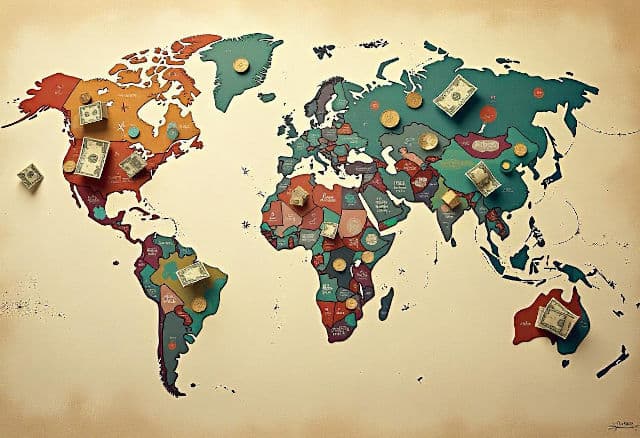
Since the dawn of human civilization, people have engaged in trade through barter. However, around 5,000 years ago, humans gradually abandoned the barter system and began using metallic coins. These coins were made from copper, silver, and gold. Around 1260 AD, the first paper currency was introduced in China and eventually spread throughout the world. In the 1930s, the first credit cards were issued by commercial establishments, and by the 1950s, banks began issuing them as well.