Accounting
20 articles
A
Accounting
February 25, 2026
Income Statement, Balance Sheet and Cash Flow
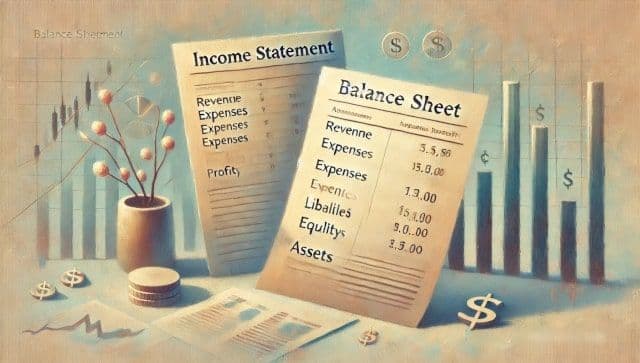
The three core financial statements every business relies on are the income statement, balance sheet, and cash flow statement. The income statement tracks revenue and expenses over a specific period to show whether a company made a profit or loss. The balance sheet provides a snapshot of what a company owns (assets), what it owes (liabilities), and what belongs to shareholders (equity) at a single point in time. The cash flow statement tracks actual money coming in and going out, broken down into operating, investing, and financing activities — because profit on paper does not always mean cash in the bank.
997Read
A
Accounting
February 25, 2026
Taxation, Types and Importance
Taxation is the process by which governments levy compulsory charges on individuals and businesses to fund public services, infrastructure, and social programs. There are several major types of taxes including income tax, value-added tax (VAT), corporate tax, customs duties, and estate or inheritance tax. Each serves a distinct purpose in generating revenue, redistributing wealth, and maintaining economic stability. Understanding how taxation works and why it matters is essential for every citizen, business owner, and policymaker navigating the modern economy.

997Read
A
Accounting
February 25, 2026
Income Tax, Concept and Calculation
Income tax is a mandatory financial charge imposed by governments on the earnings of individuals and businesses. It is calculated based on taxable income after deductions and exemptions, and is typically structured using progressive tax brackets where higher earners pay a larger percentage. Understanding key concepts like tax deductions, credits, withholding, and filing status helps taxpayers minimize their liability and stay compliant. Nearly every country in the world levies some form of income tax to fund public services, infrastructure, and social programs.

977Read
A
Accounting
February 25, 2026
Taxation for Individuals and Businesses: A Complete Overview
Taxation is the mechanism through which governments collect revenue from individuals and businesses to fund public services. Individuals face income tax based on residency status, tax brackets, and filing requirements. Businesses deal with corporate tax, capital gains tax, dividend distribution tax, and international tax considerations. Governments offer tax incentives for exports, R&D, and environmental investments to encourage economic growth and sustainability.

975Read
A
Accounting
February 25, 2026
Tax Planning and Strategies: A Comprehensive Guide
Tax planning is the process of legally structuring your financial affairs to minimize tax liability. It involves strategies like controlling income, maximizing deductions and credits, timing income and expenses, choosing the right business entity, leveraging tax-free loans, and investing in dividend-paying stocks. Effective tax planning is a year-round activity that can save individuals and businesses thousands of dollars annually.

983Read
A
Accounting
February 24, 2026
Tax Compliance and Reporting: Everything You Need to Know
Tax compliance is the obligation of individuals and businesses to follow tax laws, file accurate returns, and pay taxes on time. Tax reporting is the process of providing comprehensive financial information to tax authorities through tax returns and supporting documents. Together, they form the backbone of any functioning tax system — ensuring transparency, enabling revenue collection, and funding public services. Non-compliance can result in penalties, interest charges, and legal consequences.

1,041Read
A
Accounting
February 24, 2026
Financial Accounting: Principles, Purpose, and How It Works
Financial accounting is the process of recording, summarizing, and reporting a company's financial transactions over a specific period. These transactions are compiled into financial statements — balance sheet, income statement, and cash flow statement — that communicate a company's performance to stakeholders. Financial accounting follows nine core principles: entity, going concern, cost, matching, revenue recognition, full disclosure, consistency, conservatism, and materiality.

1,000Read
A
Accounting
February 24, 2026
Financial Recording and Transactions: The Complete Guide
Financial recording is the systematic process of capturing all money-related data in a business. Every sale, purchase, loan payment, or payroll disbursement is a financial transaction that must be recorded. The accounting cycle consists of 10 steps from identifying accounts through audit and compliance. Three pillars — the journal, general ledger, and trial balance — form the backbone of this process.

1,063Read
A
Accounting
February 24, 2026
Tax Rebate: Definition, Types, and How to Claim One
A tax rebate is a refund or reduction in taxes provided by the government when the amount of tax paid exceeds the actual tax liability. Governments use tax rebates to encourage investments in capital markets, exports, agriculture, R&D, charitable donations, special economic zones, women entrepreneurship, and renewable energy. Claiming a rebate requires verifying eligibility, gathering documents, filing accurate returns, and meeting deadlines.

1,064Read
A
Accounting
February 24, 2026
Four Flavors of Accounting: Tax, Project, Financial, and Cost Accounting Explained
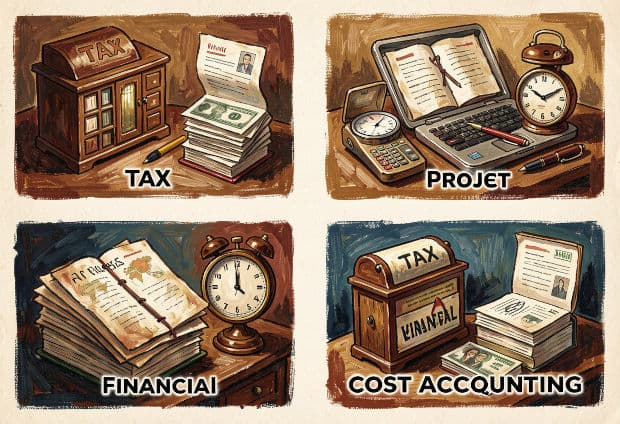
The four flavors of accounting — tax, project, financial, and cost — each serve unique purposes in the business world. Tax accounting focuses on compliance with tax laws and minimizing tax liability. Project accounting tracks the financial performance of individual projects from start to finish. Financial accounting provides a standardized view of a company's overall financial health to external stakeholders. Cost accounting breaks down the actual costs of producing goods or services to help management make informed decisions. Together, these four types give businesses a comprehensive toolkit for managing their finances.
1,029Read
A
Accounting
February 24, 2026
Audit Planning and Risk Assessment: A Complete Guide
Audit planning is the process of developing an overall strategy and a detailed approach for conducting an audit. It involves understanding the client's business, identifying areas of risk, determining materiality thresholds, and designing audit procedures that will provide sufficient and appropriate evidence. Risk assessment, on the other hand, is the systematic process of identifying and evaluating risks that could lead to material misstatement in the financial statements. Together, they form the foundation upon which the entire audit is built.
857Read
A
Accounting
February 24, 2026
Auditing: Definition, Types, Principles, and How It Works
Auditing is the process of independently examining a company's financial and accounting records to verify that everything is accurate, complete, and in compliance with applicable laws and standards. Think of it as a health checkup for your business — just like a doctor examines your body to see if everything is working properly, an auditor examines your financials to see if everything adds up. Auditing builds trust with investors, regulators, and the public.
881Read
A
Accounting
February 24, 2026
Accrual Accounting: How It Works, Types, and Why It Matters
Accrual accounting is the method that records revenue when it is earned and expenses when they are incurred — regardless of when cash actually changes hands. Unlike cash accounting, which only tracks money in and money out, accrual accounting gives you a complete and accurate picture of your company's financial health. It is the standard method required by GAAP and IFRS, and it is what most serious businesses use to manage their finances.

910Read
A
Accounting
February 24, 2026
Accounting for Startups: A Complete Guide to Getting It Right
Accounting is one of the first things every startup needs to get right — and one of the most commonly ignored. From choosing the right business structure to setting up separate bank accounts, selecting accounting software, and preparing financial statements, proper accounting practices lay the foundation for everything else. It helps startups track where the money is going, attract investors, comply with tax laws, and make smart decisions that lead to growth.

976Read
A
Accounting
February 24, 2026
Business Accounting: What It Is and How It Works
Business accounting is the systematic process of recording, summarizing, and analyzing a company's financial transactions. It gives you a clear picture of where the money is coming from, where it is going, and how much is left. Whether you are running a small shop or managing a large corporation, accounting is the backbone of good financial decision-making. It helps stakeholders — from managers to investors — understand the financial health of the business.

827Read
A
Accounting
February 24, 2026
GAAP: What It Is and Why It Matters in Accounting
GAAP stands for Generally Accepted Accounting Principles. It is a set of rules and guidelines that companies follow when preparing their financial reports. The purpose is simple — to make sure financial statements are accurate, consistent, and comparable across different organizations. GAAP is primarily used in the United States, while most other countries follow IFRS. Without GAAP, every company could report its finances differently, making it nearly impossible for investors and regulators to compare them.

809Read
A
Accounting
February 24, 2026
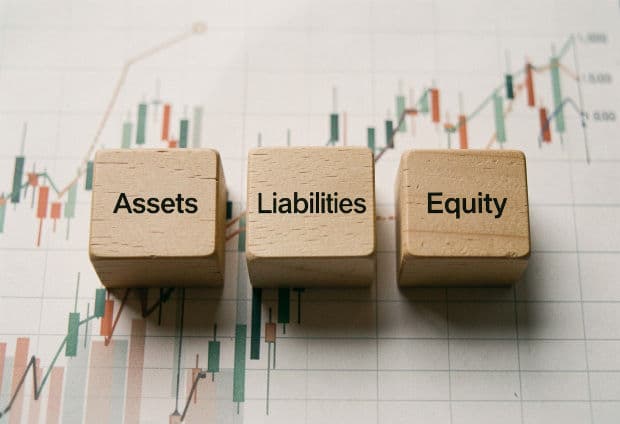
Assets, Liabilities, and Equity: The Building Blocks of Finance
Assets, liabilities, and equity are the three fundamental building blocks of any company's financial structure. Assets are what a company owns, liabilities are what it owes, and equity is what is left over after subtracting liabilities from assets. Together, they form the accounting equation: Assets = Liabilities + Equity. Understanding these three concepts is essential for reading a balance sheet and making smart financial decisions.
867Read
A
Accounting
February 24, 2026
Gross Profit: Definition, Formula, and Why It Matters
Gross profit tells you how much money your business actually makes from buying and selling products — before any other expenses come into the picture. It is the first and most basic indicator of whether your business is profitable or not. If your gross profit is healthy, your business has a solid foundation. If it is shrinking, something in your core operations needs attention.

954Read
A
Accounting
February 24, 2026
Corporate Taxation and International Tax Challenges Explained
When a company earns profit, it pays tax on it — that is corporate taxation in a nutshell. But things get complicated when companies operate across multiple countries. Different tax rates, different rules, and the risk of being taxed twice on the same income — these are real challenges that multinational corporations deal with every day. International tax treaties and transfer pricing rules exist to bring some order to this complexity.

898Read
A
Accounting
May 3, 2025
Accounting: The Language of Business
Accounting is like a notebook for a business where all the money-related activities are recorded and tracked. Just like students track their exam scores to understand how they are doing, businesses use accounting to see if they are making a profit or loss. It acts like the financial backbone of a company. Accountants organize these records into different sections to make things easier to understand. To show their performance to shareholders, companies prepare documents called financial statements.
1,369Read
About Accounting
Accounting is the systematic process of recording, classifying, and summarizing financial transactions to provide useful information for business decision-making. From basic bookkeeping to advanced financial analysis, understanding accounting is essential for anyone involved in business, finance, or entrepreneurship. Our articles cover double-entry systems, financial statement preparation, ratio analysis, cost accounting, and modern accounting software.
accountingbookkeepingfinancial statementsbalance sheetincome statementauditingaccounting basicsledger