Marketing
26 articles
M
Marketing
March 30, 2026
Freudian Advertising: The Psychology Behind Why You Buy
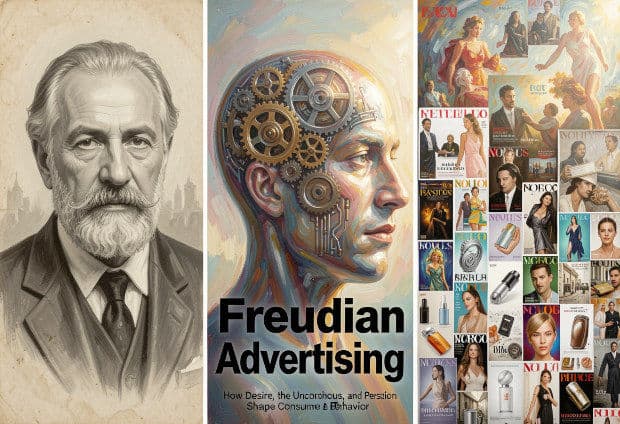
Freudian advertising uses Sigmund Freud's theories of the unconscious mind to influence consumer purchasing decisions. Harvard research shows 95 percent of buying decisions are made unconsciously. Freud's nephew Edward Bernays applied these theories to create the public relations industry. Advertisers target the Id (pleasure), Ego (logic), and Superego (morality) through seven key techniques: Sex Appeal, Fear, Nostalgia, Identity, Symbolism, Social Proof, and Repetition. From Coca-Cola to bKash, every major brand uses these Freudian principles.
674Read
M
Marketing
March 29, 2026
What Is Marketing, Really? — More Than Advertising
Most people think marketing means running ads — but that is only a tiny slice of the picture. Real marketing starts before a product exists and continues long after the sale. From Philip Kotler's 4Ps to Peter Drucker's famous insight that great marketing makes selling unnecessary, this article unpacks every dimension of marketing: its definitions, evolution from Marketing 1.0 to 5.0, types, step-by-step process, and the real state of marketing in Bangladesh.

658Read
M
Marketing
March 28, 2026
Guerrilla Marketing: The Art of Creating Massive Impact on a Tiny Budget
Guerrilla marketing is an unconventional, low-cost marketing strategy that uses creativity, surprise, and bold ideas to leave a lasting impression — instead of relying on big advertising budgets. Coined by Jay Conrad Levinson in 1984, the approach has been adopted by brands from tiny startups to giants like Coca-Cola, Nike, and IKEA. From a coffee-cup manhole cover in New York City to Red Bull's space jump, guerrilla marketing proves one thing: you don't need a massive budget to make a massive impact.

659Read
M
Marketing
March 27, 2026
Machiavellian Marketing Framework (MMF): How Power Philosophy Wins Markets
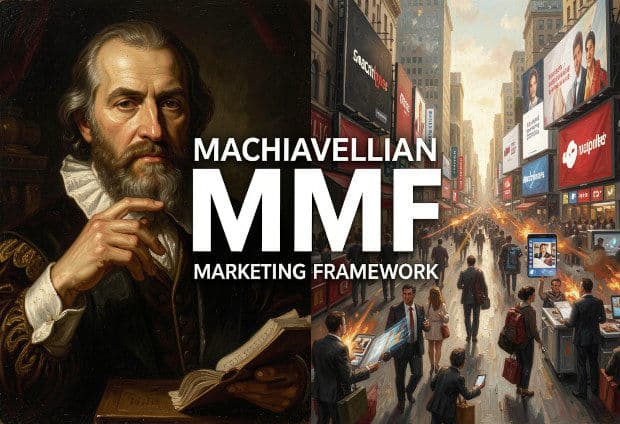
In 1513, Niccolò Machiavelli wrote a short book about power that still makes politicians nervous. Five centuries later, the world's biggest brands are quietly using the same principles to dominate markets. The Machiavellian Marketing Framework (MMF) translates Machiavelli's raw power philosophy — fear and love, narrative control, strategic alliances, and ironclad lock-in — into a modern marketing playbook. Apple, Nike, and Amazon didn't build their empires by accident. They built them the Machiavellian way.
648Read
M
Marketing
March 11, 2026
Surrogate Marketing: What It Is, How It Works, and Famous Examples
Surrogate marketing is a strategy where companies promote restricted or banned products by advertising different, legally permissible products under the same brand name. Most commonly used by alcohol and tobacco companies in countries with advertising bans, surrogate marketing maintains brand visibility through substitute products like mineral water, soda, music CDs, and event sponsorships. While it demonstrates creative business adaptation, it raises ethical concerns about undermining public health regulations.

731Read
M
Marketing
March 11, 2026
The 5 C's of Marketing: A Complete Framework for Strategic Analysis
The 5 C's of Marketing is a situational analysis framework that examines five key factors influencing marketing strategy: Company, Customers, Collaborators, Competitors, and Climate. This comprehensive framework provides a 360-degree view of your business environment, helping marketers make informed strategic decisions. By analyzing internal strengths and weaknesses, understanding customer needs, evaluating partnerships, studying competitors, and assessing external factors, businesses can develop more effective and targeted marketing strategies.

873Read
M
Marketing
March 11, 2026
Ambush Marketing: What It Is, Types, Examples, and Is It Legal?
Ambush marketing is a strategy where brands capitalize on the publicity of major events without being official sponsors. Coined by Jerry Welsh in the 1980s, it ranges from aggressive predatory ambushing to subtle indirect campaigns. Famous examples include Samsung vs Apple, Audi vs BMW billboard wars, and Nike's Olympic campaigns. While ambush marketing offers massive exposure at low cost, it carries legal risks and ethical concerns, with many countries enacting specific anti-ambush legislation.

821Read
M
Marketing
March 11, 2026
DeMarketing: What It Is, Types, Strategies, and Real-World Examples
DeMarketing is a strategy designed to intentionally reduce or redirect demand for a product or service. First introduced by Philip Kotler and Sidney Levy in 1971, demarketing serves purposes ranging from managing supply shortages and conserving resources to maintaining brand exclusivity and promoting public health. The three types, general, selective, and ostensible demarketing, each serve different objectives. Common strategies include price increases, reduced advertising, and redirecting customer attention to alternative products.

777Read
M
Marketing
March 11, 2026
Emotional Marketing: What It Is, How It Works, and Why It Drives Results
Emotional marketing is a strategy that leverages emotions like happiness, fear, nostalgia, and inspiration to create powerful connections between brands and consumers. Rooted in Aristotle's concept of pathos, emotional marketing taps into the fact that 95% of purchasing decisions are subconscious and driven by emotion. Brands like Coca-Cola, Nike, and Apple have mastered this approach, creating campaigns that resonate deeply with audiences. While emotional marketing delivers higher ROI and brand loyalty, it requires authenticity and cultural sensitivity to avoid backfiring.

740Read
M
Marketing
March 11, 2026
STP Marketing -- The Complete Guide to Segmentation, Targeting, and Positioning
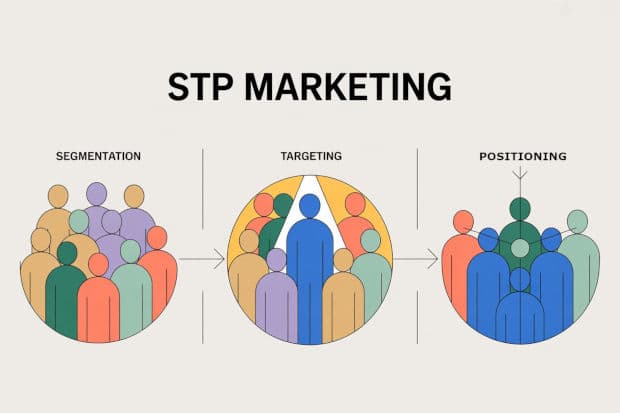
STP (Segmentation, Targeting, Positioning) is the foundational strategic marketing framework popularized by Philip Kotler. Segmentation means dividing a broad market into smaller groups based on demographics, geography, psychographics, and behavior. Targeting means choosing which segment to serve. Positioning means creating a distinct place for your brand in that segment's mind. According to Bain & Company (2025), businesses that follow STP strategy are approximately 25% more profitable than those that don't. This guide covers all three steps in depth with real-world examples from Nike, Spotify, and Coca-Cola, industry data, a step-by-step implementation process, and common mistakes to avoid.
1,305Read
M
Marketing
March 11, 2026
Holistic Marketing: What It Is, How It Works, and Why Your Business Needs It
Holistic marketing is a business philosophy that treats everything the company does as part of its marketing strategy. Introduced by Philip Kotler and Kevin Lane Keller, it ensures that all departments, channels, and activities are aligned toward a unified marketing vision. Built on five key principles, including integrated marketing, internal marketing, relationship marketing, socially responsible marketing, and performance marketing, this approach creates consistent customer experiences, stronger brand identity, and improved business efficiency.

561Read
M
Marketing
March 11, 2026
Inbound vs Outbound Marketing: Key Differences, Pros, Cons, and Which One to Choose
Inbound and outbound marketing represent two fundamentally different approaches to reaching customers. Inbound marketing attracts customers through valuable content like blogs, SEO, and social media, while outbound marketing pushes messages to audiences through TV ads, cold calls, and billboards. Inbound is more cost-effective and builds long-term trust, but takes time. Outbound delivers faster results and broader reach, but can be expensive and intrusive. The most effective marketing strategies combine both approaches to maximize impact.

435Read
M
Marketing
March 11, 2026
Outbound Marketing: What It Is, How It Works, Pros, Cons, and Strategies
Outbound marketing is a traditional marketing strategy where businesses push their messages out to a broad audience through channels like TV ads, cold calls, email blasts, billboards, and trade shows. Unlike inbound marketing, where customers find you, outbound marketing takes the message directly to potential customers. While it offers advantages like immediate results and easy scalability, it can be expensive and intrusive. Modern outbound marketing has evolved with data-driven targeting and personalization, and the most successful businesses combine outbound and inbound strategies for maximum impact.

429Read
M
Marketing
March 11, 2026
Inbound Marketing: What It Is, How It Works, and Why It Matters
Inbound marketing is a modern digital marketing strategy that focuses on attracting customers by creating valuable, relevant content rather than interrupting them with traditional advertising. Popularized by HubSpot co-founder Brian Halligan in 2005, inbound marketing combines tactics like SEO, content marketing, social media, and email marketing to pull potential customers toward your brand. Its five pillars include attracting traffic, conversion, marketing automation, loyalty, and analysis. While it costs less than outbound marketing and generates higher-quality leads, it requires patience and consistent effort to see results.

397Read
M
Marketing
March 11, 2026
Marketing Myopia: What It Is, Why It Happens, and How to Avoid It
Marketing myopia is a concept introduced by Theodore Levitt in 1960 that describes what happens when companies focus too heavily on selling their existing products instead of paying attention to what customers actually need. Companies like Kodak, Nokia, BlackBerry, and Yahoo all suffered from marketing myopia because they prioritized short-term sales over long-term customer satisfaction. To avoid this trap, businesses must adopt customer-centric strategies, invest in research, and continuously evolve their products to match changing market demands.

319Read
M
Marketing
March 11, 2026
The Evolution of Marketing: From the Industrial Revolution to the Digital Age
Marketing has undergone a remarkable evolution from the Industrial Revolution to the present day. It progressed through five major eras: the Production-Oriented Era (1800-1920), the Sales-Oriented Era (1920-1940), the Marketing-Oriented Era (1940-1970), the Societal-Oriented Era (1970-present), and the Digital Marketing Era (1990-present). Each era fundamentally changed how businesses interact with customers.

363Read
M
Marketing
March 11, 2026
White Label Marketing: What It Is, How It Works, and Is It Right for You?
White label marketing is a strategy where one company uses another company’s products, services, or marketing expertise under its own brand name. It helps businesses expand their service offerings, reduce costs, and focus on core strengths. However, it comes with risks including reduced quality control and increased competition. This article covers what white label marketing is, who can use it, its pros and cons, and tips for successful implementation.

256Read
M
Marketing
March 11, 2026
Target Market -- Who Is Your Ideal Customer and How to Find Them
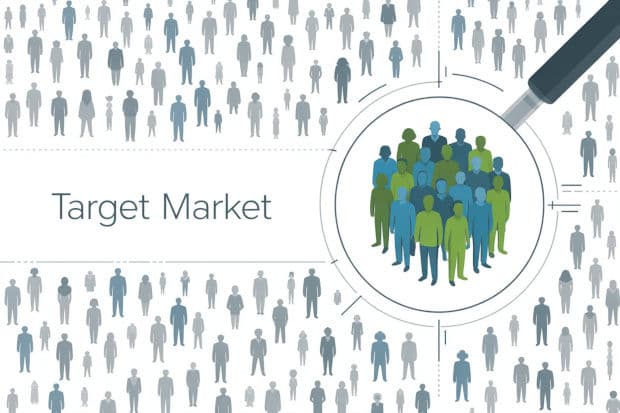
A Target Market is the specific group of consumers most likely to buy your product or service, defined by demographic (age, income, gender), geographic (location), psychographic (values, lifestyle), and behavioral (purchase habits) characteristics. According to HubSpot's 2025 State of Marketing report, businesses with well-defined target markets achieve approximately 200% higher marketing ROI. Nike does not sell shoes to 'everyone' -- per their published brand strategy, they target fitness-conscious, aspirational consumers aged 18-34. This guide covers definitions, the 4 segmentation types, Target Market vs Target Audience, a step-by-step identification process, real-world brand examples, common mistakes, tools, and data-backed insights on why precise targeting is the foundation of all effective marketing.
501Read
M
Marketing
March 11, 2026
What Is a Market? Types of Markets Explained with Real-World Examples
A market is any arrangement where buyers and sellers come together to exchange goods and services. While commonly associated with physical locations, markets in economics encompass everything from local vegetable stands to global financial exchanges. Markets are classified by size (local, national, international), time duration (short-period to very long-period), and competition level (perfect to imperfect). Understanding these types is essential for business strategy and economic analysis.
395Read
M
Marketing
March 11, 2026
Porter's Five Forces: A Complete Guide to Competitive Market Analysis
In 1980, Michael E. Porter introduced five forces for analyzing market competition: the power of customers, the power of suppliers, industry competition, the threat of new entrants, and the threat of substitute products or services. This framework remains one of the most widely used tools for competitive market analysis, helping businesses understand their position and develop effective strategies.

303Read
M
Marketing
March 7, 2026
Niche Market: What It Is, How to Find One, and Real-World Examples
A niche market is a focused segment of a broader market defined by its own unique needs, preferences, or identity. By targeting a niche, businesses can serve a specific group of customers more effectively, build stronger brand loyalty, and face less competition. This guide explains what niche markets are, provides real-world examples, and walks you through how to find the right niche for your business.

804Read
M
Marketing
March 7, 2026
TAM, SAM, and SOM: How to Measure Your Market Size Before Launching a Startup
TAM, SAM, and SOM are three essential metrics that help entrepreneurs and investors measure market size and growth potential. TAM represents the total addressable market, SAM narrows it to the serviceable portion, and SOM reflects the realistic market share a company can capture. Understanding these concepts is critical for building a solid business plan and attracting investor funding.

775Read
M
Marketing
March 7, 2026
The Backbone of Modern Business: Supply Chain
A supply chain is the end-to-end system that moves a product from raw materials to the final consumer, encompassing sourcing, manufacturing, warehousing, distribution, and retail. This article explores how supply chains work, six major supply chain models used by companies like Toyota, Amazon, and Zara, and the five critical areas of effective supply chain management.

616Read
M
Marketing
March 6, 2026
Content Marketing Strategy: A Complete Guide
Content marketing strategy is a long-term approach that uses valuable content such as blogs, videos, podcasts, and social media to build meaningful relationships with a target audience. Rather than pushing direct sales messages, it focuses on educating and informing customers, positioning the brand as a trusted authority. This guide covers the key content types, a six-step framework for building a strategy, and five essential metrics to measure its effectiveness.
706Read
M
Marketing
February 22, 2026
The 7 P's of Marketing: The Complete Framework Every Business Needs
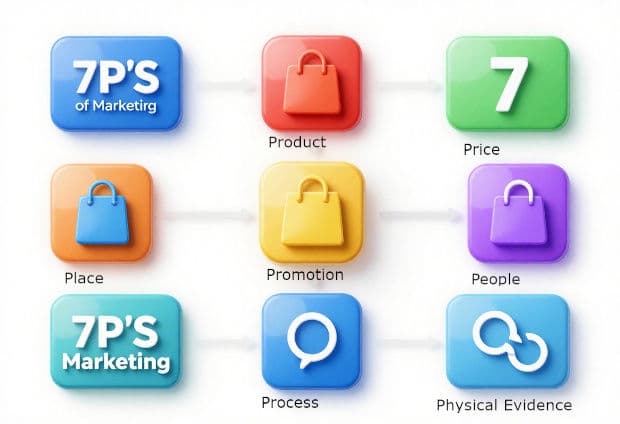
If you have ever wondered why some businesses grow consistently while others struggle despite having good products — the answer is often in their marketing strategy. And one of the most reliable, time-tested frameworks for building a complete marketing strategy is the 7 P's of Marketing. The 7 P's are Product, Price, Place, Promotion, People, Process, and Physical Evidence. Together, these seven elements cover every single aspect of bringing a product or service to market — from how you design it and price it, to how you deliver it and make customers trust it. What makes this framework so powerful is that it does not just focus on selling. It focuses on the entire customer experience — from the moment a customer first hears about your product to the moment they actually use it. Whether you are running a small business in Dhaka or building a national brand, understanding and applying the 7 P's can be the difference between a business that survives and one that truly thrives.
995Read
M
Marketing
February 20, 2026
Digital Marketing: What It Is, Why It Matters, and How It Works
We are living in the age of the internet. Almost everyone — from teenagers to grandparents — spends a significant part of their day scrolling through social media, searching on Google, checking emails, and watching YouTube videos. Businesses have noticed this shift and moved their marketing efforts to where the people are — online. This is exactly what digital marketing is. It is the process of promoting a business, product, or service using digital channels and technology. Compared to traditional marketing methods like newspaper ads or billboards, digital marketing costs less, reaches more people, works faster, and gives you the ability to target exactly the right audience based on their age, gender, location, and interests. In today's competitive market, digital marketing is no longer optional — it is essential.
1,012Read
About Marketing
Marketing is the bridge between a product and its customer. From understanding consumer psychology to crafting compelling campaigns, marketing skills are essential for business success. Our articles cover both timeless marketing principles and modern growth tactics.
marketingmarketing strategy4Psconsumer behaviormarket segmentationpositioningguerrilla marketingbrand marketing