Business Models
10 articles
B
Business Models
July 19, 2026
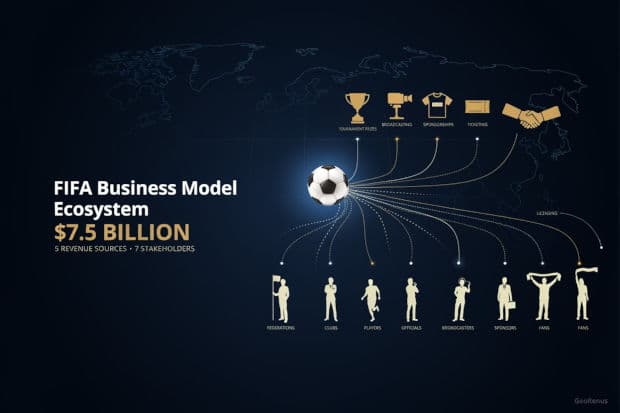
How FIFA Runs Its Business: The $7.5 Billion Ecosystem, 5 Revenue Sources, 7 Stakeholders
FIFA is the monopoly regulator of world football. Founded in Paris in 1904 by seven European nations. Headquartered in Zurich. Legally a Swiss non-profit association. 211 member federations, more than the UN. Six confederations. Revenue of $7.5 billion in the 2019-2022 cycle, projected $11 billion for 2023-2026. Five revenue sources: broadcasting 55%, sponsorship 20%, ticketing 15%, licensing 5%, other 5%. Seven stakeholders: federations, confederations, players/clubs, sponsors, broadcasters, host countries, fans. Governance: Congress (211 votes), Council (37 members), President Infantino. The 2015 $2 billion bribery scandal and Infantino's reforms. FIFA vs UEFA vs clubs, the modern conflict. Bangladesh's BFF receives $1.5-2M annually through the FIFA Forward Programme.
680Read
B
Business Models
April 3, 2026
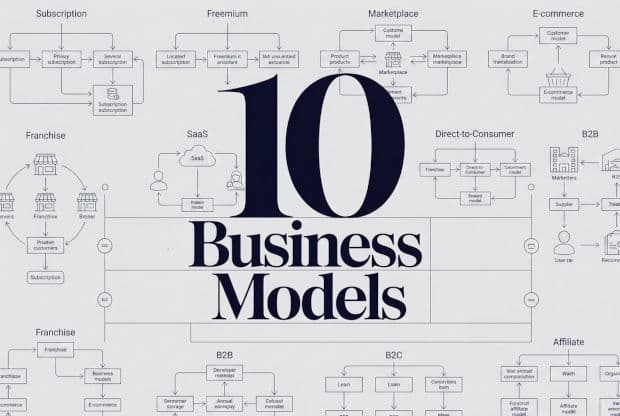
10 Real-World Examples to Understand How Business Models Actually Work
Google gives you free search. Facebook costs you nothing. Uber owns zero cars. Yet all three are billion-dollar companies. How? The answer is hidden inside their business models. This article breaks down the exact money-making mechanisms of 10 world-class companies — Google, Amazon, Apple, Netflix, Uber, bKash, IKEA, Gillette, Airbnb, and Tesla — using real numbers and plain language. Each company teaches a different lesson: from advertising and subscription models to razor-and-blade and platform plays. If you want to truly understand how businesses make money, these 10 case studies are essential reading.
644Read
B
Business Models
April 2, 2026
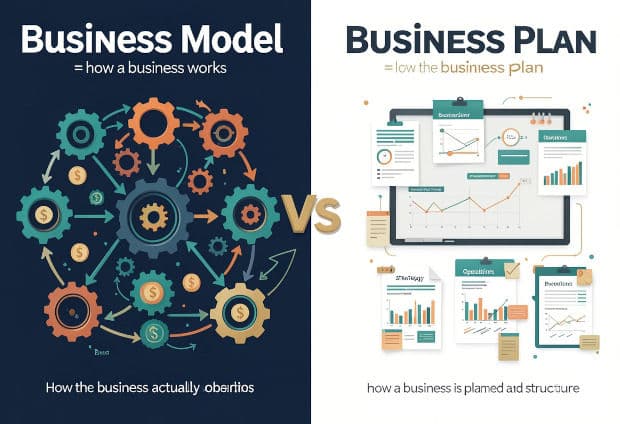
Business Model vs Business Plan: Are They the Same Thing? — Differences, Relationship, and Which Comes First
Most entrepreneurs use 'business model' and 'business plan' interchangeably — that is a costly mistake. When an investor asks for your business plan, they often really want to understand your business model. These are two completely different tools built for different purposes. A Business Model is the logic of how you make money — the WHY and HOW of value creation and capture. A Business Plan is a detailed execution roadmap — numbers, timelines, strategies, projections. Model = the GPS destination. Plan = turn-by-turn navigation. This comprehensive guide explains the differences, their relationship, when you need each one, and what this means for entrepreneurs in the Bangladesh context.
581Read
B
Business Models
April 2, 2026
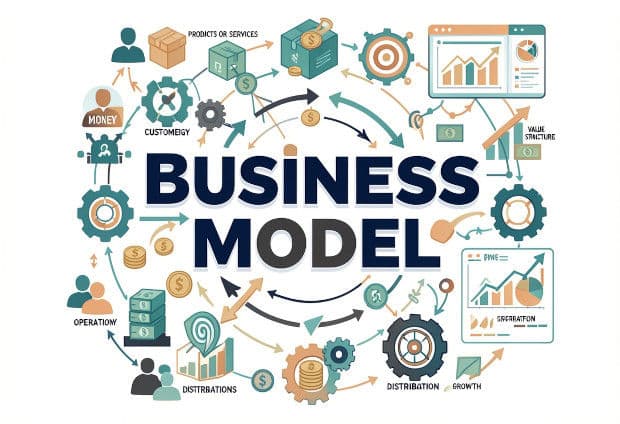
What Is a Business Model? How Businesses Actually Make Money — The Complete Guide
You have a great product — but how exactly do you make money from it? That is the heart of a business model. Google gives away search for free yet earns $307 billion a year. Uber owns zero cars yet commands a valuation of over $130 billion. Amazon started as a bookstore and now runs a cloud empire, a subscription program, an ad platform, and a marketplace — all at once. A business model is not just what you sell — it is the full logic of how a company creates value, delivers it to customers, and captures revenue in return. From Subscription to Freemium, Advertising to Marketplace, Razor-and-Blade to SaaS — this guide covers 15 major business model types, Alexander Osterwalder's Business Model Canvas, the world's best case studies, and what it all means for businesses in Bangladesh.
620Read
B
Business Models
March 8, 2026
Customer Data Monetization Model
Customer data monetization is a business model where companies offer free or low-cost services to users, collect their personal data, and then sell or leverage that data for revenue. Companies like Facebook, Google, and PatientsLikeMe have built multi-billion dollar empires using this approach. This article explains how the model works, what makes it successful, the risks involved, and real-world examples of companies that profit from user data.

544Read
B
Business Models
March 8, 2026
Bait and Hook Business Model Explained (Razor and Blade Model)
The bait and hook business model, also called the razor and blade model, is a pricing strategy where companies sell a base product at a low price or even at a loss, then generate recurring revenue from selling complementary consumable products at a premium. Popularized by Gillette with cheap razors and expensive blades, this model is now used across industries from gaming consoles to coffee machines. This article explains how it works, why companies use it, and what risks come with it.

779Read
B
Business Models
March 8, 2026
Freemium Business Model Explained: How Free Becomes Profitable
The freemium business model lets companies offer basic services for free while charging for premium features. Popularized by tech giants like Spotify, Dropbox, and Skype, this strategy turns free users into paying customers over time. This article explains how the freemium model works, its advantages, risks, real-world examples, and the keys to making it successful.

703Read
B
Business Models
March 8, 2026
Subscription Business Model Explained: How Recurring Revenue Works
The subscription business model is a revenue strategy where customers pay a recurring fee, typically monthly or yearly, in exchange for continuous access to a product or service. From streaming giants like Netflix to software platforms like Microsoft 365, subscriptions have become one of the most powerful and predictable ways for businesses to generate income. This article breaks down how the model works, its advantages, risks, real-world examples, and the keys to building a successful subscription-based business.

667Read
B
Business Models
March 8, 2026
Add-On Business Model Explained: How Companies Turn Extras Into Revenue
The add-on business model is a pricing strategy where companies offer a base product or service at a low or even free price and then generate additional revenue by selling extra features, upgrades, or complementary products. This model is widely used across industries from automobiles and airlines to mobile gaming and software. By keeping the entry price attractive, businesses draw in customers and then monetize through optional add-ons that enhance the core experience.

550Read
B
Business Models
February 19, 2026
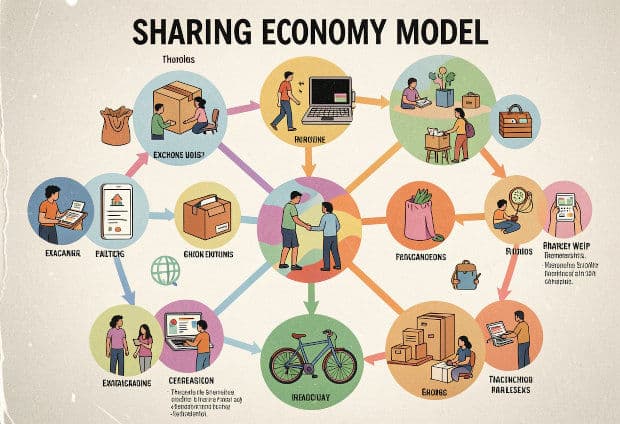
Sharing Economy Model: How Businesses Make Money Without Owning Anything
The sharing economy is a peer-to-peer business model where the main company acts as a middleman — connecting people who have something to offer with people who need it. The company itself does not own the product or service being exchanged. Instead, it uses technology to bring two sides together: the service provider and the service receiver. Pathao in Bangladesh, Uber globally, and Airbnb worldwide are all perfect real-world examples of this model in action. Simply put, the sharing economy turns unused assets into income-generating opportunities — for everyone involved.
1,185Read
About Business Models
A business model defines how a company creates, delivers, and captures value. Understanding different business models — from traditional retail to modern platform economics — helps entrepreneurs make strategic decisions about revenue streams, cost structures, and competitive positioning.
business modelsubscription modelfreemiumSaaSmarketplacefranchiserevenue modelbusiness model canvas