Subscription Business Model Explained: How Recurring Revenue Works
G
GeoRenus Editorial Team
757 views

GeoRenus Editorial Team
The subscription business model is a revenue strategy where customers pay a recurring fee, typically monthly or yearly, in exchange for continuous access to a product or service. From streaming giants like Netflix to software platforms like Microsoft 365, subscriptions have become one of the most powerful and predictable ways for businesses to generate income. This article breaks down how the model works, its advantages, risks, real-world examples, and the keys to building a successful subscription-based business.
Imagine paying for a product once and never coming back to the store. Now imagine paying a small amount every month and getting continuous access, updates, and improvements. That second scenario is the heart of the subscription business model, and it has quietly become the dominant revenue strategy of the modern economy.
From your Netflix account to your Microsoft 365 license, from the meal kit that arrives at your door every week to the cloud storage that keeps your files safe, subscriptions are everywhere. But what makes this model so powerful? Why have some of the world's most valuable companies abandoned one-time sales in favor of recurring revenue? And what are the hidden risks that can sink a subscription business?
Let us break it all down in plain English.
A subscription business model is a revenue structure where customers pay a recurring fee at regular intervals (weekly, monthly, quarterly, or annually) to gain ongoing access to a product or service. Instead of a single purchase, the customer enters into a continuing relationship with the business.
Think of it this way: buying a DVD is a one-time transaction. Paying $15.99 a month for Netflix is a subscription. The product (entertainment) is similar, but the business model is fundamentally different.
The concept is not new at all. Newspapers and magazines have used subscription models since the 1600s. In 1638, German publishers started offering annual subscriptions to periodicals. The idea was simple: guarantee a steady stream of readers and revenue.
Fast forward to today, and the subscription economy has exploded. According to Zuora's Subscription Economy Index, subscription businesses have grown nearly 6 times faster than the S&P 500 over the past decade. The model has moved far beyond media to include software (SaaS), food delivery, fitness, fashion, healthcare, and even automobiles.
As investor and author Tien Tzuo puts it: "The future of business is not about selling products. It is about delivering outcomes through ongoing relationships."
At its core, the subscription model flips the traditional sales relationship. Instead of convincing a customer to make one big purchase, the business focuses on delivering enough value to keep the customer paying month after month.
Here is how the typical subscription lifecycle works:
There are several common subscription pricing structures:
The financial metric that matters most in subscriptions is Monthly Recurring Revenue (MRR), which is the predictable revenue a business can expect every month. For investors and analysts, MRR is often more important than total sales because it shows the health and sustainability of the business.
Not every subscription business succeeds. In fact, many fail within the first few years. The difference between winners and losers usually comes down to a few critical factors.
The single biggest reason customers cancel subscriptions is that they stop seeing value. A subscription is a promise: "Keep paying us, and we will keep delivering something worth your money." If you break that promise, even for a month or two, customers leave.
Netflix spends over $17 billion annually on content precisely because it knows that without fresh, engaging shows and movies, subscribers will cancel. The content library is the value proposition, and it must be constantly refreshed.
Churn rate is the percentage of subscribers who cancel during a given period. Even a small churn rate can be devastating over time. If you have 5% monthly churn, you will lose nearly half your customers in a year. The best SaaS companies maintain monthly churn rates below 2%, and enterprise-focused businesses often achieve rates below 1%.
Reducing churn requires understanding why people leave. Common reasons include poor customer support, lack of new features, pricing that feels too high relative to perceived value, and competitors offering better alternatives.
Pricing a subscription is both an art and a science. Price too high, and potential customers walk away. Price too low, and you leave money on the table or fail to cover your costs. The sweet spot is where customers feel they are getting a bargain while the business maintains healthy margins.
Many successful subscription businesses use the "10x value rule": the perceived value should be at least 10 times the price. If a project management tool saves a team 20 hours a month (worth $1,000 in labor), charging $99 per month feels like a no-brainer.
The longer a customer uses your product, the harder it should be to leave, not because you trap them, but because they have invested time, data, and workflows into your platform. Salesforce, for example, becomes deeply embedded in a company's operations. Switching to a competitor would mean months of migration and retraining.
For all its appeal, the subscription model carries significant risks that businesses must navigate carefully.
Consumers today are overwhelmed with subscriptions. A 2023 study found that the average American spends $219 per month on subscriptions, and many underestimate their total subscription spending by up to 2.5 times. As consumers become more aware of this spending, they are increasingly cutting back. This phenomenon, known as subscription fatigue, means businesses must work harder than ever to justify their recurring charges.
Acquiring a new subscriber is expensive. Between marketing, free trials, discounts, and onboarding, the Customer Acquisition Cost (CAC) can be substantial. A healthy subscription business needs a Customer Lifetime Value (LTV) to CAC ratio of at least 3:1. If it costs $100 to acquire a customer, that customer needs to generate at least $300 in revenue over their lifetime to make the economics work.
Unlike one-time sales where revenue is recognized immediately, subscription revenue must be recognized over the subscription period. This creates accounting complexity, especially for annual subscriptions. A $1,200 annual subscription generates $100 per month in recognized revenue, which can make financial reporting more complicated.
With a one-time purchase, the transaction is complete. With a subscription, the business must keep earning the customer's loyalty every single billing cycle. This creates relentless pressure to improve, update, and innovate. For small companies with limited resources, this pace can be exhausting and unsustainable.
As Marc Benioff, CEO of Salesforce, famously said: "In the subscription economy, you are only as good as your last month's product."
Despite the challenges, the subscription model offers several compelling advantages that explain its widespread adoption.
While the advantages are significant, businesses must also consider the downsides before committing to a subscription model.
The best way to understand the subscription model is to look at companies that have mastered it. Let us examine two very different but equally instructive examples.
Netflix started in 1997 as a DVD-by-mail rental service. Customers paid a monthly fee and could rent DVDs without late fees, which was revolutionary at the time. In 2007, Netflix launched its streaming service, and the rest is history.
Today, Netflix has over 260 million subscribers across more than 190 countries. In 2023, the company generated approximately $33.7 billion in revenue, nearly all of it from subscriptions. Netflix offers multiple tiers, from the ad-supported plan at $6.99 per month to the Premium plan at $22.99 per month.
What makes Netflix a subscription masterclass is its relentless focus on content. The company invests billions in original programming, from global hits like Squid Game to award-winning films like All Quiet on the Western Front. This constant stream of new content gives subscribers a reason to stay month after month.
Netflix also uses sophisticated algorithms to personalize recommendations. The company estimates that its recommendation engine saves $1 billion per year in customer retention by helping users find content they love before they get frustrated and cancel.
Reed Hastings, co-founder of Netflix, once said: "Our competition is not other streaming services. Our competition is everything you could do with your time, from sleeping to scrolling social media."
Business Insider (now known as Insider) represents the subscription model in digital journalism. While most news websites rely heavily on advertising revenue, Business Insider has successfully built a premium subscription tier called BI Prime (now Insider Premium).
For $12.95 per month or $99 per year, subscribers get access to exclusive investigative reports, in-depth market analysis, and premium business intelligence content that is not available to free readers. The publication focuses on delivering actionable insights for business professionals, finance professionals, and technology leaders.
What makes Business Insider's approach interesting is its use of a metered paywall combined with a freemium strategy. Casual readers can access a limited number of free articles per month, giving them a taste of the content quality. When they hit the limit, they are prompted to subscribe. This approach lets the publication maintain high advertising reach through free content while converting the most engaged readers into paying subscribers.
Business Insider reached over 10 million paying digital subscribers across its parent company Axel Springer's portfolio, demonstrating that even in the challenging world of digital journalism, the subscription model can work when the content is valuable enough.
The success of both Netflix and Business Insider illustrates a fundamental truth about the subscription model: "People will happily pay recurring fees for something they perceive as genuinely valuable and difficult to replace."
Whether you are building a SaaS platform, launching a content business, or selling physical products through a subscription box, the principles remain the same. Deliver consistent value, minimize churn, price thoughtfully, and build a product that becomes part of your customer's routine. Get those elements right, and the subscription model can be one of the most powerful and sustainable business strategies in existence.
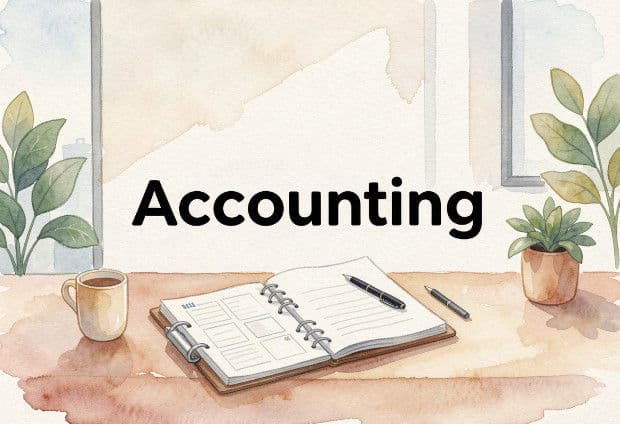
Accounting is like a notebook for a business where all the money-related activities are recorded and tracked. Just like students track their exam scores to understand how they are doing, businesses use accounting to see if they are making a profit or loss. It acts like the financial backbone of a company. Accountants organize these records into different sections to make things easier to understand. To show their performance to shareholders, companies prepare documents called financial statements.