Featured Articles
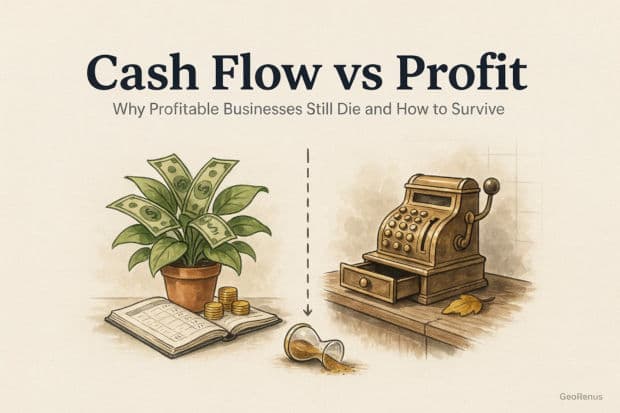
Cash Flow vs Profit -- Why Profitable Businesses Still Die and How to Survive
Profit is the difference between revenue and expenses on paper -- it appears on your income statement. Cash flow is the actual money moving in and out of your business -- it appears in your bank account. A business can be profitable on paper yet die from a cash crisis. According to US Bank (2025), 82% of business failures are caused by cash flow problems, not lack of profit. Toys R Us had $11.5 billion in revenue and showed profit, yet filed for bankruptcy because $5 billion in debt payments drained all cash. This guide explains the critical difference between profit and cash flow, why profitable businesses fail, how to read a cash flow statement, real-world case studies (Toys R Us, WeWork, Evergrande), and 10 strategies to improve your cash flow.
Apr 14, 2026701

Business
Most Important. Working Capital -- The Daily Oxygen Your Business Cannot Survive Without
Working Capital is the difference between a business's Current Assets (cash, accounts receivable, inventory) and Current Liabilities (accounts payable, short-term debt, accrued expenses). The formula is simple: Working Capital = Current Assets - Current Liabilities. Positive working capital means the business can meet its short-term obligations. Negative working capital is usually a danger sign -- unless you are Amazon, which deliberately operates with a Cash Conversion Cycle of -30 days by collecting from customers instantly while paying suppliers in 60-90 days. Deloitte's 2025 report found approximately $1.8 trillion in working capital is trapped in the world's top 1000 companies. This guide covers definitions, formulas (Current Ratio, Quick Ratio, Cash Conversion Cycle), all components explained, three real-world examples, industry benchmarks, 10 management strategies, warning signs, and practical optimization techniques.
Apr 14, 2026459
More Features

Business Models
How FIFA Runs Its Business: The $7.5 Billion Ecosystem, 5 Revenue Sources, 7 Stakeholders
Business
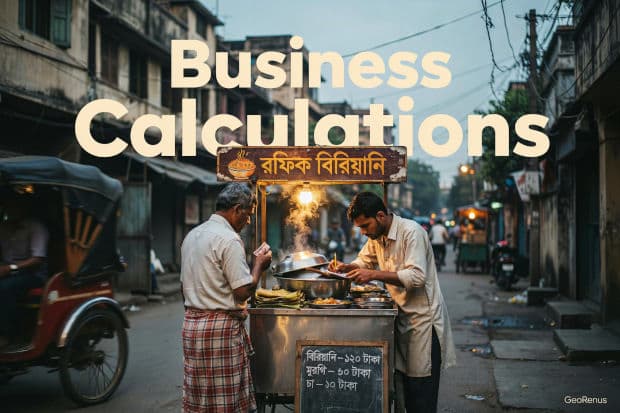
Business Calculations Part 1 -- Rafiq's Biryani: From Street Cart to First Shop
Economics
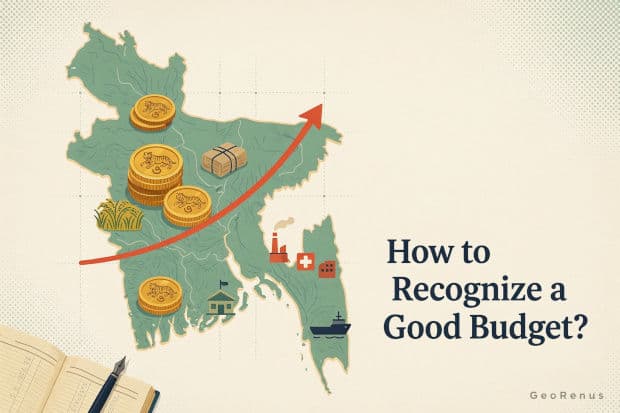
How to Recognize a Good Budget?
Economics
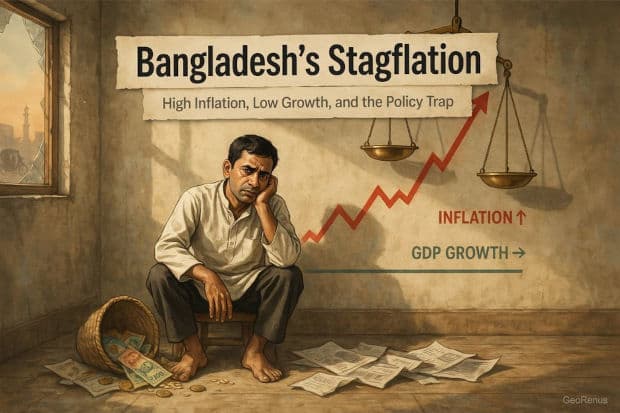
Bangladesh's Stagflation -- High Inflation, Low Growth, and the Policy Trap

Economics
Bangladesh's Boom-Bust Cycle -- How the Seeds of Collapse Were Hidden Within the Rise
Newly Added

Financial Leverage: The Final Verdict, Expert Opinions, and Practical Calculator (Part 2)

Forex Market Explained — The World's Largest Market, Exchange Rate, Bangladesh Bank's Role, History, and the Dollar Crisis Story
Value Proposition -- Why It Is the Single Most Important Thing in Your Business
Finance · Economics · Geopolitics
The hidden mechanics of money, markets & power — both sides of the story, so you can decide for yourself.
Spotlight
Business
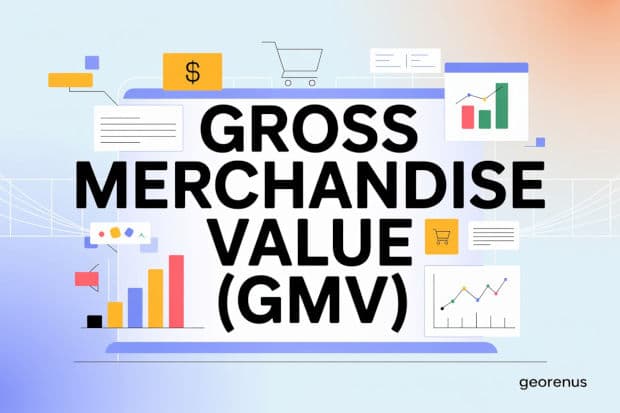
Gross Merchandise Value (GMV) -- The Most Important Metric in E-Commerce You Might Be Misunderstanding
Gross Merchandise Value (GMV) is the total dollar value of all merchandise sold through a marketplace or e-commerce platform over a given period -- before deducting discounts, returns, cancellations, or platform fees. For example, if 1,000 items sell at $50 each on your platform, GMV is $50,000 -- but that is NOT your revenue. Your actual revenue depends on your take rate (the percentage you keep as commission). GMV is the primary metric used by marketplaces like Amazon, Alibaba, and Airbnb, ride-sharing platforms like Uber, and food delivery services like DoorDash. This guide covers definitions, formulas, the critical difference between GMV and Revenue, real-world examples, top company GMV comparisons, limitations, and 10 strategies to grow GMV.
Top Read

Business Networking — How the World's Most Successful Entrepreneurs Build Empires Through Relationships
What Should You Read for Business — The Complete Knowledge Blueprint for Entrepreneurs
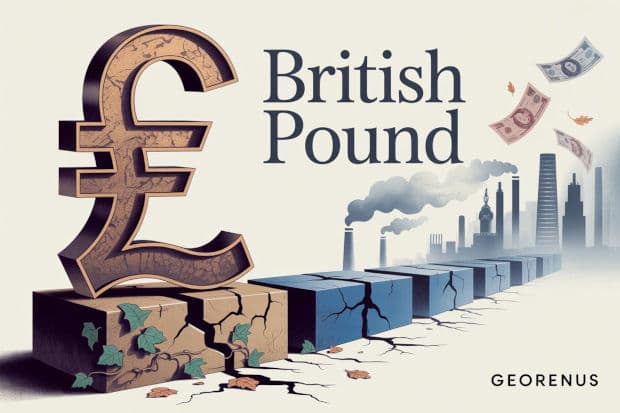
The British Pound: Rise, Dominance, and Fall — Part 3: Decades of Decline, the Modern Pound, and the Future
InShorts — Quick Reads
Digital Marketing
Upselling
Upselling is a sales technique where you encourage customers to buy a better or more expensive version of the product th
Money
Inflation-Linked Bonds
Inflation-linked bonds are bonds whose principal and/or interest payments adjust with inflation rates.
Accounting
Auditing
Auditing is the independent examination of financial records and statements to verify their accuracy and compliance with
Banking
Cheque
A cheque is a written document ordering a bank to pay a specific amount from the drawer's account to the person or entit
Banking
Letter of Indemnity
A letter of indemnity is a document guaranteeing that losses or damages arising from a specific transaction will be comp
Digital Marketing
Autoresponder
An autoresponder automatically sends pre-written emails to subscribers based on triggers like sign-ups, purchases, or ti
Digital Marketing
Funnel
A marketing funnel is the step-by-step journey that turns a regular visitor into a paying customer.
Banking
Murabaha
Murabaha is a cost-plus financing arrangement where the bank buys an asset and sells it to the customer at a disclosed m
Our Tools
Our Tools
Interactive calculators and analyzers that turn assumptions into evidence.
Built for real decisions
Run the numbers.
Stress-test the
decision.
From tax, break-even and valuation to business readiness, impact and risk — Georenus tools do the heavy lifting so you can act on evidence, not guesswork.
Tailored Solutions
Choose Your Path
Pick the toolkit built for your journey — startups, businesses, or personal finance.
Most Popular
For Startups
Launch and validate your business idea with confidence.
Business Readiness Check
AnalyzerBreak-Even Calculator
CalculatorMarket Research
DataStartup Guides
LearnBrowse
Explore by Category
Dive deep into specialized areas of expertise.
Ready to explore financial insights?
Start with quick insights or dive deep into analysis — the choice is yours.