Economics
37 articles
E
Economics
June 10, 2026
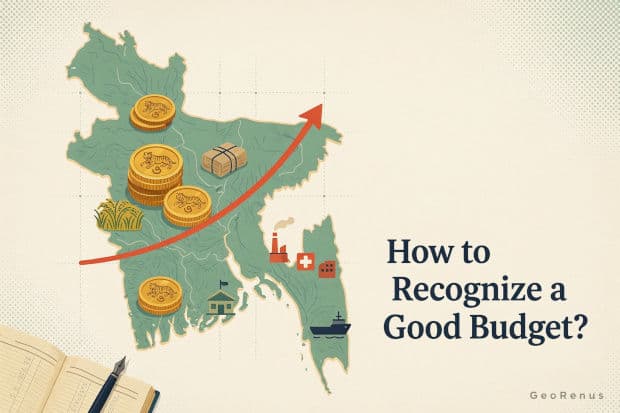
How to Recognize a Good Budget?
The size of a budget is not the right measure of a good budget. The real measures are five. Where is income coming from (Tax-to-GDP)? Is spending building the future or servicing debt? How is the deficit being financed? Are the government and central bank aligned? And who gets the bulk of subsidies? FY27 fails on all five. Compared to Singapore, Norway, Vietnam, and South Korea, Bangladesh lags far behind. Budget discipline, compounded over 30 years, changes the fate of a generation.
1,038Read
E
Economics
May 11, 2026
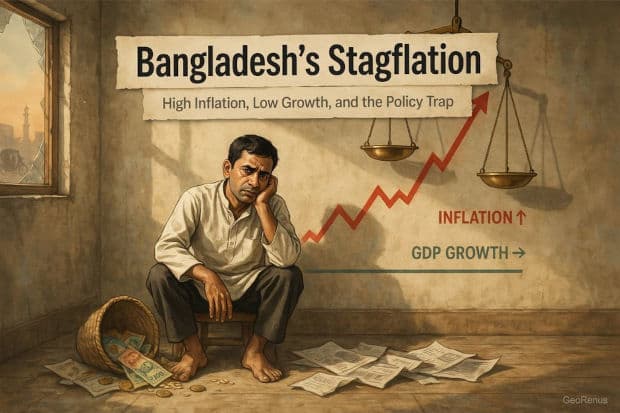
Bangladesh's Stagflation -- High Inflation, Low Growth, and the Policy Trap
Bangladesh entered a rare and dangerous economic state during 2022-2026 — high inflation (10%+), low GDP growth and taka depreciation all together. This condition is called stagflation — the same condition that brought the US economy down in the 1970s. Normal monetary policy does not work against it, because raising rates to tame inflation further chokes growth. This article explains where Bangladesh's stagflation came from, why it is so dangerous, and how a country can escape it.
1,018Read
E
Economics
May 8, 2026
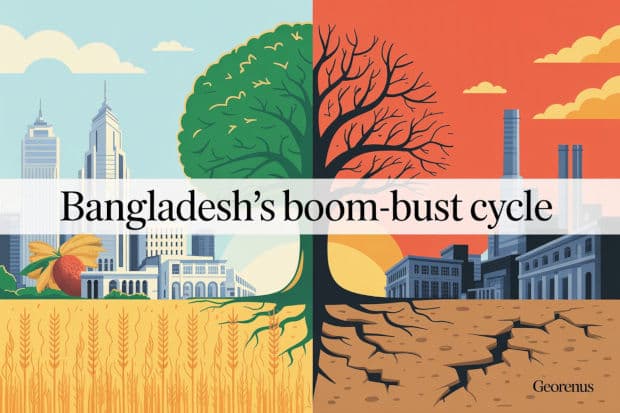
Bangladesh's Boom-Bust Cycle -- How the Seeds of Collapse Were Hidden Within the Rise
Bangladesh's 14-year economic rise from 2009 to 2022 carried the seeds of its own collapse, which broke into the open during the 2022-2024 crisis. GDP was growing fast, mega-projects were under construction, RMG exports touched USD 42 billion — but beneath the surface lay deep debt dependence, banking capture and reserve depletion. This article uses the Boom-Bust Cycle framework to explain how the crisis arrived, which signals were missed, and what the path forward looks like.
1,184Read
E
Economics
April 18, 2026
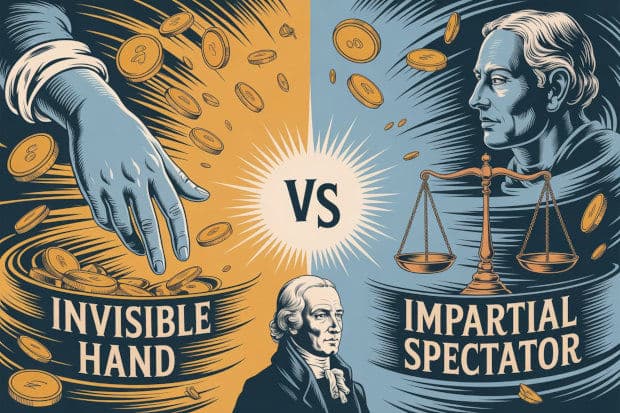
Invisible Hand vs Impartial Spectator -- Why Capitalism Adopted Adam Smith's Minor Metaphor and Abandoned His Central Philosophy
Adam Smith is celebrated as the 'Father of Capitalism' for his 'Invisible Hand' concept -- the idea that self-interest automatically benefits society. But a startling fact emerges from his actual writings: Smith used the phrase 'Invisible Hand' only 3 times in his entire body of work (once each in The Theory of Moral Sentiments, The Wealth of Nations, and History of Astronomy -- per Emma Rothschild, Harvard University Press, 2001). Meanwhile, his concept of the 'Impartial Spectator' -- an internal moral conscience based on empathy, justice, and social responsibility -- is the central theme of The Theory of Moral Sentiments (1759), mentioned hundreds of times. Smith himself considered TMS his greatest work, not Wealth of Nations. So why did capitalism adopt the minor metaphor and abandon the central philosophy? This article traces how the Industrial Revolution, the 'Adam Smith Problem,' the Chicago School, Cold War politics, and the mathematization of economics collectively cherry-picked one idea and discarded the rest.
1,209Read
E
Economics
April 2, 2026
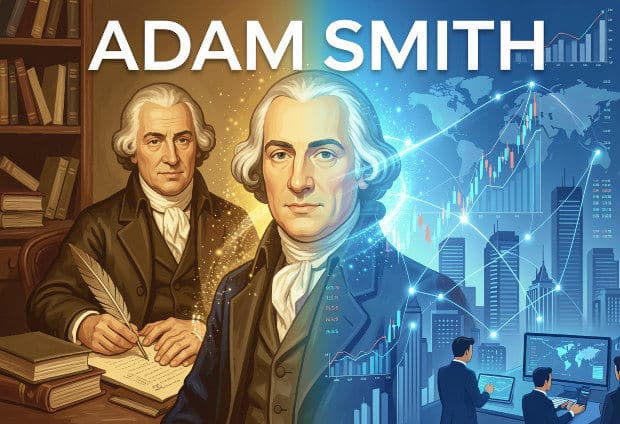
Adam Smith: The Father of Modern Economics — Biography, Books, Revolutionary Concepts, and Lasting Legacy
Adam Smith (1723-1790) is called the 'Father of Modern Economics,' but his true identity was that of a moral philosopher. His first and favorite book, The Theory of Moral Sentiments (1759), centered on the 'Impartial Spectator' -- an internal moral voice based on empathy and justice. Per Emma Rothschild's published research (Harvard UP 2001), Smith used the phrase 'Invisible Hand' only 3 times in all his writings, yet the entire world remembers him for that phrase alone. Per Gavin Kennedy (2008), Smith revised TMS 6 times until his death -- he never stopped working on his moral philosophy. This article covers Smith's biography, both books, key ideas, common misunderstandings, intellectual legacy, and relevance today -- all viewed through the lens of the Impartial Spectator that the world forgot.
1,013Read
E
Economics
April 1, 2026
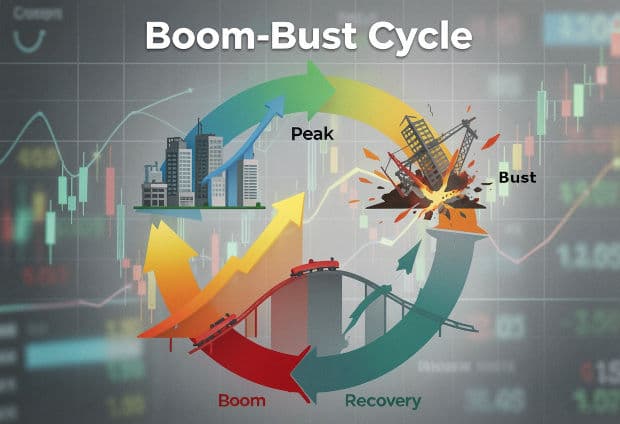
The Boom-Bust Cycle: Why Economies Rise and Fall — Definition, History, Mechanism, and How to Navigate It
Economies never move in a straight line — they always go up and down. A boom is a period of rapid growth: employment rises, incomes climb, businesses invest, optimism soars. A bust is the painful reversal: GDP shrinks, layoffs mount, businesses close, despair spreads. According to NBER data going back to 1854, the United States alone has experienced 34 business cycles. In 2006 everyone was buying houses, 2008 brought a global meltdown, 2020 delivered a COVID crash, 2021 sparked an unexpected boom, 2022 hit an inflation bust — and the pattern keeps repeating. Why it happens, how it works, what history's biggest cycles looked like, and how Bangladesh fits into this global rhythm — this in-depth guide covers it all.
1,063Read
E
Economics
April 1, 2026
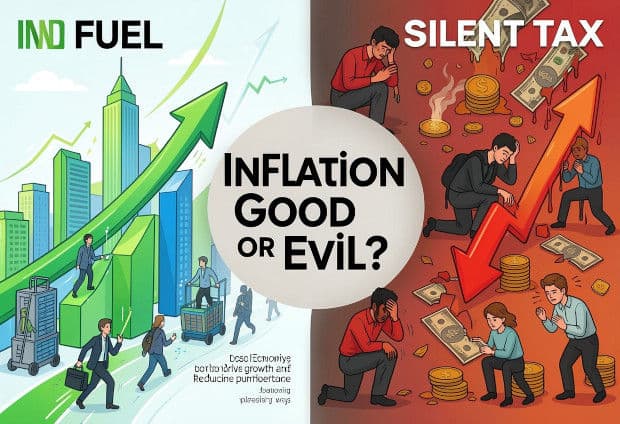
Inflation: Silent Tax or Economy's Necessary Fuel? — The Great Debate, Evidence, and Final Verdict
Is inflation a silent tax that steals your wealth without warning, or is it the necessary fuel that keeps a modern economy moving? Milton Friedman calls it theft. Paul Krugman calls it essential. This article puts both sides on trial — examining five prosecution arguments, five defense arguments, IMF data, Bangladesh's own economic history, and the positions of the world's greatest economists — to deliver a definitive verdict: moderate inflation (2-4%) is fuel, unmanaged inflation (8%+) is a tax, and the real problem is never inflation itself but the governance behind it.
970Read
E
Economics
March 31, 2026
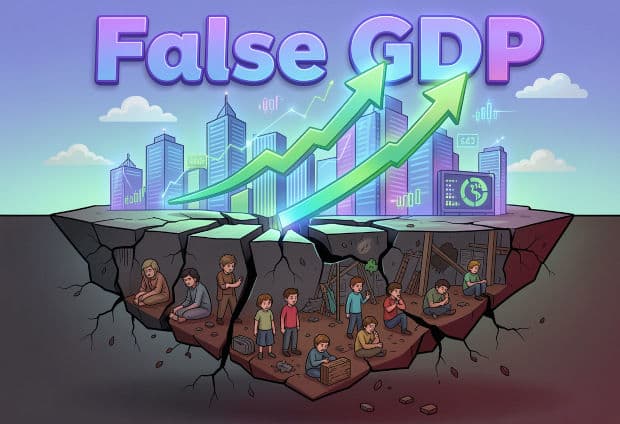
Why GDP Often Paints a False Picture of Development: The Truth Behind the Numbers
Gross Domestic Product (GDP) is the total monetary value of all goods and services produced within a country's borders over a specific period -- but does it truly measure how well a nation is doing? Equatorial Guinea has a GDP per capita of $7,000+ yet 77% of its people live in poverty. The United States has the world's largest economy but ranks only 15th in happiness. Bhutan has a tiny GDP but leads the world in Gross National Happiness. This article examines GDP's definition and formulas, its 10 fundamental limitations with global examples, paradoxes from countries like Qatar, Japan, Norway vs Nigeria, alternative metrics (HDI, GNH, Gini, GPI), the Beyond GDP movement, and why we need to look beyond the numbers to understand true development.
1,017Read
E
Economics
March 31, 2026
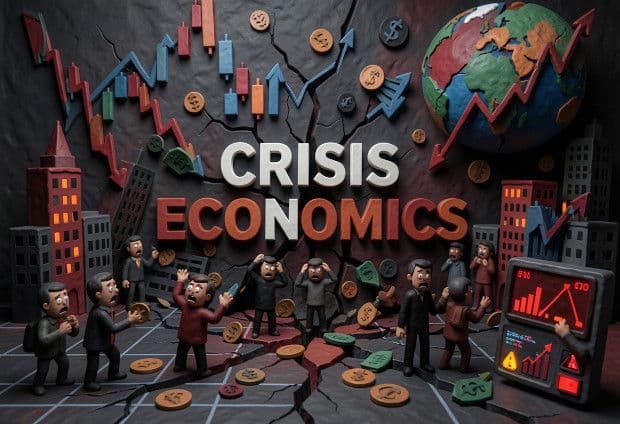
Crisis Economics: How Economic Disasters Happen, Unfold, and Get Resolved
Economic crises are not random accidents — they are built up slowly by excessive debt, asset bubbles, poor policy, and human greed, then triggered by a single spark. From the 1929 Great Depression to the 2008 global meltdown, from the 1997 Asian crisis to the COVID shock of 2020 and Sri Lanka's 2022 collapse — every crisis follows a recognizable pattern. This article breaks down what an economic crisis really is, why it happens, how governments and central banks fight back, what recovery looks like, and what you personally should do to protect yourself — all in plain English with real data, facts, and examples.
1,022Read
E
Economics
March 30, 2026
Economics 101: Why the World Runs on Scarcity
Economics is not just for economists — it governs every decision you make, from your morning coffee to national budgets. At the heart of it all is one word: scarcity. Resources are limited, but human wants are endless. This article covers the foundations of economics — scarcity, opportunity cost, demand and supply, Mankiw's ten principles, micro vs macro, GDP, inflation, unemployment, economic systems, and Bangladesh's economy — explained in plain English with real examples.
923Read
E
Economics
March 28, 2026
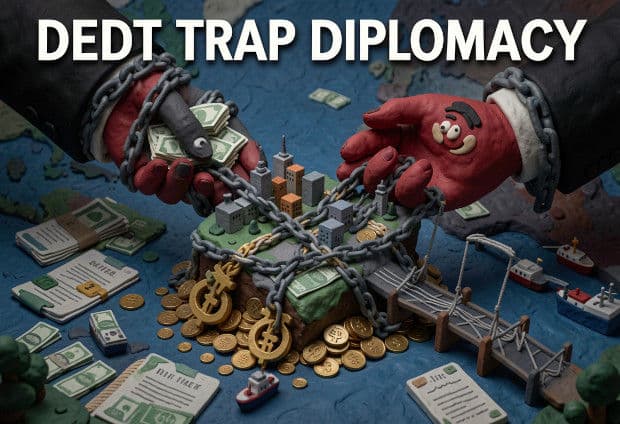
Debt Trap Diplomacy: The Strategy of Buying Countries With Loans
Debt Trap Diplomacy is the geopolitical strategy where a powerful country lends massive sums to a weaker nation for infrastructure — knowing full well it cannot repay. When repayment fails, the borrower surrenders strategic assets like ports, mines, or military bases. China's Belt and Road Initiative is the biggest modern example, spanning 150+ countries with over $1 trillion in commitments. But debt diplomacy is not China's invention alone — the IMF, colonial powers, and Western nations have all played versions of the same game. The real question is whether borrowing countries have the institutional strength to protect their sovereignty.
1,180Read
E
Economics
March 28, 2026
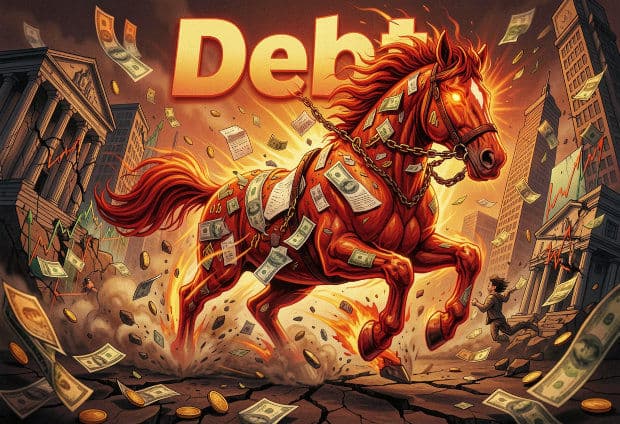
Debt: The Runaway Horse -- When Borrowing Becomes the Economy's Greatest Threat
According to the Institute of International Finance (IIF) 2025 report, global debt has surpassed $315 trillion — approximately 330% of global GDP. IMF Fiscal Monitor data shows government debt alone exceeds $100 trillion, the highest level since World War II. Over 60% of low-income countries are now in IMF debt distress classification. Every major economic crisis in modern history (1929 Great Depression, 1982 Latin American crisis, 1997 Asian crisis, 2008 global crisis, 2022 Sri Lanka collapse) was rooted in uncontrolled debt. This article uses data from IMF, World Bank, IIF, BIS, and the Federal Reserve to prove one core argument: the mad horse is already running, and the world is riding on its back.
643Read
B
Business
March 28, 2026
White Elephant: When Your Biggest Investment Becomes Your Biggest Burden
A white elephant is an asset, project, or investment whose maintenance and operating costs far exceed any benefit it provides — yet walking away from it feels impossible. The term traces back to ancient Southeast Asia, where kings gifted rare sacred elephants to courtiers as a form of disguised punishment. In modern business, government, and personal finance, white elephants quietly drain resources while pride, sunk costs, and political pressure keep them alive long past their usefulness.
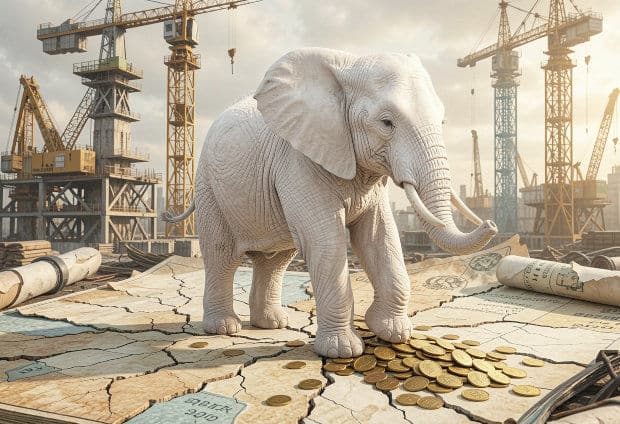
727Read
E
Economics
March 24, 2026
The War Economy: The System Where War Becomes the Most Profitable Business
War means destruction — that's what we're taught from childhood. But history tells a different story. For certain countries, certain industries, and certain people, war means enormous profit. This system is called the 'war economy.' From two world wars to today's Ukraine-Russia conflict, every major war has been driven by this invisible economic machinery. This article explores how the war economy was born, how it works, and how modern empires sustain themselves through it.
665Read
E
Economics
March 24, 2026
The Dollar Ecosystem: How a Piece of Paper Controls the Entire World
Whether you're buying oil, taking a loan, or booking a flight ticket anywhere in the world — there's one currency behind it all: the American dollar. But this dominance didn't happen overnight. Two world wars, a secret conference, the severing of gold ties, and an unwritten deal with oil — together they built the dollar's invisible empire. This article traces how a piece of paper became the world's most powerful financial weapon, and what the future may hold.
867Read
E
Economics
March 10, 2026
Forex Market Explained — The World's Largest Market, Exchange Rate, Bangladesh Bank's Role, History, and the Dollar Crisis Story
The Forex Market is where one currency is converted into another — the world's largest, with daily turnover of $7.5 trillion. Currency pairs (Major, Minor, Exotic) and Spot/Forward/Swap form its structure. Exchange rates are determined at three layers — supply-demand, interest/inflation differential, and PPP. Bangladesh Bank has been running a Crawling Peg regime since 2024. Five structural causes of the 2022-24 dollar crisis and five solution paths. History from Bretton Woods 1944 to 2026's de-dollarization.
872Read
E
Economics
March 9, 2026
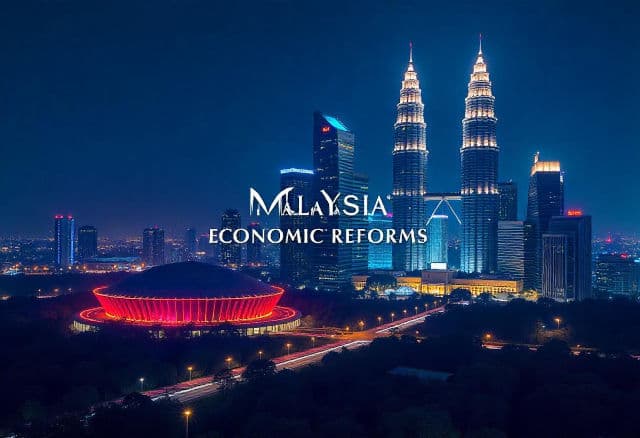
Malaysia's Economic Reforms: From Agrarian Roots to Industrial Powerhouse (Part 1)
Malaysia's economic journey from a colonial agrarian economy to a modern industrial powerhouse is one of the most remarkable transformation stories in Southeast Asia. This first part explores how the New Economic Policy (NEP) of 1971 tackled poverty and racial economic disparity, how FELDA resettled over 112,000 families, and how bold industrialization moves like the Proton car project reshaped the nation. It also covers Malaysia's controversial but effective response to the 1997 Asian Financial Crisis and the ambitious Vision 2020 framework that guided the country's development trajectory.
532Read
E
Economics
March 9, 2026
Monetary Policy: Definition, Types, Tools, and How It Works
Monetary policy refers to the actions taken by a central bank to manage the money supply and interest rates in an economy. Central banks like the Federal Reserve, the European Central Bank, and the Bank of England use tools such as adjusting the bank rate, conducting open market operations, and setting reserve requirements to influence inflation, employment, and economic growth. This article explains how monetary policy works, its main types including expansionary and contractionary approaches, the key tools central banks rely on, and how monetary policy differs from fiscal policy.
597Read
E
Economics
March 9, 2026
Fiscal Policy: Definition, Types, Tools, and How It Works
Fiscal policy is one of the most powerful tools a government has to influence the economy. Through strategic adjustments to taxation and public spending, governments can stimulate growth during recessions, cool down overheating economies, create jobs, and work toward price stability. This article explores the definition, origins, types, objectives, and real-world examples of fiscal policy, from the Great Depression to the COVID-19 pandemic, helping you understand how government budgets shape everyday economic life.
531Read
E
Economics
March 9, 2026
Social Business and the Paris 2024 Olympics: How It Changed the Game
The Paris 2024 Olympics pioneered the integration of social business principles into a major global event. The Games targeted a 50% reduction in carbon footprint compared to London 2012, used 100% renewable energy, and prioritized social enterprises in procurement. By engaging local communities, creating jobs for disadvantaged populations, and promoting sustainability, Paris 2024 demonstrated that profitability and social responsibility can coexist at the largest scale.

421Read
E
Economics
March 9, 2026
Social Business Model: What It Is, How It Works, Types, and Real-World Examples
A social business is a non-dividend company that reinvests all profits to further its social mission rather than distributing them to shareholders. Popularized by Nobel laureate Muhammad Yunus through Grameen Bank, the model operates on five core principles: purpose-driven, financially sustainable, non-dividend, social impact focused, and environmentally aware. Real-world examples include Grameen Danone Foods, BRAC, and Grameen Veolia Water.
575Read
E
Economics
March 9, 2026
The Three Zero Model: Zero Poverty, Zero Unemployment, Zero Carbon
The Three Zero Model, proposed by Nobel laureate Muhammad Yunus in his 2017 book, envisions a world with zero poverty, zero unemployment, and zero net carbon emissions. It challenges traditional capitalism by promoting social businesses that solve problems rather than maximize profit. Built on the success of Grameen Bank and microfinance, the model has gained global traction in countries like India, Brazil, Kenya, and France.

445Read
E
Economics
March 9, 2026
Microfinance: What It Is, How It Works, History, and Impact
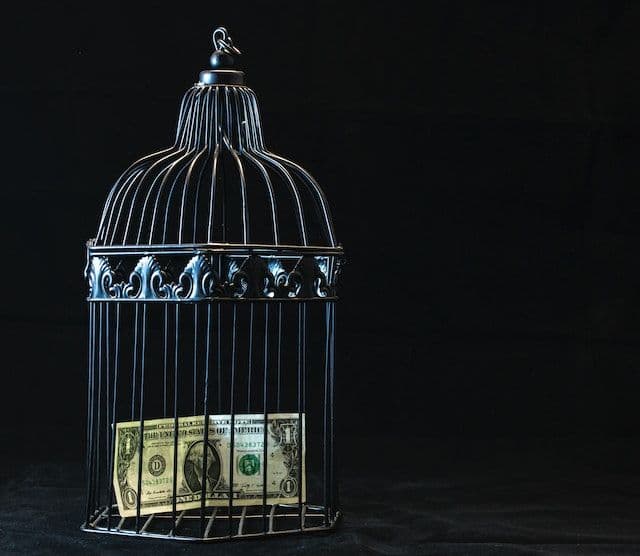
Microfinance is the provision of small-scale financial services to low-income individuals who lack access to traditional banking. Pioneered by Muhammad Yunus through Grameen Bank in Bangladesh in 1976, microfinance uses group lending, small loans, and flexible repayment to serve the unbanked. While it has transformed millions of lives through poverty reduction and women's empowerment, it faces criticisms over high interest rates and debt traps.
481Read
E
Economics
March 9, 2026
Recession: What It Is, Causes, Historical Examples, and How to Prepare
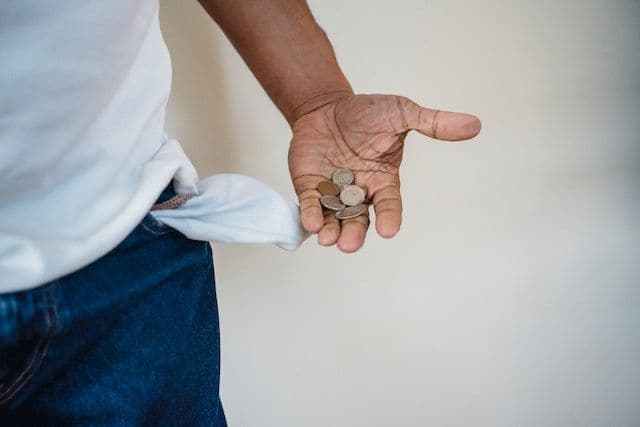
A recession is a significant decline in economic activity lasting two or more consecutive quarters of negative GDP growth. Recessions are part of the natural business cycle and are caused by financial crises, tight monetary policy, external shocks, and loss of consumer confidence. The Great Depression of 1929 remains the most severe example. Preparation through emergency savings, reduced debt, and wise investing helps individuals weather economic downturns.
493Read
E
Economics
March 9, 2026
Inflation: What It Is, Types, Causes, How It's Measured, and Why It Matters
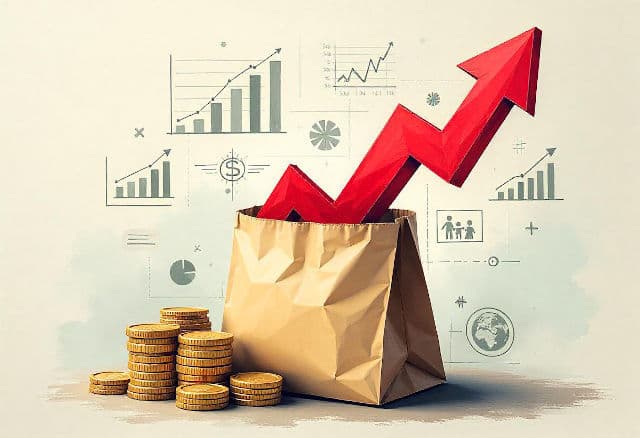
Inflation is the sustained increase in the general price level of goods and services over time, reducing the purchasing power of money. It is caused by excess money supply, government spending, credit expansion, and production declines. The five main types are demand-pull, cost-push, built-in, imported, and monetary inflation. Measured through CPI and WPI, moderate inflation (2-3%) is considered healthy for economic growth.
514Read
E
Economics
March 9, 2026
Budget: What It Is, Types, How Government Budgets Work, and Why It Matters
A budget is a financial plan that estimates income and expenditure over a specific period. Government budgets involve four stages: formulation, approval, implementation, and evaluation. Revenue comes from direct taxes, indirect taxes, and non-tax sources, while expenditure covers defense, education, healthcare, and infrastructure. Budgets can be balanced, surplus, or deficit depending on the relationship between income and spending.

405Read
E
Economics
March 9, 2026
Opportunity Cost: What It Is, Formula, Types, and Real-World Examples
Opportunity cost is the value of the next best alternative you forgo when making a decision. It is a fundamental economic concept that applies to individuals, businesses, and governments. Calculated as the return on the forgone option minus the return on the chosen option, opportunity cost helps evaluate trade-offs in investment, career, and everyday decisions.

524Read
E
Economics
March 9, 2026
Taxation: Definition, Purpose, Types, and Why It Matters
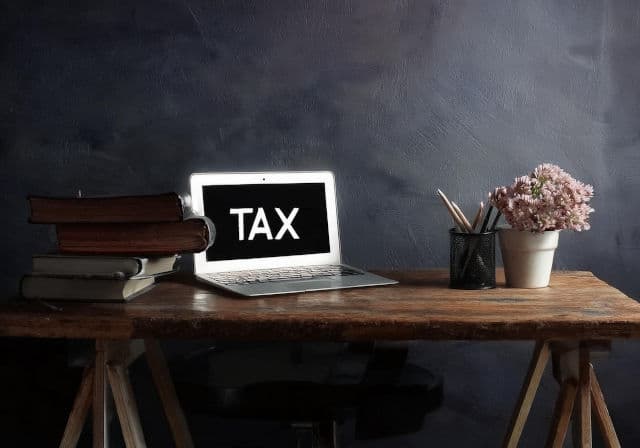
Taxation is the process by which governments collect money from individuals and businesses to fund public services and manage the economy. Taxes are broadly classified into direct taxes (income tax, corporate tax, property tax) that are paid directly to the government, and indirect taxes (VAT, customs duty, excise duty) that are levied on goods and services. Tax revenue funds infrastructure, education, defense, and social welfare programs.
469Read
E
Economics
March 9, 2026
Gross Domestic Product (GDP): What It Is, How It's Calculated, and Why It Matters
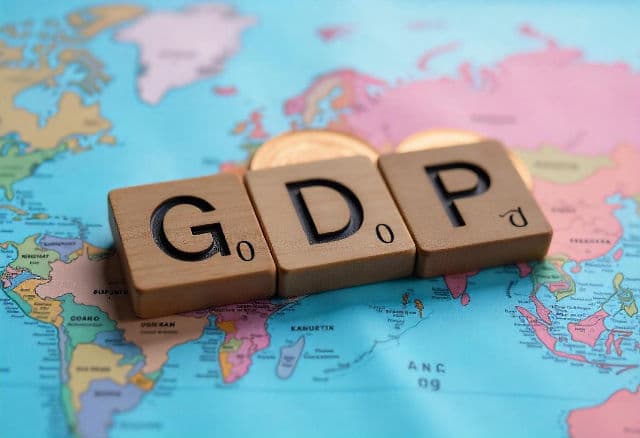
Gross Domestic Product (GDP) is the total monetary value of all finished goods and services produced within a country's borders during a specific period. It is the most widely used indicator of economic health, calculated using three methods: income, expenditure, and production. The GDP formula (C + I + G + (X - M)) captures consumption, investment, government spending, and net exports. Per capita GDP divides total output by population to measure average economic well-being.
579Read
E
Economics
March 9, 2026
Consumer Price Index (CPI): What It Is, How It's Calculated, and Why It Matters
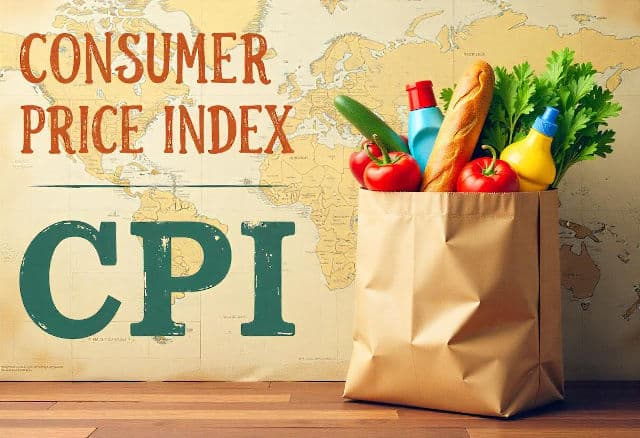
The Consumer Price Index (CPI) measures the average change in prices paid by consumers for a fixed basket of goods and services over time. It is the most widely used indicator of inflation. This guide explains what CPI is, walks through a step-by-step calculation example, covers the Laspeyres formula, and discusses the key limitations including substitution bias, quality changes, and regional variation.
506Read
E
Economics
March 9, 2026
Blue Economy: What It Is, Why It Matters, and Its Potential for Coastal Nations
The blue economy refers to the sustainable use of ocean and marine resources for economic growth, improved livelihoods, and ecosystem health. This guide covers what the blue economy is, its major sectors (fisheries, offshore energy, shipping, tourism, marine biotech), the specific potential for coastal nations like Bangladesh with its 710-kilometer coastline and Bay of Bengal resources, the key challenges including overfishing, pollution, and climate change, and strategies for sustainable ocean development.

370Read
E
Economics
March 9, 2026
Macroeconomics vs Microeconomics -- The Complete Guide to Understanding Both Sides of the Economy
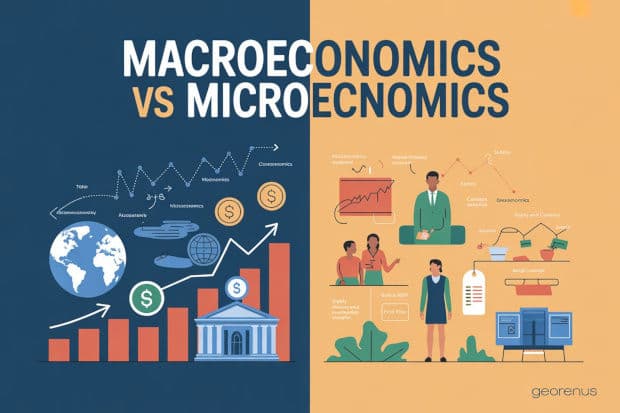
Macroeconomics studies the entire economy — GDP, inflation, unemployment, monetary policy. Microeconomics studies individual decisions — a single consumer, a single business, a single market. Macro is the big picture, Micro is the close-up. When rice prices rise at your local shop, that is micro. When the central bank raises interest rates affecting the entire country, that is macro. This guide covers definitions, key differences, how they connect, real examples, and why understanding both is essential.
707Read
E
Economics
March 9, 2026
Law of Supply: Definition, How It Works, Exceptions, and Real-World Examples
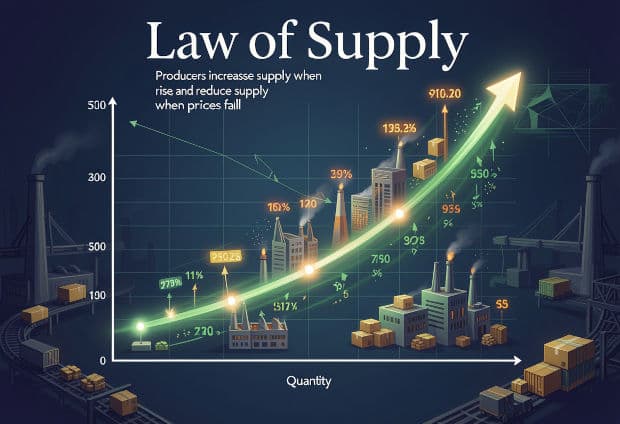
The law of supply states that as the price of a good increases, the quantity supplied also increases, and vice versa — holding all other factors constant. This guide explains the law of supply, its relationship to market pricing, the key exceptions (perishable goods, natural disasters, production capacity limits, labor market anomalies), and how businesses, investors, and governments use supply analysis for decision-making.
527Read
E
Economics
March 9, 2026
Law of Demand: Definition, Exceptions, Examples, and Why It Matters
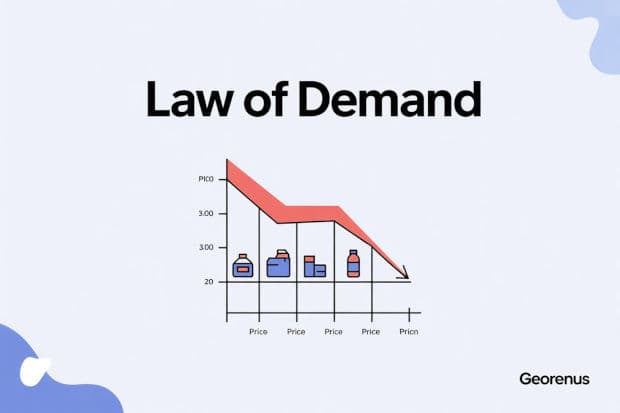
The law of demand states that when the price of a good rises, the quantity demanded falls — and vice versa — assuming all other factors remain constant. This guide covers the law of demand in detail, including its definition, the key exceptions (Giffen goods, Veblen goods, speculative markets, and more), real-world examples, and its practical importance for business pricing strategies and government policy making.
704Read
E
Economics
March 9, 2026
Macroeconomics: Definition, Goals, Importance, and How It Shapes the Economy
Macroeconomics is the branch of economics that studies the economy as a whole, examining aggregate phenomena like national output, inflation, unemployment, and economic growth. This guide covers the key goals of macroeconomics — from controlling inflation and maximizing GDP to creating employment — along with why it matters for policy making, business cycle analysis, national income measurement, and government decision-making.
506Read
E
Economics
March 9, 2026
Microeconomics: Definition, Scope, Importance, and Limitations Explained
Microeconomics is the branch of economics that studies the behavior and decision-making of individual consumers, firms, and industries. This guide covers the scope of microeconomics — from market structure analysis and consumer behavior to price determination and production theory — along with its practical importance in shaping economic policy, business strategy, and resource allocation, and the key limitations you should be aware of.
813Read
E
Economics
February 20, 2026
Economics: What It Is, Why It Matters, and How It Shapes Our Lives
Every single day, you make economic decisions — even if you do not realize it. When you choose to spend your money on lunch instead of saving it, that is an economic decision. When a business decides how many workers to hire, that is economics. When the government sets the interest rate or builds a road, that is economics too. At its core, economics is the study of how people, businesses, and governments produce, trade, and use goods and services — and how money flows between all of them. It is essentially the science of managing limited resources to meet unlimited human needs and wants. Understanding economics helps you understand why prices go up, why some countries are rich and others are poor, and why your country is growing or struggling. And for Bangladesh specifically, the economic story of the last 50 years is genuinely one of the most remarkable in the entire world.
979Read
About Economics
Economics explains how societies allocate scarce resources. From microeconomic principles of supply and demand to macroeconomic policy decisions that affect entire nations, understanding economics empowers you to make better financial decisions and critically evaluate economic narratives. Our articles challenge conventional thinking and explore alternative perspectives.
economicsmicroeconomicsmacroeconomicsGDPinflationmonetary policyfiscal policysupply demand