Gross Domestic Product (GDP): What It Is, How It's Calculated, and Why It Matters
G
GeoRenus Editorial Team
664 views
GeoRenus Editorial Team
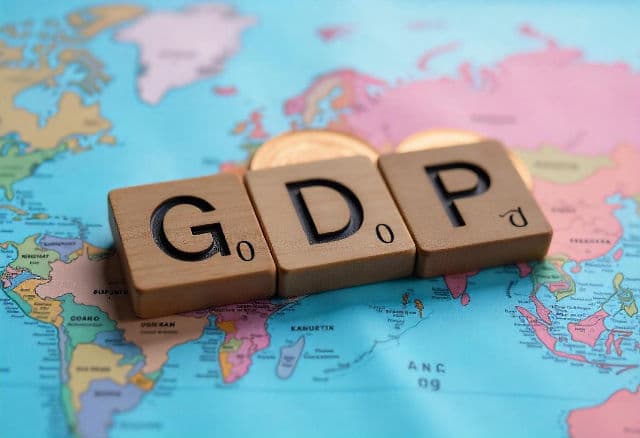
Gross Domestic Product (GDP) is the total monetary value of all finished goods and services produced within a country's borders during a specific period. It is the most widely used indicator of economic health, calculated using three methods: income, expenditure, and production. The GDP formula (C + I + G + (X - M)) captures consumption, investment, government spending, and net exports. Per capita GDP divides total output by population to measure average economic well-being.
Gross Domestic Product, or GDP, is the total monetary value of all finished goods and services produced within a country's borders during a specific time period. Think of it as a giant scoreboard that tells you how well a country's economy is performing.
The concept of GDP was first introduced in the 18th century but gained widespread use after Simon Kuznets developed the modern framework in 1934 for the U.S. Congress. Today, GDP remains the most widely used indicator of a nation's economic health.
"GDP is not a perfect measure, but it remains the best single measure of a society's economic well-being." — Paul Samuelson, Nobel Laureate in Economics
Let's say Bangladesh produces 500 shirts at 55 taka each and 300 kg of rice at 25 taka per kg in one year. The GDP calculation would be:
GDP = (500 x 55) + (300 x 25) = 27,500 + 7,500 = 35,000 taka
Now suppose that same year, Bangladesh also imported 200 shirts at 70 taka each and 150 kg of rice at 35 taka per kg. The net GDP (domestic production minus imports) would be:
Net GDP = 35,000 - {(200 x 70) + (150 x 35)} = 35,000 - 19,250 = 15,750 taka
This tells us that only domestic production counts toward GDP. Goods produced by foreign companies within the country's borders are included, but imports are subtracted.
The most common way to express GDP uses the expenditure approach:
Where:
In most economies, consumption (C) makes up the largest share of GDP. For example, in the United States, consumer spending accounts for roughly 70% of GDP.
There are three main approaches to measuring GDP, and all three should theoretically give the same result:
This method adds up all the income earned by individuals and businesses in producing goods and services. The formula is:
GDP = Wages + Rent + Interest + Profits + Depreciation + Net Foreign Income
For instance, if workers earned $5 trillion in wages, landlords collected $1 trillion in rent, and businesses made $3 trillion in profits, those figures all feed into the GDP calculation.
This is the most widely used approach. It adds up all spending on final goods and services using the formula GDP = C + I + G + (X - M) discussed above. It tracks where the money goes rather than where it comes from.
This method calculates the value added at each stage of production. It sums up the total output of every sector — agriculture, industry, and services — and subtracts the cost of intermediate inputs.
GDP = Agricultural Output + Industrial Output + Services Output - Intermediate Consumption
The production method is particularly useful for understanding which sectors drive economic growth. In Bangladesh, the services sector contributes over 50% of GDP, followed by industry and agriculture.
GDP growth refers to the percentage change in GDP from one period to another. When GDP grows, it generally means the economy is producing more goods and services, businesses are hiring, and living standards are improving.
GDP growth is typically reported quarterly or annually. A country experiencing two consecutive quarters of negative GDP growth is technically in a recession.
For example, Bangladesh recorded GDP growth of 7.1% in FY2022, making it one of the fastest-growing economies in South Asia. However, growth moderated to around 5.8% in FY2023 due to global economic headwinds.
GDP growth comes from contributions across various economic sectors. New sectors are added as economies evolve:
"The wealth of nations depends not on the abundance of their resources, but on the productivity with which they use them." — Adam Smith
Per capita GDP divides a country's total GDP by its population. It provides a rough measure of average economic output per person and is widely used to compare living standards across countries.
Per Capita GDP = Total GDP / Total Population
For example, if a country's GDP is $1,500 and it has 25 people, the per capita GDP is $1,500 / 25 = $60.
Per capita GDP helps identify whether economic growth is actually improving individual well-being. A country can have a rising GDP but falling per capita GDP if population growth outpaces economic growth.
Several fundamental factors determine a country's GDP level and growth trajectory:
Countries rich in natural resources — oil, minerals, arable land — often have higher GDP. Saudi Arabia's GDP, for example, is heavily driven by petroleum exports, which account for about 40% of its GDP.
A skilled, productive workforce is crucial. Countries like South Korea and Japan have leveraged human capital to build strong economies despite limited natural resources.
Machinery, factories, and infrastructure investments boost productivity. China's massive capital investment over the past four decades helped it become the world's second-largest economy by GDP.
Technological advancement drives productivity gains. The United States maintains its position as the world's largest economy partly due to its leadership in technology and innovation, with tech companies contributing significantly to GDP growth.
While GDP is incredibly useful, it has well-known limitations:
"GDP measures everything except that which makes life worthwhile." — Robert F. Kennedy
GDP remains the most widely used measure of economic performance worldwide. It helps governments make policy decisions, investors assess market potential, and citizens understand their country's economic trajectory. While no single number can capture the full complexity of an economy, GDP provides a vital starting point for economic analysis.
Understanding GDP — how it's calculated, what drives it, and where it falls short — is essential for anyone interested in economics, finance, or public policy.
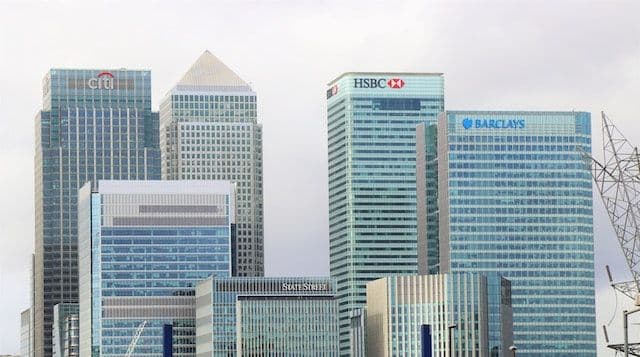
Most people use banks every single day — depositing salaries, withdrawing cash, transferring money, paying bills — without ever really thinking about how the whole system actually works. A bank is a licensed financial institution that accepts deposits from the public and uses those deposits to provide loans to individuals and businesses. Everything a bank does — from accepting your savings to issuing credit cards to printing cheques — falls under the broad category of banking. But banks are not just convenient places to store your money. They are the central nervous system of any economy — the institutions that keep money flowing productively through the system, connecting people who have surplus funds with people and businesses that need capital. And in Bangladesh, where Bangladesh Bank serves as the central authority overseeing the entire financial system, understanding how banking works is genuinely useful knowledge for anyone managing their personal finances, running a business, or simply trying to make smarter decisions with their money.