All Articles
331 articles
B
Business Models
July 19, 2026
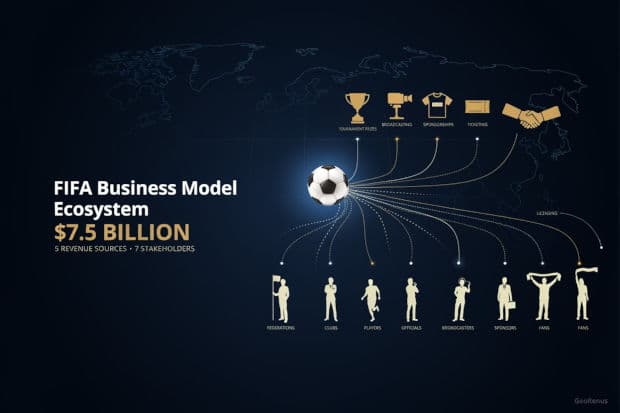
How FIFA Runs Its Business: The $7.5 Billion Ecosystem, 5 Revenue Sources, 7 Stakeholders
FIFA is the monopoly regulator of world football. Founded in Paris in 1904 by seven European nations. Headquartered in Zurich. Legally a Swiss non-profit association. 211 member federations, more than the UN. Six confederations. Revenue of $7.5 billion in the 2019-2022 cycle, projected $11 billion for 2023-2026. Five revenue sources: broadcasting 55%, sponsorship 20%, ticketing 15%, licensing 5%, other 5%. Seven stakeholders: federations, confederations, players/clubs, sponsors, broadcasters, host countries, fans. Governance: Congress (211 votes), Council (37 members), President Infantino. The 2015 $2 billion bribery scandal and Infantino's reforms. FIFA vs UEFA vs clubs, the modern conflict. Bangladesh's BFF receives $1.5-2M annually through the FIFA Forward Programme.
683Read
E
Economics
June 10, 2026
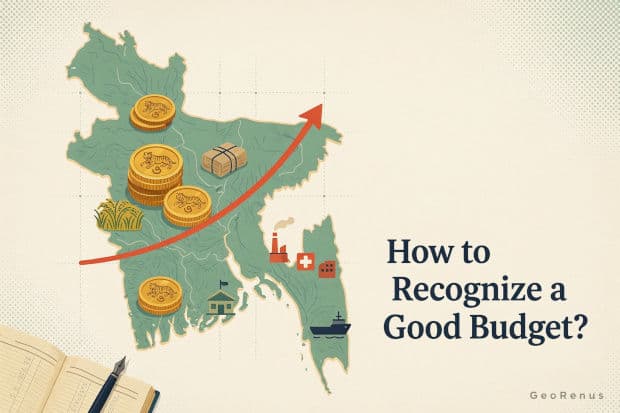
How to Recognize a Good Budget?
The size of a budget is not the right measure of a good budget. The real measures are five. Where is income coming from (Tax-to-GDP)? Is spending building the future or servicing debt? How is the deficit being financed? Are the government and central bank aligned? And who gets the bulk of subsidies? FY27 fails on all five. Compared to Singapore, Norway, Vietnam, and South Korea, Bangladesh lags far behind. Budget discipline, compounded over 30 years, changes the fate of a generation.
1,043Read
E
Economics
May 11, 2026
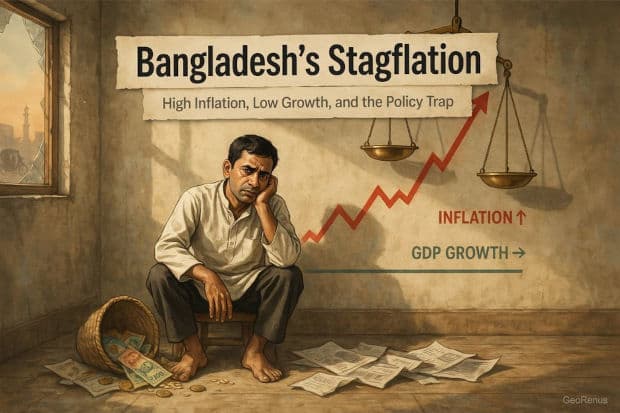
Bangladesh's Stagflation -- High Inflation, Low Growth, and the Policy Trap
Bangladesh entered a rare and dangerous economic state during 2022-2026 — high inflation (10%+), low GDP growth and taka depreciation all together. This condition is called stagflation — the same condition that brought the US economy down in the 1970s. Normal monetary policy does not work against it, because raising rates to tame inflation further chokes growth. This article explains where Bangladesh's stagflation came from, why it is so dangerous, and how a country can escape it.
1,024Read
E
Economics
May 8, 2026
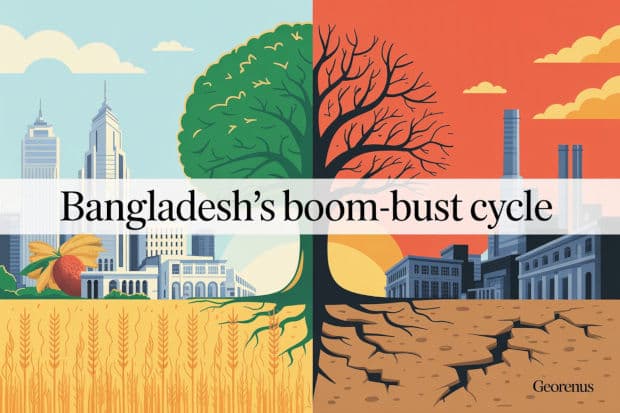
Bangladesh's Boom-Bust Cycle -- How the Seeds of Collapse Were Hidden Within the Rise
Bangladesh's 14-year economic rise from 2009 to 2022 carried the seeds of its own collapse, which broke into the open during the 2022-2024 crisis. GDP was growing fast, mega-projects were under construction, RMG exports touched USD 42 billion — but beneath the surface lay deep debt dependence, banking capture and reserve depletion. This article uses the Boom-Bust Cycle framework to explain how the crisis arrived, which signals were missed, and what the path forward looks like.
1,190Read
B
Business
April 28, 2026
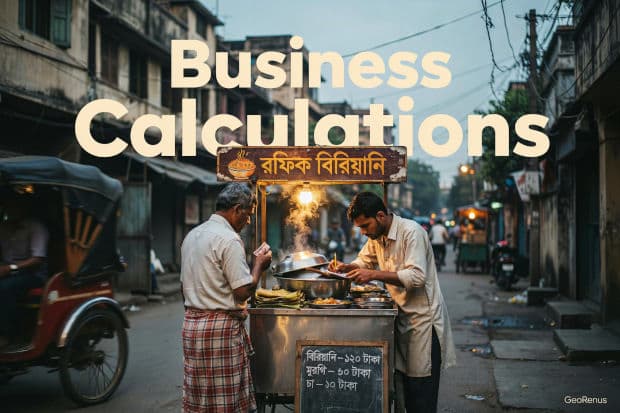
Business Calculations Part 1 -- Rafiq's Biryani: From Street Cart to First Shop
Rafiq has $500 and a dream: his own biryani business. This is Part 1 of a series that follows Rafiq's journey from street cart to multinational company, teaching every business calculation you need at exactly the moment you need it. In Part 1 (Basic Level), Rafiq starts selling from a cart and learns Revenue, Fixed vs Variable Costs, Gross and Net Profit, Profit Margin, ROI, Break-even Point, and Margin of Safety — all through his real numbers, not textbook formulas.
1,071Read
E
Economics
April 18, 2026
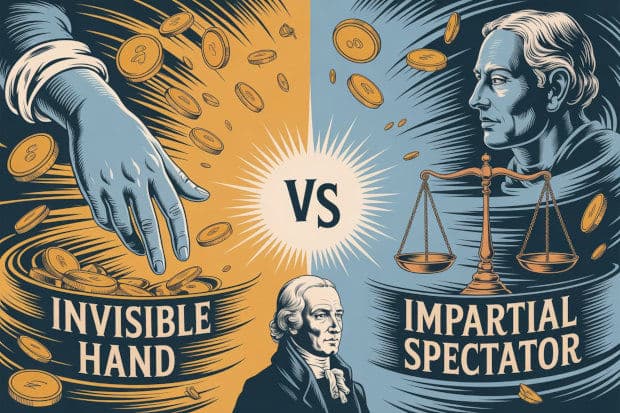
Invisible Hand vs Impartial Spectator -- Why Capitalism Adopted Adam Smith's Minor Metaphor and Abandoned His Central Philosophy
Adam Smith is celebrated as the 'Father of Capitalism' for his 'Invisible Hand' concept -- the idea that self-interest automatically benefits society. But a startling fact emerges from his actual writings: Smith used the phrase 'Invisible Hand' only 3 times in his entire body of work (once each in The Theory of Moral Sentiments, The Wealth of Nations, and History of Astronomy -- per Emma Rothschild, Harvard University Press, 2001). Meanwhile, his concept of the 'Impartial Spectator' -- an internal moral conscience based on empathy, justice, and social responsibility -- is the central theme of The Theory of Moral Sentiments (1759), mentioned hundreds of times. Smith himself considered TMS his greatest work, not Wealth of Nations. So why did capitalism adopt the minor metaphor and abandon the central philosophy? This article traces how the Industrial Revolution, the 'Adam Smith Problem,' the Chicago School, Cold War politics, and the mathematization of economics collectively cherry-picked one idea and discarded the rest.
1,212Read
B
Business
April 14, 2026
Working Capital -- The Daily Oxygen Your Business Cannot Survive Without
Working Capital is the difference between a business's Current Assets (cash, accounts receivable, inventory) and Current Liabilities (accounts payable, short-term debt, accrued expenses). The formula is simple: Working Capital = Current Assets - Current Liabilities. Positive working capital means the business can meet its short-term obligations. Negative working capital is usually a danger sign -- unless you are Amazon, which deliberately operates with a Cash Conversion Cycle of -30 days by collecting from customers instantly while paying suppliers in 60-90 days. Deloitte's 2025 report found approximately $1.8 trillion in working capital is trapped in the world's top 1000 companies. This guide covers definitions, formulas (Current Ratio, Quick Ratio, Cash Conversion Cycle), all components explained, three real-world examples, industry benchmarks, 10 management strategies, warning signs, and practical optimization techniques.
155Read
B
Business
April 14, 2026
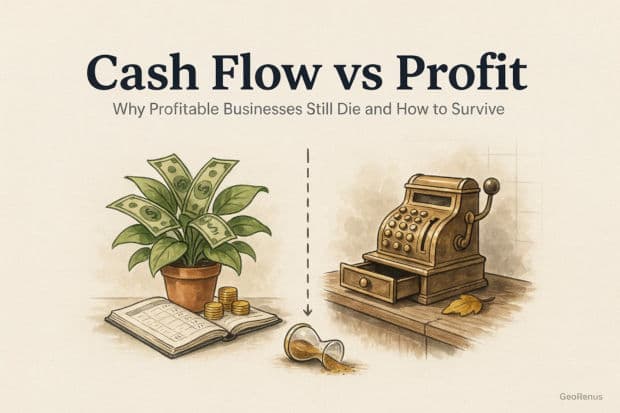
Cash Flow vs Profit -- Why Profitable Businesses Still Die and How to Survive
Profit is the difference between revenue and expenses on paper -- it appears on your income statement. Cash flow is the actual money moving in and out of your business -- it appears in your bank account. A business can be profitable on paper yet die from a cash crisis. According to US Bank (2025), 82% of business failures are caused by cash flow problems, not lack of profit. Toys R Us had $11.5 billion in revenue and showed profit, yet filed for bankruptcy because $5 billion in debt payments drained all cash. This guide explains the critical difference between profit and cash flow, why profitable businesses fail, how to read a cash flow statement, real-world case studies (Toys R Us, WeWork, Evergrande), and 10 strategies to improve your cash flow.
390Read
B
Business
April 14, 2026
Small Business vs Big Business -- The Key Differences and Which One Is Right for You
A small business typically has fewer than 500 employees (SBA definition), limited capital, and operates in a local or niche market. A large business or corporation has hundreds to thousands of employees, massive capital, and operates nationally or internationally. According to the SBA (2025), 99.9% of all US businesses are small businesses, providing 46% of total employment. Meanwhile, Fortune 500 companies generate approximately two-thirds of US GDP. This guide examines the definitions, 10 key differences across capital, decision-making, risk, innovation, customer relationships, and more, along with advantages and disadvantages of each, real-world examples from Apple's garage to Amazon's empire, data-driven comparisons, and a practical roadmap for growing from small to big.
666Read
F
Finance
April 13, 2026
Financial Leverage: The Final Verdict, Expert Opinions, and Practical Calculator (Part 2)
This is Part 2 of the Financial Leverage debate. Part 1 presented both sides: the case FOR leverage (Soros made $1B in a day, real estate returns of 400%, Apple's $100B debt strategy) and the case AGAINST (Archegos lost $20B in 48 hours, LTCM's Nobel laureates lost $4.6B, the 2008 crisis was entirely a leverage crisis). This concluding part covers what legendary investors actually think (Buffett's hidden $170B insurance float leverage, Soros, Dalio, Munger), a practical Leverage Calculator to assess your own risk, the 2025-2026 global leverage landscape (crypto disasters, AI CapEx debt, high interest rates), practical do's and don'ts, and the Final Verdict: leverage is neither multiplier nor trap -- it is fire. In a kitchen it sustains life, in a forest it destroys.

760Read
B
Business
April 13, 2026
Value Proposition -- Why It Is the Single Most Important Thing in Your Business
A Value Proposition is the clear, concise, and credible answer to why a customer should choose your product over any alternative. It explains what problem you solve, how life improves, and why you are different from competitors. CB Insights 2025 data shows 35% of startups fail due to no market need -- a weak value proposition. Apple sells an ecosystem, not phones. Uber sells convenience, not rides. Canva sells empowerment, not software. This guide covers definitions, 5 essential components, the Value Proposition Canvas framework, case studies from Apple to Stripe, common mistakes, testing methods, and a step-by-step guide to crafting a VP that converts.
1,138Read
B
Business
April 11, 2026
Gross Merchandise Value (GMV) -- The Most Important Metric in E-Commerce You Might Be Misunderstanding
Gross Merchandise Value (GMV) is the total dollar value of all merchandise sold through a marketplace or e-commerce platform over a given period -- before deducting discounts, returns, cancellations, or platform fees. For example, if 1,000 items sell at $50 each on your platform, GMV is $50,000 -- but that is NOT your revenue. Your actual revenue depends on your take rate (the percentage you keep as commission). GMV is the primary metric used by marketplaces like Amazon, Alibaba, and Airbnb, ride-sharing platforms like Uber, and food delivery services like DoorDash. This guide covers definitions, formulas, the critical difference between GMV and Revenue, real-world examples, top company GMV comparisons, limitations, and 10 strategies to grow GMV.
1,343Read
B
Business
April 11, 2026
Fixed Cost vs Variable Cost -- The Complete Guide to Understanding Your Business Expenses
Fixed costs are expenses that remain constant regardless of how much you produce or sell -- such as rent, salaries, and insurance. Variable costs are expenses that rise or fall in direct proportion to production or sales volume -- such as raw materials, packaging, and shipping. Understanding the distinction between these two cost types is fundamental to pricing strategy, break-even analysis, profit planning, and business scalability. This guide covers definitions, formulas, three detailed real-world examples (restaurant, e-commerce, SaaS), industry cost structure benchmarks, operating leverage, and strategies for managing both cost types effectively.
1,084Read
B
Business
April 10, 2026
Business Networking — How the World's Most Successful Entrepreneurs Build Empires Through Relationships
Networking is one of the most powerful tools in business. The PayPal Mafia created a trillion-dollar network from a single team. This comprehensive guide covers 10 proven networking strategies, step-by-step process, real-world case studies from Airbnb to Y Combinator, data-driven insights, and practical tips for both extroverts and introverts.
1,048Read
B
Business
April 10, 2026
What Should You Read for Business — The Complete Knowledge Blueprint for Entrepreneurs
Warren Buffett reads 500 pages daily, Bill Gates reads 50 books a year — the world's most successful entrepreneurs are relentless readers. This comprehensive guide covers every knowledge area you need for business success: accounting, marketing, operations, law, leadership, strategy, and personal development — with curated book lists, data-backed insights, and a stage-by-stage reading blueprint.
1,006Read
B
Banking
April 9, 2026
Basel III — How the World Rebuilt Banking Safety After the Greatest Financial Crisis
After the devastating 2008 financial crisis, Basel III emerged as the most comprehensive banking regulation framework in history. This article explores the complete journey from Basel I through Basel III, explaining capital requirements, liquidity ratios, leverage limits, and how they work in practice — with data tables, real-world examples, and analysis of global implementation including developing economies.
751Read
B
Business
April 9, 2026
Business Time Management — How Successful Entrepreneurs Master Their Hours
Time is the most valuable asset in business. From Elon Musk to Jeff Bezos — how do successful entrepreneurs manage their hours? This comprehensive guide covers 7 proven methods including the Eisenhower Matrix, Pomodoro Technique, and Time Blocking, backed by data, real-world case studies, and actionable tips.
878Read
B
Business
April 9, 2026
How to Think About Risk in Business — Perspectives from Philosophers, Investors, and Entrepreneurs
Is risk really what you think it is? Five world-class thinkers — Nassim Taleb, Warren Buffett, Elon Musk, Daniel Kahneman, and Peter Thiel — each see risk from a radically different angle. Taleb says what you cannot see is the real danger (Black Swan). Buffett says not understanding is the risk (Circle of Competence). Musk says inaction is the biggest risk (First Principles). Kahneman says your brain's biases are the real enemy. Thiel says thinking like everyone else is the path to destruction. Together, these five perspectives form a complete risk-thinking framework for investors and entrepreneurs.
900Read
B
Business
April 7, 2026
Business Warfare: Sun Tzu's Logic of Market Control — The Philosophy That Made Google, Amazon, and Apple Unbeatable
Sun Tzu's 2,500-year-old military philosophy from The Art of War — applied to modern business. How Google (92% search, $307B revenue), Amazon (60%+ e-commerce searches, 175+ fulfillment centers), Apple (92% retention rate), and bKash (210M+ accounts) use a 5-step control framework — terrain, intelligence, supply, terms, and lock-in — to make competition irrelevant rather than winning it.
731Read
B
Business
April 7, 2026
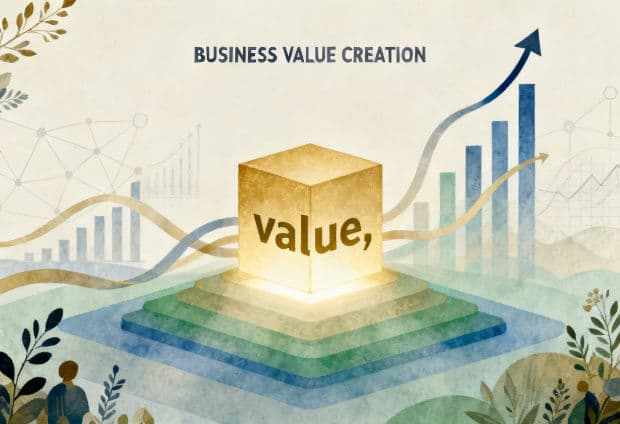
How Does a Business Create Value? — The Complete Guide to Value Creation
In 2014, Facebook bought WhatsApp — a company with just 55 employees — for $19 billion. Meanwhile, a corner store with five workers might be worth a few thousand dollars at best. What explains that staggering difference? One answer: Value Creation. The more genuine value a business creates for people, the more it survives, grows, and becomes worth something. This guide covers the seven methods of value creation, Michael Porter's Value Chain, the Value Proposition Canvas, the critical balance between value creation and value capture, and a real look at where Bangladesh stands — a complete explanation of the most fundamental concept in all of business.
687Read
B
Business
April 6, 2026
18 Common Business Mistakes That Kill Startups (And How to Avoid Them)
Business failure is not random bad luck — it follows predictable patterns. CB Insights data shows 42% of startups fail from no market need, 29% from running out of cash, and 23% from the wrong team. This guide analyzes the 18 most common business mistakes across 6 categories — Research, Product/Market, Financial, People, Strategic, and Mindset — with real-world examples from global companies and Bangladesh's own business landscape. Every mistake comes with a clear, actionable fix.
592Read
B
Business
April 5, 2026
Revenue vs Profit: Does More Sales Always Mean More Money? — The Complete Guide
A Bangladesh garments factory sells BDT 10 crore worth of goods — but ends the year with just BDT 77 lakh in net profit. Amazon's annual revenue is $575 billion, yet its net margin is only 4%. WeWork had $1.8 billion in revenue and still lost $1.6 billion. Revenue and profit are two terms many people use interchangeably — but failing to understand the difference is one of the biggest reasons businesses fail. This guide covers a step-by-step income statement analysis, profit margin calculations, real-world examples from global companies, and everything you need to know to understand revenue vs profit in plain, practical English.
536Read
B
Business
April 5, 2026
Entrepreneur vs Business Owner: Are They the Same Thing? — A Complete Analysis
Everyone with an Instagram shop calls themselves an entrepreneur these days — but Elon Musk and your neighborhood grocery store owner are fundamentally different kinds of people, even if both run businesses. This article breaks down the real differences between entrepreneurs and business owners across 15+ dimensions, using global and Bangladesh examples, a self-assessment quiz, and honest pros and cons. Both roles are valuable — you just need to know which one you actually are.
495Read
B
Business
April 5, 2026
Business vs Job: What's the Real Difference and Which One Is Right for YOU? — A Self-Evaluation Guide
Should you start a business or stick with a job? Your parents say get a stable government job, your college friend says launch a startup, and social media is full of '22-year-old millionaire entrepreneur' stories. But the honest truth is — both paths are hard, and the right answer depends entirely on your personality, risk tolerance, financial situation, and life goals. This guide walks you through a 15-point comparison, a 10-question self-assessment quiz, age-based advice, and a final decision framework so you can find your own right path — not someone else's.
502Read
G
GeoPolitics
April 4, 2026
Geopolitics Terminologies: The Essential Glossary for Understanding World Power Politics
You hear 'sanctions,' 'proxy war,' and 'hegemony' every day on CNN, BBC, and Al Jazeera — but without knowing what they mean, the news is just noise. This essential glossary covers 50+ critical geopolitical terms organized by category: from Hegemony and Soft Power to Hybrid Warfare, Chokepoints, Debt Trap Diplomacy, and the NPT. Each term comes with a clear definition and a real-world example. Whether you are a student, professional, or curious reader, this is your decoder ring for understanding world power politics.
1,035Read
G
GeoPolitics
April 4, 2026
What Is Geopolitics: The Invisible Power Game Behind World Politics — A Complete Guide
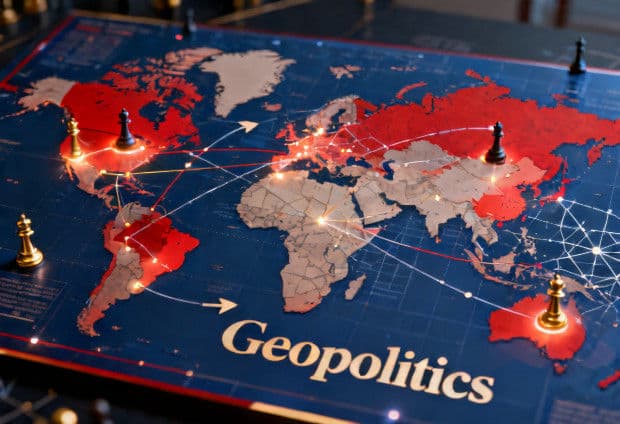
Why does fuel get expensive in Bangladesh when Russia invades Ukraine — 8,000 km away? Why does the taka lose value when the US Federal Reserve raises interest rates? Why is China building a port in Sri Lanka — and why does India care so deeply? The answer to all of these is one word: Geopolitics. This invisible game of geography, resources, and power shapes your rice price, your job security, and your currency's value every single day. This guide breaks down geopolitics from scratch — its definition, core theories, major players, current hotspots, and Bangladesh's own geopolitical position — in plain, conversational English.
964Read
G
GeoPolitics
April 4, 2026
Geopolitical Doctrines: The Grand Strategies That Shaped the World Power Map
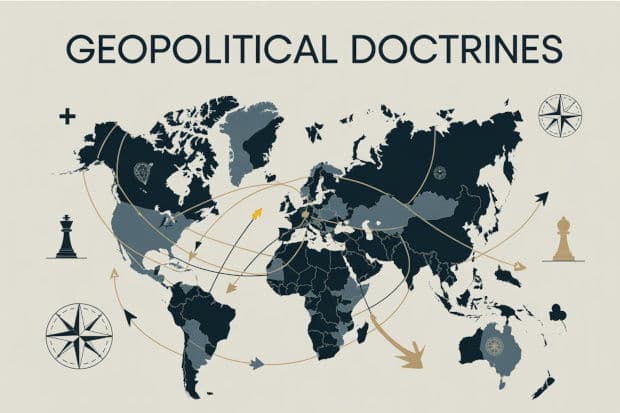
From the Monroe Doctrine to the Bush Doctrine, every major geopolitical doctrine is essentially a superpower's formal declaration of its world view. In 1823, Monroe told Europe to keep its hands off the Americas. In 1947, Truman declared the world must be saved from communism. Reagan said containment was not enough — roll it back. Bush said strike first, before the threat materializes. This article breaks down history's most influential geopolitical doctrines — their context, core arguments, real-world consequences, and relevance today — in plain, conversational English.
983Read
B
Business Models
April 3, 2026
10 Real-World Examples to Understand How Business Models Actually Work
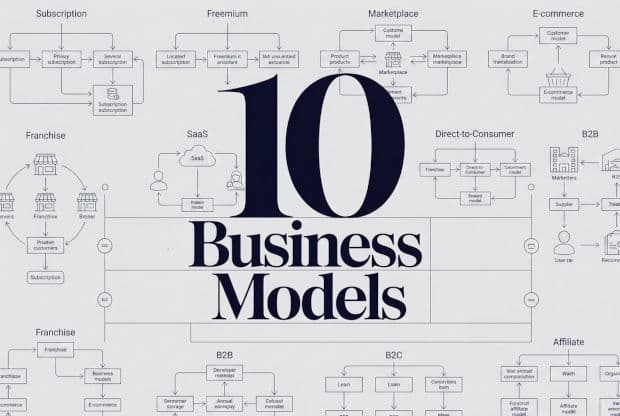
Google gives you free search. Facebook costs you nothing. Uber owns zero cars. Yet all three are billion-dollar companies. How? The answer is hidden inside their business models. This article breaks down the exact money-making mechanisms of 10 world-class companies — Google, Amazon, Apple, Netflix, Uber, bKash, IKEA, Gillette, Airbnb, and Tesla — using real numbers and plain language. Each company teaches a different lesson: from advertising and subscription models to razor-and-blade and platform plays. If you want to truly understand how businesses make money, these 10 case studies are essential reading.
645Read
B
Business
April 3, 2026
How Profit Is Made: The Journey from Revenue to the Bottom Line — A Complete Guide
Most people assume more sales automatically mean more profit — that is one of the biggest misconceptions in business. Amazon generated $575 billion in revenue in 2023, yet its net profit margin was only around 4%. Revenue is where the journey starts; profit is what survives the journey. Between the two lie costs, interest, taxes, and hard business realities. This guide walks you through every step — from Gross Profit and Operating Profit to Net Profit, how to read an Income Statement, how to calculate your Break-Even Point, and what profit really looks like across different industries in Bangladesh.
436Read
B
Business Models
April 2, 2026
Business Model vs Business Plan: Are They the Same Thing? — Differences, Relationship, and Which Comes First
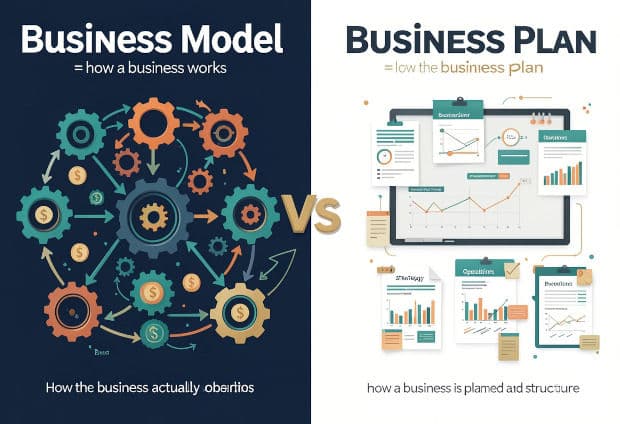
Most entrepreneurs use 'business model' and 'business plan' interchangeably — that is a costly mistake. When an investor asks for your business plan, they often really want to understand your business model. These are two completely different tools built for different purposes. A Business Model is the logic of how you make money — the WHY and HOW of value creation and capture. A Business Plan is a detailed execution roadmap — numbers, timelines, strategies, projections. Model = the GPS destination. Plan = turn-by-turn navigation. This comprehensive guide explains the differences, their relationship, when you need each one, and what this means for entrepreneurs in the Bangladesh context.
582Read
B
Business Models
April 2, 2026
What Is a Business Model? How Businesses Actually Make Money — The Complete Guide
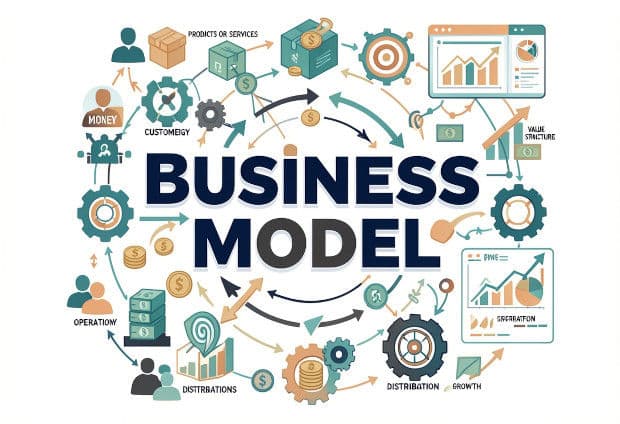
You have a great product — but how exactly do you make money from it? That is the heart of a business model. Google gives away search for free yet earns $307 billion a year. Uber owns zero cars yet commands a valuation of over $130 billion. Amazon started as a bookstore and now runs a cloud empire, a subscription program, an ad platform, and a marketplace — all at once. A business model is not just what you sell — it is the full logic of how a company creates value, delivers it to customers, and captures revenue in return. From Subscription to Freemium, Advertising to Marketplace, Razor-and-Blade to SaaS — this guide covers 15 major business model types, Alexander Osterwalder's Business Model Canvas, the world's best case studies, and what it all means for businesses in Bangladesh.
623Read
A
Agreement
April 2, 2026
The Balfour Declaration: How 67 Words in a Letter Changed the Fate of Palestine Forever
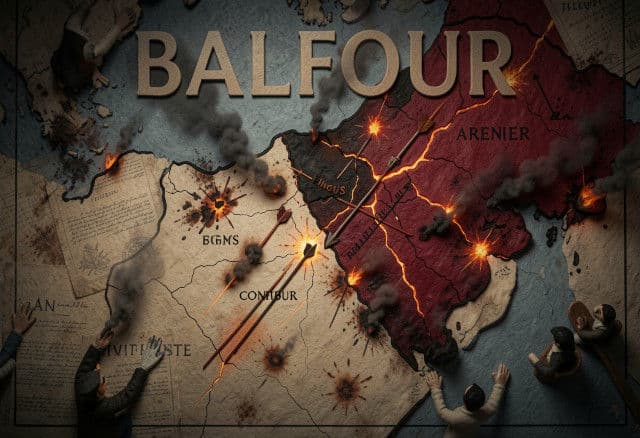
On November 2, 1917, British Foreign Secretary Arthur James Balfour wrote a letter of just 67 words — promising a 'national home' for Jewish people in Palestine, a land that wasn't Britain's to give, where 90% of the population was Arab. That single document became the foundation for the creation of Israel, the displacement of hundreds of thousands of Palestinians, and a conflict that still burns more than a century later. What was the Balfour Declaration, why was it issued, who were the key players, and what are its lasting consequences? This deep-dive covers everything.
492Read
E
Economics
April 2, 2026
Adam Smith: The Father of Modern Economics — Biography, Books, Revolutionary Concepts, and Lasting Legacy
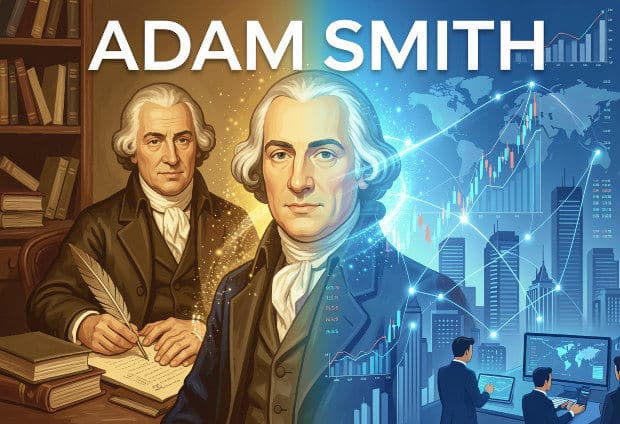
Adam Smith (1723-1790) is called the 'Father of Modern Economics,' but his true identity was that of a moral philosopher. His first and favorite book, The Theory of Moral Sentiments (1759), centered on the 'Impartial Spectator' -- an internal moral voice based on empathy and justice. Per Emma Rothschild's published research (Harvard UP 2001), Smith used the phrase 'Invisible Hand' only 3 times in all his writings, yet the entire world remembers him for that phrase alone. Per Gavin Kennedy (2008), Smith revised TMS 6 times until his death -- he never stopped working on his moral philosophy. This article covers Smith's biography, both books, key ideas, common misunderstandings, intellectual legacy, and relevance today -- all viewed through the lens of the Impartial Spectator that the world forgot.
1,017Read
F
Finance
April 1, 2026
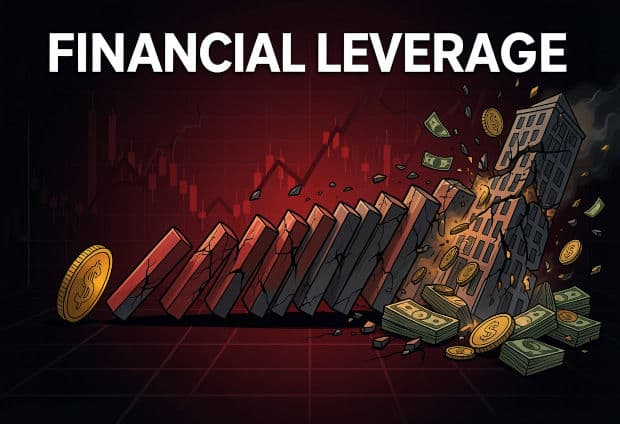
Financial Leverage: Profit Multiplier or Destruction Trap? -- The Great Debate with Evidence (Part 1)
Financial Leverage means using borrowed money to amplify your investment returns. But is it a profit multiplier or a destruction trap? In Part 1 of this two-part debate, we examine both sides with hard evidence. Side 1 argues leverage is a multiplier: George Soros made $1 billion in a single day using leveraged currency bets, US homebuyers with 5:1 leverage earned 400%+ returns, and Apple strategically carries $100B+ in debt despite having $160B+ in cash. Side 2 argues leverage is a trap: Bill Hwang's Archegos lost $20 billion in 48 hours, LTCM's Nobel laureates lost $4.6 billion with 25:1 leverage, and the entire 2008 financial crisis was caused by banks leveraged 30:1. This article presents mathematical proofs for both sides, neutral data analysis, and fair criticism of each argument's weaknesses.
633Read
E
Economics
April 1, 2026
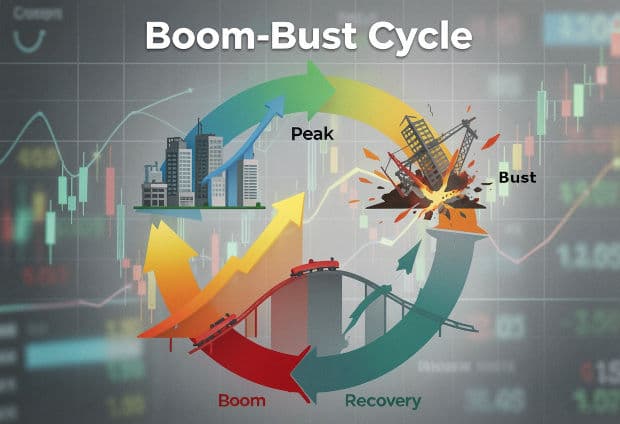
The Boom-Bust Cycle: Why Economies Rise and Fall — Definition, History, Mechanism, and How to Navigate It
Economies never move in a straight line — they always go up and down. A boom is a period of rapid growth: employment rises, incomes climb, businesses invest, optimism soars. A bust is the painful reversal: GDP shrinks, layoffs mount, businesses close, despair spreads. According to NBER data going back to 1854, the United States alone has experienced 34 business cycles. In 2006 everyone was buying houses, 2008 brought a global meltdown, 2020 delivered a COVID crash, 2021 sparked an unexpected boom, 2022 hit an inflation bust — and the pattern keeps repeating. Why it happens, how it works, what history's biggest cycles looked like, and how Bangladesh fits into this global rhythm — this in-depth guide covers it all.
1,066Read
E
Economics
April 1, 2026
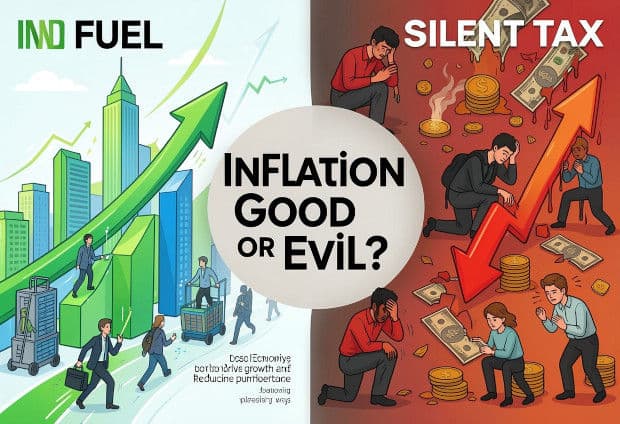
Inflation: Silent Tax or Economy's Necessary Fuel? — The Great Debate, Evidence, and Final Verdict
Is inflation a silent tax that steals your wealth without warning, or is it the necessary fuel that keeps a modern economy moving? Milton Friedman calls it theft. Paul Krugman calls it essential. This article puts both sides on trial — examining five prosecution arguments, five defense arguments, IMF data, Bangladesh's own economic history, and the positions of the world's greatest economists — to deliver a definitive verdict: moderate inflation (2-4%) is fuel, unmanaged inflation (8%+) is a tax, and the real problem is never inflation itself but the governance behind it.
972Read
E
Economics
March 31, 2026
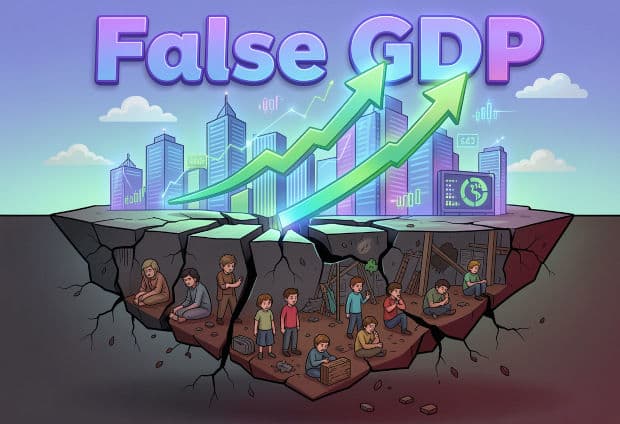
Why GDP Often Paints a False Picture of Development: The Truth Behind the Numbers
Gross Domestic Product (GDP) is the total monetary value of all goods and services produced within a country's borders over a specific period -- but does it truly measure how well a nation is doing? Equatorial Guinea has a GDP per capita of $7,000+ yet 77% of its people live in poverty. The United States has the world's largest economy but ranks only 15th in happiness. Bhutan has a tiny GDP but leads the world in Gross National Happiness. This article examines GDP's definition and formulas, its 10 fundamental limitations with global examples, paradoxes from countries like Qatar, Japan, Norway vs Nigeria, alternative metrics (HDI, GNH, Gini, GPI), the Beyond GDP movement, and why we need to look beyond the numbers to understand true development.
1,021Read
B
Banking
March 31, 2026
What Do Banks Really Do — Store Your Money or Create New Money? The Truth About Modern Banking
Most people think banks are giant vaults that safely hold deposits and lend them out. The Bank of England said otherwise in 2014: commercial banks create money out of thin air every time they approve a loan. Your 1,000 taka deposit is not sitting in a vault — it has already been lent out many times over. This article unpacks the seven real functions of a bank, explains how fractional reserve banking and the money multiplier work, examines why banks cannot create unlimited money, and gives you a clear snapshot of Bangladesh's banking sector — so you can be a smarter, more informed customer.
656Read
G
GeoPolitics
March 31, 2026
The Arab-Israeli Wars: The Conflict That Reshaped Middle Eastern Geopolitics and the Global Balance of Power
The Arab-Israeli conflict is far more than a territorial dispute between two peoples. Since 1948, every war has redrawn the global power map — spiking oil prices, triggering superpower proxy battles, and forging new geopolitical alliances. From the 1973 oil weapon that shook the world economy to October 7, 2023, the shockwaves of this conflict reach Bangladesh's remittance earnings, global shipping lanes, and the very architecture of the international order. This article covers the full arc: history, superpower rivalry, the oil weapon, the Iran factor, diplomacy's rise and fall, and what it all means for the rest of the world.
1,025Read
E
Economics
March 31, 2026
Crisis Economics: How Economic Disasters Happen, Unfold, and Get Resolved
Economic crises are not random accidents — they are built up slowly by excessive debt, asset bubbles, poor policy, and human greed, then triggered by a single spark. From the 1929 Great Depression to the 2008 global meltdown, from the 1997 Asian crisis to the COVID shock of 2020 and Sri Lanka's 2022 collapse — every crisis follows a recognizable pattern. This article breaks down what an economic crisis really is, why it happens, how governments and central banks fight back, what recovery looks like, and what you personally should do to protect yourself — all in plain English with real data, facts, and examples.
1,025Read
M
Marketing
March 30, 2026
Freudian Advertising: The Psychology Behind Why You Buy
Freudian advertising uses Sigmund Freud's theories of the unconscious mind to influence consumer purchasing decisions. Harvard research shows 95 percent of buying decisions are made unconsciously. Freud's nephew Edward Bernays applied these theories to create the public relations industry. Advertisers target the Id (pleasure), Ego (logic), and Superego (morality) through seven key techniques: Sex Appeal, Fear, Nostalgia, Identity, Symbolism, Social Proof, and Repetition. From Coca-Cola to bKash, every major brand uses these Freudian principles.
674Read
E
Economics
March 30, 2026
Economics 101: Why the World Runs on Scarcity
Economics is not just for economists — it governs every decision you make, from your morning coffee to national budgets. At the heart of it all is one word: scarcity. Resources are limited, but human wants are endless. This article covers the foundations of economics — scarcity, opportunity cost, demand and supply, Mankiw's ten principles, micro vs macro, GDP, inflation, unemployment, economic systems, and Bangladesh's economy — explained in plain English with real examples.
925Read
B
Business
March 30, 2026
What Is Business Really? Different Types of Business Explained
Most people think business is just buying and selling — but it is far bigger than that. Business includes production, service delivery, distribution, risk-taking, and creating value for society. According to the World Bank, there are over 400 million formal businesses globally, and Bangladesh alone has more than 8 million SMEs. This article covers the definition of business from multiple perspectives, its five core pillars, types by ownership structure and activity, size classification, step-by-step startup guide, and the business landscape in Bangladesh with real data.
556Read
M
Marketing
March 29, 2026
What Is Marketing, Really? — More Than Advertising
Most people think marketing means running ads — but that is only a tiny slice of the picture. Real marketing starts before a product exists and continues long after the sale. From Philip Kotler's 4Ps to Peter Drucker's famous insight that great marketing makes selling unnecessary, this article unpacks every dimension of marketing: its definitions, evolution from Marketing 1.0 to 5.0, types, step-by-step process, and the real state of marketing in Bangladesh.

657Read
G
GeoPolitics
March 29, 2026
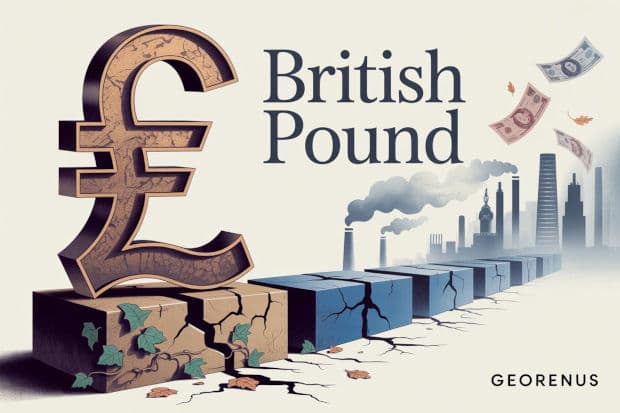
The British Pound: Rise, Dominance, and Fall — Part 3: Decades of Decline, the Modern Pound, and the Future
In Part 2, we traced the pound's golden age under the Gold Standard and its eventual dethroning by the US dollar at Bretton Woods in 1944. Part 3 — the final chapter — covers what came next: a string of post-war devaluations, the national humiliation of the 1976 IMF bailout, Thatcher's monetarist rollercoaster, George Soros defeating the Bank of England in 1992, the Brexit shock, Liz Truss's 45-day disaster, where the pound stands today, and what 1,200 years of this currency's history teaches every nation on earth.
957Read
G
GeoPolitics
March 29, 2026
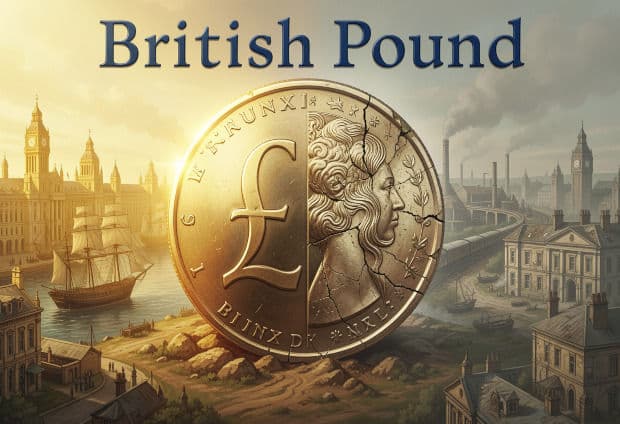
The British Pound: Rise, Dominance, and Fall — Part 2: From the Peak of Empire to the Beginning of Decline
Part 1 traced the pound's origins from King Offa's silver pennies to the formal Gold Standard of 1816. Part 2 covers the dramatic middle act — the 130 years in which sterling ruled the world and then lost everything. The golden age of the Gold Standard, the British Empire at its peak, the shock of World War I, Churchill's catastrophic policy blunder, World War II bankruptcy, and the 1944 Bretton Woods conference where the dollar took the throne — the full story is here.
929Read
G
GeoPolitics
March 29, 2026
The British Pound: Rise, Dominance, and Fall — Part 1: From the Birth of Money to the Rise of Sterling
The British pound sterling is over 1,200 years old. This article traces the full prehistory of the pound — from the chaos of barter through commodity money, metal coins, Chinese paper currency, London goldsmith banking, the founding of the Bank of England in 1694, and the formal adoption of the Gold Standard in 1816. By that year, sterling was already the world's most trusted currency and London its financial capital.
1,003Read
B
Banking
March 28, 2026
Banking Terminologies: The Essential Glossary Every New Customer Needs
Walk into any bank and you will hear words like EMI, FDR, KYC, RTGS, CIB, and CAR — terms that can feel like a foreign language to a first-time customer. Not understanding them can lead to costly mistakes and missed opportunities. In Bangladesh, over 65% of adults now hold a bank or MFS account, yet most cannot explain even the most basic banking terms. This guide breaks down 50+ essential banking terminologies in plain English — with real examples, numbers, and context — so you can walk into any bank with confidence and make smarter financial decisions.
632Read
E
Economics
March 28, 2026
Debt Trap Diplomacy: The Strategy of Buying Countries With Loans
Debt Trap Diplomacy is the geopolitical strategy where a powerful country lends massive sums to a weaker nation for infrastructure — knowing full well it cannot repay. When repayment fails, the borrower surrenders strategic assets like ports, mines, or military bases. China's Belt and Road Initiative is the biggest modern example, spanning 150+ countries with over $1 trillion in commitments. But debt diplomacy is not China's invention alone — the IMF, colonial powers, and Western nations have all played versions of the same game. The real question is whether borrowing countries have the institutional strength to protect their sovereignty.
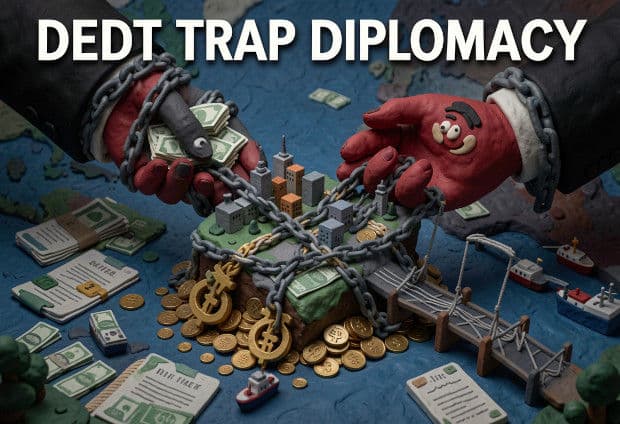
1,183Read
E
Economics
March 28, 2026
Debt: The Runaway Horse -- When Borrowing Becomes the Economy's Greatest Threat
According to the Institute of International Finance (IIF) 2025 report, global debt has surpassed $315 trillion — approximately 330% of global GDP. IMF Fiscal Monitor data shows government debt alone exceeds $100 trillion, the highest level since World War II. Over 60% of low-income countries are now in IMF debt distress classification. Every major economic crisis in modern history (1929 Great Depression, 1982 Latin American crisis, 1997 Asian crisis, 2008 global crisis, 2022 Sri Lanka collapse) was rooted in uncontrolled debt. This article uses data from IMF, World Bank, IIF, BIS, and the Federal Reserve to prove one core argument: the mad horse is already running, and the world is riding on its back.
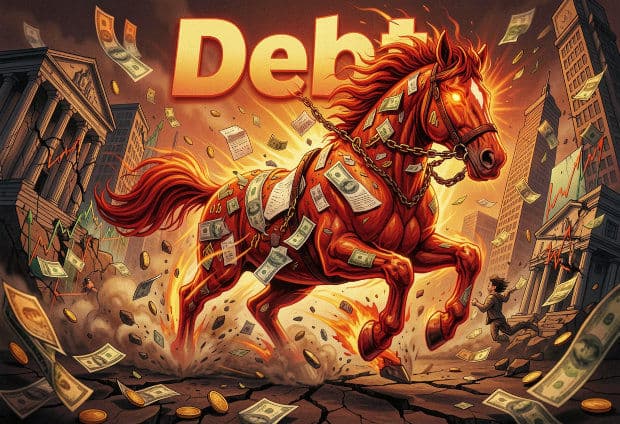
643Read
F
Finance
March 28, 2026
Financial Leverage: What it is, How it works and How to Calculate
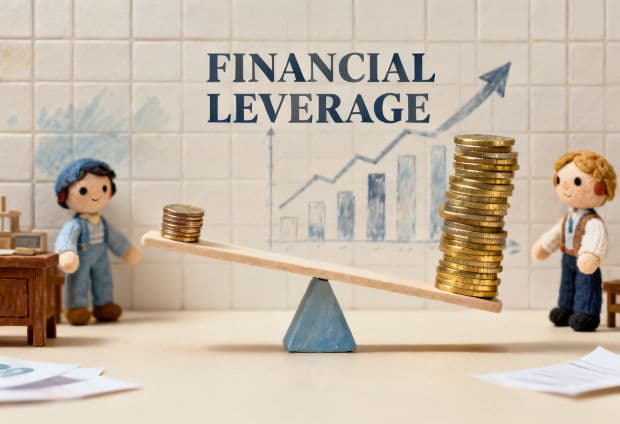
Financial leverage means using borrowed money to amplify your investment returns — putting in 10 lakh of your own and borrowing 40 lakh more to control a 50 lakh asset. When the investment pays off, your returns multiply dramatically. But when things go wrong, your losses multiply just as fast. From home loans and margin trading to corporate bonds and credit cards, leverage is everywhere in modern finance. The 2008 global financial crisis and countless personal bankruptcies share one common thread: too much leverage, too little caution.
662Read
G
GeoPolitics
March 28, 2026
Trade Routes: The Roads That Built Civilizations, Wealth, and Empires (Part 1)
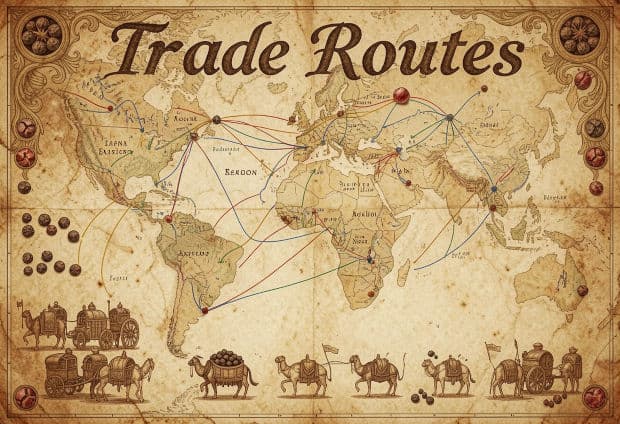
The history of human civilization is, at its core, the history of trade routes. Since ancient times, people have carved paths across deserts, oceans, and rivers to exchange goods, ideas, and culture — and along those paths, empires rose, civilizations flourished, and the foundations of the world economy were laid. The Silk Road, the Spice Route, the Trans-Saharan Route, the Incense Route — behind every trade route lies a complex story of power, wealth, and politics. In this first part, we explore what trade routes are, why they were created, and how the great routes of the ancient world transformed the planet forever.
943Read
G
GeoPolitics
March 28, 2026
The Silk Road: The Trade Route That Created the World's First Globalization (Part 1)
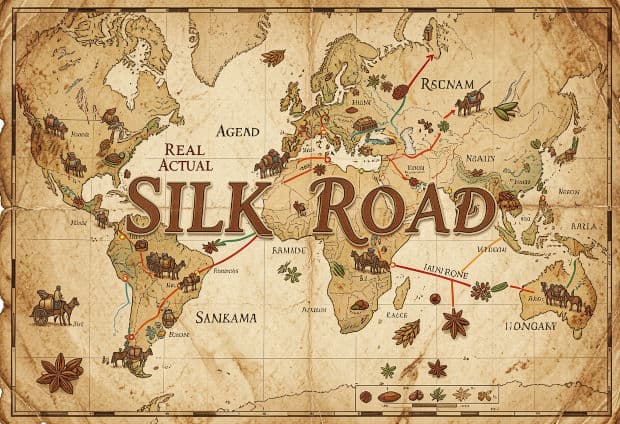
The Silk Road was never a single road — it was the ancient world's most expansive trade network, stretching roughly 6,400 kilometers from China to the Mediterranean and far beyond via sea. For over 1,500 years, this web of routes carried far more than silk: spices, gold, paper, gunpowder, religion, language, and even deadly disease all traveled these paths. It was the original engine of globalization, reshaping every civilization it touched — from the Han dynasty in China to the Roman Empire in the west. Understanding the Silk Road means understanding how the modern world was built, one caravan at a time.
1,090Read
B
Business
March 28, 2026
White Elephant: When Your Biggest Investment Becomes Your Biggest Burden
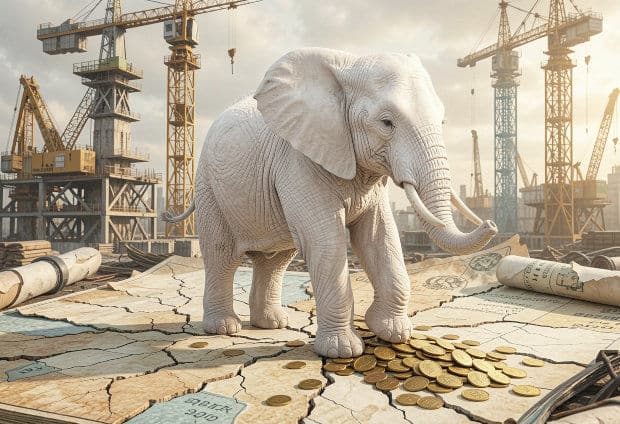
A white elephant is an asset, project, or investment whose maintenance and operating costs far exceed any benefit it provides — yet walking away from it feels impossible. The term traces back to ancient Southeast Asia, where kings gifted rare sacred elephants to courtiers as a form of disguised punishment. In modern business, government, and personal finance, white elephants quietly drain resources while pride, sunk costs, and political pressure keep them alive long past their usefulness.
728Read
M
Marketing
March 28, 2026
Guerrilla Marketing: The Art of Creating Massive Impact on a Tiny Budget
Guerrilla marketing is an unconventional, low-cost marketing strategy that uses creativity, surprise, and bold ideas to leave a lasting impression — instead of relying on big advertising budgets. Coined by Jay Conrad Levinson in 1984, the approach has been adopted by brands from tiny startups to giants like Coca-Cola, Nike, and IKEA. From a coffee-cup manhole cover in New York City to Red Bull's space jump, guerrilla marketing proves one thing: you don't need a massive budget to make a massive impact.
659Read
M
Marketing
March 27, 2026
Machiavellian Marketing Framework (MMF): How Power Philosophy Wins Markets
In 1513, Niccolò Machiavelli wrote a short book about power that still makes politicians nervous. Five centuries later, the world's biggest brands are quietly using the same principles to dominate markets. The Machiavellian Marketing Framework (MMF) translates Machiavelli's raw power philosophy — fear and love, narrative control, strategic alliances, and ironclad lock-in — into a modern marketing playbook. Apple, Nike, and Amazon didn't build their empires by accident. They built them the Machiavellian way.
648Read
A
Agreement
March 27, 2026
The Sykes-Picot Agreement: The Secret Deal That Reshaped the Middle East Forever
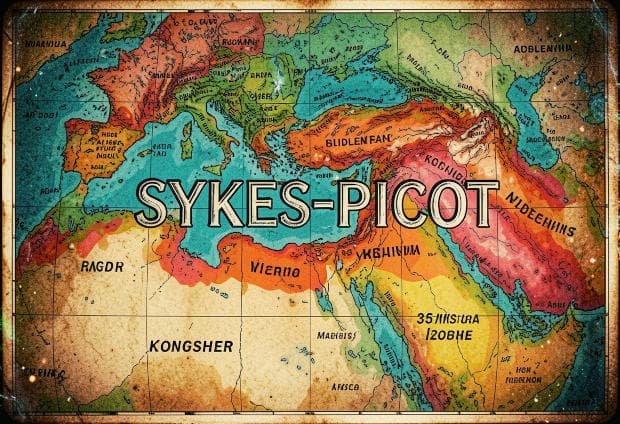
In 1916, during the height of World War I, Britain and France secretly carved up the Arab lands of the Ottoman Empire between themselves. Two diplomats — Sir Mark Sykes and François Georges-Picot — drew straight lines on a map that became the borders of modern Iraq, Syria, Lebanon, Jordan, and Palestine. This deal betrayed earlier promises of Arab independence and planted the seeds of a century of conflict, instability, and deep mistrust of Western powers across the Middle East.
649Read
E
Economics
March 24, 2026
The War Economy: The System Where War Becomes the Most Profitable Business
War means destruction — that's what we're taught from childhood. But history tells a different story. For certain countries, certain industries, and certain people, war means enormous profit. This system is called the 'war economy.' From two world wars to today's Ukraine-Russia conflict, every major war has been driven by this invisible economic machinery. This article explores how the war economy was born, how it works, and how modern empires sustain themselves through it.
668Read
E
Economics
March 24, 2026
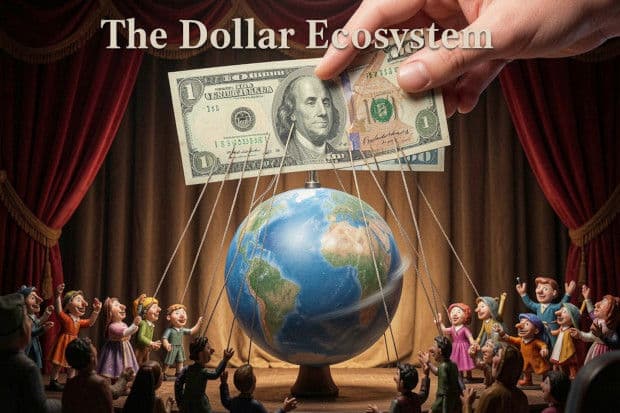
The Dollar Ecosystem: How a Piece of Paper Controls the Entire World
Whether you're buying oil, taking a loan, or booking a flight ticket anywhere in the world — there's one currency behind it all: the American dollar. But this dominance didn't happen overnight. Two world wars, a secret conference, the severing of gold ties, and an unwritten deal with oil — together they built the dollar's invisible empire. This article traces how a piece of paper became the world's most powerful financial weapon, and what the future may hold.
868Read
B
Banking
March 20, 2026
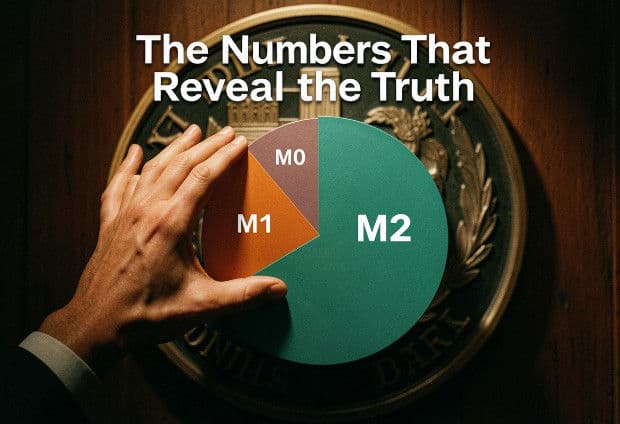
M0, M1, and M2 — The Numbers That Reveal the True Face of Any Economy
M0, M1, and M2 are three layers of money supply that reveal how much 'real' money exists in an economy versus how much has been created by banks through lending. M0 is physical currency printed by the central bank — the only 'real' money. As M1 and M2 grow larger relative to M0, it means banks have created more debt-based money. In advanced economies, bank-created money is 89-97% of the total. Bangladesh's M2/M0 ratio of 4.45x and M2/GDP ratio of just 34% tell a story of both underdevelopment and fragility, worsened by high non-performing loans.
1,201Read
B
Banking
March 19, 2026
Debt-Based Money Creation: Banking's Most Surprising System Explained
Debt-based money creation is the most astonishing and least discussed truth about modern finance — every bank loan literally creates new money out of thin air, and when that loan is repaid, the money is destroyed. This article explains how it works step by step, why the interest problem creates a perpetual 'debt treadmill,' the Cantillon Effect, moral hazard, and what it means for Bangladesh's economy.
728Read
B
Banking
March 19, 2026
Fractional Reserve Banking: Definition, Formula, and the Textbook vs. Reality
Fractional reserve banking is the backbone of the modern financial system — banks keep only a fraction of deposits as reserves and lend out the rest. This article breaks down how it actually works, the money multiplier formula, the real constraints on lending (hint: it's not what textbooks say), bank runs, Islamic banking alternatives, and what it all means for Bangladesh's banking sector.
689Read
B
Business
March 15, 2026
How to Overcome Barriers to Entry: 10 Proven Strategies for New Businesses
Barriers to entry can feel overwhelming for new entrepreneurs, but they are not insurmountable. From building brand value through social media and quality products, to developing alternative distribution channels, leveraging affordable technology, securing smart funding, navigating regulatory requirements, and avoiding price wars — each barrier has a corresponding strategy to overcome it. This guide walks through 10 practical, proven approaches that new businesses can use to break into competitive markets, with real-world examples from companies that started small and succeeded.

782Read
B
Business
March 15, 2026
Barriers to Entry: What They Are, Why They Matter, and How They Shape Markets
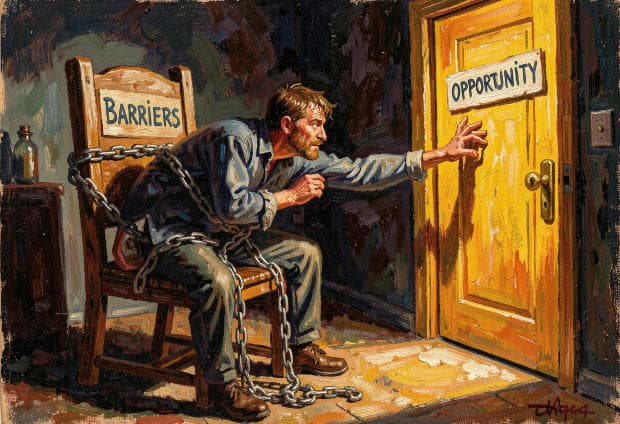
Barriers to entry are the obstacles that make it difficult for new companies to enter a market and compete with established players. These barriers include high capital requirements, government regulations, technological advantages held by incumbents, supply chain control, strong brand loyalty, and control over raw materials. While barriers protect existing businesses, they also reduce market competition, stifle innovation, and can negatively impact overall economic growth. Understanding these barriers is the first step for any entrepreneur looking to break into a competitive industry.
782Read
G
GeoPolitics
March 14, 2026
The Petrodollar: The Invisible Chain That Holds the World Together
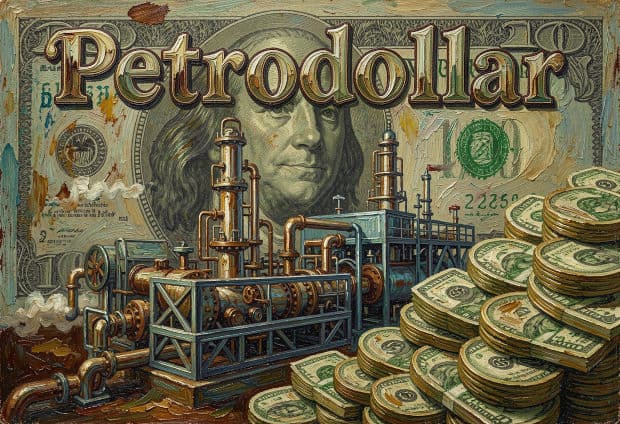
The petrodollar is a system where all global oil trade is conducted in US dollars. Because of this single rule, every country on Earth must first acquire dollars before it can buy oil — keeping demand for the dollar permanently high and giving America an economic advantage no other nation enjoys. This system was born from a secret 1974 deal between the US and Saudi Arabia, and it remains the most powerful foundation of the global economy. But with China's petro-yuan push, Russia's forced de-dollarization, and Saudi Arabia's shifting calculations, the petrodollar is now facing its most serious challenges in half a century.
673Read
G
GeoPolitics
March 14, 2026
(Part 1) Malaysia's Economic Reforms: From Agrarian Roots to Industrial Powerhouse
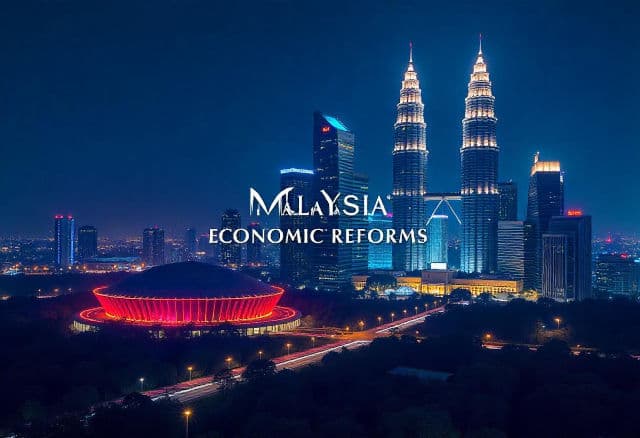
Malaysia's transformation from an agrarian economy dependent on rubber and tin to a modern industrial powerhouse is one of Southeast Asia's most remarkable success stories. Beginning with the landmark New Economic Policy in 1971 — designed to reduce poverty and address ethnic economic disparities after the 1969 racial riots — Malaysia systematically built its manufacturing sector, attracted massive foreign investment, became the world's second-largest palm oil producer, and weathered the 1997 Asian financial crisis through unconventional policies. This first part traces that extraordinary journey from rural beginnings to the threshold of the new millennium.
625Read
G
GeoPolitics
March 14, 2026
(Part 2) Malaysia's Economic Reforms: From Agrarian Roots to Industrial Powerhouse
Malaysia's economic journey from 2000 to the present is a story of ambitious transformation, scandalous setbacks, and resilient recovery. The Economic Transformation Programme aimed to make Malaysia a high-income nation by 2020, the GST was introduced and controversially scrapped, the 1MDB scandal shook investor confidence to its core, and COVID-19 forced the government into unprecedented stimulus spending. Despite these challenges, Malaysia has reduced poverty to below 0.4%, built world-class infrastructure, and is now pursuing digital economy and renewable energy strategies to secure its economic future.
667Read
G
GeoPolitics
March 14, 2026
(Part 1) Indonesia's Journey to Economic Resilience: Key Reforms from Crisis to Growth
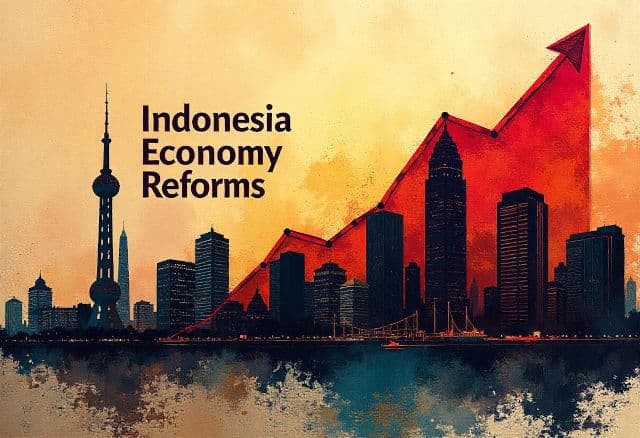
Indonesia was one of Southeast Asia's fastest-growing economies before the 1997 Asian financial crisis shattered its banking system, currency, and political stability. The rupiah lost over 80% of its value, GDP contracted by 13.1%, and mass protests toppled President Suharto's 32-year rule. This first part examines how Indonesia responded to the devastation through sweeping reforms in currency stabilization, banking sector restructuring, debt management, governance transparency, and fiscal policy — laying the foundation for one of Asia's most remarkable economic recoveries.
626Read
G
GeoPolitics
March 14, 2026
The Politics of Oil: How Black Gold Controls the World (A Complete Overview)
Oil is not just a fuel — it is the most powerful geopolitical weapon in the modern world. From the first oil wells in Pennsylvania to OPEC embargoes, from Russia's gas leverage over Europe to China's petro-yuan ambitions, oil has shaped wars, toppled governments, and redrawn global alliances. This comprehensive overview traces how a single natural resource became the centerpiece of world politics, economics, and power struggles that continue to define international relations today.
577Read
G
GeoPolitics
March 14, 2026
(Part 1) The Politics of Oil: How Black Gold Became the World's Most Dangerous Commodity
Before oil was discovered, the world ran on coal, animal power, and human labor. But after Edwin Drake drilled the first oil well in Pennsylvania in 1859, this black liquid gradually became the most valuable and most dangerous commodity on earth. Two world wars were shaped by oil strategy, Western companies seized control of Middle Eastern resources, the CIA overthrew a democratic government for oil, and OPEC was born as a counter-force. This is the origin story of oil politics.
500Read
G
GeoPolitics
March 14, 2026
(Part 2) The Politics of Oil: How Black Gold Controls the World
The 1973 oil embargo was the moment the world realized that oil is not just a commodity — it is a weapon as powerful as a nuclear bomb. After that event, every major power restructured its strategy around oil. America created the petrodollar system to maintain dollar dominance, Russia turned oil and gas into a geopolitical weapon against Europe, and China began challenging the dollar's oil monopoly. This article covers the 1973 embargo, the birth of petrodollars, the 1979 Iran crisis, and the Gulf War.
532Read
G
GeoPolitics
March 14, 2026
Oil and Geopolitics: The Complete History of Wars Fought Over Energy Resources
No commodity in human history has caused more bloodshed than oil. From World War II to the 2026 Venezuela and Iran crises, oil has been at the center of almost every major military conflict of the modern era. This article traces the full history of wars fought over energy resources — from Hitler's desperate march toward Baku's oil fields to America's 2003 invasion of Iraq, from Nigeria's resource curse to the ongoing battle for control of the Strait of Hormuz.
878Read
G
GeoPolitics
March 14, 2026
How Oil Controls the Global Economy: From Prices to Politics
Oil is the most traded commodity on earth and the central driving force of the modern economy. When oil prices rise, inflation increases, factory production costs climb, and transportation expenses soar — creating a chain reaction that destabilizes the entire global economy. From the 1973 Arab oil embargo to the 2022 Russia-Ukraine energy crisis, every major oil shock has been followed by an economic downturn. This article explores the five key mechanisms through which oil controls the world economy.
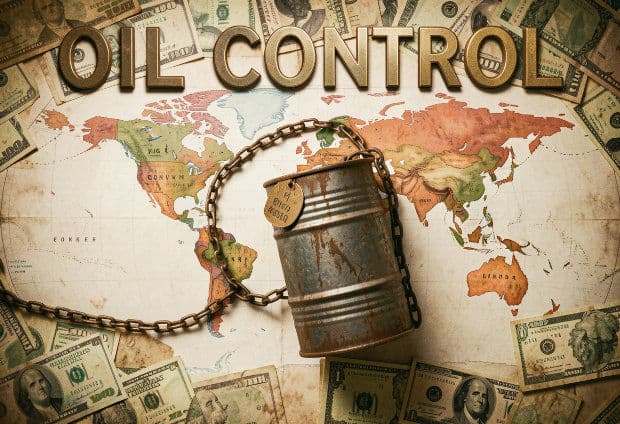
602Read
G
GeoPolitics
March 14, 2026
The Global Oil Map: Reserves, Production, Transportation, and Consumption Explained
Oil is the most traded commodity on Earth, with global production and consumption at about 103 million barrels per day and an annual market worth over $3 trillion. Venezuela holds the largest reserves (303.8 billion barrels) but the US leads production (13.3M bbl/day) thanks to the shale revolution. The Strait of Hormuz carries 21% of maritime oil and is the most critical chokepoint. The IEA projects peak oil demand by the late 2020s, but petrochemicals and developing-world growth will keep demand elevated for decades.
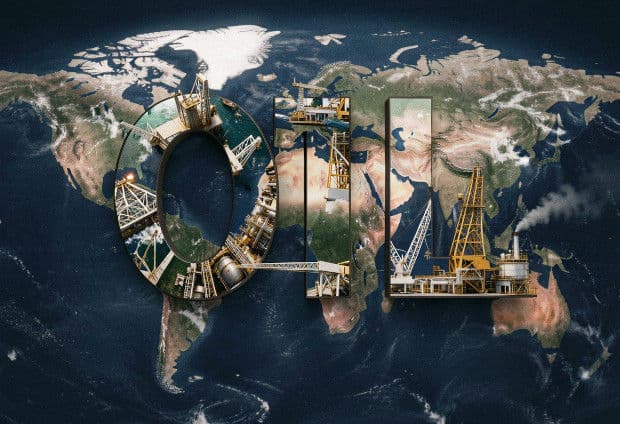
1,534Read
S
Startup
March 13, 2026
Startup Funding Rounds Explained: Pre-Seed to Series A, B, and C
Startup funding rounds are the stages through which a growing company raises capital from investors. From pre-seed funding where founders invest their own money to validate an idea, through seed rounds that help build a product, all the way to Series A, B, and C rounds that scale operations and expand globally — each stage serves a specific purpose and attracts different types of investors. Understanding these funding stages is essential for any founder looking to grow a startup into a profitable business.

621Read
S
Startup
March 13, 2026
What Is Pivoting in Business? When and How Startups Should Pivot
Pivoting is the strategic process of fundamentally changing the direction of a business when the current plan is not delivering the expected results. In the startup world, a pivot could mean changing the product, target audience, business model, or technology to better align with market demand. Some of the most successful companies in history, including PayPal, Instagram, and Netflix, survived and thrived precisely because they pivoted at the right time.
479Read
S
Startup
March 13, 2026
How to Craft the Perfect Startup Elevator Pitch (With Examples)
An elevator pitch is a concise, compelling summary of your startup's idea, value proposition, and potential — delivered in 30 seconds to two minutes. It is called an elevator pitch because you should be able to deliver it during a short elevator ride. A strong pitch can open doors to investors, partners, and customers, while a weak one can shut them permanently.

523Read
S
Startup
March 13, 2026
The Lean Startup Methodology: What It Is and How to Apply It
The Lean Startup methodology, pioneered by Eric Ries, has transformed how entrepreneurs build companies. Instead of spending months perfecting a product in secret, lean startups launch quickly with a minimum viable product, learn from real customer feedback, and iterate rapidly. This approach dramatically reduces the risk of building something nobody wants.
560Read
S
Startup
March 13, 2026
How to Distribute Equity in a Startup: A Founder's Complete Guide
Dividing equity in a startup is one of the most important and emotionally charged decisions founders will ever make. Get it right and you build a motivated, aligned team. Get it wrong and you risk co-founder disputes, employee resentment, and even company failure. This guide walks you through exactly how to distribute equity fairly across founders, employees, investors, and advisors.
548Read
S
Startup
March 13, 2026
The Complete Guide to Building a Startup Marketing Budget
How much should a startup spend on marketing? It is one of the most critical questions founders face, and getting it wrong can mean the difference between explosive growth and burning through cash with nothing to show for it. This guide breaks down exactly how to build a marketing budget that fits your stage, goals, and resources.
525Read
S
Startup
March 13, 2026
SAFE Notes Explained: What They Are, How They Work, and Why Startups Use Them
A SAFE note — short for Simple Agreement for Future Equity — is one of the most popular instruments startups use to raise early-stage funding without giving up ownership right away. Created by Y Combinator in 2013, SAFE notes let investors put money into a company today in exchange for the right to receive equity during a future funding round, making the process faster, cheaper, and simpler than traditional methods.

553Read
S
Sales
March 12, 2026
What Is a Sales Funnel? Stages, Examples, and How to Build One
A sales funnel is the journey a potential customer takes from first hearing about your product to actually making a purchase. Understanding the stages of this funnel — awareness, interest, decision, and action — helps businesses optimize every step of the buying process and convert more prospects into paying customers.

376Read
S
Sales
March 12, 2026
10 Common Sales Mistakes That Are Killing Your Deals (And How to Fix Them)
Even the most talented salespeople make mistakes that cost them deals. The difference between good and great in sales often comes down to avoiding the same avoidable errors over and over. From talking too much to ignoring follow-ups, these 10 common sales mistakes are quietly undermining your results — and fixing them could transform your close rate almost overnight.

498Read
S
Sales
March 12, 2026
Sales vs Marketing: Key Differences and How They Work Together
Many people assume sales and marketing are the same thing. They are not. While both aim to drive revenue, they approach that goal in fundamentally different ways. Understanding the distinction between sales and marketing — and more importantly, how to align them — is critical for any business that wants to grow sustainably.

410Read
S
Sales
March 12, 2026
6 Proven Strategies to Increase Sales Using the Psychology of Persuasion
Understanding what makes people say yes is the ultimate sales superpower. These six persuasion strategies, rooted in decades of behavioral psychology research, can help you connect with customers on a deeper level and consistently close more deals without resorting to pushy tactics.

478Read
S
Sales
March 12, 2026
10 Body Language Tips to Crush Your Sales Targets and Win More Deals
Your body language speaks louder than your words — especially in sales. Research shows that up to 93% of communication is nonverbal, meaning how you stand, gesture, and make eye contact can make or break a sales pitch. This article covers 10 proven body language tips that top salespeople use to build trust, command attention, and close more deals.

455Read
S
Sales
March 12, 2026
The MTNUT Framework: How to Close Any Sales Deal by Overcoming 5 Key Objections
Closing a sales deal is the most critical moment in the entire sales process. The MTNUT framework identifies the five most common barriers to closing: Money, Time, Need, Urgency, and Trust. This article explains each objection, how to overcome them, and shares five powerful closing techniques — from the Question Close to the Summary Close — that top salespeople use to seal the deal.

368Read
S
Sales
March 12, 2026
How to Become an Extraordinary Salesperson: Qualities, Habits, and Proven Strategies
An extraordinary salesperson is someone who can sell anything at any time to anyone — not through manipulation, but through genuine skill, empathy, and persistence. This article breaks down the 10 essential qualities every top salesperson needs and the daily habits that separate average performers from the best in the business.

511Read
O
Organization
March 12, 2026
The World Bank: What It Is, How It Works, History, and Key Organizations
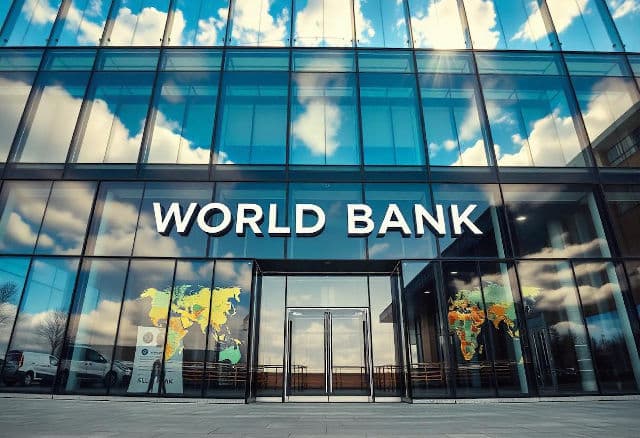
The World Bank is an international financial institution that provides loans, grants, and technical assistance to developing countries for the purpose of reducing poverty and promoting economic development. Founded in 1944 at the Bretton Woods Conference alongside the IMF, the World Bank Group consists of five organizations and works with 189 member countries. In 2022, the World Bank identified 17 key goals to address global challenges ranging from climate change to education.
576Read
O
Organization
March 12, 2026
Nikkei: What It Is, the Nikkei 225, History, and How to Invest
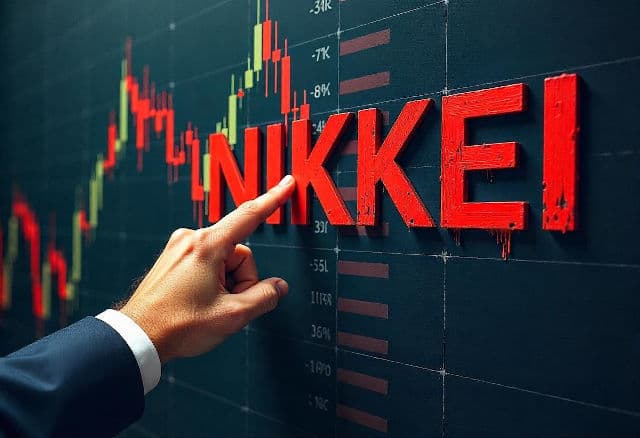
Nikkei is Japan's most prominent financial media company and the name behind the Nikkei 225, the leading stock market index for the Tokyo Stock Exchange. Founded in 1876, Nikkei Inc. publishes the world's largest financial newspaper and owns the Financial Times. The Nikkei 225 index tracks 225 top Japanese companies and serves as the primary barometer of Japan's economic health for global investors.
585Read
O
Organization
March 12, 2026
Bloomberg: What It Is, How It Works, the Bloomberg Terminal, and Global Impact
Bloomberg L.P. is one of the most powerful financial information and media companies in the world, founded in 1981 by Michael Bloomberg. From its iconic Bloomberg Terminal used by over 325,000 financial professionals to Bloomberg News, Bloomberg Television, and Bloomberg Businessweek, the company has become an indispensable part of the global financial infrastructure, operating in over 120 countries.
769Read
O
Organization
March 12, 2026
Fortune Magazine: What It Is, History, the Fortune 500, and Its Global Impact
Fortune Magazine is one of America's most iconic business publications, founded in 1930 by Henry Luce. Famous for its annual Fortune 500 and Fortune Global 500 lists, the magazine has shaped how the world understands corporate power, business leadership, and economic trends for nearly a century. Today it operates as a multimedia brand covering business, finance, technology, and leadership.

690Read
O
Organization
March 12, 2026
The Financial Times: What It Is, History, Content, and Global Influence
The Financial Times (FT) is one of the world's most prestigious business newspapers, founded in London in 1888. Known for its distinctive salmon-pink pages, the FT provides authoritative coverage of global finance, economics, politics, and business. Now owned by Japan's Nikkei Inc., the Financial Times has over one million paying subscribers and is read by business leaders, investors, and policymakers across more than 100 countries.
721Read
O
Organization
March 12, 2026
The Economist: What It Is, History, Influence, and Why It Matters
The Economist is one of the most influential weekly publications in the world, founded in London in 1843. Covering international politics, economics, business, science, and culture, it has shaped global conversations for over 180 years. With a print and digital readership exceeding 1.6 million, The Economist remains a trusted voice for decision-makers, investors, and intellectually curious readers worldwide.
762Read
O
Organization
March 12, 2026
Business Insider: What It Is, How It Works, and Why It Matters in Financial Media
Business Insider is one of the most recognized online media companies in the United States, founded in 2007. It covers business, finance, technology, politics, and lifestyle news with a digital-first approach that reshaped how millions of readers consume financial journalism. Now rebranded as just Insider, the platform reaches over 200 million monthly visitors worldwide.
583Read
F
Finance
March 12, 2026
Time Value of Money: What It Is, How It Works, and Why It Matters
The Time Value of Money is the fundamental concept that a dollar today is worth more than a dollar in the future due to its earning potential. This guide explains how TVM works, the difference between simple and compound interest, the TVM formula, compounding vs. discounting, real-world applications, and why it is the most important concept in finance.
741Read
F
Finance
March 12, 2026
Valuation of Bonds and Stocks: Methods, Formulas, and How to Determine Fair Value
Valuation is the process of determining what a financial asset is truly worth. This guide explains the key methods for valuing stocks (P/E ratio, P/B ratio, and Dividend Discount Model) and bonds (coupon bond and zero-coupon bond valuation), with formulas, worked examples, and the critical relationship between interest rates and bond prices.
749Read
F
Finance
March 12, 2026
Capital Budgeting: What It Is, How It Works, and Key Techniques Explained
Capital budgeting is the process companies use to evaluate and select long-term investments. This guide covers the core concepts, the four-step process, key evaluation techniques including NPV, IRR, Payback Period, and Profitability Index, and the limitations that financial professionals should be aware of.

713Read
F
Finance
March 12, 2026
Risk vs. Return: Understanding the Trade-Off Every Investor Must Know
Risk and return are the two sides of every investment decision. This guide explains the risk-return trade-off, the eight major types of investment risk, how to measure risk using standard deviation, beta, and Sharpe ratio, different types of returns, and proven strategies for managing risk in your portfolio.

781Read
F
Finance
March 12, 2026
Cost of Capital: What It Is, WACC Formula, and How to Calculate It
The cost of capital is the minimum rate of return a company must earn to satisfy its investors. This guide explains the Weighted Average Cost of Capital (WACC), how to calculate the cost of debt and equity using the CAPM model, the factors that influence cost of capital, and the limitations financial professionals should understand.
726Read
F
Finance
March 12, 2026
Project Financing: How It Works, Key Participants, and Strategies for Success
Project financing is a method of funding large-scale infrastructure projects where the project's own cash flows serve as the primary repayment source. This guide covers the key participants, the three-stage process, advantages like non-recourse lending and risk sharing, how it differs from corporate financing, and the limitations investors and sponsors should understand.
739Read
F
Finance
March 12, 2026
Financial Markets: What They Are, Types, Functions, and How They Work
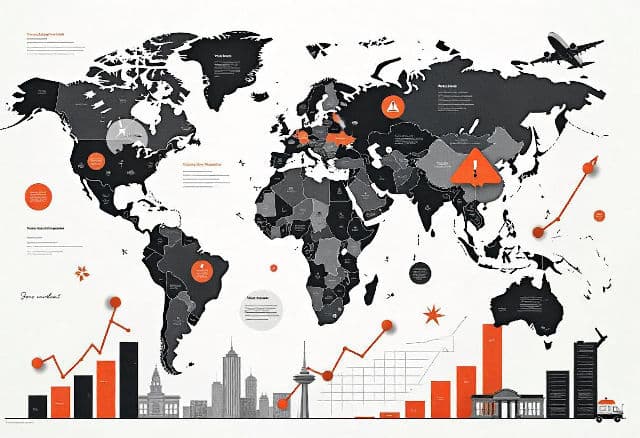
Financial markets are the platforms where financial assets like stocks, bonds, currencies, and derivatives are traded. This guide covers the eight major types of financial markets, how they work, their key functions in the economy, and the limitations investors should be aware of when participating in these markets.
698Read
F
Finance
March 12, 2026
The Stock Market: A Complete Guide for Investors
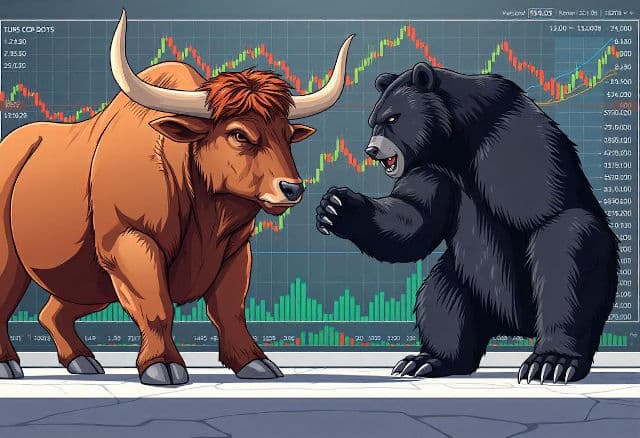
The stock market is a marketplace where shares of publicly traded companies are bought and sold. This comprehensive guide explains what the stock market is, how it works, the types of stocks available, how to start investing, and the key advantages and risks every investor should understand before entering the market.
451Read
F
Finance
March 12, 2026
Derivatives: What They Are, Types, How They Work, and How to Invest
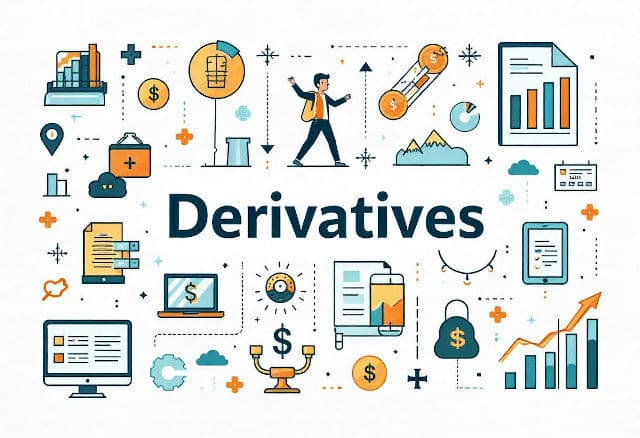
Derivatives are financial contracts whose value is derived from underlying assets like stocks, bonds, commodities, or currencies. This guide explains the four main types of derivatives — options, futures, forwards, and swaps — how they work, who trades them, their advantages and risks, and how beginners can start investing in them.
1,069Read
F
Finance
March 12, 2026
Mutual Funds: What They Are, How They Work, Types, and How to Invest
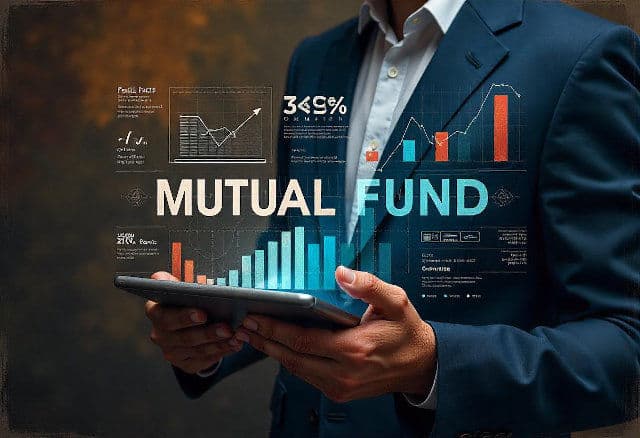
A mutual fund is a pooled investment vehicle managed by a professional fund manager that invests in a diversified portfolio of stocks, bonds, or other securities. This comprehensive guide explains how mutual funds work, the different types available, their advantages and disadvantages, and how you can start investing in them to build long-term wealth.
460Read
M
Money
March 11, 2026
YouTube Monetization: Methods, Requirements, and Strategies to Earn Money From YouTube
YouTube offers multiple monetization paths for content creators with over 2.7 billion monthly users. This guide covers 8 proven methods including ad revenue, Super Chats, channel memberships, sponsorships, affiliate marketing, merchandise sales, online courses, and YouTube Premium revenue. Learn the eligibility requirements and strategies to maximize your YouTube earnings.

716Read
M
Money
March 11, 2026
Instagram Monetization: Strategies and Methods to Earn Money From Instagram
Instagram offers powerful monetization opportunities for creators and businesses with over 2 billion monthly users. This guide covers 7 proven strategies including brand partnerships, affiliate marketing, selling products, dropshipping, Reels bonuses, paid subscriptions, and coaching services. Learn the eligibility requirements and success tips to start earning on Instagram.

715Read
M
Money
March 11, 2026
Facebook Monetization: Strategies, Methods, and Real Examples of How to Earn Money From Facebook
Facebook remains a powerful platform for earning money with nearly 3 billion users. This guide covers 7 proven monetization strategies including in-stream ads, marketplace selling, affiliate marketing, sponsored posts, paid groups, and Facebook Stars. Learn the eligibility requirements and real-world success examples to start earning on Facebook.

2,054Read
M
Money
March 11, 2026
Golden Rules of Money Management: 10 Rules for Mastering Money Management
Master your finances with these 10 golden rules of money management. Learn how to build an emergency fund, follow the 50/30/20 budget rule, avoid high-interest debt, invest early, diversify your portfolio, and buy assets instead of liabilities. These timeless principles can transform your financial life regardless of your income level.
687Read
M
Money
March 11, 2026
The Rules of Money: 10 Rules That Will Bring You Financial Success
Financial success isn't about luck — it's about following proven principles. This article covers 10 essential rules of money including setting clear goals, taking calculated risks, the 40% EMI rule, the 25x retirement rule, using debt wisely, diversifying income, and learning from mistakes. Apply these rules consistently to build lasting wealth.
692Read
M
Money
March 11, 2026
15 Ways to Make Money at Home
Want to earn money without leaving your house? This guide covers 15 proven ways to make money at home — from virtual assistant work and online tutoring to blogging, e-commerce, affiliate marketing, and audiobook narration. Each method is practical, flexible, and can be started with minimal investment.

674Read
M
Money
March 11, 2026
10 Ways to Make Money Offline
Not all money-making opportunities require the internet. This guide covers 10 proven ways to earn money offline — including selling used gadgets, tutoring, delivery services, ride-sharing, photography, event work, food businesses, and customer service. Each method is practical, accessible, and can be started with minimal investment.

755Read
M
Money
March 11, 2026
15 Ways to Make Money Online, Offline, and at Home
Looking for ways to earn extra income? This guide covers 15 proven methods to make money online, offline, and from home — including freelancing, affiliate marketing, content creation, AI tools, e-commerce, and more. Whether you have specialized skills or just spare time, there's an income opportunity for you.

855Read
M
Money
March 11, 2026
Digital Money: Definition, How It Works, Types, and Examples
Digital money refers to any form of currency that exists purely in electronic format. It includes bank deposits, cryptocurrencies like Bitcoin and Ethereum, stablecoins, and Central Bank Digital Currencies (CBDCs). Digital money enables faster transactions, lower costs, and greater financial inclusion, though it also faces challenges like regulatory uncertainty and price volatility.
672Read
M
Money
March 11, 2026
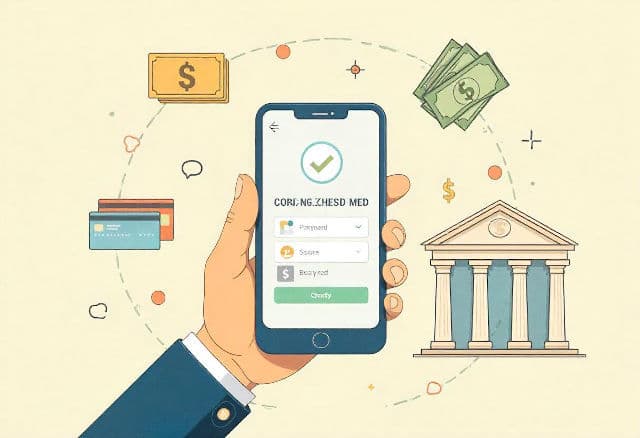
Digital Wallet: What It Is, How It Works, Types, and Examples
A digital wallet (e-wallet) is a software application that stores payment information on your electronic device, enabling cashless transactions via QR codes, NFC, or online encryption. Digital wallets come in three types: closed (single merchant), semi-closed (partner merchants), and open (full banking functionality). Popular examples include PayPal, Apple Pay, Google Pay, and bKash. They offer convenience, speed, and security but depend on device availability and internet connectivity.
488Read
M
Money
March 11, 2026
Investing vs Saving: What's the Difference and Which Should You Do?
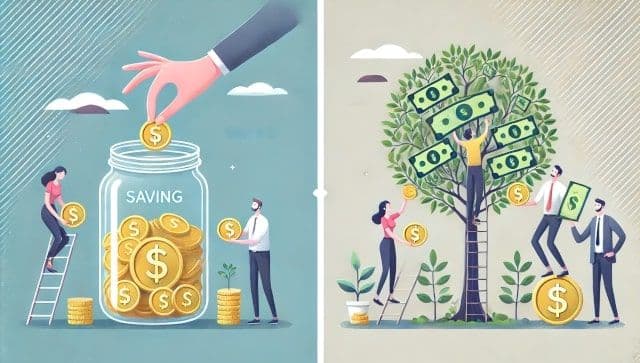
Saving and investing are both essential for financial health, but they serve different purposes. Saving means setting aside money in safe, low-return accounts for short-term needs and emergencies. Investing means putting money into assets like stocks and real estate for higher long-term returns, with the trade-off of risk. The ideal strategy combines both: save 3-6 months of expenses for emergencies, then invest the rest toward long-term goals like retirement.
347Read
M
Money
March 11, 2026
Time Value of Money (TVM): What It Is, How It Works, Formulas, and Examples
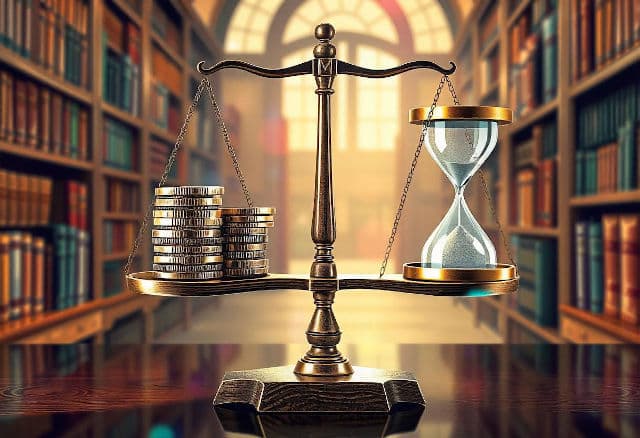
The time value of money (TVM) is a core financial principle stating that money available today is worth more than the same amount in the future due to its earning potential. Through compound interest, invested money grows exponentially over time. The TVM formula — FV = PV x (1 + i/m)^(m x n) — allows you to calculate future and present values of money. Understanding TVM is essential for saving, investing, debt management, and retirement planning.
379Read
M
Money
March 11, 2026
Fiat Money: What It Is, How It Works, History, Advantages, and Risks
Fiat money is government-issued currency that is not backed by a physical commodity like gold or silver. Its value comes from public trust in the issuing government and supply-and-demand dynamics. First used in 10th-century China, fiat money became the global standard after the U.S. abandoned the gold standard in 1971. While it offers flexibility for monetary policy and enables modern banking, fiat money carries risks including inflation, dependence on public trust, and potential for hyperinflation when mismanaged.
465Read
M
Money
March 11, 2026
Money Illusion: What It Is, How It Works, History, and Real-World Examples
Money illusion is a psychological bias where people evaluate their wealth and income in nominal terms (face value) rather than real terms (adjusted for inflation). First described by economist Irving Fisher in 1928, this bias leads people to feel wealthier when their salary increases even if inflation has risen faster. Money illusion affects salary negotiations, real estate valuations, savings decisions, and plays a key role in the Phillips Curve relationship between unemployment and inflation.
518Read
M
Money
March 11, 2026
The Psychology of Money: How Your Mind Shapes Your Financial Life
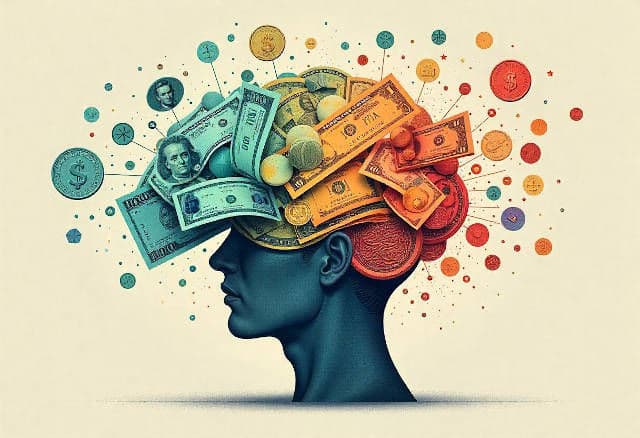
The psychology of money explores how cognitive biases, emotional patterns, mindsets, and social influences shape our financial decisions. Common biases like confirmation bias, loss aversion, and anchoring can lead to costly mistakes. Money mindsets — scarcity, abundance, and avoidance — determine our approach to saving and investing. Family upbringing, cultural conditioning, and emotions like fear and greed profoundly affect financial behavior. Improving money psychology requires setting clear goals, budgeting, seeking professional advice, and practicing mindful spending.
437Read
M
Money
March 11, 2026
Money vs Currency: What's the Difference and Why It Matters
Money and currency are related but distinct concepts. Money is a broad term for any universally accepted medium of exchange, unit of account, and store of value — it can take many forms including gold, digital assets, and physical cash. Currency is a specific type of money issued by a government or central bank for use within a particular country. Key differences include their nature, forms, backing, intrinsic value, stability, and international acceptance. All currency is money, but not all money is currency.
419Read
M
Money
March 11, 2026
Currency: What It Is, How It Works, Types, and How Its Value Is Determined
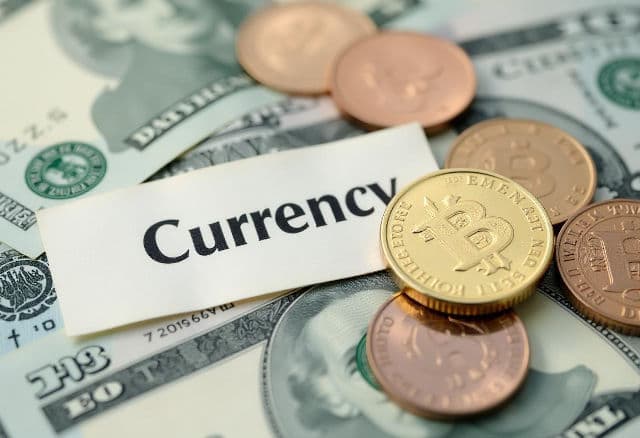
Currency is a medium of exchange used in everyday transactions, issued by governments and central banks. It comes in three main types: fiat currency (government-backed, like the dollar and euro), commodity money (backed by physical goods like gold), and cryptocurrency (decentralized digital money like Bitcoin). A currency's value is determined by factors including interest rates, inflation, foreign investment, and trade balance. Exchange rates measure currency value, operating under either fixed or floating systems.
365Read
M
Money
March 11, 2026
Money Supply: What It Is, How It Works, Types (M1, M2, M3), and Its Impact on the Economy
Money supply refers to the total amount of currency and liquid assets circulating in an economy at a specific point in time. It is measured in categories: M1 (cash and demand deposits), M2 (M1 plus short-term deposits and money market funds), and M3 (M2 plus long-term deposits). The central bank controls money supply through tools like the bank rate, open market operations, and reserve requirements. Changes in money supply directly affect interest rates, inflation, borrowing, spending, and overall economic growth.
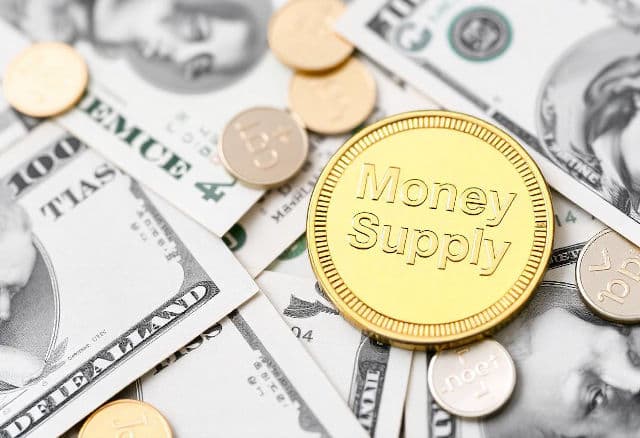
393Read
M
Money
March 11, 2026
Monetary Policy: What It Is, How It Works, Types, Tools, and Objectives
Monetary policy is the set of rules and actions used by a country's central bank to control money supply and credit conditions in the economy. The three main tools are the bank rate, open market operations, and reserve requirements. There are two types: expansionary policy (used during recessions to stimulate growth) and contractionary policy (used to control inflation). Key objectives include controlling inflation, reducing unemployment, and managing exchange rates. Unlike fiscal policy which is managed by the government, monetary policy is the exclusive domain of the central bank.
382Read
M
Money
March 11, 2026
Fiscal Policy: What It Is, How It Works, Types, and Why It Matters
Fiscal policy is the government's use of spending and taxation to influence the economy. It originated from John Maynard Keynes's ideas during the Great Depression. There are two types: expansionary fiscal policy (cutting taxes and increasing spending to stimulate growth) and contractionary fiscal policy (raising taxes and cutting spending to control inflation). The three main components are government spending, taxation, and debt management. Fiscal policy aims to achieve economic growth, employment generation, price stability, and income equality.
290Read
M
Money
March 11, 2026
Who Controls Our Money? The Role of Central Banks, Governments, and Financial Institutions
The control of money in any economy is primarily managed by the central bank, which issues currency, sets monetary policy, and regulates interest rates. The government complements this through fiscal policy involving taxation and public spending. Commercial banks further influence money supply through fractional reserve banking. Together, these institutions work to maintain economic stability, control inflation, and promote sustainable growth. Understanding who controls money helps explain why prices change, how economies grow, and why policy decisions impact our daily financial lives.
375Read
M
Money
March 11, 2026
Velocity of Money: What It Means, How It Works, and Why It Matters with Examples
The velocity of money measures how quickly money circulates through an economy, calculated by dividing GDP by the money supply. A higher velocity indicates a healthy, active economy where money changes hands frequently, while a lower velocity suggests people are saving more and spending less. Factors like money supply, consumer confidence, digital payment systems, and credit availability all influence velocity. Central banks and policymakers closely monitor this indicator to shape monetary and fiscal policy decisions.
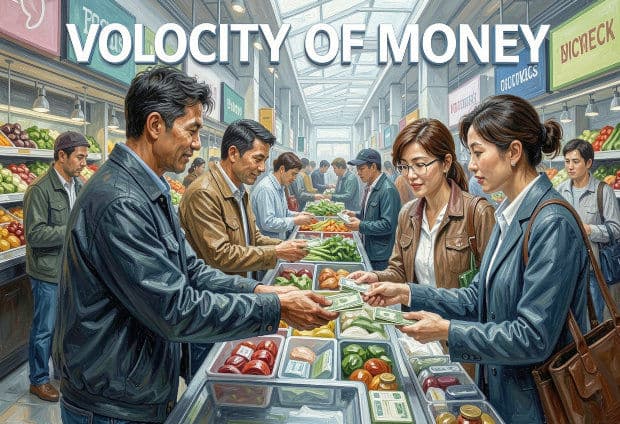
337Read
M
Marketing
March 11, 2026
Surrogate Marketing: What It Is, How It Works, and Famous Examples
Surrogate marketing is a strategy where companies promote restricted or banned products by advertising different, legally permissible products under the same brand name. Most commonly used by alcohol and tobacco companies in countries with advertising bans, surrogate marketing maintains brand visibility through substitute products like mineral water, soda, music CDs, and event sponsorships. While it demonstrates creative business adaptation, it raises ethical concerns about undermining public health regulations.

731Read
M
Marketing
March 11, 2026
The 5 C's of Marketing: A Complete Framework for Strategic Analysis
The 5 C's of Marketing is a situational analysis framework that examines five key factors influencing marketing strategy: Company, Customers, Collaborators, Competitors, and Climate. This comprehensive framework provides a 360-degree view of your business environment, helping marketers make informed strategic decisions. By analyzing internal strengths and weaknesses, understanding customer needs, evaluating partnerships, studying competitors, and assessing external factors, businesses can develop more effective and targeted marketing strategies.

873Read
M
Marketing
March 11, 2026
Ambush Marketing: What It Is, Types, Examples, and Is It Legal?
Ambush marketing is a strategy where brands capitalize on the publicity of major events without being official sponsors. Coined by Jerry Welsh in the 1980s, it ranges from aggressive predatory ambushing to subtle indirect campaigns. Famous examples include Samsung vs Apple, Audi vs BMW billboard wars, and Nike's Olympic campaigns. While ambush marketing offers massive exposure at low cost, it carries legal risks and ethical concerns, with many countries enacting specific anti-ambush legislation.
820Read
M
Marketing
March 11, 2026
DeMarketing: What It Is, Types, Strategies, and Real-World Examples
DeMarketing is a strategy designed to intentionally reduce or redirect demand for a product or service. First introduced by Philip Kotler and Sidney Levy in 1971, demarketing serves purposes ranging from managing supply shortages and conserving resources to maintaining brand exclusivity and promoting public health. The three types, general, selective, and ostensible demarketing, each serve different objectives. Common strategies include price increases, reduced advertising, and redirecting customer attention to alternative products.

777Read
M
Marketing
March 11, 2026
Emotional Marketing: What It Is, How It Works, and Why It Drives Results
Emotional marketing is a strategy that leverages emotions like happiness, fear, nostalgia, and inspiration to create powerful connections between brands and consumers. Rooted in Aristotle's concept of pathos, emotional marketing taps into the fact that 95% of purchasing decisions are subconscious and driven by emotion. Brands like Coca-Cola, Nike, and Apple have mastered this approach, creating campaigns that resonate deeply with audiences. While emotional marketing delivers higher ROI and brand loyalty, it requires authenticity and cultural sensitivity to avoid backfiring.

739Read
M
Marketing
March 11, 2026
STP Marketing -- The Complete Guide to Segmentation, Targeting, and Positioning
STP (Segmentation, Targeting, Positioning) is the foundational strategic marketing framework popularized by Philip Kotler. Segmentation means dividing a broad market into smaller groups based on demographics, geography, psychographics, and behavior. Targeting means choosing which segment to serve. Positioning means creating a distinct place for your brand in that segment's mind. According to Bain & Company (2025), businesses that follow STP strategy are approximately 25% more profitable than those that don't. This guide covers all three steps in depth with real-world examples from Nike, Spotify, and Coca-Cola, industry data, a step-by-step implementation process, and common mistakes to avoid.
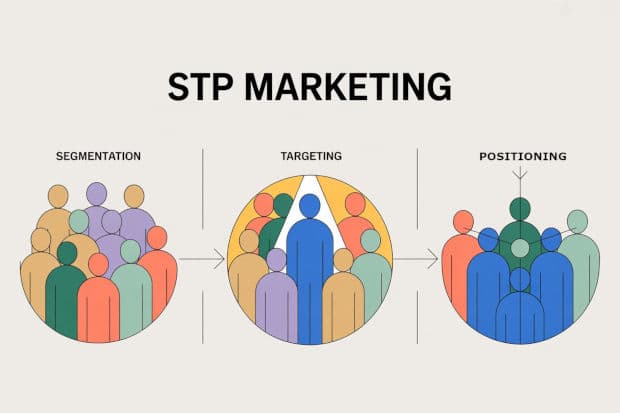
1,305Read
M
Marketing
March 11, 2026
Holistic Marketing: What It Is, How It Works, and Why Your Business Needs It
Holistic marketing is a business philosophy that treats everything the company does as part of its marketing strategy. Introduced by Philip Kotler and Kevin Lane Keller, it ensures that all departments, channels, and activities are aligned toward a unified marketing vision. Built on five key principles, including integrated marketing, internal marketing, relationship marketing, socially responsible marketing, and performance marketing, this approach creates consistent customer experiences, stronger brand identity, and improved business efficiency.

560Read
M
Marketing
March 11, 2026
Inbound vs Outbound Marketing: Key Differences, Pros, Cons, and Which One to Choose
Inbound and outbound marketing represent two fundamentally different approaches to reaching customers. Inbound marketing attracts customers through valuable content like blogs, SEO, and social media, while outbound marketing pushes messages to audiences through TV ads, cold calls, and billboards. Inbound is more cost-effective and builds long-term trust, but takes time. Outbound delivers faster results and broader reach, but can be expensive and intrusive. The most effective marketing strategies combine both approaches to maximize impact.

433Read
M
Marketing
March 11, 2026
Outbound Marketing: What It Is, How It Works, Pros, Cons, and Strategies
Outbound marketing is a traditional marketing strategy where businesses push their messages out to a broad audience through channels like TV ads, cold calls, email blasts, billboards, and trade shows. Unlike inbound marketing, where customers find you, outbound marketing takes the message directly to potential customers. While it offers advantages like immediate results and easy scalability, it can be expensive and intrusive. Modern outbound marketing has evolved with data-driven targeting and personalization, and the most successful businesses combine outbound and inbound strategies for maximum impact.

429Read
M
Marketing
March 11, 2026
Inbound Marketing: What It Is, How It Works, and Why It Matters
Inbound marketing is a modern digital marketing strategy that focuses on attracting customers by creating valuable, relevant content rather than interrupting them with traditional advertising. Popularized by HubSpot co-founder Brian Halligan in 2005, inbound marketing combines tactics like SEO, content marketing, social media, and email marketing to pull potential customers toward your brand. Its five pillars include attracting traffic, conversion, marketing automation, loyalty, and analysis. While it costs less than outbound marketing and generates higher-quality leads, it requires patience and consistent effort to see results.

396Read
M
Marketing
March 11, 2026
Marketing Myopia: What It Is, Why It Happens, and How to Avoid It
Marketing myopia is a concept introduced by Theodore Levitt in 1960 that describes what happens when companies focus too heavily on selling their existing products instead of paying attention to what customers actually need. Companies like Kodak, Nokia, BlackBerry, and Yahoo all suffered from marketing myopia because they prioritized short-term sales over long-term customer satisfaction. To avoid this trap, businesses must adopt customer-centric strategies, invest in research, and continuously evolve their products to match changing market demands.

318Read
M
Marketing
March 11, 2026
The Evolution of Marketing: From the Industrial Revolution to the Digital Age
Marketing has undergone a remarkable evolution from the Industrial Revolution to the present day. It progressed through five major eras: the Production-Oriented Era (1800-1920), the Sales-Oriented Era (1920-1940), the Marketing-Oriented Era (1940-1970), the Societal-Oriented Era (1970-present), and the Digital Marketing Era (1990-present). Each era fundamentally changed how businesses interact with customers.

362Read
M
Marketing
March 11, 2026
White Label Marketing: What It Is, How It Works, and Is It Right for You?
White label marketing is a strategy where one company uses another company’s products, services, or marketing expertise under its own brand name. It helps businesses expand their service offerings, reduce costs, and focus on core strengths. However, it comes with risks including reduced quality control and increased competition. This article covers what white label marketing is, who can use it, its pros and cons, and tips for successful implementation.

255Read
M
Marketing
March 11, 2026
Target Market -- Who Is Your Ideal Customer and How to Find Them
A Target Market is the specific group of consumers most likely to buy your product or service, defined by demographic (age, income, gender), geographic (location), psychographic (values, lifestyle), and behavioral (purchase habits) characteristics. According to HubSpot's 2025 State of Marketing report, businesses with well-defined target markets achieve approximately 200% higher marketing ROI. Nike does not sell shoes to 'everyone' -- per their published brand strategy, they target fitness-conscious, aspirational consumers aged 18-34. This guide covers definitions, the 4 segmentation types, Target Market vs Target Audience, a step-by-step identification process, real-world brand examples, common mistakes, tools, and data-backed insights on why precise targeting is the foundation of all effective marketing.
500Read
M
Marketing
March 11, 2026
What Is a Market? Types of Markets Explained with Real-World Examples
A market is any arrangement where buyers and sellers come together to exchange goods and services. While commonly associated with physical locations, markets in economics encompass everything from local vegetable stands to global financial exchanges. Markets are classified by size (local, national, international), time duration (short-period to very long-period), and competition level (perfect to imperfect). Understanding these types is essential for business strategy and economic analysis.
394Read
M
Marketing
March 11, 2026
Porter's Five Forces: A Complete Guide to Competitive Market Analysis
In 1980, Michael E. Porter introduced five forces for analyzing market competition: the power of customers, the power of suppliers, industry competition, the threat of new entrants, and the threat of substitute products or services. This framework remains one of the most widely used tools for competitive market analysis, helping businesses understand their position and develop effective strategies.

301Read
L
Logo
March 11, 2026
The Pros and Cons of Logo Usage: What Every Business Should Know
A logo is not just a symbol. It is the face of an organization, a reflection of its values, and the first thing customers see. The advantages and disadvantages of having a logo depend entirely on its design and usage. A well-crafted logo builds brand identity, professionalism, and customer loyalty, while a poorly designed one can send wrong messages and hurt the brand. This article explores both sides in detail.
352Read
L
Logo
March 11, 2026
Famous Logo Examples: The Hidden Stories Behind 10 Iconic Brand Logos
A logo is not just a symbol. It is the visual identity of a brand, a representation of its values, history, and aspirations. From the hidden bear in Toblerone’s mountain to Amazon’s A-to-Z arrow, every famous logo has a story worth knowing. This article breaks down 10 iconic brand logos and reveals the design thinking and strategy behind each one.

383Read
I
Investment
March 10, 2026
Venture Capital: How It Works, Stages, and Why It Matters
Venture capital (VC) is a form of private equity financing where investors provide funding to high-growth startups in exchange for equity stakes. VC firms pool capital from limited partners and deploy it into promising companies, offering not just money but also strategic guidance, mentorship, and industry connections. Startups typically raise capital in stages from pre-seed through Series C and beyond, with global VC investment exceeding $300 billion in 2021. While most venture-backed startups fail, the winners can generate extraordinary returns, following a power law distribution that makes venture capital one of the most powerful engines of innovation and economic growth worldwide.

477Read
I
Investment
March 10, 2026
10 Things to Consider Before Making an Investment Decision
Investing can transform your financial future, but only if you approach it with the right preparation. This comprehensive guide walks you through the 10 most important things every investor should consider before putting money into any investment. From defining clear financial goals and understanding your risk tolerance to building an emergency fund, managing fees, and avoiding emotional decision-making, these foundational principles will help you make smarter, more confident investment decisions that align with your personal financial situation and long-term objectives.

434Read
I
Investment
March 10, 2026
Angel Investing: What It Is and How It Works
Angel investing is a form of early-stage financing where high-net-worth individuals provide capital to startups in exchange for equity ownership. This guide covers everything you need to know about angel investing, including how it works, who qualifies as an angel investor, SEC accredited investor criteria, the difference between angel investors and venture capitalists, the typical investment process from deal sourcing to closing, famous success stories like Google, Facebook, Uber, and WhatsApp, the risks and rewards involved, and practical advice for both founders seeking angel funding and aspiring investors looking to get started.
531Read
F
Finance
March 10, 2026
Insurance: What It Is, How It Works, and Why You Need It
Insurance is a financial contract that protects individuals and businesses from unexpected financial losses by transferring risk to an insurance company in exchange for regular premium payments. This comprehensive guide covers everything you need to know about insurance, including how it works through risk pooling and underwriting, its rich history dating back to ancient Babylon, the major types of insurance available today such as life, health, auto, and homeowners insurance, key terminology every policyholder should understand, how insurance companies generate revenue, factors that affect your premiums, practical tips for choosing the right policy, common mistakes to avoid, and the exciting future of insurance driven by insurtech, artificial intelligence, and innovative models like usage-based and parametric insurance.

403Read
F
Finance
March 10, 2026
ESOP: How Employee Stock Ownership Plans Work
An Employee Stock Ownership Plan (ESOP) is a tax-qualified retirement benefit that gives employees ownership stakes in the company they work for. Companies create ESOP trusts that hold and allocate shares of stock to eligible workers based on compensation or seniority. With roughly 6,500 active ESOPs covering 14 million participants in the United States, these plans offer significant tax benefits for companies while helping employees build retirement wealth at no direct personal cost. This guide covers how ESOPs work, their history, types, benefits, vesting rules, distribution procedures, and real-world success stories from companies like Publix Super Markets and WinCo Foods.
447Read
F
Finance
March 10, 2026
Financial Institutions: Types, Functions, and Their Role in the Economy
Financial institutions are organizations that handle monetary transactions such as accepting deposits, making loans, facilitating investments, and managing risk. They include commercial banks, investment banks, credit unions, insurance companies, brokerage firms, mutual funds, pension funds, and central banks. These institutions serve as intermediaries between savers and borrowers, playing a critical role in capital allocation, economic growth, and financial stability. Understanding how they work, the risks they face, and how they are regulated is essential for anyone navigating the modern financial landscape.
561Read
F
Finance
March 10, 2026
SWIFT: How the Global Financial Messaging System Works
SWIFT (Society for Worldwide Interbank Financial Telecommunication) is the global messaging network that powers cross-border payments. Connecting over 11,000 financial institutions in 200+ countries, SWIFT does not move money directly but instead carries secure payment instructions between banks. This article explains how SWIFT works, its history since 1973, message types, fees, geopolitical significance including the 2022 Russia sanctions, alternatives like CIPS and Ripple, and the future of global payments through gpi and ISO 20022.
774Read
F
Finance
March 10, 2026
The Roles of Finance: How Money Management Drives Every Part of Our Lives
Finance is the backbone of modern life, guiding how individuals budget and invest, how businesses allocate capital and manage cash flow, and how governments fund public services and manage national debt. From personal savings strategies like the 50/30/20 rule to corporate capital structuring and public fiscal policy, the roles of finance are vast and interconnected. This article explores the three main branches of finance, examines how finance drives decision-making at every level, and highlights the growing impact of fintech, AI, and blockchain on the financial landscape.
397Read
F
Finance
March 10, 2026
The Bond Market: A Comprehensive Guide to Fixed-Income Investing
The bond market is a vast financial marketplace where debt securities are traded. With a global value exceeding $130 trillion, it dwarfs the stock market in size. Bonds work as IOUs: investors lend money to governments, municipalities, or corporations in exchange for regular interest payments and the return of principal at maturity. This guide covers the different types of bonds, how prices and interest rates interact, key metrics like yield and credit ratings, the risks and benefits of bond investing, and practical steps to get started.

396Read
E
Economics
March 10, 2026
Forex Market Explained — The World's Largest Market, Exchange Rate, Bangladesh Bank's Role, History, and the Dollar Crisis Story
The Forex Market is where one currency is converted into another — the world's largest, with daily turnover of $7.5 trillion. Currency pairs (Major, Minor, Exotic) and Spot/Forward/Swap form its structure. Exchange rates are determined at three layers — supply-demand, interest/inflation differential, and PPP. Bangladesh Bank has been running a Crawling Peg regime since 2024. Five structural causes of the 2022-24 dollar crisis and five solution paths. History from Bretton Woods 1944 to 2026's de-dollarization.
874Read
F
Finance
March 10, 2026
The 4% Rule: Your Guide to Sustainable Retirement Withdrawals
The 4% Rule is a retirement guideline that helps working professionals figure out how much money they need in the bank to comfortably sustain their retirement years. The framework is scientifically proven, historically successful, and easy to implement if applied consciously. Four simple steps and a basic calculation create a foundational structure that can help you build your own customized retirement withdrawal plan.
459Read
E
Economics
March 9, 2026
Malaysia's Economic Reforms: From Agrarian Roots to Industrial Powerhouse (Part 1)
Malaysia's economic journey from a colonial agrarian economy to a modern industrial powerhouse is one of the most remarkable transformation stories in Southeast Asia. This first part explores how the New Economic Policy (NEP) of 1971 tackled poverty and racial economic disparity, how FELDA resettled over 112,000 families, and how bold industrialization moves like the Proton car project reshaped the nation. It also covers Malaysia's controversial but effective response to the 1997 Asian Financial Crisis and the ambitious Vision 2020 framework that guided the country's development trajectory.
532Read
E
Economics
March 9, 2026
Monetary Policy: Definition, Types, Tools, and How It Works
Monetary policy refers to the actions taken by a central bank to manage the money supply and interest rates in an economy. Central banks like the Federal Reserve, the European Central Bank, and the Bank of England use tools such as adjusting the bank rate, conducting open market operations, and setting reserve requirements to influence inflation, employment, and economic growth. This article explains how monetary policy works, its main types including expansionary and contractionary approaches, the key tools central banks rely on, and how monetary policy differs from fiscal policy.
599Read
E
Economics
March 9, 2026
Fiscal Policy: Definition, Types, Tools, and How It Works
Fiscal policy is one of the most powerful tools a government has to influence the economy. Through strategic adjustments to taxation and public spending, governments can stimulate growth during recessions, cool down overheating economies, create jobs, and work toward price stability. This article explores the definition, origins, types, objectives, and real-world examples of fiscal policy, from the Great Depression to the COVID-19 pandemic, helping you understand how government budgets shape everyday economic life.
532Read
E
Economics
March 9, 2026
Social Business and the Paris 2024 Olympics: How It Changed the Game
The Paris 2024 Olympics pioneered the integration of social business principles into a major global event. The Games targeted a 50% reduction in carbon footprint compared to London 2012, used 100% renewable energy, and prioritized social enterprises in procurement. By engaging local communities, creating jobs for disadvantaged populations, and promoting sustainability, Paris 2024 demonstrated that profitability and social responsibility can coexist at the largest scale.
422Read
E
Economics
March 9, 2026
Social Business Model: What It Is, How It Works, Types, and Real-World Examples
A social business is a non-dividend company that reinvests all profits to further its social mission rather than distributing them to shareholders. Popularized by Nobel laureate Muhammad Yunus through Grameen Bank, the model operates on five core principles: purpose-driven, financially sustainable, non-dividend, social impact focused, and environmentally aware. Real-world examples include Grameen Danone Foods, BRAC, and Grameen Veolia Water.

576Read
E
Economics
March 9, 2026
The Three Zero Model: Zero Poverty, Zero Unemployment, Zero Carbon
The Three Zero Model, proposed by Nobel laureate Muhammad Yunus in his 2017 book, envisions a world with zero poverty, zero unemployment, and zero net carbon emissions. It challenges traditional capitalism by promoting social businesses that solve problems rather than maximize profit. Built on the success of Grameen Bank and microfinance, the model has gained global traction in countries like India, Brazil, Kenya, and France.

445Read
E
Economics
March 9, 2026
Microfinance: What It Is, How It Works, History, and Impact
Microfinance is the provision of small-scale financial services to low-income individuals who lack access to traditional banking. Pioneered by Muhammad Yunus through Grameen Bank in Bangladesh in 1976, microfinance uses group lending, small loans, and flexible repayment to serve the unbanked. While it has transformed millions of lives through poverty reduction and women's empowerment, it faces criticisms over high interest rates and debt traps.
482Read
E
Economics
March 9, 2026
Recession: What It Is, Causes, Historical Examples, and How to Prepare
A recession is a significant decline in economic activity lasting two or more consecutive quarters of negative GDP growth. Recessions are part of the natural business cycle and are caused by financial crises, tight monetary policy, external shocks, and loss of consumer confidence. The Great Depression of 1929 remains the most severe example. Preparation through emergency savings, reduced debt, and wise investing helps individuals weather economic downturns.

496Read
E
Economics
March 9, 2026
Inflation: What It Is, Types, Causes, How It's Measured, and Why It Matters
Inflation is the sustained increase in the general price level of goods and services over time, reducing the purchasing power of money. It is caused by excess money supply, government spending, credit expansion, and production declines. The five main types are demand-pull, cost-push, built-in, imported, and monetary inflation. Measured through CPI and WPI, moderate inflation (2-3%) is considered healthy for economic growth.
514Read
E
Economics
March 9, 2026
Budget: What It Is, Types, How Government Budgets Work, and Why It Matters
A budget is a financial plan that estimates income and expenditure over a specific period. Government budgets involve four stages: formulation, approval, implementation, and evaluation. Revenue comes from direct taxes, indirect taxes, and non-tax sources, while expenditure covers defense, education, healthcare, and infrastructure. Budgets can be balanced, surplus, or deficit depending on the relationship between income and spending.
406Read
E
Economics
March 9, 2026
Opportunity Cost: What It Is, Formula, Types, and Real-World Examples
Opportunity cost is the value of the next best alternative you forgo when making a decision. It is a fundamental economic concept that applies to individuals, businesses, and governments. Calculated as the return on the forgone option minus the return on the chosen option, opportunity cost helps evaluate trade-offs in investment, career, and everyday decisions.

525Read
E
Economics
March 9, 2026
Taxation: Definition, Purpose, Types, and Why It Matters
Taxation is the process by which governments collect money from individuals and businesses to fund public services and manage the economy. Taxes are broadly classified into direct taxes (income tax, corporate tax, property tax) that are paid directly to the government, and indirect taxes (VAT, customs duty, excise duty) that are levied on goods and services. Tax revenue funds infrastructure, education, defense, and social welfare programs.
471Read
E
Economics
March 9, 2026
Gross Domestic Product (GDP): What It Is, How It's Calculated, and Why It Matters
Gross Domestic Product (GDP) is the total monetary value of all finished goods and services produced within a country's borders during a specific period. It is the most widely used indicator of economic health, calculated using three methods: income, expenditure, and production. The GDP formula (C + I + G + (X - M)) captures consumption, investment, government spending, and net exports. Per capita GDP divides total output by population to measure average economic well-being.
580Read
E
Economics
March 9, 2026
Consumer Price Index (CPI): What It Is, How It's Calculated, and Why It Matters
The Consumer Price Index (CPI) measures the average change in prices paid by consumers for a fixed basket of goods and services over time. It is the most widely used indicator of inflation. This guide explains what CPI is, walks through a step-by-step calculation example, covers the Laspeyres formula, and discusses the key limitations including substitution bias, quality changes, and regional variation.
509Read
E
Economics
March 9, 2026
Blue Economy: What It Is, Why It Matters, and Its Potential for Coastal Nations
The blue economy refers to the sustainable use of ocean and marine resources for economic growth, improved livelihoods, and ecosystem health. This guide covers what the blue economy is, its major sectors (fisheries, offshore energy, shipping, tourism, marine biotech), the specific potential for coastal nations like Bangladesh with its 710-kilometer coastline and Bay of Bengal resources, the key challenges including overfishing, pollution, and climate change, and strategies for sustainable ocean development.

372Read
E
Economics
March 9, 2026
Macroeconomics vs Microeconomics -- The Complete Guide to Understanding Both Sides of the Economy
Macroeconomics studies the entire economy — GDP, inflation, unemployment, monetary policy. Microeconomics studies individual decisions — a single consumer, a single business, a single market. Macro is the big picture, Micro is the close-up. When rice prices rise at your local shop, that is micro. When the central bank raises interest rates affecting the entire country, that is macro. This guide covers definitions, key differences, how they connect, real examples, and why understanding both is essential.
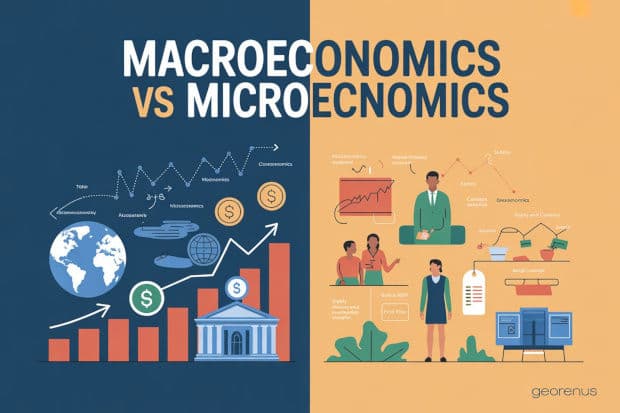
711Read
E
Economics
March 9, 2026
Law of Supply: Definition, How It Works, Exceptions, and Real-World Examples
The law of supply states that as the price of a good increases, the quantity supplied also increases, and vice versa — holding all other factors constant. This guide explains the law of supply, its relationship to market pricing, the key exceptions (perishable goods, natural disasters, production capacity limits, labor market anomalies), and how businesses, investors, and governments use supply analysis for decision-making.
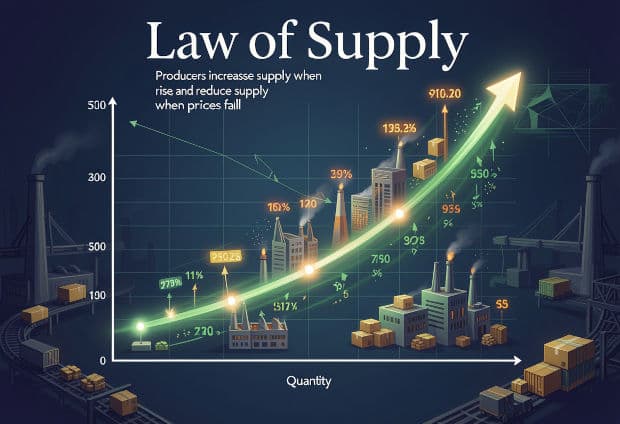
528Read
E
Economics
March 9, 2026
Law of Demand: Definition, Exceptions, Examples, and Why It Matters
The law of demand states that when the price of a good rises, the quantity demanded falls — and vice versa — assuming all other factors remain constant. This guide covers the law of demand in detail, including its definition, the key exceptions (Giffen goods, Veblen goods, speculative markets, and more), real-world examples, and its practical importance for business pricing strategies and government policy making.
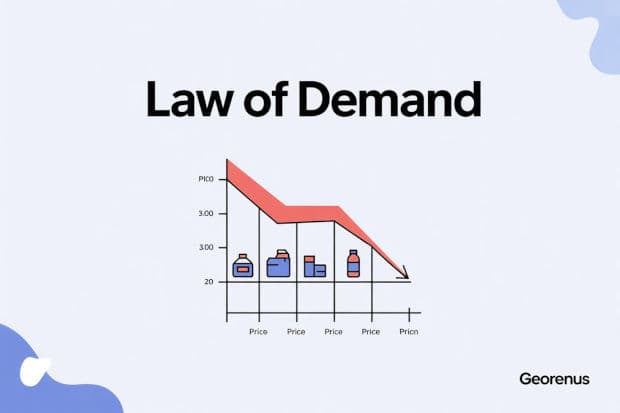
709Read
E
Economics
March 9, 2026
Macroeconomics: Definition, Goals, Importance, and How It Shapes the Economy
Macroeconomics is the branch of economics that studies the economy as a whole, examining aggregate phenomena like national output, inflation, unemployment, and economic growth. This guide covers the key goals of macroeconomics — from controlling inflation and maximizing GDP to creating employment — along with why it matters for policy making, business cycle analysis, national income measurement, and government decision-making.
508Read
E
Economics
March 9, 2026
Microeconomics: Definition, Scope, Importance, and Limitations Explained
Microeconomics is the branch of economics that studies the behavior and decision-making of individual consumers, firms, and industries. This guide covers the scope of microeconomics — from market structure analysis and consumer behavior to price determination and production theory — along with its practical importance in shaping economic policy, business strategy, and resource allocation, and the key limitations you should be aware of.
815Read
E
E-Commerce
March 8, 2026
Multi Vendor E-Commerce: How Marketplace Platforms Work and How to Build One
Multi vendor e-commerce is an online marketplace model where multiple independent sellers list and sell products through a single platform, like Amazon, eBay, or Etsy. This guide explains how multi vendor marketplaces work, covers the key statistics behind their dominance (67% of global e-commerce sales), and provides a step-by-step roadmap for building your own marketplace platform — from market research and platform development to payment integration and regulatory compliance.

418Read
E
E-Commerce
March 8, 2026
Single Branded E-Commerce: How to Build and Grow Your Own Online Store
Single branded e-commerce is an online retail model where a company sells exclusively its own products through its own website or digital storefront. This guide covers how to start a single branded e-commerce business — from market research and brand development to platform selection and logistics — along with the key advantages like brand control, higher profit margins, and customer data ownership, as well as the challenges you should prepare for.

408Read
E
E-Commerce
March 8, 2026
White Label vs Private Label E-Commerce: Which Model Is Right for You?
White label and private label are two popular e-commerce business models that let you sell products under your own brand name. White label involves rebranding generic products manufactured by a third party, offering faster time to market and lower costs. Private label means working with manufacturers to create custom, exclusive products, providing greater brand control and higher profit margins. This guide compares both models, examines their advantages, and helps you decide which approach fits your business goals.

434Read
E
E-Commerce
March 8, 2026
E-Commerce Marketing: The Complete Guide to Growing Your Online Store
E-commerce marketing is the practice of using promotional strategies to drive traffic to your online store, convert visitors into customers, and retain them for repeat purchases. This guide covers the five major e-commerce marketing channels — content marketing, email marketing, social media marketing, affiliate marketing, and search engine marketing — along with their advantages, best practices, and real-world examples to help you build an effective marketing strategy for your online business.
394Read
E
E-Commerce
March 8, 2026
E-Commerce Business Models: Dropshipping, Wholesaling, Private Label, White Label, and Subscription Explained
Running a successful e-commerce business starts with choosing the right business model. This guide explores five of the most popular e-commerce business models: dropshipping, wholesaling and warehousing, private labeling, white labeling, and subscription-based models. Each model has unique capital requirements, risk profiles, and profit potential, and understanding these differences is essential for entrepreneurs looking to build a profitable online business.
518Read
E
E-Commerce
March 8, 2026
Affiliate Marketing: How It Works, Types, Examples, and Pros & Cons
Affiliate marketing is a performance-based business model where affiliates earn commissions by promoting a merchant's products through their own marketing channels. This comprehensive guide covers how affiliate marketing works through a 9-step process, the three main types (unattached, involved, and related), popular programs like Amazon Associates, ClickBank, and ShareASale, along with the key advantages including low startup costs and passive income potential, and challenges such as high competition and income variability.

968Read
D
Digital Marketing
March 8, 2026
SEO: A Complete Guide to Search Engine Optimization for Websites
Search Engine Optimization (SEO) is a digital marketing technique used to improve a website's visibility and ranking on search engine results pages. This comprehensive guide covers the three main types of SEO—on-page, off-page, and technical—along with how search engines work through crawling, indexing, and ranking processes. It explains essential elements like keyword optimization, quality content, backlink building, website speed, mobile-friendliness, and SSL security, while highlighting key benefits including increased visibility, improved user experience, and cost-effective marketing.

648Read
D
Digital Marketing
March 8, 2026
Conversion Rate Optimization (CRO): Framework, Benefits, and Challenges
Conversion Rate Optimization (CRO) is the process of improving your website to increase the percentage of visitors who complete a desired action. This guide covers a comprehensive CRO framework including audience understanding, goal setting, data analysis, customer experience enhancement, compelling CTAs, A/B testing, trust building, mobile optimization, and continuous iteration. It also explores the key benefits like increased ROI and cost efficiency, along with common challenges such as data quality, testing complexity, and resource limitations.

697Read
D
Digital Marketing
March 8, 2026
Digital Marketing Strategies: A Complete Guide to Channels, Goals, and Growth
Digital marketing strategies are comprehensive plans that outline how businesses use digital channels to achieve their marketing objectives. This guide covers the essential elements of building an effective strategy including setting clear goals and KPIs, conducting audience research, implementing SEO and content strategies, leveraging social media engagement, analyzing data, optimizing conversions, and using remarketing tactics. It also explores major digital marketing channels such as SEO, PPC, social media, content marketing, email, chatbots, and podcasting.
667Read
E
E-Commerce
March 8, 2026
Dropshipping: What It Is, How It Works, Advantages, and Disadvantages
Dropshipping is an online retail business model where the seller markets and sells products without holding inventory. When a customer places an order, the seller forwards it to a third-party supplier who ships the product directly to the customer. This guide covers the complete dropshipping process from niche selection and store setup to supplier management and scaling, along with its key advantages like low investment and location independence, and disadvantages including low margins and intense competition.
869Read
D
Digital Marketing
March 8, 2026
Keyword Research and Selection: A Complete Step-by-Step Guide for SEO Success
Keyword research is a fundamental aspect of SEO that involves discovering and analyzing the specific words and phrases people type into search engines. This guide walks you through a structured 10-step process covering everything from understanding your business goals and brainstorming seed keywords to using professional tools, analyzing search intent, assessing keyword metrics, performing competitor analysis, and continuously monitoring and refining your strategy for long-term SEO success.

662Read
D
Digital Marketing
March 8, 2026
How Digital Marketing Changed the World: Channels, Impact, and Real Success Stories
Digital marketing has revolutionized how businesses connect with consumers worldwide. From the early days of Web 1.0 in 1991 to today's multi-channel ecosystem spanning SEO, PPC, email, social media, and content marketing, this transformation has given consumers unprecedented access and choice while enabling businesses of all sizes to compete on a global stage. This article explores the origins, major channels, real-world impact, advantages, disadvantages, and success stories of digital marketing.
683Read
D
Digital Marketing
March 8, 2026
Digital Marketing Challenges and Essential Skills for Success
Digital marketing encompasses all marketing efforts that use digital channels to reach consumers online. This guide covers how digital marketing works, the major challenges marketers face including data privacy, ad fatigue, and channel fragmentation, and the essential skills needed for success. From SEO and content creation to data analytics and PPC advertising, mastering these skills is crucial for anyone looking to build a career or grow a business in the digital economy.

689Read
D
Digital Marketing
March 8, 2026
Evolution of Marketing in the Digital Age: From Traditional to AI-Powered Strategies
The evolution of marketing from ancient marketplace signs to modern AI-powered strategies represents one of the most significant transformations in business history. With digital advertising spending surpassing traditional media for the first time in 2020, and over 4.9 billion internet users worldwide, digital marketing has become the dominant force in reaching customers. Key drivers include SEO, social media, content marketing, mobile optimization, influencer partnerships, and artificial intelligence.

692Read
D
Digital Marketing
March 8, 2026
Lead Generation: A Complete Step-by-Step Guide for Business Growth
Lead generation is the process of attracting and converting strangers into potential customers who have expressed interest in a company's products or services. This step-by-step guide covers everything from identifying your target audience and creating compelling content to leveraging social media, email marketing, paid advertising, SEO strategies, and CRM systems. With AI-based tools increasing lead volume by 50% or more, mastering lead generation is essential for sustainable business growth.

646Read
D
Digital Marketing
March 8, 2026
Search Engine Advertising Fundamentals: A Complete Guide to Paid Search
Search Engine Advertising (SEA) is a form of paid digital marketing where businesses place ads on search engine results pages to reach customers actively searching for their products or services. Also known as PPC or paid search, SEA involves key fundamentals including keyword research, ad copywriting, landing page optimization, bidding strategies, Quality Score management, and performance monitoring. With 53% of all website traffic originating from search engines, mastering these fundamentals is essential for any effective online marketing strategy.

344Read
C
Crime and Fraud
March 8, 2026
Pyramid Scheme: What It Is, How It Works, and How to Spot One
A pyramid scheme is an unsustainable and illegal business model where participants earn money primarily by recruiting new members rather than through legitimate product sales. The scheme takes the shape of a pyramid, with a few people at the top profiting while the majority at the bottom lose their investment. Common types include MLM disguised schemes, Ponzi schemes, eight ball models, and chain emails. Pyramid schemes are illegal in most countries and inevitably collapse when new recruitment slows down.
730Read
C
Crime and Fraud
March 8, 2026
Ponzi Scheme vs. Pyramid Scheme: How These Financial Frauds Work
Ponzi schemes and pyramid schemes are two of the most common forms of financial fraud. A Ponzi scheme pays existing investors with new investors' money, creating an illusion of legitimate returns, while a pyramid scheme generates income through recruiting new members who pay entry fees. Both are unsustainable by design and inevitably collapse. The largest Ponzi scheme in history was run by Bernie Madoff, defrauding investors of $65 billion. Understanding the differences between these schemes is essential for protecting yourself from financial fraud.

1,293Read
C
Crime and Fraud
March 8, 2026
White Collar Crime: Understanding Financial Fraud in the Corporate World
White collar crime refers to financially motivated, non-violent crimes committed by individuals in positions of trust and respectability. First defined by sociologist Edwin Sutherland in 1949, these offenses include securities fraud, embezzlement, money laundering, tax evasion, insurance fraud, and cybercrime. Unlike street crimes, white collar crimes often go undetected for years and can cause billions of dollars in losses. Famous cases like Enron, Bernie Madoff, and Volkswagen Dieselgate highlight the devastating impact these crimes have on investors, employees, and the broader economy.
557Read
C
Crime and Fraud
March 8, 2026
The Nigerian Prince Scam: How the World's Most Famous Email Fraud Works
The Nigerian Prince scam, also known as the 419 scam or advance-fee fraud, is one of the most infamous email scams in history. Originating from the Spanish Prisoner con of the 18th century, the modern version took shape in Nigeria during the 1990s and exploded with the rise of email and the internet. Scammers pose as wealthy royals or officials, promising victims millions in exchange for upfront fees. Despite widespread awareness, the scam continues to generate billions in losses annually, targeting vulnerable individuals worldwide.

894Read
C
Crime and Fraud
March 8, 2026
The Harshad Mehta Scam: India's Biggest Stock Market Fraud of 1992
The 1992 Harshad Mehta scam was one of the most notorious financial frauds in Indian history. Harshad Mehta, known as the Big Bull of Dalal Street, exploited loopholes in India's banking system by using fake Bank Receipts and ready forward deals to siphon approximately Rs. 4,000 crore from banks into the stock market. His manipulation caused the BSE Sensex to skyrocket from 1,000 to over 4,500 points before the fraud was exposed by journalist Sucheta Dalal. The scam led to sweeping reforms in India's financial regulatory framework.
751Read
C
Crime and Fraud
March 8, 2026
What Are Identity Theft and Cyber Fraud?
Identity theft and cyber fraud are among the fastest-growing crimes in the digital era. Identity theft occurs when criminals steal personal information such as names, Social Security numbers, bank details, or medical records to commit fraud. Using techniques like phishing, social engineering, and malware, cybercriminals can access sensitive data and cause devastating financial, credit, and reputational damage to their victims. Understanding the types, techniques, and prevention strategies is essential for protecting yourself in an increasingly connected world.
537Read
C
Crime and Fraud
March 8, 2026
What Are False Advertising and Marketing Fraud?
False advertising and marketing fraud are deceptive business practices where companies mislead consumers through exaggerated claims, fake images, hidden fees, and fabricated testimonials to drive sales. From bait-and-switch tactics to high-yield investment scams, these practices harm consumers financially and emotionally while ultimately destroying the brands that engage in them. Understanding the types, impacts, and legal protections available is essential for every consumer navigating today's marketplace.
565Read
C
Crime and Fraud
March 8, 2026
What Is Fraudulent Financial Reporting?
Fraudulent Financial Reporting (FFR) occurs when a company intentionally manipulates its financial statements to deceive investors, regulators, and other stakeholders about its true financial health. Methods include inflating revenue, hiding expenses, manipulating reserves, and creating fictitious transactions. Major corporate scandals like Enron, WorldCom, Satyam, and Parmalat have demonstrated the devastating consequences of FFR, which can destroy billions in shareholder value and undermine trust in financial markets.
590Read
C
Crime and Fraud
March 8, 2026
What Is Insider Trading?
Insider trading occurs when someone trades securities based on material, non-public information that gives them an unfair advantage over ordinary investors. While insider trading can be both legal and illegal depending on the circumstances, the illegal form involves breaching a duty of trust by using confidential corporate information for personal profit. With hundreds of cases filed annually in the United States alone, insider trading remains one of the most prosecuted forms of securities fraud worldwide.

598Read
C
Crime and Fraud
March 8, 2026
What Is Money Laundering?
Money laundering is the process of disguising the origins of illegally obtained money to make it appear legitimate. Criminals use a wide variety of methods, from structuring small deposits and creating shell companies to exploiting international trade and cryptocurrency, to move billions of dollars through the global financial system undetected. With an estimated $2 trillion laundered worldwide every year, money laundering remains one of the most significant threats to financial system integrity and economic development.
607Read
C
Crime and Fraud
March 8, 2026
The Five Biggest Stock Market Scams
From Enron's accounting deception to Bernie Madoff's record-breaking Ponzi scheme, the history of stock markets is littered with massive frauds that cost investors billions of dollars. This article examines five of the most infamous stock market scams in history: the Enron scandal of 2001, the Bernie Madoff Ponzi scheme of 2008, the WorldCom accounting fraud of 2002, the Tyco International embezzlement case, and the Volkswagen Dieselgate scandal of 2015. Each case offers critical lessons about corporate governance, regulatory oversight, and the importance of investor vigilance.

522Read
C
Crime and Fraud
March 8, 2026
What Is a Pump and Dump Scheme?
A Pump and Dump scheme is a form of securities fraud where criminals artificially inflate the price of a stock, cryptocurrency, or other asset through false and misleading promotion, then sell their holdings at the inflated price, leaving other investors with massive losses. This scam has existed since the earliest days of financial markets and has evolved into digital forms involving social media hype, email campaigns, chatroom manipulation, and even celebrity endorsements. Understanding how pump and dump works is the first step to protecting your investments.

379Read
C
Crime and Fraud
March 8, 2026
What Is Trade-Based Money Laundering?
Trade-Based Money Laundering (TBML) is a sophisticated method of disguising illegal proceeds by moving them through legitimate international trade transactions. Criminals manipulate invoices, misrepresent goods, and exploit the complexity of global commerce to convert dirty money into clean funds. TBML typically follows three stages: placement, layering, and integration. With methods ranging from over-invoicing and under-invoicing to outright bank fraud and export manipulation, TBML remains one of the hardest forms of financial crime to detect and prosecute worldwide.

355Read
C
Canvas & Methods
March 8, 2026
What Is Social Empathy Mapping?
Social Empathy Mapping is a visual tool that helps businesses understand their customers on a deeper, more human level. Originally created by Dave Gray, co-founder of the strategy consultancy XPlane, the empathy map captures what customers see, think and feel, hear, say and do, along with their pains and gains. By organizing customer insights into these six distinct quadrants, businesses can make better decisions about products, marketing, and brand strategy based on genuine understanding rather than assumptions.

531Read
C
Canvas & Methods
March 8, 2026
What Is the Customer Exploration Map?
The Customer Exploration Map is a structured template or chart that helps entrepreneurs and businesses systematically discover, analyze, and understand their target customers. It guides you through identifying who your customers are, what they like and dislike, what challenges they face, what assumptions you hold, what solutions already exist, and how to empathize with their real-world experiences. Used by startups and established businesses alike, this tool transforms guesswork about customers into actionable insights.
523Read
C
Canvas & Methods
March 8, 2026
What Is the Social Business Model Canvas?
The Social Business Model Canvas is a strategic planning tool designed specifically for social enterprises and mission-driven organizations. Developed in 2013 by Social Innovation Lab, it extends the traditional Business Model Canvas by adding blocks for social value, impact measurement, and beneficiary segments. With 13 interconnected blocks, it helps social entrepreneurs map out how their ventures can create both social impact and financial sustainability on a single page.

541Read
C
Canvas & Methods
March 8, 2026
What Is the Lean Canvas Model?
The Lean Canvas Model is a one-page, nine-block business planning framework specifically designed for startups and entrepreneurs. Created by Ash Maurya as an adaptation of the Business Model Canvas, it shifts the focus from traditional business planning to a problem-solution approach. Instead of spending weeks on lengthy business plans, founders can use the Lean Canvas to quickly map out their core problem, solution, target customers, revenue streams, and competitive advantages, all on a single page that is easy to iterate and share with investors or team members.

632Read
C
Canvas & Methods
March 8, 2026
What Is the Business Model Canvas?
The Business Model Canvas is a powerful one-page strategic tool that allows entrepreneurs and business leaders to visually map out all the critical components of their business. Developed by Alexander Osterwalder in 2005, this framework organizes your business idea into nine essential building blocks covering everything from value proposition and customer segments to cost structures and revenue streams. Instead of writing lengthy business plans, you can use this canvas to quickly prototype, test, and communicate your business model to teams and investors alike.

498Read
B
Business Models
March 8, 2026
Customer Data Monetization Model
Customer data monetization is a business model where companies offer free or low-cost services to users, collect their personal data, and then sell or leverage that data for revenue. Companies like Facebook, Google, and PatientsLikeMe have built multi-billion dollar empires using this approach. This article explains how the model works, what makes it successful, the risks involved, and real-world examples of companies that profit from user data.

546Read
B
Business Models
March 8, 2026
Bait and Hook Business Model Explained (Razor and Blade Model)
The bait and hook business model, also called the razor and blade model, is a pricing strategy where companies sell a base product at a low price or even at a loss, then generate recurring revenue from selling complementary consumable products at a premium. Popularized by Gillette with cheap razors and expensive blades, this model is now used across industries from gaming consoles to coffee machines. This article explains how it works, why companies use it, and what risks come with it.
780Read
B
Business Models
March 8, 2026
Freemium Business Model Explained: How Free Becomes Profitable
The freemium business model lets companies offer basic services for free while charging for premium features. Popularized by tech giants like Spotify, Dropbox, and Skype, this strategy turns free users into paying customers over time. This article explains how the freemium model works, its advantages, risks, real-world examples, and the keys to making it successful.
707Read
B
Business Models
March 8, 2026
Subscription Business Model Explained: How Recurring Revenue Works
The subscription business model is a revenue strategy where customers pay a recurring fee, typically monthly or yearly, in exchange for continuous access to a product or service. From streaming giants like Netflix to software platforms like Microsoft 365, subscriptions have become one of the most powerful and predictable ways for businesses to generate income. This article breaks down how the model works, its advantages, risks, real-world examples, and the keys to building a successful subscription-based business.

671Read
B
Business Models
March 8, 2026
Add-On Business Model Explained: How Companies Turn Extras Into Revenue
The add-on business model is a pricing strategy where companies offer a base product or service at a low or even free price and then generate additional revenue by selling extra features, upgrades, or complementary products. This model is widely used across industries from automobiles and airlines to mobile gaming and software. By keeping the entry price attractive, businesses draw in customers and then monetize through optional add-ons that enhance the core experience.

551Read
B
Business Law
March 8, 2026
Partnership Business: Definition, Types, and How to Start One
A partnership business is a legal arrangement where two or more individuals agree to share the profits, losses, and management responsibilities of a business. This guide explains what partnerships are, the different types, key considerations before forming one, how to register, what should be in a partnership agreement, and the advantages and disadvantages of this business structure.

416Read
B
Business Law
March 8, 2026
Sole Proprietorship: What It Is, How It Works, and How to Start One
A sole proprietorship is the simplest and most common form of business ownership where one person owns, operates, and is personally responsible for the entire business. This guide covers what a sole proprietorship is, its key characteristics, how to start and register one, tax obligations, and a balanced look at its advantages and disadvantages.
479Read
B
Business
March 7, 2026
Customer Acquisition Cost (CAC) -- The Complete Guide to Measuring and Reducing Your Cost Per Customer
Customer Acquisition Cost (CAC) is the measure of how much a business spends on average to acquire one new customer, calculated by dividing total sales and marketing expenses by the number of new customers gained in that period — for example, spending $10,000 in a month to acquire 100 customers gives a CAC of $100 per customer. This cost includes everything that goes into bringing in new customers: advertising, sales team salaries and commissions, marketing tools and software, content creation, and agency fees. CAC matters because it tells you whether your business is actually profitable; if the total value a customer brings over their lifetime (Customer Lifetime Value or LTV) is lower than the CAC, you're losing money on every customer, and the general rule of thumb is that a healthy business should maintain an LTV:CAC ratio of at least 3:1. From Casper's $308 CAC disaster to Dropbox's near-zero referral-driven acquisition -- understanding CAC can make or break your business. This complete guide covers formulas, three real-world case studies, industry benchmarks, LTV:CAC ratios, 10 proven reduction strategies, and essential tracking tools.
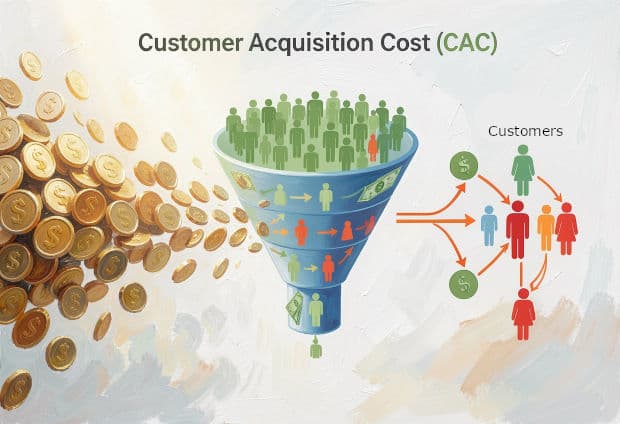
743Read
B
Business
March 7, 2026
Key Performance Indicators (KPIs): Definition, Types, and How to Use Them
Key Performance Indicators (KPIs) are measurable values that show how effectively a company is achieving its key business objectives. From executive-level metrics like net profit margin to department-specific ones like customer acquisition cost, KPIs help organizations track progress, engage employees, and make data-driven decisions. This guide covers what KPIs are, how to create them, the SMART framework, and the best KPIs for every department.
717Read
B
Business
March 7, 2026
Return on Investment (ROI) — The Complete Guide to Measuring How Hard Your Money Works
Return on Investment (ROI) measures net profit as a percentage of investment cost and is the most universally used financial metric for evaluating any investment. This guide covers the ROI formula, three calculation methods, real-world examples, industry benchmarks, key limitations, better alternatives like IRR and CAGR, and practical strategies to improve your returns in Bangladesh and globally.
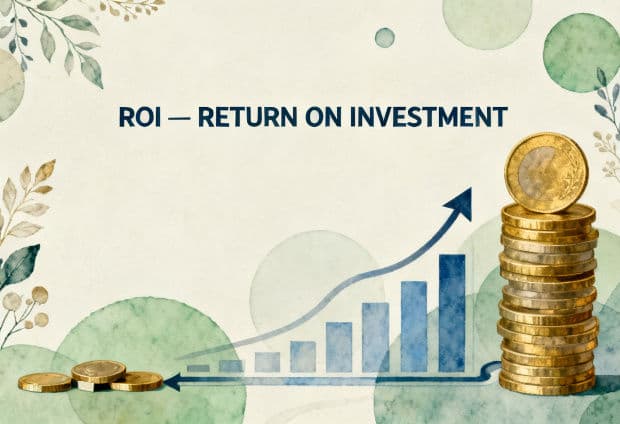
641Read
M
Marketing
March 7, 2026
Niche Market: What It Is, How to Find One, and Real-World Examples
A niche market is a focused segment of a broader market defined by its own unique needs, preferences, or identity. By targeting a niche, businesses can serve a specific group of customers more effectively, build stronger brand loyalty, and face less competition. This guide explains what niche markets are, provides real-world examples, and walks you through how to find the right niche for your business.
804Read
B
Business
March 7, 2026
Competitive Advantage: Definition, Types, and Real-World Examples
Competitive advantage is what makes a company stand out from its rivals by offering better value to customers. This article explores the three main types of competitive advantage strategies defined by Michael Porter, along with real-world examples and why it matters for business success.

712Read
B
Business
March 7, 2026
What Is a Patent? A Complete Guide to Patents
A patent is an exclusive right granted by a government that prevents others from making, using, selling, or distributing your invention for a specific period. This guide covers patent types, costs, the application process, famous examples, and how to protect your invention.
650Read
B
Business
March 7, 2026
Customer Lifetime Value (CLV/LTV) -- How Much Is Each Customer Really Worth to Your Business?
Customer Lifetime Value (LTV) is the estimated total revenue a single customer will generate for your business over the entire duration of their relationship. For example, the average Starbucks customer has an LTV of approximately $14,099, while an Amazon Prime member generates roughly $2,283 per year. Understanding LTV helps businesses decide how much to spend on acquiring new customers (CAC), which customer segments deserve the most attention, and why retention is almost always more profitable than acquisition. This guide covers 4 LTV formulas, three detailed real-world examples (coffee shop, e-commerce, SaaS), a comparison of top global companies' LTVs, 10 proven strategies to increase LTV, and essential benchmarks including the critical LTV:CAC ratio.
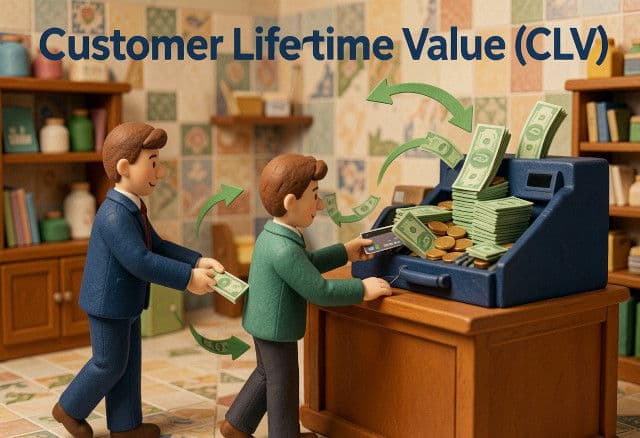
639Read
M
Marketing
March 7, 2026
TAM, SAM, and SOM: How to Measure Your Market Size Before Launching a Startup
TAM, SAM, and SOM are three essential metrics that help entrepreneurs and investors measure market size and growth potential. TAM represents the total addressable market, SAM narrows it to the serviceable portion, and SOM reflects the realistic market share a company can capture. Understanding these concepts is critical for building a solid business plan and attracting investor funding.
774Read
B
Business
March 7, 2026
Break-Even Analysis: How to Know When Your Business Starts Making Money
Break-even analysis helps business owners figure out exactly how many units they need to sell before they start turning a profit. By comparing fixed costs, variable costs, and selling price, you can find your break-even point and make smarter decisions about pricing, budgeting, and growth. This guide walks you through the formula, a real-world example, the benefits, limitations, and practical tips to lower your break-even point.

901Read
B
Business
March 7, 2026
Gross Profit vs Net Profit -- The Complete Guide to Understanding Business Profitability
Gross Profit tells you how efficiently you produce; Net Profit tells you how much you actually keep. This guide explains both with three real-world examples (retail store, digital agency, e-commerce), a comparison of top global companies like Apple, Amazon, and Meta, 10 data tables, and actionable strategies to improve your margins.
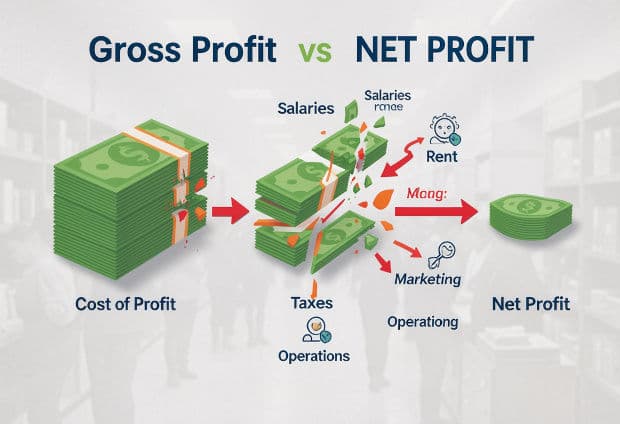
609Read
B
Business
March 7, 2026
Mastering Gross Profit Margin: A Key Profitability Metric
Gross Profit Margin measures the percentage of revenue a company retains after subtracting the cost of goods sold. It is a critical profitability metric used by investors and business owners to evaluate pricing power, operational efficiency, and competitive positioning across industries.

458Read
B
Business
March 7, 2026
Decoding Net Worth: What It Really Means
Net worth is the difference between your total assets and total liabilities, serving as the most comprehensive measure of financial health for both individuals and businesses. This article explains how to calculate net worth, why it matters, how billionaire wealth is estimated, and highlights the world's wealthiest individuals and most valuable companies.

528Read
M
Marketing
March 7, 2026
The Backbone of Modern Business: Supply Chain
A supply chain is the end-to-end system that moves a product from raw materials to the final consumer, encompassing sourcing, manufacturing, warehousing, distribution, and retail. This article explores how supply chains work, six major supply chain models used by companies like Toyota, Amazon, and Zara, and the five critical areas of effective supply chain management.
616Read
B
Business
March 7, 2026
Corporate Social Responsibility (CSR)
Corporate Social Responsibility (CSR) is the commitment by businesses to operate ethically and contribute to economic development while improving the quality of life of employees, communities, and society at large. This article explores stakeholder responsibilities, types of CSR, its business benefits, and real-world examples from global and Bangladeshi companies.
369Read
B
Business
March 7, 2026
Net Profit: What it is and How to Calculate
Net profit, also known as net income or the bottom line, is the amount of money a business retains after subtracting all expenses from total revenue. It is calculated as Total Revenue minus COGS, operating expenses, interest, taxes, and other costs. Net profit and its percentage form — net profit margin — are critical metrics for evaluating a company's financial health, comparing profitability across businesses, and making informed investment decisions.
361Read
B
Business
March 7, 2026
Understanding Business Models: B2B, B2C, and B2G
This article explains the three major business models: B2B (Business-to-Business), B2C (Business-to-Consumer), and B2G (Business-to-Government). It covers the key characteristics, real-world examples, and critical differences of each model, along with market size data and revenue figures from major companies like Salesforce, Amazon, and Lockheed Martin.

595Read
B
Branding
March 6, 2026
Luxury Branding
Luxury branding is the strategic process of positioning a product as rare, exclusive, and emotionally significant. This article explores what separates luxury from premium brands, examines iconic examples like Hermès, Louis Vuitton, and Ferrari, and outlines five essential steps to build a luxury brand from the ground up.

757Read
B
Branding
March 6, 2026
Personal Branding
Personal branding is the strategic practice of shaping how others perceive your professional identity, skills, and values. This article covers what personal branding is, step-by-step strategies to build your own brand, and why it matters for career growth, trust-building, and creating new opportunities in today's competitive landscape.
719Read
B
Branding
March 6, 2026
Co-Branding: What it is and why companies do that
Co-branding is a strategic alliance where two or more companies collaborate to create a joint product or service, combining their logos, credibility, and resources. This article explores the different types of co-branding, including ingredient, same company, national-to-local, and composite co-branding with real-world examples. It also covers the key advantages like audience growth, credibility, and reduced risk, as well as disadvantages such as coordination challenges and brand failure risk.
789Read
B
Branding
March 6, 2026
Brand Positioning: What Is and The Power of Brand Positioning
Brand positioning is the strategic process of occupying a distinct place in customers' minds so that your brand is the first one they think of when a need arises. This article explains what brand positioning is, why it matters for differentiation, pricing power, relevance, and credibility, and walks through five proven positioning strategies and a six-step framework for implementing your own.

679Read
B
Branding
March 6, 2026
Understanding Brand Image
Brand image is the perception customers hold about your brand based on their experiences, interactions, and the information available to them. Unlike brand identity, which is created internally by the company, brand image is determined externally by customers. A positive brand image drives reputation, competitive advantage, higher profits, and credibility — making it one of the most valuable strategic assets any business can build.

663Read
B
Branding
March 6, 2026
Understanding Brand Equity
Brand equity refers to the perceived value of a brand in the eyes of consumers, shaped by their experiences, perceptions, and emotional connections. It is built on five core components: brand awareness, brand loyalty, brand image, brand value, and brand association. Strong brand equity allows companies like Apple and Coca-Cola to charge premium prices, retain loyal customers, and dominate their markets. Conversely, negative brand equity — as seen with Evaly in Bangladesh — can erode trust, drive away customers, and take years to recover from.

691Read
M
Marketing
March 6, 2026
Content Marketing Strategy: A Complete Guide
Content marketing strategy is a long-term approach that uses valuable content such as blogs, videos, podcasts, and social media to build meaningful relationships with a target audience. Rather than pushing direct sales messages, it focuses on educating and informing customers, positioning the brand as a trusted authority. This guide covers the key content types, a six-step framework for building a strategy, and five essential metrics to measure its effectiveness.

705Read
B
Branding
March 6, 2026
Why Is Branding Important?
Branding is the process of creating a unique identity that differentiates your company from competitors and builds emotional connections with customers. Strong branding increases awareness, builds trust, improves advertising effectiveness, and fosters loyalty. According to research, 46% of customers are willing to pay more for brands they trust, making branding one of the most important investments a business can make.

708Read
B
Branding
March 6, 2026
10 Characteristics of a Good Brand Name
A strong brand name is the foundation of any successful business. The right name is short, memorable, legally available, and flexible enough to grow with your company. This article explores ten essential characteristics — from SEO friendliness and linguistic elegance to storytelling — that separate forgettable names from iconic ones.

737Read
B
Branding
March 6, 2026
Brand Architecture: Definition, Models, and Examples
Brand architecture is the strategic framework that defines how a parent company organizes, manages, and presents its portfolio of brands, sub-brands, products, and services. The three primary models — The Branded House, The House of Brands, and The Hybrid Brand Architecture — each offer distinct advantages depending on the company's market, customer base, and growth strategy. A well-planned brand architecture reduces marketing costs, sharpens brand positioning, and provides a scalable framework for long-term growth.

789Read
B
Branding
March 6, 2026
Rebranding: What it is and types of Rebranding.
Rebranding is a marketing strategy where an established company creates a new identity by changing its name, logo, visual design, messaging, or market positioning. It ranges from minor brand refreshes to complete transformations. Successful rebranding requires thorough planning, competitor analysis, clear messaging, and a well-executed launch strategy. Companies like McDonald's, Pepsi, and Instagram have all undergone significant rebranding efforts throughout their histories.

356Read
B
Books
March 6, 2026
The Personal MBA
The Personal MBA by Josh Kaufman is a 496-page guide that distills the most important business concepts into accessible, jargon-free language. Covering value creation, marketing, sales, finance, and decision making, the book argues that disciplined self-education can rival a formal MBA program. Kaufman provides practical frameworks, real-world examples, and mental models that entrepreneurs, professionals, and curious learners can apply immediately.

482Read
B
Books
March 5, 2026
The 80/20 Principle: How to Achieve More by Doing Less
Discover Richard Koch's transformative 80/20 Principle—the secret to achieving extraordinary results with minimal effort. Learn how 80% of your outcomes come from just 20% of your inputs, and master practical strategies for applying this powerful principle to sales, decision making, time management, and personal happiness. This comprehensive review explores the connection to chaos theory, provides a 5-step analysis framework, and reveals why focusing on the vital few is the key to success in business and life.

475Read
B
Books
March 5, 2026
High Performance Entrepreneur: A Guide to Building Ethical, Successful Businesses
A comprehensive review of Subroto Bagchi's 'High Performance Entrepreneur,' exploring essential entrepreneurial qualities like willpower, self-discipline, and integrity. The book emphasizes building ethical businesses grounded in strong values, financial systems, and clear purpose. It covers critical topics including when to become an entrepreneur, embracing calculated risks, the importance of consistency and continuous learning, and how to select investors who align with your vision. Drawing from Bagchi's experience co-founding Mindtree and examples from successful entrepreneurs worldwide, this guide demonstrates that sustainable business success comes from maintaining integrity while serving customers and society.
474Read
B
Books
March 5, 2026
Think and Grow Rich: The Timeless Blueprint for Achieving Success and Wealth
Think and Grow Rich by Napoleon Hill is a groundbreaking self-development book published in 1937 that has sold over 100 million copies worldwide. Based on 20 years of research studying 500+ successful individuals including Andrew Carnegie, Thomas Edison, and Henry Ford, Hill reveals 13 principles for achieving wealth and success. The core message is that thoughts have power and can be transformed into reality through burning desire, definiteness of purpose, faith, persistence, the mastermind principle, and auto-suggestion. The book provides practical formulas including six specific steps to turn desire into money, explains how to overcome six basic fears that hold people back, and teaches how to harness the subconscious mind for success.

563Read
B
Books
March 5, 2026
Rich Dad Poor Dad: Lessons on Money, Wealth, and Financial Freedom
Rich Dad Poor Dad by Robert Kiyosaki is a groundbreaking personal finance book that contrasts the money philosophies of two father figures—one rich, one poor—to teach essential lessons about assets versus liabilities, escaping the rat race, building passive income, and achieving financial freedom. Through simple language and real-world examples, Kiyosaki challenges conventional wisdom about money and provides a blueprint for thinking like an investor, not just an employee.
594Read
B
Books
March 4, 2026
The Lean Startup: How to Build a Business That Adapts, Learns, and Grows
Eric Ries's "The Lean Startup" revolutionizes entrepreneurship with a systematic approach to building successful businesses under uncertainty. The book introduces the Build-Measure-Learn feedback loop, emphasizing rapid experimentation with Minimum Viable Products (MVPs) to validate assumptions before investing heavily. Through real-world examples from companies like Dropbox, Zappos, and Instagram, Ries demonstrates how validated learning, split testing, and smart pivoting can help startups minimize waste and maximize the chances of creating products customers actually want. This methodology applies not just to tech startups, but to any organization facing uncertainty and seeking to innovate efficiently.

549Read
B
Books
March 4, 2026
Zero to One: Building the Future Through Innovation, Not Competition
Zero to One by Peter Thiel argues that true innovation comes from creating entirely new things (going from 0 to 1) rather than copying existing ideas (going from 1 to n). Thiel challenges conventional wisdom about competition, arguing that monopolies—not perfect competition—drive progress and create lasting value. The book provides practical frameworks for building breakthrough companies through proprietary technology, definite optimism, strategic team building, and long-term thinking focused on technological advantages.

611Read
B
Banking
March 4, 2026
Bangladesh Banking Sector: Navigating Through Crisis, Corruption, and Reform
Bangladesh's banking sector faces a severe crisis with non-performing loans reaching $11.4 billion (9.32% of total loans), far exceeding the global average and healthy benchmarks. State-owned banks are particularly troubled, with some institutions having over 60% of loans in default and a collective capital deficit of $1 billion. The crisis stems from systemic corruption, political interference in lending decisions, weak regulatory oversight, and a culture of impunity that allows well-connected borrowers to default with minimal consequences. Comprehensive reforms including transparency measures, regulatory strengthening, bank consolidation, and judicial improvements are urgently needed to prevent further deterioration of the financial system and protect Bangladesh's economic future.
683Read
B
Banking
March 4, 2026
Fractional Reserve Banking: How Banks Create Money and Drive Economic Growth
Fractional reserve banking is a system where banks hold only a portion of customer deposits as reserves and lend out the rest, enabling money creation and economic growth. Through the money multiplier effect, an initial deposit can expand into multiple times its original amount as it cycles through the banking system. While this system provides essential credit for mortgages, business loans, and consumer spending, it also creates inherent risks that require careful regulation, deposit insurance, and central bank oversight to maintain stability. Understanding how fractional reserve banking works is fundamental to grasping modern finance, monetary policy, and the digital money that dominates today's economy.
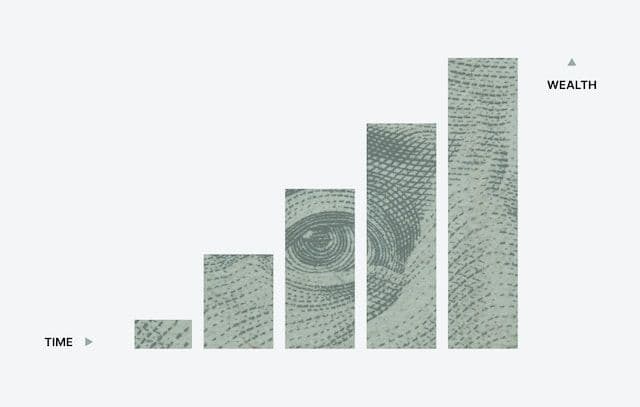
795Read
B
Banking
March 4, 2026
What Is a Bank Run? Causes, Historical Examples, and How to Prevent One
A bank run occurs when large numbers of depositors simultaneously withdraw their funds from a bank, fearing it may become insolvent. Under fractional reserve banking, banks only keep a small portion of deposits as cash reserves and lend the rest out. This means banks cannot satisfy all withdrawal requests at once if panic sets in. Bank runs have caused catastrophic economic damage throughout history — from the Great Depression, when over 9,000 US banks failed, to the 2023 collapse of Silicon Valley Bank, where $42 billion was withdrawn in a single day. Preventive measures include deposit insurance (like FDIC coverage up to $250,000), central bank lending facilities, strict banking regulation, and transparent communication. Understanding how bank runs work is essential financial literacy for anyone who keeps money in a bank.
871Read
B
Banking
March 4, 2026
What Is a Commercial Bank and How Does It Work?
A commercial bank is a financial institution that accepts deposits from the public, provides loans to individuals and businesses, and offers a wide range of financial services including payment processing, currency exchange, and investment products. Commercial banks earn revenue primarily through the net interest margin — the difference between the interest they charge on loans and the interest they pay on deposits. They play a critical role in economic development by facilitating capital formation, enabling financial inclusion, creating jobs, and funding government initiatives. Major examples include JPMorgan Chase, Bank of America, Wells Fargo, Citibank, and HSBC. As digital transformation accelerates, commercial banks are adapting through online and mobile banking platforms, data analytics, and AI-driven services to meet evolving consumer expectations.

738Read
B
Banking
March 4, 2026
How Do Banks Work?
Banks are the cornerstone of the modern financial system, acting as intermediaries between savers and borrowers. They accept deposits, make loans, facilitate payments, and create credit through the fractional reserve banking system. This comprehensive guide explains how different types of banks — retail, commercial, investment, and central banks — operate, how they are regulated to protect depositors and maintain financial stability, and how they contribute to economic growth. From deposit insurance and monetary policy to cybersecurity and fintech innovation, understanding how banks work is essential for making informed financial decisions.
949Read
B
Banking
March 4, 2026
What Is Digital Banking? A Beginner's Guide to Online and Mobile Banking
Digital banking is the complete transformation of traditional banking services into digital channels, allowing customers to manage accounts, make payments, apply for loans, and invest through websites and mobile apps. From online banking and mobile apps offered by traditional banks to fully digital neobanks like Chime, Revolut, and N26, digital banking provides greater convenience, efficiency, enhanced security, and personalized financial services. While challenges like cybersecurity threats, the digital divide, and regulatory complexity remain, emerging technologies such as artificial intelligence, blockchain, open banking, and biometric authentication are shaping a future where banking is more accessible, secure, and personalized than ever before.

481Read
B
Banking
March 3, 2026
Banking 101 - Understanding Banking Products and Services
Banking products and services form the foundation of modern personal finance. Banks act as intermediaries between depositors and borrowers, offering a wide range of products including checking accounts, savings accounts, fixed deposits, debit and credit cards, personal loans, mortgages, and investment services. This comprehensive guide covers everything from the basics of what a bank is and the different types of banks (commercial banks, credit unions, central banks, and investment banks) to core banking products, essential digital banking services like online and mobile banking, loan and credit options, investment and wealth management tools, and additional services such as safe deposit boxes, foreign currency exchange, and wire transfers. Understanding these products and services empowers you to make smarter financial decisions and take full control of your financial future.
802Read
B
Banking
March 3, 2026
Commercial Bank vs Central Bank: Key Differences You Should Know
Commercial banks and central banks are two fundamentally different types of financial institutions. Commercial banks serve individuals and businesses by accepting deposits, providing loans, and offering everyday banking services. Their primary goal is profit maximization. Central banks, on the other hand, are government-owned apex institutions that regulate the banking sector, control monetary policy, issue currency, and act as the lender of last resort. Each country has only one central bank but may have hundreds of commercial banks. While commercial banks deal directly with the public, central banks only transact with banks, government bodies, and financial institutions. Understanding these differences is essential for grasping how the modern financial system works.
590Read
B
Banking
March 2, 2026
Bangladesh Bank: History, Functions, and Key Events
Bangladesh Bank is the central bank and supreme monetary authority of Bangladesh, established on December 16, 1971, under Presidential Order No. 127. It manages currency issuance, monetary policy, banking regulation, foreign reserves, and payment systems. The bank gained global notoriety in 2016 when hackers stole $81 million from its Federal Reserve Bank of New York account in one of the largest cyber heists in history.
615Read
B
Banking
March 2, 2026
What Is a Central Bank? Role, Functions, and How It Works
A central bank is the financial institution responsible for managing a nation's money supply, setting interest rates, regulating commercial banks, and maintaining economic stability. Major central banks like the Federal Reserve, ECB, and Bank of England influence everything from mortgage rates to inflation through tools such as open market operations, reserve requirements, and crisis lending facilities.
559Read
B
Banking
March 2, 2026
How Do Bank Loans Work? A Complete Guide
Bank loans allow you to borrow a lump sum from a financial institution and repay it over time with interest. This guide covers the major types of bank loans, key cost components like interest rates and fees, how the application process works, and what happens if you default.

490Read
B
Banking
March 2, 2026
The History of Banking: From Ancient Times to the Digital Age
Banking has evolved over 4,000 years, from ancient Mesopotamian grain warehouses and Roman argentarii to medieval Italian banking families, the gold standard, and the Federal Reserve. Today, fintech, neobanks, cryptocurrency, and blockchain are reshaping the financial landscape as banking enters its most transformative era yet.
761Read
A
Analysis
March 2, 2026
Business Analysis Tools: A Complete Guide to the Best Tools
Business analysis tools help organizations identify needs, model processes, collaborate effectively, and visualize data for better decision-making. This guide covers the top tools including Jira, Confluence, Trello, Balsamiq, Microsoft Visio, Wrike, Bizagi Modeler, and more, with details on features, pricing, and best use cases.
967Read
A
Analysis
March 2, 2026
MoSCoW Analysis: Definition, Method, and How to Prioritize
MoSCoW Analysis is a prioritization framework that classifies project requirements into Must Have, Should Have, Could Have, and Won't Have categories. Developed by Dai Clegg at Oracle in 1994, it helps teams make clear trade-offs and focus resources on what matters most. The method is widely used in Agile, product management, and business planning.
944Read
A
Analysis
March 2, 2026
SCRS Analysis: Definition, Framework, and How to Apply It
SCRS Analysis is a structured business analysis framework that guides projects through four phases: Strategy, Current State, Requirements, and Solution. It ensures that every project decision aligns with organizational goals while addressing real gaps and delivering actionable solutions.
894Read
A
Analysis
March 2, 2026
VPEC-T Analysis: Definition, Components, and How to Use It
VPEC-T Analysis is a thinking framework developed by Nigel Green and Carl Bate that examines information systems through five lenses: Values, Policies, Events, Content, and Trust. It helps organizations bridge the gap between business needs and IT solutions by capturing multiple stakeholder perspectives and surfacing hidden assumptions that traditional analysis methods often miss.
817Read
A
Analysis
March 2, 2026
STEER Analysis: Definition, Components, and How to Apply It
STEER Analysis is a strategic framework that examines five external macro-environmental factors: Sociocultural, Technological, Economic, Environmental, and Regulatory. It helps businesses identify threats, spot opportunities, and make informed strategic decisions by systematically scanning the forces beyond their direct control.
930Read
A
Analysis
March 2, 2026
MOST Analysis: Definition, Framework, and How to Use It
MOST Analysis is a strategic planning framework that stands for Mission, Objectives, Strategies, and Tactics. It helps organizations ensure internal alignment by creating a clear hierarchy from their overarching purpose down to the specific daily actions taken by teams and individuals. This guide covers the framework's components, a practical Tesla example, and its advantages and limitations.

914Read
A
Analysis
March 1, 2026
CATWOE Analysis: Definition, Framework, and Examples
CATWOE Analysis is a structured problem-framing framework developed by Peter Checkland as part of Soft Systems Methodology. It examines business problems through six lenses: Customers, Actors, Transformation Process, Worldview, Owners, and Environmental Constraints. This comprehensive guide explains each element, provides a real-world ride-sharing example, and explores the advantages and limitations of the framework.

1,039Read
A
Analysis
March 1, 2026
Root Cause Analysis: The Five Whys Method Explained
Root Cause Analysis (RCA) is a systematic problem-solving method that identifies the fundamental cause of an issue rather than just treating its symptoms. The Five Whys technique, originally developed by Sakichi Toyoda and popularized through the Toyota Production System, involves asking "Why?" repeatedly to trace a problem back to its origin. This article explains how to conduct effective root cause analysis, provides real-world examples, and explores why this simple method remains one of the most widely used problem-solving tools across industries.

959Read
B
Business
March 1, 2026
Break-Even Analysis — When Does Your Business Actually Start Making Money?
Before you invest a single dollar in your business, you need to answer one question: how many units must you sell to stop losing money? Break-even analysis gives you that answer. This guide walks through the formulas, three detailed real-world examples (coffee shop, e-commerce, SaaS), 10 data tables, limitations, and proven strategies to reach profitability faster.
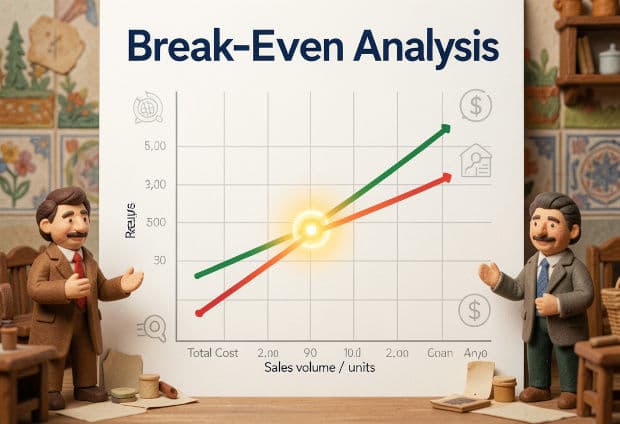
1,010Read
A
Analysis
March 1, 2026
Six Thinking Hats
The Six Thinking Hats is a decision-making framework developed by Edward de Bono in 1985 that separates thinking into six distinct modes — facts (White), emotions (Red), caution (Black), optimism (Yellow), creativity (Green), and process control (Blue). Used by organizations like IBM, NASA, and Prudential Insurance, this parallel thinking method helps teams make better decisions faster by eliminating ego-driven conflict and ensuring every perspective is heard.
739Read
A
Analysis
March 1, 2026
Business Analysis: What It Is, Why It Matters, and How to Do It
Business analysis is the structured practice of identifying organizational needs, evaluating problems, and recommending solutions that deliver measurable value to stakeholders. This article covers the complete business analysis process, from goal identification to plan review, along with seven essential techniques including SWOT, PESTLE, MOST, CATWOE, the 5 Whys, Brainstorming, and Business Process Modeling. Whether you are a beginner or a seasoned professional, these frameworks will help you make smarter, data-driven business decisions.
592Read
A
Analysis
March 1, 2026
PESTLE Analysis in depth
PESTLE Analysis is a strategic framework used to evaluate the six key external factors that influence a business: Political, Economic, Social, Technological, Legal, and Environmental. It helps organizations anticipate changes in the macro-environment, identify opportunities and threats, and make more informed strategic decisions. Widely used in corporate strategy, market entry planning, and investment analysis, PESTLE is a foundational tool for understanding the forces beyond a company's control.

695Read
A
Agreement
February 27, 2026
Basel Accords
The Basel Accords are a series of international banking regulations developed by the Basel Committee on Banking Supervision (BCBS). These accords — Basel I, Basel II, and Basel III — establish global standards for capital adequacy, risk management, and banking supervision. Introduced progressively since 1988, the Basel Accords aim to strengthen the stability, transparency, and resilience of the global banking system by ensuring that financial institutions maintain sufficient capital reserves to absorb losses and withstand economic shocks.
721Read
A
Agreement
February 27, 2026
Paris Agreement
The Paris Agreement is a landmark international treaty on climate change adopted by nearly 196 countries at COP-21 in Paris on December 12, 2015, and entered into force on November 4, 2016. Its central goal is to limit global warming to well below 2 degrees Celsius above pre-industrial levels, with efforts to cap it at 1.5 degrees Celsius. The agreement operates through Nationally Determined Contributions (NDCs), where each country sets its own emission reduction targets, updated every five years through a Global Stocktake process. It also establishes a climate finance framework, with developed nations pledging $100 billion per year to support developing countries. The Paris Agreement represents the culmination of over four decades of international climate negotiations, from the establishment of the UNFCCC at the 1992 Rio Earth Summit through the Kyoto Protocol and beyond.
808Read
A
Agreement
February 27, 2026
North American Free Trade Agreement (NAFTA)
The North American Free Trade Agreement (NAFTA) was a landmark trade pact between the United States, Canada, and Mexico that took effect on January 1, 1994. It eliminated most tariffs on goods traded among the three nations, tripling regional trade to over $1.1 trillion by 2016. NAFTA aimed to boost economic growth, enhance product competitiveness, and protect intellectual property across North America. Despite its successes in trade expansion, the agreement drew criticism for contributing to US manufacturing job losses and harming small-scale Mexican agriculture. After years of debate, NAFTA was replaced by the United States-Mexico-Canada Agreement (USMCA), which came into effect on July 1, 2020.
726Read
A
Agreement
February 27, 2026
Teesta Water Sharing Treaty
The Teesta Water Sharing Treaty is an unresolved agreement between Bangladesh and India over sharing the waters of the Teesta River, which flows from Sikkim through West Bengal into Bangladesh's Rangpur division. Despite decades of negotiations and a near-signing in 2011, political opposition from West Bengal has stalled the deal. The dispute directly affects millions of farmers in northern Bangladesh who depend on Teesta water for irrigation, while India uses the river for hydropower and large-scale agriculture.

793Read
A
Agreement
February 27, 2026
Bangladesh-India Treaty of Friendship 1972
The Bangladesh-India Treaty of Friendship, Cooperation and Peace was signed on March 19, 1972, just months after Bangladesh won independence. The treaty contained 12 articles covering everything from economic cooperation and cultural exchange to mutual security commitments. It was signed by Sheikh Mujibur Rahman and Indira Gandhi for a 25-year term and expired in 1997 without renewal, but it remains a foundational document in South Asian bilateral diplomacy.

796Read
A
Agreement
February 27, 2026
World Trade Organization (WTO) Agreements
The World Trade Organization (WTO) is the only global body that sets and enforces the rules of international trade between nations. Headquartered in Geneva, Switzerland, it has 164 member countries and oversees more than 60 international trade agreements alongside roughly 300 regional trade agreements. The WTO works to reduce trade barriers, settle disputes, and ensure that global commerce flows as smoothly and predictably as possible.
764Read
A
Agreement
February 27, 2026
General Agreement on Tariffs and Trade (GATT)
The General Agreement on Tariffs and Trade (GATT) was a multilateral trade agreement signed in 1947 by 23 countries to reduce tariffs and promote free trade. Over eight negotiation rounds spanning nearly five decades, GATT slashed average tariffs from 22% to about 5% and laid the groundwork for the World Trade Organization (WTO), which replaced it in 1995.

926Read
A
Accounting
February 25, 2026
Income Statement, Balance Sheet and Cash Flow
The three core financial statements every business relies on are the income statement, balance sheet, and cash flow statement. The income statement tracks revenue and expenses over a specific period to show whether a company made a profit or loss. The balance sheet provides a snapshot of what a company owns (assets), what it owes (liabilities), and what belongs to shareholders (equity) at a single point in time. The cash flow statement tracks actual money coming in and going out, broken down into operating, investing, and financing activities — because profit on paper does not always mean cash in the bank.
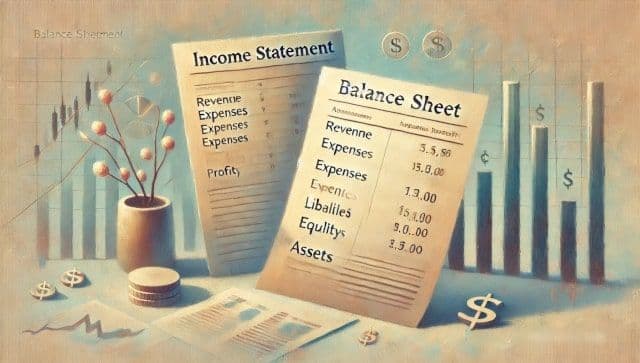
1,008Read
A
Accounting
February 25, 2026
Taxation, Types and Importance
Taxation is the process by which governments levy compulsory charges on individuals and businesses to fund public services, infrastructure, and social programs. There are several major types of taxes including income tax, value-added tax (VAT), corporate tax, customs duties, and estate or inheritance tax. Each serves a distinct purpose in generating revenue, redistributing wealth, and maintaining economic stability. Understanding how taxation works and why it matters is essential for every citizen, business owner, and policymaker navigating the modern economy.
1,006Read
A
Accounting
February 25, 2026
Income Tax, Concept and Calculation
Income tax is a mandatory financial charge imposed by governments on the earnings of individuals and businesses. It is calculated based on taxable income after deductions and exemptions, and is typically structured using progressive tax brackets where higher earners pay a larger percentage. Understanding key concepts like tax deductions, credits, withholding, and filing status helps taxpayers minimize their liability and stay compliant. Nearly every country in the world levies some form of income tax to fund public services, infrastructure, and social programs.
986Read
A
Accounting
February 25, 2026
Taxation for Individuals and Businesses: A Complete Overview
Taxation is the mechanism through which governments collect revenue from individuals and businesses to fund public services. Individuals face income tax based on residency status, tax brackets, and filing requirements. Businesses deal with corporate tax, capital gains tax, dividend distribution tax, and international tax considerations. Governments offer tax incentives for exports, R&D, and environmental investments to encourage economic growth and sustainability.

984Read
A
Accounting
February 25, 2026
Tax Planning and Strategies: A Comprehensive Guide
Tax planning is the process of legally structuring your financial affairs to minimize tax liability. It involves strategies like controlling income, maximizing deductions and credits, timing income and expenses, choosing the right business entity, leveraging tax-free loans, and investing in dividend-paying stocks. Effective tax planning is a year-round activity that can save individuals and businesses thousands of dollars annually.
993Read
A
Accounting
February 24, 2026
Tax Compliance and Reporting: Everything You Need to Know
Tax compliance is the obligation of individuals and businesses to follow tax laws, file accurate returns, and pay taxes on time. Tax reporting is the process of providing comprehensive financial information to tax authorities through tax returns and supporting documents. Together, they form the backbone of any functioning tax system — ensuring transparency, enabling revenue collection, and funding public services. Non-compliance can result in penalties, interest charges, and legal consequences.
1,050Read
A
Accounting
February 24, 2026
Financial Accounting: Principles, Purpose, and How It Works
Financial accounting is the process of recording, summarizing, and reporting a company's financial transactions over a specific period. These transactions are compiled into financial statements — balance sheet, income statement, and cash flow statement — that communicate a company's performance to stakeholders. Financial accounting follows nine core principles: entity, going concern, cost, matching, revenue recognition, full disclosure, consistency, conservatism, and materiality.

1,011Read
A
Accounting
February 24, 2026
Financial Recording and Transactions: The Complete Guide
Financial recording is the systematic process of capturing all money-related data in a business. Every sale, purchase, loan payment, or payroll disbursement is a financial transaction that must be recorded. The accounting cycle consists of 10 steps from identifying accounts through audit and compliance. Three pillars — the journal, general ledger, and trial balance — form the backbone of this process.

1,074Read
A
Accounting
February 24, 2026
Tax Rebate: Definition, Types, and How to Claim One
A tax rebate is a refund or reduction in taxes provided by the government when the amount of tax paid exceeds the actual tax liability. Governments use tax rebates to encourage investments in capital markets, exports, agriculture, R&D, charitable donations, special economic zones, women entrepreneurship, and renewable energy. Claiming a rebate requires verifying eligibility, gathering documents, filing accurate returns, and meeting deadlines.
1,071Read
A
Accounting
February 24, 2026
Four Flavors of Accounting: Tax, Project, Financial, and Cost Accounting Explained
The four flavors of accounting — tax, project, financial, and cost — each serve unique purposes in the business world. Tax accounting focuses on compliance with tax laws and minimizing tax liability. Project accounting tracks the financial performance of individual projects from start to finish. Financial accounting provides a standardized view of a company's overall financial health to external stakeholders. Cost accounting breaks down the actual costs of producing goods or services to help management make informed decisions. Together, these four types give businesses a comprehensive toolkit for managing their finances.
1,036Read
A
Accounting
February 24, 2026
Audit Planning and Risk Assessment: A Complete Guide
Audit planning is the process of developing an overall strategy and a detailed approach for conducting an audit. It involves understanding the client's business, identifying areas of risk, determining materiality thresholds, and designing audit procedures that will provide sufficient and appropriate evidence. Risk assessment, on the other hand, is the systematic process of identifying and evaluating risks that could lead to material misstatement in the financial statements. Together, they form the foundation upon which the entire audit is built.
867Read
A
Accounting
February 24, 2026
Auditing: Definition, Types, Principles, and How It Works
Auditing is the process of independently examining a company's financial and accounting records to verify that everything is accurate, complete, and in compliance with applicable laws and standards. Think of it as a health checkup for your business — just like a doctor examines your body to see if everything is working properly, an auditor examines your financials to see if everything adds up. Auditing builds trust with investors, regulators, and the public.
891Read
A
Accounting
February 24, 2026
Accrual Accounting: How It Works, Types, and Why It Matters
Accrual accounting is the method that records revenue when it is earned and expenses when they are incurred — regardless of when cash actually changes hands. Unlike cash accounting, which only tracks money in and money out, accrual accounting gives you a complete and accurate picture of your company's financial health. It is the standard method required by GAAP and IFRS, and it is what most serious businesses use to manage their finances.
918Read
A
Accounting
February 24, 2026
Accounting for Startups: A Complete Guide to Getting It Right
Accounting is one of the first things every startup needs to get right — and one of the most commonly ignored. From choosing the right business structure to setting up separate bank accounts, selecting accounting software, and preparing financial statements, proper accounting practices lay the foundation for everything else. It helps startups track where the money is going, attract investors, comply with tax laws, and make smart decisions that lead to growth.

985Read
A
Accounting
February 24, 2026
Business Accounting: What It Is and How It Works
Business accounting is the systematic process of recording, summarizing, and analyzing a company's financial transactions. It gives you a clear picture of where the money is coming from, where it is going, and how much is left. Whether you are running a small shop or managing a large corporation, accounting is the backbone of good financial decision-making. It helps stakeholders — from managers to investors — understand the financial health of the business.
838Read
A
Accounting
February 24, 2026
GAAP: What It Is and Why It Matters in Accounting
GAAP stands for Generally Accepted Accounting Principles. It is a set of rules and guidelines that companies follow when preparing their financial reports. The purpose is simple — to make sure financial statements are accurate, consistent, and comparable across different organizations. GAAP is primarily used in the United States, while most other countries follow IFRS. Without GAAP, every company could report its finances differently, making it nearly impossible for investors and regulators to compare them.

824Read
A
Accounting
February 24, 2026
Assets, Liabilities, and Equity: The Building Blocks of Finance
Assets, liabilities, and equity are the three fundamental building blocks of any company's financial structure. Assets are what a company owns, liabilities are what it owes, and equity is what is left over after subtracting liabilities from assets. Together, they form the accounting equation: Assets = Liabilities + Equity. Understanding these three concepts is essential for reading a balance sheet and making smart financial decisions.
876Read
A
Accounting
February 24, 2026
Gross Profit: Definition, Formula, and Why It Matters
Gross profit tells you how much money your business actually makes from buying and selling products — before any other expenses come into the picture. It is the first and most basic indicator of whether your business is profitable or not. If your gross profit is healthy, your business has a solid foundation. If it is shrinking, something in your core operations needs attention.
961Read
A
Accounting
February 24, 2026
Corporate Taxation and International Tax Challenges Explained
When a company earns profit, it pays tax on it — that is corporate taxation in a nutshell. But things get complicated when companies operate across multiple countries. Different tax rates, different rules, and the risk of being taxed twice on the same income — these are real challenges that multinational corporations deal with every day. International tax treaties and transfer pricing rules exist to bring some order to this complexity.
909Read
S
Startup
February 23, 2026
How to Calculate Startup Valuation: Methods, Tools, and Examples
How much is your startup actually worth? Whether you are trying to attract investors, decide how to split equity, or simply understand where your business stands — you need to know your startup's valuation. According to CB Insights, precise valuation helped push global venture capital investment to $368 billion in 2021 alone. This article breaks down the most commonly used valuation methods in simple terms, with real examples and practical tools.
943Read
S
Startup
February 23, 2026
What Is a Startup? The Ultimate Guide You Need to Read
Everyone talks about startups these days, but what exactly makes a startup different from any other business? A startup is not just a new company — it is a business built around solving a specific problem in a new or innovative way. From Zoom to Uber to Foodpanda, every giant platform you see today started as a small idea with a big vision. There are currently over 150 million startups worldwide, and about 137,000 new ones are being registered every single day.

831Read
S
Sales
February 23, 2026
What Is Sales and How Does It Work?
In the simplest terms, sales is what happens when one person sells something and another person pays for it. It is the exchange of goods or services for money, with the goal of making a profit. Whether you are running a small tea stall or managing a multinational company, sales is the engine that keeps any business alive. Without sales, there is no revenue — and without revenue, there is no business.
965Read
O
Organization
February 23, 2026
What Is the International Monetary Fund (IMF)?
When a country faces serious financial trouble, where does it turn for help? The International Monetary Fund, or IMF, is one of the most powerful financial organizations in the world. With 190 member countries and headquarters in Washington D.C., the IMF works to keep the global economy stable, provides emergency loans to struggling nations, and helps countries build better economic policies. From the ashes of World War II to modern-day financial crises, the IMF has been at the center of global economic governance.
1,022Read
M
Marketing
February 22, 2026
The 7 P's of Marketing: The Complete Framework Every Business Needs
If you have ever wondered why some businesses grow consistently while others struggle despite having good products — the answer is often in their marketing strategy. And one of the most reliable, time-tested frameworks for building a complete marketing strategy is the 7 P's of Marketing. The 7 P's are Product, Price, Place, Promotion, People, Process, and Physical Evidence. Together, these seven elements cover every single aspect of bringing a product or service to market — from how you design it and price it, to how you deliver it and make customers trust it. What makes this framework so powerful is that it does not just focus on selling. It focuses on the entire customer experience — from the moment a customer first hears about your product to the moment they actually use it. Whether you are running a small business in Dhaka or building a national brand, understanding and applying the 7 P's can be the difference between a business that survives and one that truly thrives.
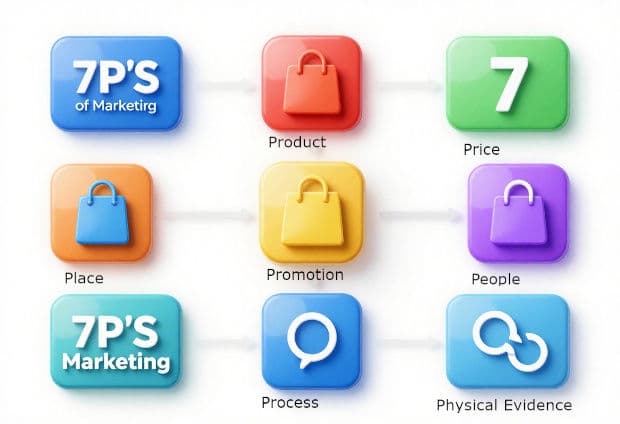
994Read
L
Logo
February 22, 2026
Types of Logos: A Complete Guide to Every Logo Style You See Every Day
Think about the last time you picked up your phone, walked past a billboard, or grabbed a product off a supermarket shelf. Every single brand you saw had a logo — and every single one of those logos was designed with a specific purpose, a specific style, and a specific strategy behind it. A logo is a graphic mark or symbol that represents an identity. It is not just decoration. It is the visual face of a brand, a company, a religion, a movement, or a culture. A good logo communicates who you are without requiring anyone to read a single word of explanation. The moment someone sees the bitten apple, the golden arches, or the swoosh — they know exactly what brand they are looking at. That kind of instant recognition is the goal of every logo ever designed. And to achieve that goal, designers work with different types of logos — each with its own visual language, strengths, and best use cases. Depending on which designer or design school you consult, logos can be classified into anywhere from 5 to 11 distinct types — because art and design are inherently subjective, and different designers categorize them differently.
936Read
I
Investment
February 21, 2026
Investment: What It Is, Types, and Real Life Examples
Every single person who has ever saved money has thought about one question at some point — what should I do with this money to make it grow? The answer to that question is investment. An investment is any asset or item you acquire today with the expectation that it will generate income or increase in value over time. In simple economic terms, you are giving up the ability to use your money today in exchange for the promise of having more money in the future. This could mean buying shares in a company, purchasing land, putting money into a mutual fund, buying gold, or even investing time and effort into education to increase your future earning potential. The world of investment is enormous and varied — but the core idea behind every single type of investment is the same. You commit something valuable today because you expect to get back something more valuable tomorrow.
1,045Read
G
GeoPolitics
February 21, 2026
The U.S.-China Rivalry: What It Means for the World's Economy, Technology, and Military Balance
Two countries are competing to be the most powerful nation on earth — and the outcome of that competition will shape the future of every other country in between. The United States is the established superpower, the world's largest economy, and the global leader in financial services and technology. China is the rapidly rising challenger, the world's second largest economy, and a country that has made extraordinary advances in manufacturing, infrastructure, artificial intelligence, and military capability in just a few decades. The rivalry between these two giants is playing out across three major battlegrounds — economics, technology, and military power — and the tension between them is already affecting global trade, supply chains, investment flows, and geopolitical alliances around the world. Understanding this rivalry is no longer just for foreign policy experts. It matters for every business, every investor, and every country that trades with either of them — including Bangladesh.
1,199Read
F
Finance
February 21, 2026
Finance: What It Is, Why You Need It, and How It Works in Real Life
Whether you realize it or not, finance is part of everything you do with money. Every time you decide how to spend your salary, save for something important, take a loan, or invest in something — that is finance in action. At its most basic level, finance is the art and science of managing money. It covers everything from how you personally budget your monthly income to how large corporations decide where to invest billions of taka, and how governments plan national budgets and economic policies. According to financial expert L.J. Gitman, finance is simply the art of money management — and that definition, as straightforward as it sounds, covers an enormous amount of ground. Understanding finance is not just for bankers or economists. It is for anyone who wants to make smarter decisions with their money, build wealth over time, and avoid costly financial mistakes.
1,030Read
E
Economics
February 20, 2026
Economics: What It Is, Why It Matters, and How It Shapes Our Lives
Every single day, you make economic decisions — even if you do not realize it. When you choose to spend your money on lunch instead of saving it, that is an economic decision. When a business decides how many workers to hire, that is economics. When the government sets the interest rate or builds a road, that is economics too. At its core, economics is the study of how people, businesses, and governments produce, trade, and use goods and services — and how money flows between all of them. It is essentially the science of managing limited resources to meet unlimited human needs and wants. Understanding economics helps you understand why prices go up, why some countries are rich and others are poor, and why your country is growing or struggling. And for Bangladesh specifically, the economic story of the last 50 years is genuinely one of the most remarkable in the entire world.
983Read
E
E-Commerce
February 20, 2026
E-Commerce: The Complete Guide to Online Business
Not too long ago, if you wanted to buy something, you had to physically go to a shop, find what you needed, pay for it, and carry it home. Today, millions of people around the world buy everything — from groceries to electronics to clothing — without leaving their sofa. That shift happened because of e-commerce. E-commerce, short for electronic commerce, is simply the buying and selling of products and services over the internet using electronic devices. What started as a small experiment in the early 1980s has grown into one of the largest and most powerful industries in the world. In 2020 alone, global e-commerce sales reached $4.28 trillion. And the growth is nowhere near stopping.
947Read
M
Marketing
February 20, 2026
Digital Marketing: What It Is, Why It Matters, and How It Works
We are living in the age of the internet. Almost everyone — from teenagers to grandparents — spends a significant part of their day scrolling through social media, searching on Google, checking emails, and watching YouTube videos. Businesses have noticed this shift and moved their marketing efforts to where the people are — online. This is exactly what digital marketing is. It is the process of promoting a business, product, or service using digital channels and technology. Compared to traditional marketing methods like newspaper ads or billboards, digital marketing costs less, reaches more people, works faster, and gives you the ability to target exactly the right audience based on their age, gender, location, and interests. In today's competitive market, digital marketing is no longer optional — it is essential.
1,011Read
C
Crime and Fraud
February 20, 2026
Ponzi Scheme: The Investment Fraud That Has Been Fooling People for Over 100 Years
A Ponzi scheme is one of the oldest and most dangerous investment frauds in the world — and the scary part is, it is still happening today. In simple terms, it is a fake investment opportunity where a person or company promises you very high returns on your money in a very short time. But here is the truth — there is no real business, no real profit, and no real investment happening behind the scenes. The money you put in does not go into any legitimate fund. Instead, your money is used to pay the "profits" of earlier investors, while the people running the scheme quietly pocket the rest. Eventually the whole thing collapses, and most people lose everything they invested.
917Read
C
Canvas & Methods
February 19, 2026
Minimum Viable Product (MVP): The Smart Way to Launch Your Business With Less Risk
Every entrepreneur wants their product to be perfect before launching it to the market. But spending months — sometimes years — building something fully, only to discover that customers do not actually want it, is one of the most painful and expensive mistakes a founder can make. The Minimum Viable Product, or MVP, is the business strategy that solves this exact problem. Instead of building everything at once, you launch your product with only the most essential features, collect real feedback from real customers, and then improve it step by step. It is not about launching something incomplete — it is about launching something smart. Companies like Pathao, Uber, and Dropbox all started this way, and today they are among the most successful tech businesses in the world.
973Read
B
Business Models
February 19, 2026
Sharing Economy Model: How Businesses Make Money Without Owning Anything
The sharing economy is a peer-to-peer business model where the main company acts as a middleman — connecting people who have something to offer with people who need it. The company itself does not own the product or service being exchanged. Instead, it uses technology to bring two sides together: the service provider and the service receiver. Pathao in Bangladesh, Uber globally, and Airbnb worldwide are all perfect real-world examples of this model in action. Simply put, the sharing economy turns unused assets into income-generating opportunities — for everyone involved.
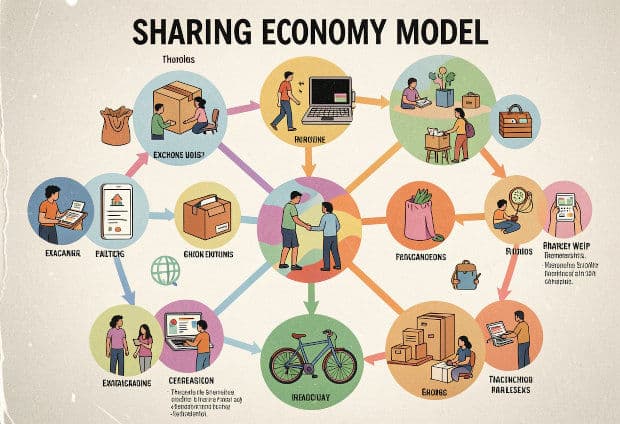
1,190Read
B
Business Law
February 17, 2026
Business Law: What It Is, Why It Matters, and Types You Must Know
Business law is the set of rules and regulations that governs how businesses operate, make agreements, treat their workers, pay their taxes, and resolve disputes. Simply put, it is the legal framework that keeps the entire business world running in an orderly and fair way. Without business law, anyone could sell anything, break any agreement, or exploit workers without any consequences. Whether you are a small shop owner or running a large company, understanding business law is not optional — it is one of the most essential foundations of running a successful and sustainable business.
963Read
B
Branding
February 17, 2026
Branding: How to Make Your Business Stand Out
Branding is the way you make your business different from all other businesses so that your customers can recognize you easily. It is not just a logo or a slogan — it is everything that your business represents. From your customer service and staff uniforms to your packaging and advertisements, branding is present everywhere. A strong brand builds trust, attracts customers, and helps a business grow in a competitive market.
894Read
B
Books
January 12, 2026
The $100 Startup
Chris Guillebeau's "The $100 Startup" is a practical handbook for the business world that shows how anyone can start their own business with minimal investment. Chris shares real-life stories of entrepreneurs who turned their ideas into successful ventures. The book provides valuable insights into entrepreneurship, emphasizing the idea that anyone can start a profitable business on a small budget.

1,079Read
B
Business
May 15, 2025
HORECA (Hotel Restaurant Catering Café): A Growing Marketing Channel in the Foodservice Industry
The term HORECA is itself an abbreviation of Hotel, Restaurant, Catering, or Café. This marketing channel, which originated in Europe, has now expanded across Asia, the United States, and many other parts of the world. Recognizing its growing importance, many businesses have adopted various software solutions to enhance the effectiveness and efficiency of operations within this sector. Over time, the scope of HORECA has expanded beyond traditional hospitality to include other retail foodservice sectors such as amusement parks, resorts, hotels, and the travel industry.
2,712Read
B
Business
May 15, 2025
What is Equity? A Comprehensive Guide to Ownership, Value, and ROE
Equity refers to a share or stock, which signifies an ownership interest in a company held by the owner or shareholders. There are different types of equity, such as: Owner's Equity: Refers to the control the owner has over the company. Shareholders' Equity: Also known as stockholders' equity, refers to the valuation of companies, especially those not publicly traded. Private Equity: Refers to companies whose shares are not publicly available for trading. A higher Return on Equity (ROE) is considered better.

1,253Read
B
Business
May 15, 2025
Understanding Gross Profit: The Foundation of Business Profitability
By subtracting the cost of goods sold from sales, we can determine the gross profit. Gross profit helps us understand whether the business is making any profit from selling its products. Among the three key profit indicators in business, the first is gross profit. If managed properly, a company can earn a healthy amount of gross profit, which in turn increases the net profit.
1,287Read
B
Business
May 15, 2025
Red Ocean and Blue Ocean Strategy: Fight the Competition or Make It Irrelevant — The Complete Guide
Red Ocean strategy means competing in an existing market where rivals fight over the same customers. Blue Ocean strategy means creating an entirely new, uncontested market where competition is irrelevant. W. Chan Kim and Renee Mauborgne's 2005 bestseller introduced the Four Actions Framework — Eliminate, Reduce, Raise, Create — to achieve Value Innovation. Netflix, Apple, Tesla, and Bangladesh's bKash are among the most celebrated Blue Ocean success stories.
1,384Read
B
Business
May 15, 2025
Needs, Wants, and Demands
Needs are what we lack or feel deprived of for survival or sustenance. These needs can be physical, mental, or social. Wants are the desires people express to fulfill their needs. These wants are often influenced by an individual's surroundings and many other factors. Demands occur when people have the purchasing power to satisfy their wants.

1,438Read
M
Money
May 10, 2025
How Money Works?
In our daily lives, money acts as a medium of exchange in almost all transactions. Through money, we purchase goods and services and repay debts. The primary functions of money are: serving as a unit of account, storing value, and acting as a medium of exchange. For anything to be considered money, it must fulfill several conditions, such as recognition, portability, stability, durability, and uniformity. Today, we commonly see three types of money: physical, digital, and cryptocurrency.
1,483Read
M
Money
May 10, 2025
From Barter to Bitcoin: The Evolution of Money
Since the dawn of human civilization, people have engaged in trade through barter. However, around 5,000 years ago, humans gradually abandoned the barter system and began using metallic coins. These coins were made from copper, silver, and gold. Around 1260 AD, the first paper currency was introduced in China and eventually spread throughout the world. In the 1930s, the first credit cards were issued by commercial establishments, and by the 1950s, banks began issuing them as well.
2,076Read
M
Money
May 10, 2025
Money: What It Is, How It Works, and Its Complete History
Every single day you go to a shop, hand over some notes, and walk away with what you need. The shopkeeper happily accepts those notes without any hesitation. But have you ever stopped and thought — why does that work? What is actually behind those pieces of paper that makes everyone willing to accept them? Why does a 500 taka note say "চাহিবামাত্র ইহার বাহককে দিতে বাধ্য থাকিবে" — meaning the bearer must be paid on demand? Money is so deeply embedded in our daily lives that most of us never question how it actually works. But understanding money — what it really is, how it functions, where it came from, and what different types exist — is the foundation of understanding any economy. At its core, money is simply a medium of exchange that people use to trade goods and services, repay debts, and measure value. It sounds simple. But the story behind it spans thousands of years and several fascinating transformations — from cowrie shells and whale teeth to gold coins, paper notes, and digital deposits.
2,530Read
B
Banking
May 7, 2025
Banking: What It Is, How Banks Work, and Everything You Need to Know
Most people use banks every single day — depositing salaries, withdrawing cash, transferring money, paying bills — without ever really thinking about how the whole system actually works. A bank is a licensed financial institution that accepts deposits from the public and uses those deposits to provide loans to individuals and businesses. Everything a bank does — from accepting your savings to issuing credit cards to printing cheques — falls under the broad category of banking. But banks are not just convenient places to store your money. They are the central nervous system of any economy — the institutions that keep money flowing productively through the system, connecting people who have surplus funds with people and businesses that need capital. And in Bangladesh, where Bangladesh Bank serves as the central authority overseeing the entire financial system, understanding how banking works is genuinely useful knowledge for anyone managing their personal finances, running a business, or simply trying to make smarter decisions with their money.
1,824Read
A
Analysis
May 3, 2025
SWOT Analysis
A ‘SWOT’ analysis is essentially a planning process that helps an organization identify new directions it can pursue while overcoming its challenges. The acronym ‘SWOT’ stands for Strengths, Weaknesses, Opportunities, and Threats. Therefore, a SWOT analysis is an excellent strategy for evaluating these four aspects of any organization.
1,680Read
A
Agreement
May 3, 2025
The Bretton Woods Agreement: A Turning Point in Global Economic History
In 1944, as the world was still engulfed in the devastation of World War II, the global economy had collapsed and people’s living standards had plummeted. In an effort to stabilize the international economy and address pressing global financial issues, the Allied nations convened a historic summit. Nearly 730 delegates from 44 countries gathered at the Mount Washington Hotel in Bretton Woods, New Hampshire, for the United Nations Monetary and Financial Conference. The outcome of this summit was the landmark Bretton Woods Agreement, which gave birth to the Bretton Woods System.

2,110Read
A
Accounting
May 3, 2025
Accounting: The Language of Business
Accounting is like a notebook for a business where all the money-related activities are recorded and tracked. Just like students track their exam scores to understand how they are doing, businesses use accounting to see if they are making a profit or loss. It acts like the financial backbone of a company. Accountants organize these records into different sections to make things easier to understand. To show their performance to shareholders, companies prepare documents called financial statements.
1,375Read