How Do Banks Work?
G
GeoRenus Editorial Team
982 views

GeoRenus Editorial Team
Banks are the cornerstone of the modern financial system, acting as intermediaries between savers and borrowers. They accept deposits, make loans, facilitate payments, and create credit through the fractional reserve banking system. This comprehensive guide explains how different types of banks — retail, commercial, investment, and central banks — operate, how they are regulated to protect depositors and maintain financial stability, and how they contribute to economic growth. From deposit insurance and monetary policy to cybersecurity and fintech innovation, understanding how banks work is essential for making informed financial decisions.
Banks are the backbone of the modern financial system. Whether you are depositing your paycheck, taking out a mortgage, or simply swiping your debit card at a coffee shop, a bank is working behind the scenes to make that transaction possible. But have you ever stopped to think about what actually happens inside a bank? How does it take your deposit and turn it into a loan for someone else? And how does it make money in the process?
At its core, a bank is a financial institution that accepts deposits from the public and channels those deposits into lending activities. This simple concept — borrowing from depositors and lending to borrowers — is the engine that drives the entire banking system. The difference between the interest a bank pays on deposits and the interest it earns on loans is called the net interest margin, and it is the primary way most banks generate revenue.
According to the International Monetary Fund (IMF), "Banks are at the heart of the financial system. They take in money from depositors and lend it to borrowers, helping to channel funds from those who have surplus money to those who need it." This intermediation role is what makes banks indispensable to a functioning economy.
The banking industry has evolved dramatically over the centuries. From the merchant banks of Renaissance Italy to the rise of fintech and digital-only banks, the way we interact with banks has changed. Today, over 4.2 billion people worldwide have a bank account, according to the World Bank. Mobile banking, contactless payments, and AI-driven financial services are reshaping the landscape. Yet the fundamental principles — accepting deposits, making loans, and facilitating payments — remain the same.
In this guide, we will break down how banks work from top to bottom: how they are structured, how they are regulated, the different types of banks, their role in the economy, and how they keep your money safe. Let us get started.
When you think of a bank, you probably picture a building with tellers behind a counter. But the modern banking system is far more complex than that. Banks operate through multiple channels to reach their customers, and the infrastructure behind those channels is what makes the system work.
Physical branches remain a critical part of the banking ecosystem, especially for complex transactions like opening new accounts, applying for mortgages, and resolving disputes. In the United States alone, there are approximately 72,000 bank branches as of 2024. While this number has declined from a peak of around 99,000 in 2009, branches still serve an important role for customers who prefer face-to-face interaction.
For example, JPMorgan Chase — the largest bank in the U.S. by assets — operates over 4,700 branches across the country. These branches handle everything from basic deposits to complex wealth management consultations.
Automated Teller Machines (ATMs) were introduced in the late 1960s and revolutionized banking by giving customers 24/7 access to their cash. Today, there are over 3 million ATMs worldwide. Modern ATMs can do much more than dispense cash — many allow you to deposit checks, transfer funds between accounts, and even apply for loans.
The first ATM was installed by Barclays Bank in London in 1967. Since then, ATM technology has advanced to include contactless withdrawals, biometric authentication, and video conferencing with bank staff.
Online banking has transformed the way people interact with their banks. Over 75% of Americans now use online or mobile banking as their primary way of managing their finances, according to the American Bankers Association. This shift has been accelerated by the COVID-19 pandemic, which pushed millions of people to adopt digital banking for the first time.
Online banking platforms allow customers to check balances, transfer money, pay bills, apply for loans, and manage investments — all from their smartphone or computer. Banks like Ally Bank, Chime, and Marcus by Goldman Sachs operate entirely online, with no physical branches at all. This digital-first model allows them to offer higher interest rates on savings accounts because they save on the overhead costs of maintaining physical locations.
The rise of fintech (financial technology) companies has further pushed traditional banks to innovate. Companies like PayPal, Square (now Block), and Stripe have introduced new ways to send money, accept payments, and manage finances. Many traditional banks have responded by developing their own apps and partnering with fintech firms to stay competitive.
Banks do not operate in a vacuum. They are among the most heavily regulated institutions in any economy, and for good reason. The failure of a single large bank can send shockwaves through the entire financial system — as the world saw during the 2008 financial crisis. Regulation exists to protect depositors, maintain public confidence, and ensure the stability of the financial system.
In the United States, banks are regulated by multiple agencies, including the Federal Reserve (the Fed), the Office of the Comptroller of the Currency (OCC), the Federal Deposit Insurance Corporation (FDIC), and state banking regulators. Each of these agencies has a different role. The Fed oversees monetary policy and supervises bank holding companies, the OCC charters and regulates national banks, and the FDIC insures deposits.
In the United Kingdom, the Bank of England's Prudential Regulation Authority (PRA) and the Financial Conduct Authority (FCA) serve similar functions. In the European Union, the European Central Bank (ECB) plays a central supervisory role under the Single Supervisory Mechanism.
One of the most important regulatory protections for consumers is deposit insurance. In the U.S., the FDIC insures deposits up to $250,000 per depositor, per insured bank, for each account ownership category. This means that if your bank fails, the government guarantees you will get your money back (up to the insured limit).
The FDIC was created in 1933 in response to the thousands of bank failures during the Great Depression. Since its creation, no depositor has ever lost a penny of FDIC-insured deposits. Similar schemes exist around the world: the UK's Financial Services Compensation Scheme (FSCS) protects up to 85,000 pounds per depositor, while Canada's CDIC covers up to CAD $100,000.
Regulators require banks to hold a minimum amount of capital relative to their assets. This is known as the capital adequacy ratio (CAR). Under the international Basel III framework, banks must maintain a minimum Common Equity Tier 1 (CET1) ratio of 4.5% and a total capital ratio of at least 8%. These requirements ensure that banks have enough of a financial cushion to absorb losses without becoming insolvent.
For example, after the 2008 financial crisis, the Basel III accords significantly tightened capital requirements. Major banks like JPMorgan Chase now maintain CET1 ratios well above the minimum — typically in the 12-15% range — providing a much larger buffer against unexpected losses.
Banks are subject to regular internal and external audits to ensure they are operating safely and in compliance with regulations. Regulators conduct on-site examinations, review financial statements, and stress-test banks to see how they would perform under adverse economic conditions.
The Federal Reserve's annual stress tests, for example, simulate scenarios like a severe recession, a housing market crash, or a spike in unemployment. Banks that fail these tests may be required to raise additional capital or restrict dividend payments and stock buybacks until they meet the required standards.
Not all banks are the same. The banking industry is made up of several distinct types of institutions, each serving different customers and fulfilling different roles in the financial system. Understanding these differences is key to understanding how banks work as a whole. Let us look at the major categories.
Retail banks are the banks most people interact with on a daily basis. They serve individual consumers and small businesses, offering a range of products and services designed for everyday financial needs. When you walk into a Bank of America or Wells Fargo branch, you are visiting a retail bank.
The most basic products offered by retail banks are checking and savings accounts. A checking account gives you easy access to your money for daily transactions — paying bills, buying groceries, and receiving your paycheck via direct deposit. A savings account, on the other hand, is designed for money you want to set aside and earn interest on.
As of 2024, the national average savings account interest rate in the U.S. is about 0.46%, though high-yield savings accounts from online banks can offer rates of 4.5% to 5.0% APY. This difference illustrates why many consumers are moving to online banks for better returns on their savings.
Retail banks are major issuers of credit cards. A credit card allows you to borrow money up to a certain limit to make purchases, with the understanding that you will pay it back — usually with interest if you carry a balance. The average credit card interest rate in the U.S. is around 20.7% APR, making credit card debt one of the most expensive forms of borrowing.
Banks earn money from credit cards in multiple ways: interest charges on balances carried month to month, annual fees, late fees, and interchange fees (a small percentage of each transaction paid by the merchant). For example, every time you swipe your Visa or Mastercard, the merchant pays a fee of roughly 1.5% to 3.5% of the transaction amount, a portion of which goes to the issuing bank.
Retail banks facilitate a wide range of payment services, including wire transfers, direct deposits, bill pay, and person-to-person payments. Services like Zelle, which is owned by a consortium of major U.S. banks, allow customers to send money instantly to friends and family. Zelle processed over $806 billion in payments in 2023, making it one of the largest peer-to-peer payment platforms in the world.
Many retail banks offer currency exchange services, allowing customers to buy and sell foreign currencies. This is especially useful for travelers or businesses that deal with international suppliers. While banks typically offer less favorable exchange rates than specialized services, the convenience and security of exchanging currency at a trusted institution keeps many customers coming back.
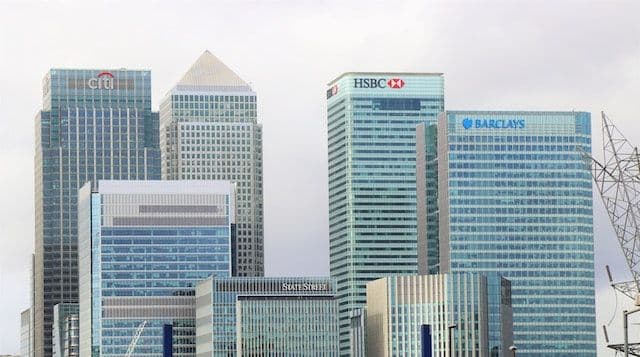
Commercial banks focus on serving businesses, from small enterprises to large corporations. While there is significant overlap between retail and commercial banking (many large banks, like Citibank and HSBC, offer both), commercial banking involves larger transaction volumes and more complex financial products.
One of the primary functions of a commercial bank is providing loans to businesses. These can range from small business lines of credit to multi-million-dollar term loans for large corporations. In the U.S., commercial and industrial loans held by all commercial banks totaled approximately $2.8 trillion as of mid-2024. These loans fund everything from inventory purchases to factory expansions.
For example, a local restaurant might take out a $200,000 Small Business Administration (SBA) loan through a commercial bank to renovate its kitchen and expand its seating capacity. The bank evaluates the business's financial health, creditworthiness, and ability to repay before approving the loan.
Trade finance is one of the most important but least understood services offered by commercial banks. It involves providing the financial instruments and products that companies need to conduct international trade. This includes letters of credit, trade credit insurance, export financing, and factoring.
For instance, imagine a U.S. manufacturer wants to buy $5 million worth of raw materials from a supplier in Germany. The supplier wants to be paid upfront, but the manufacturer does not want to pay until the goods arrive. A commercial bank steps in by issuing a letter of credit — a guarantee from the bank that the supplier will be paid once the goods are shipped and the necessary documents are presented. Global trade finance volumes exceeded $12 trillion in 2023, highlighting the critical role banks play in keeping international commerce flowing.
Commercial banks offer treasury management services to help businesses manage their cash flow, optimize their liquidity, and minimize financial risk. This includes cash pooling, automated clearing house (ACH) payments, lockbox services, and foreign exchange hedging.
A large multinational corporation, for example, might use treasury management services from a bank like HSBC or Bank of America to consolidate the cash balances of its subsidiaries across 30 countries into a single account structure. This allows the company to earn higher interest on its pooled cash and reduce the cost of currency conversions.
Investment banks operate in a very different world from retail and commercial banks. They do not take deposits from the general public. Instead, they help companies raise capital, advise on mergers and acquisitions, and trade securities. The biggest names in investment banking — Goldman Sachs, Morgan Stanley, JPMorgan (investment banking division), and Bank of America Securities — are some of the most powerful financial institutions in the world.
When a company wants to buy another company (or merge with one), it typically hires an investment bank to advise on the deal. The bank helps with valuation, negotiation, due diligence, and deal structuring. In return, the bank earns an advisory fee, which can be substantial.
For example, when Microsoft acquired Activision Blizzard for $68.7 billion in 2023, investment banks on both sides of the deal earned hundreds of millions of dollars in advisory fees. Global M&A deal value reached approximately $3.2 trillion in 2023, according to Dealogic.
When a company wants to raise money by issuing stocks or bonds, an investment bank acts as the underwriter. The bank buys the securities from the issuing company and then sells them to investors. This process is known as an Initial Public Offering (IPO) for stocks or a bond issuance for debt.
For example, when Saudi Aramco went public in 2019 in the largest IPO in history, raising $25.6 billion, a consortium of investment banks including Goldman Sachs, Morgan Stanley, and JPMorgan underwrote the offering. The underwriting fee typically ranges from 3% to 7% of the total amount raised, depending on the size and complexity of the deal.
Many investment banks also have large asset management divisions that invest money on behalf of institutional and individual clients. BlackRock, the world's largest asset manager (which originated as part of Blackstone Group), manages over $10 trillion in assets. Goldman Sachs Asset Management and Morgan Stanley Investment Management also manage hundreds of billions of dollars.
These divisions offer mutual funds, exchange-traded funds (ETFs), hedge funds, private equity, and other investment products. They charge management fees — typically 0.1% to 2% of assets under management annually — which can add up to enormous sums when managing billions of dollars.
Central banks are fundamentally different from all other types of banks. They are not commercial entities seeking profit. Instead, they are government or quasi-government institutions responsible for managing a country's monetary policy and ensuring the stability of the financial system. As the Federal Reserve's website states, "The Federal Reserve System is the central bank of the United States. It was founded by Congress in 1913 to provide the nation with a safer, more flexible, and more stable monetary and financial system."
The most important function of a central bank is setting monetary policy — controlling the money supply and interest rates to achieve economic goals like stable prices, maximum employment, and sustainable growth. The Federal Reserve does this primarily through the federal funds rate, which is the interest rate at which banks lend to each other overnight.
When the Fed lowers the federal funds rate, borrowing becomes cheaper, encouraging businesses to invest and consumers to spend. When it raises the rate, borrowing becomes more expensive, which helps cool down an overheating economy and control inflation. For example, in 2022-2023, the Fed raised interest rates from near 0% to a range of 5.25%-5.50% in one of the fastest rate-hiking cycles in history, aimed at combating inflation that had reached a 40-year high of 9.1% in June 2022.
Central banks serve as the banker to commercial banks. Commercial banks maintain reserve accounts at the central bank, and the central bank provides liquidity to the banking system through mechanisms like the discount window and open market operations.
During the 2008 financial crisis, the Federal Reserve acted as the lender of last resort, providing emergency loans to banks and financial institutions to prevent a complete collapse of the financial system. The Fed's emergency lending programs injected trillions of dollars into the financial system, stabilizing markets and preventing a repeat of the Great Depression.
Central banks manage their country's foreign exchange reserves — holdings of foreign currencies, gold, and other international assets. These reserves serve as a buffer against economic shocks and are used to influence the exchange rate of the domestic currency.
China's People's Bank of China (PBOC) holds the world's largest foreign exchange reserves at approximately $3.2 trillion. Japan, Switzerland, and India also hold substantial reserves. These reserves give central banks the firepower to intervene in currency markets when necessary.
Central banks also serve as the government's banker, managing the government's accounts, facilitating the issuance of government debt (bonds), and processing government payments. For example, when the U.S. Treasury issues new bonds to finance government spending, the Federal Reserve Bank of New York conducts the auction and manages the settlement process.
Central banks have the exclusive authority to issue banknotes (paper currency) and coins. Every dollar bill in your wallet says "Federal Reserve Note" on it — because it was issued by the Federal Reserve. The Bank of England issues pound notes, the ECB issues euro notes, and so on. This monopoly on currency issuance is one of the central bank's most fundamental powers.
Beyond the major categories above, there are several other types of banking institutions that serve specialized needs.
Digital Banks (Neobanks) are banks that operate entirely online with no physical branches. Examples include Chime, Revolut, N26, and Monzo. They typically offer lower fees and higher interest rates because they do not have the overhead costs of physical branches. Revolut, one of the largest neobanks, reported over 40 million customers globally by 2024. Neobanks represent the intersection of banking and fintech, using technology to deliver a streamlined, mobile-first banking experience.
Community Banks are small, locally focused banks that serve specific geographic areas. They play a vital role in providing credit to small businesses and individuals in their communities. There are approximately 4,600 community banks in the U.S., and they collectively hold about $2.3 trillion in assets. Despite their small size, they account for a disproportionate share of small business lending.
Credit Unions are nonprofit financial cooperatives owned by their members. Because they are not driven by profit, credit unions often offer better interest rates on savings accounts and lower rates on loans than traditional banks. There are over 4,900 credit unions in the U.S. with more than 138 million members. Navy Federal Credit Union, the largest in the country, has over 13 million members and more than $170 billion in assets.
Development Banks are specialized institutions, often government-backed, that provide financing for economic development projects. The World Bank, the Asian Development Bank (ADB), and the European Bank for Reconstruction and Development (EBRD) are examples. These banks provide long-term loans, grants, and technical assistance to developing countries for infrastructure, education, and healthcare projects.
Islamic Banks operate under Sharia (Islamic law), which prohibits the charging or paying of interest (riba). Instead, Islamic banks use profit-sharing arrangements, leasing (ijara), and cost-plus financing (murabaha) to provide banking services that comply with religious principles. The global Islamic banking industry was valued at over $2.2 trillion in 2023, with major hubs in Saudi Arabia, Malaysia, the UAE, and Qatar.
Banks are not just places to store money — they are critical engines of economic growth. As the Bank of England explains, "Banks channel funds between savers and borrowers, and create money in the form of bank deposits. In doing so, they help the economy grow." Let us look at the specific ways banks contribute to the economy.
The most fundamental role of a bank in the economy is that of a financial intermediary — connecting those who have money (savers) with those who need money (borrowers). Without banks, individuals and businesses would have to find each other and negotiate terms directly, which would be incredibly inefficient.
Consider this: if you have $10,000 in savings, you probably do not have the time, expertise, or willingness to find a creditworthy borrower, negotiate a loan agreement, and manage the risk of default. A bank does all of this for you. It pools the savings of millions of depositors and uses that pool to make loans to qualified borrowers. In return, you earn interest on your deposit, and the bank earns a spread between the deposit rate and the lending rate.
Commercial banks are the primary transmission mechanism for monetary policy. When the central bank changes interest rates, commercial banks adjust their own lending and deposit rates accordingly, which affects borrowing, spending, and investment throughout the economy.
For example, when the Federal Reserve raised interest rates aggressively in 2022-2023, mortgage rates in the U.S. jumped from around 3% to over 7%. This made home buying significantly more expensive, which cooled the housing market and helped slow inflation. This chain of events — central bank decision to commercial bank rate change to consumer behavior shift — illustrates how monetary policy flows through the banking system.
One of the most remarkable things banks do is create money through a process known as credit creation (also called the money multiplier effect). This is made possible by the fractional reserve banking system, in which banks are only required to keep a fraction of their deposits in reserve and can lend out the rest.
Here is a simplified example: You deposit $1,000 in your bank. The bank is required to keep, say, 10% ($100) in reserve and can lend out the remaining $900. That $900 gets deposited by the borrower in another bank, which keeps $90 in reserve and lends out $810. This process repeats, and by the time it works through the entire banking system, your original $1,000 deposit can create up to $10,000 in new money (with a 10% reserve requirement, the money multiplier is 1/0.10 = 10).
This is why the Bank of England has stated, "Most of the money in the economy is created, not by printing presses at the central bank, but by commercial banks when they make loans." It is a powerful concept and one of the key reasons why banks are so important to the economy.
Banks operate the payment infrastructure that keeps the economy running. Every time you swipe your debit card, make an online purchase, or receive your paycheck via direct deposit, the transaction is processed through a network of banks and payment systems.
In the United States, the two main interbank payment systems are Fedwire (operated by the Federal Reserve) and CHIPS (the Clearing House Interbank Payments System). Fedwire processes over $4 trillion in transactions every single day. Globally, the SWIFT network connects over 11,000 financial institutions in more than 200 countries and territories, processing millions of messages daily to facilitate international payments.
Banks touch nearly every aspect of modern life. Whether you realize it or not, you probably interact with the banking system multiple times every day. Let us look at how banks affect your everyday finances.
A bank provides a safe place to store your money. Before modern banking, people literally hid cash under mattresses or in safes. Today, your deposits are protected by deposit insurance, and your bank provides you with easy access to your funds through branches, ATMs, and digital platforms.
Banks also offer various savings products to help you grow your money. These include regular savings accounts, high-yield savings accounts, certificates of deposit (CDs), and money market accounts. For example, a 1-year CD from a competitive bank might offer an interest rate of 4.5% to 5.0% APY, significantly higher than a standard savings account.
When you need money for a big purchase — a home, a car, or an education — a bank can provide the financing. Mortgage loans, auto loans, personal loans, and student loans are all common products offered by banks.
The mortgage market alone is enormous. Outstanding mortgage debt in the U.S. exceeds $12.5 trillion. A 30-year fixed-rate mortgage allows a homebuyer to spread the cost of a home over three decades, making homeownership accessible to millions of families who could not afford to pay cash.
Credit cards have become an essential tool for everyday spending. They offer convenience, rewards (such as cash back, travel points, and airline miles), and buyer protection. There are over 1.1 billion credit cards in circulation in the U.S., and credit card spending exceeded $5.6 trillion in 2023.
For example, a popular card like the Chase Sapphire Preferred offers 2x points on travel and dining, which can be redeemed for free flights and hotel stays. These rewards programs are funded in part by the interchange fees that merchants pay every time a customer uses a credit card.
Beyond basic banking, many banks offer additional financial services such as investment accounts, retirement planning (IRAs and 401(k) rollovers), insurance products, and financial advisory services. Large banks like Fidelity, Charles Schwab, and Wells Fargo Advisors provide comprehensive wealth management services for individuals and families.
Many banks also offer financial education resources to help customers make better financial decisions. Topics might include budgeting, debt management, retirement planning, and investing basics.
Banks provide a range of other everyday conveniences that people often take for granted. Safe deposit boxes allow you to store valuables securely. Notary services are available at many branches. International wire transfers enable you to send money abroad quickly. Automatic bill pay ensures your utilities and subscriptions are always paid on time.
Direct deposit, for example, is now the default way most employers pay their employees. Rather than issuing paper checks, the employer sends the funds electronically to the employee's bank account. Over 93% of American workers receive their pay via direct deposit, according to the American Payroll Association.
With billions of dollars flowing through the banking system every day, security is paramount. Banks invest heavily in protecting their systems and their customers' information from fraud, theft, and cyberattacks. U.S. banks and financial institutions spend an estimated $30 billion or more annually on cybersecurity. Here are the key security measures that banks use.
Banks use advanced encryption protocols to protect data in transit and at rest. When you log into your online banking portal, your connection is secured using 256-bit SSL/TLS encryption — the same level of encryption used by the military and government agencies. This ensures that even if a hacker intercepts your data, they cannot read it.
Multi-factor authentication requires you to provide two or more forms of verification before you can access your account. This typically includes something you know (your password), something you have (your phone, for a one-time code), and sometimes something you are (your fingerprint or face). MFA significantly reduces the risk of unauthorized access, even if your password is compromised.
Modern banks use artificial intelligence and machine learning algorithms to detect fraudulent transactions in real time. These systems analyze patterns in your spending behavior and flag anything unusual. For example, if you normally make purchases in New York and your card is suddenly used in another country, the system may block the transaction and alert you immediately.
JPMorgan Chase, for instance, uses a proprietary AI system that analyzes over 5 billion transactions annually to identify and prevent fraud. This technology has helped the bank prevent billions of dollars in potential losses each year.
Banks implement secure login procedures that go beyond simple username and password combinations. These may include security questions, device recognition, login notifications, and session timeouts. Many banks also lock accounts after a certain number of failed login attempts to prevent brute-force attacks.
Biometric authentication — using your fingerprint, face, voice, or even your iris — is becoming increasingly common in banking. Apple's Face ID and Touch ID, for example, are widely used to access banking apps. Some banks are also experimenting with voice recognition and behavioral biometrics (analyzing how you type or hold your phone) for additional security.
Banks regularly update their software and systems to patch security vulnerabilities. These updates are critical because cybercriminals are constantly looking for new ways to exploit weaknesses. Banks maintain dedicated security teams that monitor for threats around the clock and deploy patches as soon as vulnerabilities are discovered.
Banks deploy multiple layers of firewalls and intrusion detection systems to protect their networks from unauthorized access. These systems monitor incoming and outgoing network traffic and block suspicious activity. Enterprise-grade firewalls used by major banks can analyze millions of packets per second, providing a robust defense against cyberattacks.
Human error is one of the biggest security risks in any organization. Banks invest heavily in training their employees to recognize phishing attempts, social engineering attacks, and other security threats. Regular training sessions and simulated phishing tests help ensure that staff remain vigilant.
Beyond the technical measures, there are important reasons why banking security matters at a broader level.
Trust is the foundation of banking. If customers do not trust that their money is safe, they will not deposit it in banks, and the entire system breaks down. Banks that suffer major security breaches can lose customers, face lawsuits, and suffer lasting reputational damage. According to a 2023 Edelman survey, financial services ranked as one of the least trusted industries, making it even more important for banks to demonstrate strong security practices.
A major cyberattack on the banking system could have devastating consequences for the economy. If millions of people suddenly cannot access their money, pay their bills, or make purchases, economic activity grinds to a halt. This is why governments treat banking cybersecurity as a matter of national security. The Financial Stability Board (FSB) has identified cyber risk as one of the top threats to global financial stability.
Banks are required by law to maintain certain security standards. In the U.S., regulations like the Gramm-Leach-Bliley Act (GLBA), the Bank Secrecy Act (BSA), and various state-level data privacy laws mandate that banks protect customer information. Failure to comply can result in hefty fines, enforcement actions, and even criminal charges. The European Union's General Data Protection Regulation (GDPR) also applies to banks operating in Europe, imposing strict rules on how customer data is collected, stored, and used.
Banks are far more than just places to stash your cash. They are complex institutions that sit at the very center of the global economy. From the local credit union where you open your first savings account to the massive investment banks that facilitate billion-dollar mergers, every type of bank plays a vital role in keeping the financial system running smoothly.
We have seen how banks are structured — with physical branches, ATMs, and increasingly powerful digital platforms. We have explored how they are regulated to protect depositors and maintain financial stability. We have walked through the different types of banks — retail, commercial, investment, central, and others — and looked at the specific products and services each one offers.
We have also examined the critical role banks play in the economy as financial intermediaries, transmitters of monetary policy, creators of credit, and operators of the payment system. And we have looked at how banks protect your money through sophisticated security measures, from encryption and multi-factor authentication to AI-powered fraud detection.
The banking industry continues to evolve. The rise of fintech, digital-only banks, blockchain technology, and central bank digital currencies (CBDCs) is reshaping the landscape in ways that would have been unimaginable just a decade ago. Yet the fundamental principles of banking — accepting deposits, making loans, and facilitating payments — remain as relevant today as they were centuries ago.
As Warren Buffett once said, "Banking is very good business if you don't do anything dumb." Understanding how banks work empowers you to make smarter financial decisions, choose the right banking products, and navigate the financial system with confidence.

Accounting is like a notebook for a business where all the money-related activities are recorded and tracked. Just like students track their exam scores to understand how they are doing, businesses use accounting to see if they are making a profit or loss. It acts like the financial backbone of a company. Accountants organize these records into different sections to make things easier to understand. To show their performance to shareholders, companies prepare documents called financial statements.