CATWOE Analysis: Definition, Framework, and Examples
G
GeoRenus Editorial Team
1,110 views

GeoRenus Editorial Team
CATWOE Analysis is a structured problem-framing framework developed by Peter Checkland as part of Soft Systems Methodology. It examines business problems through six lenses: Customers, Actors, Transformation Process, Worldview, Owners, and Environmental Constraints. This comprehensive guide explains each element, provides a real-world ride-sharing example, and explores the advantages and limitations of the framework.
When businesses face complex problems, the hardest part is often not solving the problem itself but understanding it clearly in the first place. Different stakeholders see the same situation from entirely different angles. A supply chain disruption, for instance, looks very different to a warehouse manager than it does to the CEO or the end customer. This is precisely where CATWOE Analysis comes into play.
CATWOE Analysis is a structured thinking framework that helps analysts and decision-makers examine a business problem from six distinct perspectives. Developed as part of Peter Checkland's Soft Systems Methodology (SSM) in the 1980s, CATWOE has become a go-to tool for business analysts, consultants, and strategists who need to get beneath the surface of messy, real-world situations.
Unlike purely quantitative tools that rely on numbers and data, CATWOE embraces the human side of problem-solving. It acknowledges that every business situation involves people with different interests, motivations, and constraints. As Peter Checkland himself noted, "Real-world problems are not neatly packaged; they are messy, interconnected, and deeply human." CATWOE gives you a systematic way to unpack that messiness.
In this article, we will break down each element of the CATWOE framework, walk through a practical real-world example, and explore where and how this powerful analytical tool is used across industries.
CATWOE Analysis is a problem-framing technique used in business analysis and systems thinking. The acronym stands for Customers, Actors, Transformation Process, Worldview, Owners, and Environmental Constraints. Each letter represents a different lens through which you examine a business situation, system, or proposed change.
The framework was introduced by Peter Checkland, a British management scientist and professor at Lancaster University, as part of his Soft Systems Methodology (SSM) developed during the 1970s and 1980s. Checkland recognized that traditional systems engineering approaches, which worked brilliantly for technical problems like building bridges or designing circuits, fell short when applied to human organizations where opinions, politics, and culture matter enormously.
Soft Systems Methodology was Checkland's answer to this gap. It is a structured approach for tackling ill-defined, complex problems in human activity systems. CATWOE sits at the heart of SSM as the tool used to construct what Checkland called a "root definition" of a system. A root definition is essentially a concise, carefully worded statement that describes what a system does, for whom, and under what constraints.
Think of CATWOE as a checklist that forces you to ask the right questions before jumping to solutions. Instead of diving headfirst into fixing a problem, CATWOE makes you pause and consider: Who benefits? Who does the work? What actually changes? Why does it matter? Who has the power? And what limitations exist? By answering these six questions thoroughly, you gain a 360-degree understanding of the situation.
Each letter in CATWOE represents one critical element of the analysis. Together, they provide a comprehensive picture of any business system or problem. Here is the full form of the acronym:
The term "Weltanschauung" is a German word that Checkland deliberately chose to represent the "W" in CATWOE. It translates roughly to "worldview" and emphasizes the idea that every system exists within a particular context of beliefs, assumptions, and values. This philosophical grounding is what sets CATWOE apart from more mechanical analytical tools.
Conducting a CATWOE Analysis involves systematically working through each of the six elements. The process is straightforward, but it requires careful thought and, ideally, input from multiple stakeholders. Below, we walk through each element in detail with guiding questions and tips.
The first step is to identify the customers of the system. In CATWOE, "customers" does not necessarily mean paying customers in the commercial sense. It refers to anyone who is directly affected by the output of the system, whether positively or negatively.
Ask yourself: Who receives the output of this process? Who benefits from it? Who might be harmed or inconvenienced by it? For example, in a hospital emergency department, the customers are the patients who arrive seeking urgent medical care. But they could also include family members who are affected emotionally, or even other patients in the waiting room whose care is delayed.
Identifying customers accurately is critical because any transformation that does not serve its customers well is fundamentally flawed. The entire purpose of most systems is to deliver value to these individuals.
Actors are the people who perform the activities within the system. They are the ones rolling up their sleeves and doing the actual work that makes the transformation happen.
Key questions include: Who carries out the tasks in this system? What skills and resources do they need? Are they employees, contractors, volunteers, or automated systems? In the hospital example, the actors would be doctors, nurses, paramedics, administrative staff, and lab technicians. Each actor plays a specific role, and understanding these roles helps you see where bottlenecks or skill gaps might exist.
It is worth noting that actors and customers can sometimes overlap. A teacher in a school system, for instance, is an actor who delivers education but may also be a customer of the school's professional development programs.
The transformation process is arguably the most important element of the CATWOE framework. It describes the core conversion that takes place within the system, turning inputs into outputs.
Every system exists to transform something. A manufacturing plant transforms raw materials into finished goods. A university transforms students without degrees into graduates with degrees. A customer service department transforms complaints into resolutions. The transformation should be expressed as a clear input-to-output statement.
When defining the transformation, be specific. Instead of saying "the hospital makes people better," you might say: "Patients presenting with acute medical conditions (input) are transformed into patients who have received appropriate diagnosis and treatment (output)." This precision forces clarity and helps everyone agree on what the system is actually supposed to do.
The worldview, or Weltanschauung, is the bigger picture context that gives the transformation its meaning and justification. It answers the question: Why does this system matter? What belief or value makes the transformation worth doing?
This is often the most overlooked element, yet it is enormously powerful. Different stakeholders may have very different worldviews about the same system. For a hospital, one worldview might be: "Every person deserves access to timely, high-quality medical care regardless of their ability to pay." Another worldview might be: "A hospital must operate efficiently to remain financially sustainable." Both are valid, but they lead to very different priorities and decisions.
Surfacing these different worldviews is one of the greatest strengths of CATWOE. It reveals hidden assumptions and potential conflicts before they derail a project.
Owners are the people or entities who have the authority and power to control the system. They can decide to start, modify, or shut down the system entirely. In corporate settings, owners are often senior executives, board members, or shareholders.
Identifying owners is crucial for understanding where decision-making power lies. If you propose a change to a system but fail to get buy-in from the owners, your proposal is unlikely to succeed, no matter how brilliant it is. In a hospital, the owners might include the hospital board of directors, the chief executive, government health authorities, or in the case of a private hospital, the investors.
A practical tip: there can be multiple layers of ownership. A department manager may own a process operationally, while a C-suite executive owns it strategically, and a regulatory body owns it from a compliance perspective.
Environmental constraints are the external factors that the system must operate within but has little or no power to change. These are the boundaries, rules, and realities that shape what is possible.
Common environmental constraints include government regulations, legal requirements, industry standards, budget limitations, technological infrastructure, cultural norms, competitive pressures, and physical or geographical limitations. For a hospital, environmental constraints might include healthcare regulations, licensing requirements, insurance policies, available medical technology, and the geographic distribution of the patient population.
Understanding these constraints early prevents wasted effort on solutions that are simply not feasible. As the saying goes, "You cannot change the wind, but you can adjust your sails." CATWOE helps you see clearly what the wind is doing.
To bring the CATWOE framework to life, let us apply it to a real-world scenario: a ride-sharing platform like Uber. Ride-sharing has disrupted the traditional taxi industry worldwide and provides an excellent case study because it involves multiple stakeholders with competing interests.
Imagine Uber is evaluating its core ride-sharing service to identify areas for improvement and to understand the perspectives of all parties involved. Here is how a CATWOE Analysis would look:
The primary customers of Uber's ride-sharing service are the riders (passengers) who use the app to request and pay for rides. These individuals seek convenient, affordable, and safe transportation from one location to another. Secondary customers may include businesses that use Uber for employee transportation, as well as individuals who rely on Uber in areas with limited public transit.
It is also worth considering that drivers themselves are customers of the Uber platform in a sense. They use the app to find passengers and earn income. This dual-customer dynamic is a distinctive feature of platform-based businesses.
The actors in the Uber system include drivers who provide the rides, Uber's software engineers who maintain and develop the app, customer support representatives, operations teams managing driver onboarding and compliance, marketing teams, and data scientists who optimize pricing and route algorithms. Drivers are arguably the most visible and critical actors, as they deliver the core service directly to customers.
The core transformation in Uber's system can be stated as: A person needing to travel from Point A to Point B (input) is transformed into a person who has been safely and conveniently transported to their destination (output). At a platform level, there is a secondary transformation: unmatched supply and demand in the transportation market (input) is transformed into an efficient, real-time matching of riders with nearby drivers (output).
The underlying worldview that justifies Uber's existence might be stated as: "Technology can make urban transportation more accessible, efficient, and affordable for everyone by connecting riders directly with drivers through a mobile platform, eliminating the inefficiencies of the traditional taxi model."
However, different stakeholders hold different worldviews. Traditional taxi operators might see Uber as an unfair competitor that bypasses regulations. City planners might view it as a contributor to traffic congestion. Environmentalists might see it as either a positive force (if it reduces car ownership) or a negative one (if it increases total vehicle miles traveled). Recognizing these competing worldviews is essential for strategic decision-making.
The owners of Uber's ride-sharing system include Uber's board of directors, its CEO, and its major institutional shareholders. These are the individuals and entities with the power to fundamentally change how the system operates, including decisions about pricing models, geographic expansion, driver compensation, and even whether to continue operating in certain markets. Government regulators also act as a form of ownership in that they can grant or revoke Uber's license to operate in specific jurisdictions.
Uber operates within a wide range of environmental constraints. These include local and national transportation regulations, labor laws (especially the ongoing debate about whether drivers are employees or independent contractors), data privacy regulations such as GDPR, insurance requirements, traffic and road infrastructure, fuel prices, smartphone and internet penetration rates, and competitive pressure from rivals like Lyft and regional ride-sharing services. Cultural attitudes toward ride-sharing also vary by region, affecting adoption rates.
This example shows how CATWOE forces you to examine a business from every angle. Even a seemingly simple service like booking a ride involves a complex web of stakeholders, constraints, and competing perspectives.
CATWOE Analysis is used across a wide range of industries and contexts. While it originated in the academic field of systems thinking, it has found practical application in many areas of business and public policy:
According to the International Institute of Business Analysis (IIBA), CATWOE is recognized as a standard business analysis technique and is referenced in the Business Analysis Body of Knowledge (BABOK Guide). Its versatility makes it applicable to virtually any situation where multiple stakeholders and perspectives are involved.
CATWOE Analysis offers several compelling advantages that explain its enduring popularity among business analysts and decision-makers:
While CATWOE is a valuable tool, it is not without its limitations. Being aware of these drawbacks helps you use the framework more effectively:
To overcome these limitations, experienced analysts often combine CATWOE with other tools such as SWOT Analysis, PESTLE Analysis, or stakeholder mapping. Using CATWOE as one component of a broader analytical toolkit tends to yield the best results.
CATWOE Analysis remains one of the most practical and insightful frameworks for understanding complex business problems. Born out of Peter Checkland's pioneering work in Soft Systems Methodology, it provides a structured yet flexible approach to examining any system through six essential lenses: Customers, Actors, Transformation, Worldview, Owners, and Environmental Constraints.
Its greatest strength lies in its ability to surface the human, political, and cultural dimensions of business problems, aspects that purely quantitative tools often miss. Whether you are a business analyst defining requirements for a new IT system, a consultant advising on organizational change, or a manager trying to understand why a process is not working, CATWOE gives you the questions you need to ask.
That said, CATWOE works best when used as part of a broader analytical toolkit. Pair it with quantitative frameworks and decision-making models, and you will have a comprehensive understanding that leads to better, more inclusive, and more sustainable solutions. In a world where business problems are becoming increasingly complex and interconnected, the ability to see a situation from multiple perspectives is not just an advantage. It is a necessity.
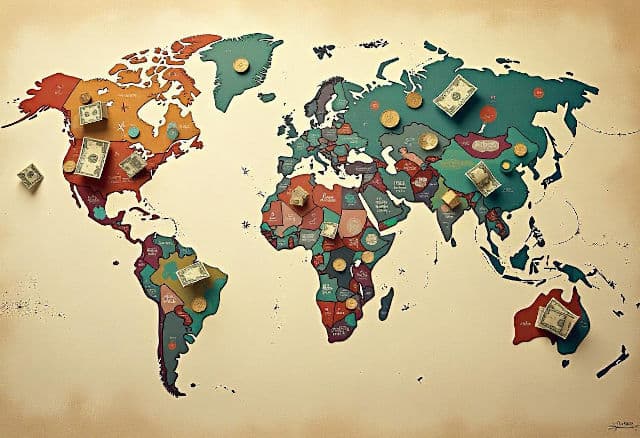
Since the dawn of human civilization, people have engaged in trade through barter. However, around 5,000 years ago, humans gradually abandoned the barter system and began using metallic coins. These coins were made from copper, silver, and gold. Around 1260 AD, the first paper currency was introduced in China and eventually spread throughout the world. In the 1930s, the first credit cards were issued by commercial establishments, and by the 1950s, banks began issuing them as well.