PESTLE Analysis in depth
G
GeoRenus Editorial Team
754 views

GeoRenus Editorial Team
PESTLE Analysis is a strategic framework used to evaluate the six key external factors that influence a business: Political, Economic, Social, Technological, Legal, and Environmental. It helps organizations anticipate changes in the macro-environment, identify opportunities and threats, and make more informed strategic decisions. Widely used in corporate strategy, market entry planning, and investment analysis, PESTLE is a foundational tool for understanding the forces beyond a company's control.
Every business, whether a scrappy startup or a Fortune 500 giant, operates within a broader environment that it cannot control. Interest rates shift, governments change, new technologies emerge, and consumer preferences evolve. The companies that thrive are not the ones that simply react to these changes -- they are the ones that anticipate them. That is exactly where PESTLE Analysis comes in.
PESTLE Analysis is one of the most widely used strategic frameworks in the business world. It provides a structured way to scan the external macro-environment and identify the forces that could impact an organization's strategy, operations, and bottom line. The acronym stands for Political, Economic, Social, Technological, Legal, and Environmental factors. By examining each of these six dimensions, decision-makers can build a more complete picture of the landscape they operate in and make smarter, more informed choices.
As management guru Peter Drucker once observed, "The greatest danger in times of turbulence is not the turbulence itself, but to act with yesterday's logic." PESTLE Analysis is a tool designed to keep your logic current -- to ensure your strategy is grounded in the realities of today and the possibilities of tomorrow.
Whether you are launching a new product, entering a foreign market, or simply trying to future-proof your business plan, understanding how external forces shape your industry is not optional. According to a 2023 McKinsey Global Survey, over 70% of executives cited external disruptions as a primary concern for strategic planning. PESTLE Analysis gives you the framework to address those concerns systematically.
PESTLE Analysis is a strategic management tool used to identify, analyze, and monitor the key external factors that influence an organization. Think of it as a wide-angle lens for your business -- it helps you zoom out from day-to-day operations and see the bigger picture.
The framework was originally developed in the 1960s by Harvard professor Francis Aguilar, who introduced the concept as ETPS (Economic, Technical, Political, and Social) in his book "Scanning the Business Environment." Over the decades, the model evolved. Legal and Environmental factors were added as regulations grew more complex and sustainability became a central business concern. Today, the six-factor PESTLE model is the industry standard.
At its core, PESTLE is an external analysis tool. Unlike frameworks such as SWOT (which looks at both internal and external factors), PESTLE focuses exclusively on the macro-environment -- the forces that exist outside the organization but can profoundly affect it. These are factors that a company typically cannot control but must understand and respond to.
For example, when Apple decides to manufacture iPhones in India rather than solely in China, that decision is shaped by political trade tensions, economic labor costs, legal regulatory requirements, and technological infrastructure availability -- all PESTLE factors. The framework helps companies like Apple think through these dimensions in a structured, disciplined way.
Each letter in PESTLE represents a distinct category of external influence. Let us break down each factor, understand what it covers, and look at real-world examples that bring these concepts to life.
Political factors refer to the influence that government policies, political stability, and geopolitical events have on business operations. This includes taxation policies, trade tariffs, government regulations, political stability or instability, corruption levels, and foreign trade policies.
Consider Tesla's global expansion. When the U.S. government introduced the Inflation Reduction Act in 2022, offering up to $7,500 in tax credits for qualifying electric vehicles, it directly boosted Tesla's domestic sales. Conversely, when the European Union imposed stricter import rules on Chinese-made EVs in 2024, Tesla had to rethink its strategy for vehicles produced at its Shanghai Gigafactory. Political decisions in one country can ripple across a company's entire global supply chain.
Another powerful example is Brexit. When the United Kingdom voted to leave the European Union in 2016, companies across industries -- from banking to automotive manufacturing -- had to reassess their European strategies. JPMorgan moved approximately 200 billion euros in assets from London to Frankfurt to maintain access to EU markets. That is the power of political factors at work.
Economic factors encompass the macroeconomic conditions that affect purchasing power, cost structures, and overall business viability. Key indicators include GDP growth rates, inflation, interest rates, exchange rates, unemployment levels, and consumer spending patterns.
When the U.S. Federal Reserve raised interest rates aggressively in 2022 and 2023 -- bringing the federal funds rate from near zero to over 5.25% -- the effects were felt across every sector. Mortgage rates soared, dampening real estate activity. Tech companies, which had thrived on cheap capital, saw their valuations plummet. Consumer spending shifted from discretionary goods to essentials as borrowing became more expensive.
For a company like Coca-Cola, economic factors play out differently across markets. In developed economies with stable currencies, Coca-Cola can maintain consistent pricing strategies. But in emerging markets like Nigeria or Argentina, where inflation has exceeded 20-30% annually, the company must constantly adjust prices, manage currency risk, and rethink packaging sizes to keep products affordable. Understanding these economic dynamics is essential for any multinational.
Social factors, sometimes called socio-cultural factors, relate to the demographics, cultural trends, lifestyle changes, and shifting attitudes within a society. These include population growth rates, age distribution, health consciousness, education levels, and cultural norms.
The rise of health consciousness in Western markets provides a textbook example. As consumers became more aware of the health risks associated with sugary drinks, Coca-Cola saw sales of its flagship soda stagnate. The company responded by diversifying into water (Dasani), tea (Honest Tea), and low-sugar options (Coca-Cola Zero Sugar). By 2023, Coca-Cola's low- and no-sugar products represented over 30% of its total beverage volume. That strategic pivot was driven entirely by changing social attitudes.
Similarly, the growing emphasis on remote work since the COVID-19 pandemic has reshaped entire industries. Companies like Zoom saw their daily meeting participants surge from 10 million in December 2019 to over 300 million by April 2020. Social factors -- how people choose to live, work, and communicate -- are among the most powerful drivers of business transformation.
Technological factors examine how innovations, research and development (R&D) activity, automation, and the pace of technological change affect an industry. This includes emerging technologies, the rate of tech adoption, digital infrastructure, and intellectual property considerations.
Few companies illustrate the impact of technological factors better than Tesla. The electric vehicle maker has invested heavily in battery technology, and its development of the 4680 battery cell promises to reduce production costs by up to 50% while increasing vehicle range. Tesla's commitment to over-the-air software updates -- allowing it to improve vehicle features without requiring a dealership visit -- has fundamentally changed what consumers expect from an automobile.
The explosion of artificial intelligence is another seismic technological shift. According to Goldman Sachs, AI could increase global GDP by approximately 7%, or nearly $7 trillion, over a 10-year period. Companies across every sector -- from healthcare to finance to retail -- are racing to integrate AI into their operations. Those that fail to adapt risk becoming obsolete, much like Kodak did when it underestimated the digital photography revolution.
Legal factors include the laws and regulations that businesses must comply with, such as employment laws, consumer protection regulations, health and safety standards, antitrust laws, and data protection rules. While closely related to political factors, legal factors focus specifically on the regulatory and compliance landscape.
The European Union's General Data Protection Regulation (GDPR), which took effect in May 2018, is a landmark example. GDPR imposed strict rules on how companies collect, store, and use personal data, with fines of up to 20 million euros or 4% of global annual turnover, whichever is higher. Tech giants like Google, Amazon, and Meta have collectively faced billions of euros in GDPR fines, forcing them to overhaul their data practices.
In the United States, antitrust actions against Big Tech have intensified. The Department of Justice's antitrust case against Google, filed in 2020, alleged that the company maintained an illegal monopoly in search and search advertising. These legal battles can reshape entire industries, alter competitive dynamics, and force companies to change their business models.
Environmental factors address the ecological and environmental considerations that affect business, including climate change, carbon footprint regulations, sustainability practices, waste management, and natural resource availability. This dimension has grown dramatically in importance over the past two decades.
The fashion industry offers a compelling case study. The sector is responsible for an estimated 8-10% of global carbon emissions -- more than international flights and maritime shipping combined. As consumer awareness of fast fashion's environmental impact has grown, companies like H&M and Zara have launched sustainability initiatives, including clothing recycling programs and commitments to use 100% sustainable materials.
For energy companies, environmental factors are existential. BP rebranded itself as "Beyond Petroleum" and pledged to reach net-zero emissions by 2050. Shell, TotalEnergies, and other oil majors have made similar commitments, investing billions in renewable energy projects. As Warren Buffett's business partner Charlie Munger noted, "Those who will not face improvements and changes will be swept aside by those who do." Environmental factors are no longer a niche concern -- they are a central pillar of corporate strategy.
Conducting a PESTLE Analysis is not about filling in a template and moving on. Done properly, it is a rigorous research exercise that informs strategic decision-making. Here is a step-by-step approach to doing it right.
Step 1: Define Your Objective. Before you start researching, clarify what you are analyzing. Are you evaluating a new market entry? Assessing risks for an existing product line? Planning a five-year strategy? The scope of your objective will determine the depth and focus of your analysis.
Step 2: Gather Data for Each Factor. Research each of the six PESTLE dimensions systematically. Use reliable sources -- government reports, industry publications, economic databases, and credible news outlets. For political factors, review current government policies and upcoming elections. For economic factors, examine central bank reports and IMF forecasts. Cast a wide net.
Step 3: Identify Opportunities and Threats. For each factor, determine whether it represents an opportunity or a threat (or both). A new government subsidy for renewable energy is an opportunity for solar companies but potentially a threat for fossil fuel producers. Context matters.
Step 4: Assess Impact and Likelihood. Not all external factors are equally important. Rank each factor by its potential impact on your business (high, medium, low) and the likelihood of it occurring. A factor with high impact and high likelihood should be a top strategic priority.
Step 5: Integrate Findings into Strategy. The analysis is only valuable if it leads to action. Use your PESTLE findings to inform your SWOT analysis, shape your business plan, or adjust your strategic roadmap. Many successful organizations conduct PESTLE reviews quarterly or semi-annually to stay ahead of changes.
For example, when Starbucks entered the Chinese market, a thorough PESTLE analysis would have revealed favorable political relations, a growing middle-class economy, a cultural shift toward Western-style coffee consumption, rapid technological adoption of mobile payments, evolving food safety laws, and increasing environmental awareness. Each of these insights shaped Starbucks' market entry strategy, from store design to its partnership with Alibaba for delivery services.
PESTLE Analysis is remarkably versatile. While it originated in the world of strategic management, its applications extend far beyond the corporate boardroom.
Like any strategic framework, PESTLE has its strengths and limitations. Understanding both is key to using it effectively.
In an increasingly interconnected and unpredictable world, understanding the external forces that shape your business environment is not a luxury -- it is a necessity. PESTLE Analysis provides a clear, structured framework for doing exactly that.
By systematically evaluating Political, Economic, Social, Technological, Legal, and Environmental factors, organizations can anticipate change, identify opportunities before competitors do, and mitigate risks before they materialize. From Tesla navigating trade policies to Coca-Cola responding to health-conscious consumers, the most successful companies in the world rely on this kind of disciplined external analysis.
However, PESTLE is not a silver bullet. It works best when combined with other strategic tools -- SWOT analysis for internal assessment, Porter's Five Forces for competitive dynamics, and scenario planning for long-term uncertainty. The key is to make PESTLE a regular practice, not a one-time exercise.
As the legendary strategist Sun Tzu wrote, "He who knows the enemy and knows himself will never in a hundred battles be in danger." PESTLE Analysis helps you know the external battlefield. Combine it with a deep understanding of your own organization, and you will be well equipped to navigate whatever the future holds.
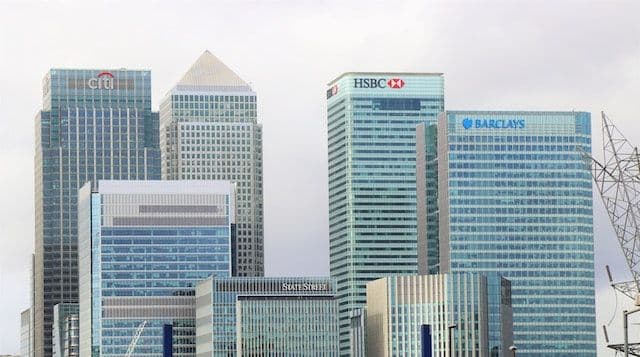
Most people use banks every single day — depositing salaries, withdrawing cash, transferring money, paying bills — without ever really thinking about how the whole system actually works. A bank is a licensed financial institution that accepts deposits from the public and uses those deposits to provide loans to individuals and businesses. Everything a bank does — from accepting your savings to issuing credit cards to printing cheques — falls under the broad category of banking. But banks are not just convenient places to store your money. They are the central nervous system of any economy — the institutions that keep money flowing productively through the system, connecting people who have surplus funds with people and businesses that need capital. And in Bangladesh, where Bangladesh Bank serves as the central authority overseeing the entire financial system, understanding how banking works is genuinely useful knowledge for anyone managing their personal finances, running a business, or simply trying to make smarter decisions with their money.