What Is a Commercial Bank and How Does It Work?
G
GeoRenus Editorial Team
809 views

GeoRenus Editorial Team
A commercial bank is a financial institution that accepts deposits from the public, provides loans to individuals and businesses, and offers a wide range of financial services including payment processing, currency exchange, and investment products. Commercial banks earn revenue primarily through the net interest margin — the difference between the interest they charge on loans and the interest they pay on deposits. They play a critical role in economic development by facilitating capital formation, enabling financial inclusion, creating jobs, and funding government initiatives. Major examples include JPMorgan Chase, Bank of America, Wells Fargo, Citibank, and HSBC. As digital transformation accelerates, commercial banks are adapting through online and mobile banking platforms, data analytics, and AI-driven services to meet evolving consumer expectations.
Think about the last time you deposited a paycheck, swiped a debit card at a grocery store, or paid your rent through an online transfer. Behind every one of those transactions sits a commercial bank — quietly moving money, managing risk, and keeping the financial gears of the economy turning. Commercial banks are so deeply woven into daily life that most people never stop to think about what they actually do or how they make money doing it.
At the most basic level, a commercial bank takes in money from people and businesses who have more than they need right now (depositors) and channels that money toward people and businesses who need more than they currently have (borrowers). The bank earns a profit on the spread — charging borrowers a higher interest rate than it pays to depositors. This simple concept, known as the net interest margin, is the engine that drives the entire commercial banking industry.
But modern commercial banking goes far beyond just deposits and loans. Today's commercial banks process payments, exchange currencies, manage wealth, underwrite business financing, and provide the digital infrastructure that supports a global economy running around the clock. In this article, we will break down what a commercial bank is, how it works, the services it provides, and why it matters so much to economic development.
A commercial bank is a type of financial institution licensed to accept deposits from the general public, make loans, and offer basic financial products like checking accounts, savings accounts, and certificates of deposit (CDs). Unlike investment banks, which primarily serve corporations and institutional investors through underwriting and advisory services, commercial banks deal directly with everyday consumers and businesses.
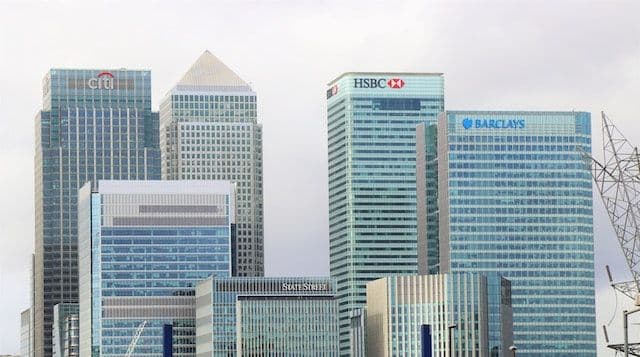
The term "commercial" bank distinguishes these institutions from central banks (which manage national monetary policy) and investment banks (which focus on capital markets). In practice, many large banks — like JPMorgan Chase, Bank of America, and Citibank — operate as universal banks that combine commercial and investment banking under one roof, but the commercial banking division remains the core that serves individual and business customers.
"Banking is very good business if you don't do anything dumb." — Warren Buffett
That quote from Warren Buffett captures the essence of commercial banking. The business model is straightforward: take in deposits at a low interest rate, lend that money out at a higher interest rate, and manage the risks in between. The difference between these two rates — the net interest margin (NIM) — is how commercial banks earn the majority of their revenue. For example, if a bank pays depositors an average of 0.5% interest on savings accounts and charges borrowers an average of 6.5% interest on loans, the bank's net interest margin is roughly 6 percentage points. Multiply that across billions of dollars in lending, and you begin to see why banking is such a profitable business.
Beyond interest income, commercial banks also generate revenue through fees — account maintenance fees, ATM fees, wire transfer charges, overdraft penalties, loan origination fees, and commissions on financial products. According to the FDIC, non-interest income accounts for roughly 30-35% of total revenue at major U.S. commercial banks.
Commercial banks operate under strict government regulation and supervision. In the United States, they are regulated by agencies including the Federal Reserve, the Office of the Comptroller of the Currency (OCC), and the Federal Deposit Insurance Corporation (FDIC). The FDIC insures deposits up to $250,000 per depositor, per bank, providing a safety net that gives the public confidence to keep their money in the banking system.
Commercial banks perform several core functions that form the backbone of the financial system. These primary functions are what distinguish banks from other types of financial institutions.
The most fundamental function of any commercial bank is accepting deposits. When you open a savings account, checking account, or fixed deposit at a bank, you are essentially lending your money to that institution. The bank, in turn, promises to return your money on demand (for checking and savings accounts) or after a fixed period (for time deposits and CDs).
Banks offer several types of deposit accounts:
As of 2024, total deposits in U.S. commercial banks exceeded $17 trillion, according to the Federal Reserve. This massive pool of deposits is the raw material that banks use to fund their lending operations.
Lending is where commercial banks really earn their keep. Banks take the deposits they collect and lend them out to individuals, businesses, and governments at higher interest rates. This is the core profit engine of the commercial banking model.
Common types of bank loans include:
Here is a practical example. Suppose a small business owner in Texas needs $200,000 to open a second restaurant location. She approaches Bank of America for a business loan. The bank evaluates her credit history, business plan, revenue projections, and collateral. If approved, the bank lends her the funds at, say, 7.5% annual interest. The bank funded that loan using deposits from thousands of savers who are earning just 0.5% to 4% on their accounts. The difference between what the bank charges the borrower and what it pays depositors is the bank's profit margin on that transaction.
Every time you use a debit card, write a check, send a wire transfer, or set up an automatic bill payment, a commercial bank is processing that transaction. Payment processing is one of the most important — and most invisible — services that commercial banks provide.
The scale of payment processing is staggering. The Federal Reserve's payment systems process more than $4 trillion in transactions every single day. Commercial banks serve as the intermediaries in this system, verifying funds, moving money between accounts, and settling transactions across institutions. Services like Automated Clearing House (ACH) transfers, wire transfers, and real-time payment networks all run through the commercial banking infrastructure.
For example, when you swipe your debit card at a coffee shop, the transaction flows from the merchant's point-of-sale terminal through the card network (like Visa or Mastercard), to the merchant's bank (the acquiring bank), and then to your bank (the issuing bank), which verifies that you have sufficient funds and authorizes the payment — all within a few seconds.
Commercial banks facilitate foreign currency exchange for both individuals and businesses. If you are traveling abroad and need to convert U.S. dollars to euros, your bank can handle that. More importantly, commercial banks provide foreign exchange services to businesses engaged in international trade, helping them manage currency risk and settle cross-border transactions.
Global banks like HSBC and Citibank are major players in the foreign exchange market, which trades over $7.5 trillion per day according to the Bank for International Settlements. These banks help multinational corporations hedge against currency fluctuations, convert payments from overseas customers, and manage the financial complexities of operating across multiple countries.
Beyond their primary functions, commercial banks serve a deeper structural role in the economy as financial intermediaries. They bridge the gap between those who have money and those who need it, and in doing so, they perform several critical intermediary functions.
Commercial banks are the primary channel through which savings in an economy get converted into productive investment. When a retiree in Ohio deposits her pension income into a savings account at JPMorgan Chase, that money does not just sit in a vault. The bank pools her deposit with millions of others and channels those funds toward businesses that need capital — a tech startup in Silicon Valley, a construction company in Atlanta, or a hospital expanding in Chicago.
This capital supply function is essential. Without commercial banks serving as intermediaries, individual savers would have to find borrowers on their own, negotiate terms, and bear the full risk of default. Banks make this process efficient, standardized, and far less risky for individual depositors.
One of the most sophisticated things commercial banks do is transform risk. When you deposit money in a bank, your individual risk is essentially zero (up to the FDIC insurance limit). But the bank is lending your money to borrowers who might default. How does this work?
The answer is diversification. A bank like Wells Fargo does not put all its eggs in one basket. It lends to millions of different borrowers across thousands of industries, geographies, and risk profiles. If a few borrowers default, the losses are absorbed by the bank's diversified loan portfolio and its capital reserves. The risk that would be catastrophic for an individual lender is manageable for a large, well-diversified bank.
"The essence of bank management is the management of risk, not the avoidance of it." — Walter Wriston, former CEO of Citibank
Banks also use credit scoring models, collateral requirements, loan covenants, and reserve funds to manage and mitigate risk. Regulators require banks to maintain minimum capital ratios — under Basel III standards, banks must hold at least 4.5% Common Equity Tier 1 (CET1) capital relative to their risk-weighted assets — ensuring they can absorb losses without becoming insolvent.
Commercial banks perform a remarkable balancing act called liquidity transformation. Depositors want the ability to withdraw their money at any time — that is liquidity. But borrowers need long-term loans — 30-year mortgages, 10-year business loans — that tie up capital for years or decades. Banks bridge this gap by maintaining a carefully managed balance between liquid assets (cash and short-term securities) and illiquid assets (long-term loans).
Under Basel III regulations, banks must maintain a Liquidity Coverage Ratio (LCR) of at least 100%, meaning they must hold enough high-quality liquid assets to cover 30 days of net cash outflows under stress conditions. This requirement ensures that even during a financial crisis, banks can meet depositor withdrawals without fire-selling long-term assets at a loss.
For example, during the bank run on Silicon Valley Bank (SVB) in March 2023, the bank could not meet the sudden surge in withdrawal demands because its assets were locked up in long-term bonds that had lost significant value due to rising interest rates. This was fundamentally a liquidity management failure — and a stark reminder of why this function is so critical.
Modern commercial banks offer a comprehensive suite of financial services that extend well beyond traditional deposits and loans. These services are typically organized into three broad categories.
Personal banking — also called retail banking — is the consumer-facing side of a commercial bank. This is where most people interact with banks on a daily basis. Personal banking services include:
Bank of America, for instance, serves approximately 69 million consumer and small business clients across the United States, making it one of the largest retail banking operations in the world.
For businesses — from small sole proprietorships to large corporations — commercial banks provide a separate and more complex set of services:
Consider a mid-sized manufacturing company that exports auto parts to Europe. HSBC might provide the company with a letter of credit to guarantee payment from the European buyer, an FX hedging service to protect against euro-dollar fluctuations, and a revolving line of credit to manage cash flow between shipments. These interconnected services illustrate why commercial banks are indispensable to businesses operating in a global economy.
While investment banking is a separate discipline, many commercial banks offer investment-related products to their customers. These typically include:
JPMorgan Chase's wealth management division, J.P. Morgan Private Bank, manages over $3 trillion in client assets, serving ultra-high-net-worth families and institutions worldwide. While this is technically a separate business line, it operates under the commercial bank's umbrella and benefits from the trust and relationships the bank has built through its core banking services.
The rise of the internet and smartphones has fundamentally transformed how people interact with commercial banks. What once required a trip to a physical branch can now be done in seconds from a couch.
Internet banking — accessing banking services through a web browser — became mainstream in the early 2000s. Today, virtually every commercial bank offers an online platform where customers can check balances, transfer funds, pay bills, apply for loans, and manage investments. Banks like Wells Fargo invested heavily in digital platforms early on, recognizing that online banking would become a competitive necessity rather than a luxury.
Mobile banking took this one step further. With dedicated smartphone apps, banks put the full power of their services into customers' pockets. Features like mobile check deposit, biometric authentication (fingerprint and face recognition), real-time alerts, peer-to-peer payments (like Zelle), and budgeting tools have made banking more accessible and convenient than ever.
The numbers tell the story: as of 2024, over 78% of Americans used mobile banking, according to the American Bankers Association. Bank of America reported more than 47 million active digital banking users, with mobile banking accounting for the majority of routine transactions.
"The branch of the future is your phone." — Jamie Dimon, CEO of JPMorgan Chase
This shift has allowed commercial banks to reduce their physical branch footprint — the number of bank branches in the U.S. has declined by over 10,000 since 2012 — while simultaneously serving more customers at lower cost. However, the digital shift also raises important questions about cybersecurity, digital literacy, and access for underserved populations.
Commercial banks are not just profit-making enterprises — they are engines of economic growth. Their role in channeling savings into productive investment, creating employment, and expanding financial access makes them indispensable to the development of any economy.
Capital formation — the process of building up the stock of real capital in a country — depends heavily on commercial banks. By mobilizing savings from millions of depositors and directing those funds toward productive loans and investments, banks accelerate the pace of capital accumulation. When a bank lends to a factory, a farm, or a technology company, it is directly contributing to the creation of productive assets that generate output, employment, and income.
In the United States, commercial banks collectively held over $12 trillion in outstanding loans and leases as of mid-2024, funding everything from small business startups to large infrastructure projects. Without this intermediation, the sheer volume of investment that drives economic growth would be impossible.
The commercial banking sector is a major employer in its own right. In the United States, the banking industry directly employs over 2 million people, working in roles from tellers and loan officers to data analysts and cybersecurity specialists. JPMorgan Chase alone employs approximately 310,000 people worldwide.
But the indirect employment impact is even larger. When a commercial bank lends money to a small business, that business can hire workers, purchase supplies from other companies, and generate economic activity that creates jobs throughout the supply chain. A single business loan can have a ripple effect that supports dozens of jobs beyond the direct borrower.
By providing efficient payment processing infrastructure, commercial banks dramatically increase the volume and velocity of financial transactions in an economy. The shift from cash to electronic payments — enabled by bank-issued debit and credit cards, ACH networks, and digital payment platforms — has made it faster, cheaper, and safer to exchange money.
This increased transaction efficiency has profound economic effects. It reduces friction in commerce, lowers the cost of doing business, and enables real-time settlement of trades and payments. According to the Federal Reserve, electronic payments in the United States totaled over $128 trillion in value in 2023, a figure that would be inconceivable without the commercial banking infrastructure.
Commercial banks are significant purchasers of government securities — Treasury bonds, notes, and bills — which means they help finance government spending and public investment. When the U.S. Treasury issues bonds to fund infrastructure projects, education, defense, or social programs, commercial banks are among the largest institutional buyers.
U.S. commercial banks held approximately $4.2 trillion in government securities as of 2024, making them a crucial source of financing for federal and state governments. This relationship is symbiotic: the government gets reliable funding, and banks earn a safe, liquid return on a portion of their assets.
Financial inclusion — the effort to ensure that all individuals and businesses have access to useful and affordable financial products — is one of the most important developmental contributions of commercial banks. Globally, about 1.4 billion adults remain unbanked, lacking access to even a basic bank account, according to the World Bank.
Commercial banks play a central role in closing this gap. Through basic savings accounts, microloans, mobile banking platforms, and community outreach programs, banks bring people into the formal financial system. Once individuals have access to banking services, they can save more effectively, borrow at reasonable rates rather than relying on predatory lenders, and participate more fully in the economy.
For example, JPMorgan Chase committed $30 billion to advancing racial equity, including expanding banking services in underserved communities across the United States. Programs like these demonstrate how commercial banks can be powerful forces for financial inclusion when they commit resources to reaching unbanked and underbanked populations.
The commercial banking industry is in the midst of a profound transformation. Technological disruption, evolving consumer expectations, and new competitive threats are reshaping the landscape at an unprecedented pace.
Digital transformation is no longer optional for commercial banks — it is existential. Banks are investing billions of dollars in upgrading their technology infrastructure, migrating systems to the cloud, adopting blockchain for payments and settlements, and building APIs that connect their services to third-party platforms.
JPMorgan Chase spends over $15 billion annually on technology, making it one of the largest technology spenders in the world — not just among banks, but across all industries. This investment funds everything from cybersecurity defenses to artificial intelligence tools that detect fraud in real time.
As banking moves online, cybersecurity has become one of the most critical challenges facing commercial banks. The financial sector is the most targeted industry for cyberattacks. According to IBM's Cost of a Data Breach Report, the average cost of a data breach in the financial sector reached $5.9 million in 2023, significantly above the global average across all industries.
Banks must defend against phishing attacks, ransomware, distributed denial-of-service (DDoS) attacks, insider threats, and increasingly sophisticated state-sponsored cyber intrusions. The stakes are enormous — a successful breach can compromise millions of customer records, disrupt payment systems, and erode trust in the banking system itself.
Artificial intelligence and advanced data analytics are transforming how commercial banks operate. AI-powered systems can analyze millions of transactions in real time to detect fraudulent activity, assess credit risk more accurately than traditional models, and personalize financial products for individual customers.
"AI is the defining technology of our time, and financial services will be at the forefront of its application." — McKinsey Global Banking Annual Review
Bank of America's virtual assistant, Erica, has handled over 2 billion client interactions since its launch, helping customers with tasks ranging from checking balances to providing proactive financial insights. Wells Fargo uses AI to analyze patterns in commercial lending data, helping loan officers make faster and more accurate credit decisions.
Today's banking customers — particularly millennials and Gen Z — expect instant, seamless, mobile-first experiences. They want to open accounts in minutes, not days. They expect 24/7 access to their money. And they are willing to switch banks if they find a better digital experience elsewhere.
This shift in expectations is forcing commercial banks to rethink everything from branch design to product development. Banks are investing in user experience (UX) design, reducing paperwork, streamlining onboarding processes, and creating intuitive apps that rival the best consumer technology products.
Perhaps the most disruptive challenge facing commercial banks is the rise of fintech companies and non-banking financial institutions. Companies like PayPal, Square (Block), Stripe, SoFi, and Chime are offering banking-like services — payments, lending, savings, investing — without the overhead, regulatory burden, and legacy systems that traditional banks carry.
The global fintech market was valued at approximately $226 billion in 2023 and is projected to grow rapidly in the coming years. Big tech companies — Apple, Google, and Amazon — have also entered the financial services space, offering payment solutions, credit cards, and lending products that compete directly with traditional commercial banks.
However, commercial banks retain significant competitive advantages: deep customer relationships, established trust, massive balance sheets, and the ability to offer the full spectrum of financial services under one roof. The banks most likely to thrive are those that combine the scale and stability of traditional banking with the speed and innovation of the fintech world.
Commercial banks are the bedrock of the modern financial system. From accepting deposits and making loans to processing payments and enabling international trade, they perform the fundamental functions that keep money flowing through the economy. Their role as financial intermediaries — channeling savings into investment, transforming risk, and managing liquidity — is essential to economic stability and growth.
The numbers speak for themselves. With the U.S. banking sector holding over $23 trillion in assets, employing more than 2 million people, and processing trillions of dollars in transactions daily, commercial banks are among the most consequential institutions in the global economy. Giants like JPMorgan Chase, Bank of America, Wells Fargo, Citibank, and HSBC are not just banks — they are critical infrastructure.
Yet the industry stands at an inflection point. Digital transformation, AI, cybersecurity threats, and competition from fintech are reshaping the rules of the game. The commercial banks that will define the next era of finance are those that can embrace technology without losing the trust, stability, and relationship-driven service that have made banking endure for centuries. The business of banking may look very different in ten years, but the core function — connecting people who have money with people who need it — will remain as essential as ever.

Accounting is like a notebook for a business where all the money-related activities are recorded and tracked. Just like students track their exam scores to understand how they are doing, businesses use accounting to see if they are making a profit or loss. It acts like the financial backbone of a company. Accountants organize these records into different sections to make things easier to understand. To show their performance to shareholders, companies prepare documents called financial statements.