STEER Analysis: Definition, Components, and How to Apply It
G
GeoRenus Editorial Team
1,010 views
GeoRenus Editorial Team
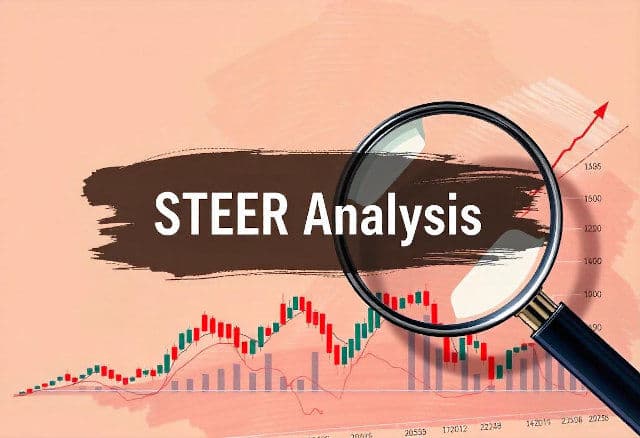
STEER Analysis is a strategic framework that examines five external macro-environmental factors: Sociocultural, Technological, Economic, Environmental, and Regulatory. It helps businesses identify threats, spot opportunities, and make informed strategic decisions by systematically scanning the forces beyond their direct control.
In today's fast-moving global economy, businesses cannot afford to operate in a vacuum. The external environment, including shifting cultural norms, technological breakthroughs, economic cycles, environmental pressures, and regulatory changes, shapes every strategic decision a company makes. Yet many organizations still rely on outdated or incomplete frameworks to scan the world around them.
That is where STEER Analysis comes in. STEER stands for Sociocultural, Technological, Economic, Environmental, and Regulatory, and it provides a structured, comprehensive lens for examining the macro-environment in which a business operates. Think of it as a next-generation cousin of the well-known PESTLE analysis, refined to give sharper focus to the forces that matter most in the 21st century.
Whether you are a startup founder evaluating market entry, a corporate strategist plotting a five-year roadmap, or a finance professional assessing risk, STEER Analysis offers a practical and systematic way to understand the external factors that can make or break your strategy. In this guide, we will walk through what STEER Analysis is, how it differs from other frameworks, and how you can put it to work with a real-world example.
STEER Analysis is an external macro-environment analysis framework used to identify and evaluate the broad forces that influence an organization from the outside. Unlike internal tools such as SWOT, STEER focuses entirely on factors beyond a company's direct control but well within its sphere of impact.
The acronym breaks down into five pillars:
The framework was developed as a refinement of earlier models like PEST and PESTLE. While PESTLE lumps Legal and Political into their own categories, STEER consolidates them under the single umbrella of "Regulatory" and instead gives "Sociocultural" and "Environmental" dedicated prominence. This makes the framework especially relevant in an era defined by ESG (Environmental, Social, and Governance) concerns and rapid cultural change.
As management consultant Peter Drucker once noted, "The greatest danger in times of turbulence is not the turbulence; it is to act with yesterday's logic." STEER Analysis is designed precisely to help leaders act with today's logic, grounded in a clear-eyed view of the external landscape.
Each of the five components captures a distinct dimension of the external environment. Let us examine them in detail.
Sociocultural factors reflect the values, behaviors, and demographic characteristics of the society in which a business operates. These factors evolve over years and decades, but their impact on demand, brand perception, and workforce dynamics is enormous.
Key sociocultural variables include:
For example, the global shift toward health-conscious eating has forced fast-food giants like McDonald's to expand their menus with salads, fruit options, and plant-based items. According to a 2023 International Food Information Council survey, 52% of consumers said they follow a specific diet or eating pattern, up from 39% in 2021. Companies that ignored this sociocultural shift lost market share.
Technology is arguably the fastest-moving variable in the STEER framework. Technological factors encompass everything from emerging innovations and digital infrastructure to research and development spending and the pace of automation.
Consider the following:
Global spending on digital transformation reached $2.15 trillion in 2023 and is projected to surpass $3.9 trillion by 2027, according to Statista. Businesses that fail to track technological trends risk being disrupted by more agile competitors.
Economic factors capture the macroeconomic conditions that determine consumer purchasing power, cost structures, and overall business viability. These are among the most closely watched variables in strategic planning.
Important economic indicators include:
For instance, when the U.S. Federal Reserve raised interest rates 11 times between March 2022 and July 2023, taking the federal funds rate to a 22-year high of 5.25%-5.50%, the ripple effects were felt across housing, retail, and tech sectors worldwide. A STEER-aware organization would have anticipated tightening monetary policy and adjusted its capital expenditure plans accordingly.
Environmental factors have moved from the periphery to the center of strategic analysis. Climate change, resource depletion, and growing stakeholder demand for sustainability mean that no serious strategic framework can ignore ecological considerations.
Key environmental variables include:
A 2024 report by Bloomberg Intelligence estimated that global ESG assets are on track to exceed $40 trillion by 2030, representing more than 25% of projected total assets under management. Companies that integrate environmental analysis into their strategy are better positioned to attract capital and retain customers.
Regulatory factors encompass the legal and political rules of the game. This includes government legislation, industry-specific compliance requirements, trade agreements, tax codes, and labor laws. In STEER, the Regulatory category intentionally merges what PESTLE separates into Political and Legal, offering a more streamlined perspective.
Examples of regulatory factors:
The European Union's General Data Protection Regulation (GDPR), enacted in 2018, imposed fines of up to 4% of annual global turnover for non-compliance. Companies like Meta have faced penalties exceeding $1.3 billion for GDPR violations. Understanding the regulatory environment is not optional; it is a survival imperative.
STEER and SWOT are both popular strategic tools, but they serve fundamentally different purposes. Understanding when to use each, and when to use them together, is critical for effective strategic planning.
SWOT Analysis examines four dimensions: Strengths, Weaknesses, Opportunities, and Threats. It covers both internal factors (strengths and weaknesses) and external factors (opportunities and threats). SWOT is typically used at the business or project level and is great for quick situational assessments.
STEER Analysis, on the other hand, focuses exclusively on external macro-environmental factors. It does not consider a company's internal capabilities. Instead, it provides a deep, structured scan of the broader landscape in which the business operates.
Here is how they compare:
It is also worth noting how STEER compares to PESTLE (Political, Economic, Social, Technological, Legal, Environmental). STEER essentially repackages PESTLE's six factors into five by merging Political and Legal into "Regulatory" and renaming Social as "Sociocultural." The result is a slightly leaner framework that many analysts find easier to apply without losing analytical depth.
As Harvard Business School professor Michael Porter observed, "The essence of strategy is choosing what not to do." Using STEER alongside SWOT helps leaders make those choices with a fuller picture of reality.
Conducting a STEER Analysis is a systematic process that moves from data gathering to strategy formulation. Below is a step-by-step guide.
The first step is to gather relevant data across all five STEER dimensions. This is the foundation of the entire analysis, so thoroughness matters.
A common mistake at this stage is relying solely on secondary research. Where possible, supplement published data with primary research such as stakeholder interviews, customer surveys, and expert consultations.
Once you have collected your data, the next step is to organize and analyze it. For each of the five STEER categories, ask three critical questions:
Create a STEER matrix or table that maps each factor, its current status, its projected direction, and its estimated impact (high, medium, or low). This visual tool makes it easier for leadership teams to see where the greatest risks and opportunities lie.
With your analysis organized, look for cross-cutting trends and patterns. Often, the most important strategic insights come from the intersection of two or more STEER factors.
For example, the rise of remote work is simultaneously a sociocultural trend (changing attitudes toward work-life balance), a technological trend (cloud collaboration tools), and a regulatory trend (new labor laws governing remote employees). Identifying these interconnections gives you a richer, more actionable understanding of your environment.
Prioritize trends by their likelihood and magnitude of impact. Focus your strategic attention on the top 5-10 trends that could materially affect your business within your planning horizon.
The final step is to translate your findings into concrete strategic actions. For each major trend or factor identified, develop a response strategy:
Remember, STEER Analysis is not a one-time exercise. The external environment is constantly evolving, and your analysis should be updated at least annually, or quarterly in fast-moving industries. Build it into your strategic planning calendar as a recurring activity.
To make the framework tangible, let us apply STEER Analysis to Netflix, Inc., one of the world's largest streaming entertainment companies. As of 2024, Netflix had over 260 million paid subscribers in more than 190 countries. Here is how each STEER dimension applies to Netflix's strategic environment.
Netflix operates at the intersection of entertainment and culture. Several sociocultural trends shape its business:
Technology is Netflix's backbone. Key technological factors include:
Netflix's financial performance is tightly linked to macroeconomic conditions:
Even a digital-first company like Netflix faces environmental considerations:
Operating in 190+ countries means Netflix navigates a complex web of regulations:
This Netflix example illustrates how STEER Analysis can surface a rich set of strategic factors that might otherwise be overlooked when using simpler frameworks.
STEER Analysis offers several compelling benefits that make it a valuable addition to any strategist's toolkit.
By providing a structured, comprehensive view of the external environment, STEER Analysis helps leaders make decisions grounded in evidence rather than gut instinct. When you understand the sociocultural, technological, economic, environmental, and regulatory forces at play, you can allocate resources more effectively and time your strategic moves with greater precision.
For example, a company considering international expansion can use STEER to compare target markets across all five dimensions, leading to a more informed country selection rather than one based on superficial metrics like GDP alone.
One of the most valuable functions of STEER Analysis is early warning. By systematically scanning the external environment, organizations can identify emerging threats before they become crises. A company that tracks regulatory trends, for instance, can begin compliance preparation months or years ahead of new legislation.
Warren Buffett captured this idea well: "Risk comes from not knowing what you are doing." STEER Analysis reduces the "not knowing" by ensuring no major external category is overlooked.
STEER does not just help you avoid problems; it also helps you spot opportunities. Emerging technological trends, shifting consumer preferences, or new regulatory incentives can all open doors for innovation and growth.
Consider how companies that recognized the sociocultural trend toward sustainability early were able to build first-mover advantages in green products, renewable energy, and ethical supply chains. A 2023 Nielsen study found that 78% of U.S. consumers say a sustainable lifestyle is important to them, creating a massive market opportunity for brands that align with this value.
Modern businesses answer to a wide range of stakeholders: shareholders, employees, customers, regulators, and communities. STEER Analysis helps protect these stakeholders by ensuring the organization's strategy accounts for the full spectrum of external forces.
Shareholders benefit from better risk management and forward-looking strategy. Employees benefit from an organization that anticipates labor market and regulatory changes. Customers benefit from products and services that evolve with cultural and technological trends. Communities benefit from a business that takes its environmental and social responsibilities seriously.
No analytical framework is without limitations, and STEER Analysis is no exception. Being aware of its drawbacks helps you use it more effectively.
Despite these limitations, STEER remains a powerful tool when used as part of a broader strategic analysis process. The key is to keep the analysis focused, regularly updated, and complemented by internal assessment frameworks.
STEER Analysis provides a clear, structured approach to understanding the external forces that shape business strategy. By examining Sociocultural, Technological, Economic, Environmental, and Regulatory factors, organizations gain a panoramic view of their operating environment that supports better decision-making, stronger risk management, and sharper opportunity identification.
In an era defined by rapid technological change, climate urgency, and evolving societal expectations, the ability to read the external environment accurately has never been more important. STEER does not replace other tools like SWOT or Porter's Five Forces; rather, it complements them by ensuring that the external scan is thorough and well-organized.
Whether you are a startup exploring a new market, a multinational navigating geopolitical complexity, or a non-profit adapting to changing regulatory landscapes, STEER Analysis gives you a reliable framework for making sense of the world outside your walls. The most successful organizations are those that look outward as rigorously as they look inward, and STEER is one of the best tools available for doing exactly that.
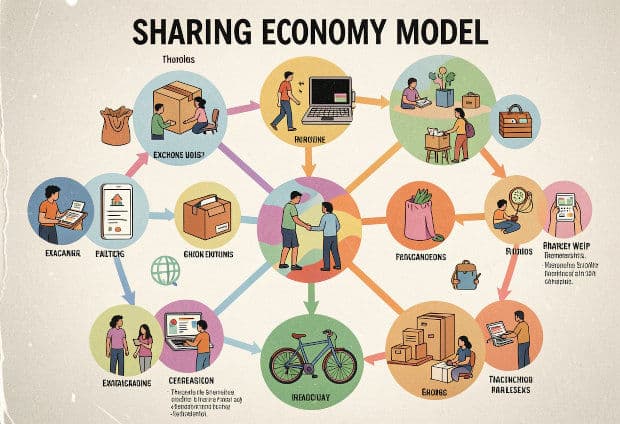
The sharing economy is a peer-to-peer business model where the main company acts as a middleman — connecting people who have something to offer with people who need it. The company itself does not own the product or service being exchanged. Instead, it uses technology to bring two sides together: the service provider and the service receiver. Pathao in Bangladesh, Uber globally, and Airbnb worldwide are all perfect real-world examples of this model in action. Simply put, the sharing economy turns unused assets into income-generating opportunities — for everyone involved.