SCRS Analysis: Definition, Framework, and How to Apply It
G
GeoRenus Editorial Team
970 views
Summary
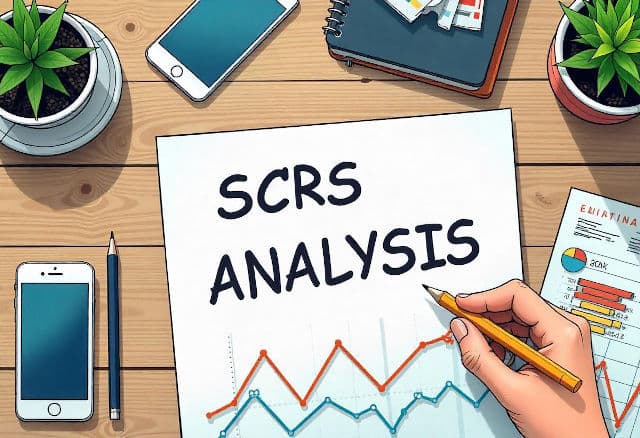
SCRS Analysis is a structured business analysis framework that guides projects through four phases: Strategy, Current State, Requirements, and Solution. It ensures that every project decision aligns with organizational goals while addressing real gaps and delivering actionable solutions.
Key Takeaways
- SCRS stands for Strategy, Current State, Requirements, and Solution, forming a sequential project analysis framework.
- The framework aligns with the IIBA's BABOK Guide knowledge areas, particularly strategy analysis and requirements lifecycle management.
- Strategy defines the organizational vision and objectives that anchor the entire analysis process.
- Current State assessment identifies the gap between where the organization is today and where it needs to be.
- Requirements are categorized into business, functional, technical, and transition requirements for comprehensive coverage.
- The Solution phase evaluates and selects the best approach to fulfill requirements within budget, timeline, and organizational constraints.
- SCRS provides traceability from strategy through solution, reducing scope creep and ensuring accountability.
Introduction to SCRS Analysis
Every successful project begins with a clear understanding of where you are, where you want to go, and how you plan to get there. Yet an alarming number of projects still fail because teams jump straight into building solutions without properly analyzing the problem. According to the Project Management Institute (PMI), roughly 14% of IT projects fail outright, and nearly half exceed their original budgets or timelines. Much of this waste traces back to poor requirements gathering and a disconnect between strategy and execution.
This is exactly where SCRS Analysis comes in. SCRS is a structured business analysis framework that walks project teams through four essential phases: Strategy, Current State, Requirements, and Solution. Think of it as a roadmap that prevents you from taking expensive detours. Whether you are a business analyst preparing for an IIBA certification, a project manager scoping out a digital transformation, or a finance professional evaluating a technology investment, SCRS Analysis provides a clear, repeatable process for turning business needs into actionable solutions.
In this article, we will break down each component of the SCRS framework, walk through a real-world practical example, and discuss both the advantages and limitations you should keep in mind.
What Is SCRS Analysis?
SCRS stands for Strategy, Current State, Requirements, and Solution. It is a project analysis framework designed to guide teams through the entire lifecycle of implementing a project, from the initial strategic vision all the way to deploying a working solution. The framework is widely recognized in the business analysis community and aligns closely with the knowledge areas outlined in the BABOK Guide (Business Analysis Body of Knowledge) published by the International Institute of Business Analysis (IIBA).
At its core, SCRS Analysis answers four fundamental questions in sequence:
- Strategy: What is the organization trying to achieve, and why does this initiative matter?
- Current State: Where does the organization stand today? What processes, systems, and capabilities already exist?
- Requirements: What exactly needs to change or be built to bridge the gap between the current state and the strategic vision?
- Solution: What is the concrete, actionable plan that fulfills those requirements while staying aligned with strategy?
The beauty of SCRS is its logical flow. You cannot define requirements without understanding the current state, and you cannot design a solution without clear requirements. Each step builds on the previous one, reducing the risk of scope creep, misaligned deliverables, and wasted resources. As one business analysis practitioner put it, "You can't make rash decisions. You must always use a structured model before implementing changes, because the cost of getting it wrong far exceeds the time spent analyzing it right."
Unlike some frameworks that focus narrowly on either strategy or execution, SCRS bridges the gap between the two. It is equally useful for large-scale enterprise projects, such as migrating an entire company to cloud infrastructure, and for smaller initiatives, such as redesigning an internal approval workflow.
The Four Components of SCRS Analysis
Each component of the SCRS framework serves a distinct purpose, but together they form a cohesive analytical pipeline. Let us examine each one in detail.
Strategy
Strategy is the starting point of any SCRS Analysis. This component examines the business vision, objectives, policies, and plans that define where the organization wants to go. Think of it as the "North Star" that every subsequent decision must align with.
During the strategy phase, analysts work with senior leadership to understand the company's strategic roadmap. What are the long-term goals? What competitive pressures are driving change? What regulatory or market conditions demand a response? For example, a retail bank might have a strategic objective to increase digital customer engagement by 40% over the next two years. That strategic goal becomes the anchor for the entire SCRS process.
Without a clear strategy, projects drift. Requirements become a wish list rather than a focused set of needs, and solutions end up solving the wrong problems.
Current State
Once the strategic direction is established, the next step is to take an honest look at the organization's current state. This involves analyzing existing processes, systems, technology, people, culture, and competitive environment. The goal is to understand how the business operates today and to identify the gap between where it is and where it wants to be.
Current state analysis often uncovers uncomfortable truths. Legacy systems that are decades old, manual processes held together by spreadsheets, or organizational silos that prevent information sharing. A thorough current state assessment might reveal, for instance, that a company's customer service team handles 65% of inquiries through phone calls because their online portal lacks self-service functionality. That gap becomes a critical input for the requirements phase.
In the BABOK framework, this aligns with the "Strategy Analysis" knowledge area, which explicitly calls for assessing the current state and defining the desired future state before moving into requirements.
Requirements
Requirements define what needs to change to move from the current state toward the strategic vision. This is arguably the most critical phase of the SCRS framework because poorly defined requirements are the single largest cause of project failure.
Requirements in the SCRS context are typically categorized into three types:
- Business Requirements: High-level needs that describe what the organization must achieve (e.g., reduce customer onboarding time from 5 days to 1 day).
- Functional Requirements: Specific capabilities the solution must provide (e.g., automated identity verification, digital document upload).
- Technical Requirements: Infrastructure, security, and integration specifications (e.g., must integrate with the existing core banking system via API).
Good requirements are measurable, testable, and traceable back to the strategy. They are gathered through stakeholder interviews, workshops, document analysis, and observation, techniques that the IIBA outlines extensively in the BABOK Guide's Elicitation and Collaboration knowledge area.
Solution
The final component is the Solution, which is the well-defined proposal that fulfills the identified requirements while remaining aligned with the organization's strategy and realistic given the current state constraints. A solution is not just a technology selection; it encompasses process changes, organizational restructuring, technology implementations, training programs, and change management plans.
For example, if the requirement is to reduce customer onboarding time, the solution might include deploying a digital onboarding platform, redesigning the KYC (Know Your Customer) workflow, training frontline staff on the new system, and establishing new performance metrics. The solution must be practical, cost-effective, and achievable within the organization's capacity.
How to Conduct an SCRS Analysis
Conducting an SCRS Analysis is a systematic process. While the four core components provide the structure, there are additional steps around validation and execution that make the framework truly effective in practice. Here is a step-by-step guide.
1. Strategy
Begin by meeting with executive sponsors and key stakeholders to understand the organization's strategic objectives. Review existing documents such as strategic plans, annual reports, competitive analyses, and board presentations. Ask questions like:
- What business outcomes are we trying to achieve?
- What market forces or regulatory changes are driving this initiative?
- How does this project fit into the broader organizational roadmap?
- What is the expected return on investment (ROI) or value proposition?
Document the strategic context clearly. This becomes the foundation against which every requirement and solution will be validated. If a proposed feature does not support the strategy, it should be questioned or removed.
2. Current State
Conduct a thorough assessment of the existing environment. This involves:
- Process mapping to visualize current workflows
- Technology inventory to catalog existing systems and tools
- Stakeholder analysis to identify who is affected by and who influences the initiative
- SWOT or gap analysis to pinpoint strengths, weaknesses, and gaps
- Data collection through interviews, surveys, and observation
The output of this step should be a clear picture of the "as-is" state, including pain points, inefficiencies, and constraints. Be brutally honest here. Sugarcoating the current state leads to solutions that do not address real problems.
3. Requirements
With the strategy defined and the current state understood, you now have the context needed to elicit meaningful requirements. Use a combination of techniques:
- Stakeholder interviews and workshops
- User story mapping and use case development
- Prototyping and wireframing for visual validation
- Document analysis of existing policies and procedures
- Benchmarking against industry standards and competitor capabilities
Prioritize requirements using frameworks like MoSCoW (Must have, Should have, Could have, Won't have) to ensure the most critical needs are addressed first. Each requirement should be traceable to a strategic objective and a current state gap.
4. Solution
Design the solution by evaluating multiple options and selecting the one that best meets the requirements within budget, timeline, and organizational constraints. Consider:
- Build vs. buy vs. partner decisions
- Technology platform selection
- Process redesign and change management needs
- Resource and budget planning
- Risk assessment and mitigation strategies
The solution should be documented as a formal proposal or business case that stakeholders can review and approve before execution begins.
5. Validation and Iteration
Before moving to execution, validate the entire SCRS chain. Walk stakeholders through the logic: the strategy drives the current state analysis, the gap between current and desired state defines the requirements, and the requirements shape the solution. If any link in this chain is weak, iterate.
Validation techniques include peer reviews, stakeholder sign-off sessions, proof-of-concept testing, and pilot programs. The BABOK Guide emphasizes that requirements validation is not a one-time event but an ongoing process throughout the project lifecycle.
6. Execution and Monitoring
With a validated solution in hand, move into execution. Implement the solution according to the project plan, and establish monitoring mechanisms to track progress against the strategic objectives. Key performance indicators (KPIs) should be defined during the requirements phase and measured continuously during execution.
Monitor for deviations, manage risks proactively, and be prepared to iterate. Real-world projects rarely go exactly as planned, and the SCRS framework provides a reference point for making informed adjustments. If something changes in the strategy, for instance, you can trace the impact through current state, requirements, and solution to understand what else needs to change.
SCRS Analysis Practical Example
To illustrate how SCRS Analysis works in practice, let us walk through a realistic scenario. Imagine a mid-sized retail company called BrightMart, which operates 120 physical stores across the United States and has a growing e-commerce platform. The company's leadership has decided to migrate its on-premises IT infrastructure to the cloud to improve scalability, reduce costs, and support its digital growth strategy.
Strategy
BrightMart's strategic plan calls for doubling online revenue within three years while reducing IT operational costs by 25%. The CEO has publicly stated, "Our future is omnichannel. Customers should have a seamless experience whether they shop in-store, on our website, or through our mobile app." The cloud migration supports this by providing the elastic infrastructure needed to handle seasonal traffic spikes like Black Friday, which currently overwhelms their servers, and by freeing up IT budget for innovation rather than hardware maintenance.
Current State
The current state assessment reveals several critical findings:
- BrightMart runs its e-commerce platform on aging on-premises servers that are 7 years old.
- During peak shopping events, the website experiences average downtime of 4.5 hours, resulting in an estimated $2.3 million in lost sales per event.
- The IT team spends 60% of its time on infrastructure maintenance rather than strategic development.
- Data is siloed across store-level systems, the e-commerce platform, and the warehouse management system, making unified analytics impossible.
- The company lacks in-house cloud expertise; only 2 out of 35 IT staff members have cloud certifications.
This gap analysis makes it clear that the current infrastructure cannot support the strategic vision. The distance between where BrightMart is and where it needs to be is substantial, but now it is clearly defined.
Requirements
Based on the strategy and current state analysis, the team identifies the following key requirements:
- Business Requirements: Achieve 99.95% uptime during peak shopping events; reduce IT infrastructure costs by 25%; enable real-time data integration across all sales channels.
- Functional Requirements: Auto-scaling compute resources during traffic spikes; centralized data warehouse for unified analytics; disaster recovery with a recovery time objective (RTO) of under 1 hour.
- Technical Requirements: AWS or Azure cloud platform with multi-region deployment; API-based integration with existing POS and warehouse systems; SOC 2 Type II compliance for data security.
- Transition Requirements: Cloud skills training for the IT team; phased migration to avoid business disruption; parallel-run period of 90 days before decommissioning on-premises servers.
Solution
After evaluating three cloud providers and two migration strategies, BrightMart selects a hybrid migration approach using Amazon Web Services (AWS). The solution includes:
- Migrating the e-commerce platform and customer database to AWS using a lift-and-shift approach for phase one, followed by re-architecting for cloud-native services in phase two.
- Deploying Amazon Redshift as a centralized data warehouse to unify data from all channels.
- Implementing auto-scaling groups and load balancers to handle traffic spikes.
- Partnering with an AWS consulting firm for the migration and training 15 IT staff members for AWS certification within 6 months.
- Estimated total investment: $1.8 million over 18 months, with projected annual savings of $750,000 in infrastructure costs.
Validation and Iteration
BrightMart conducts a proof-of-concept by migrating a non-critical internal application to AWS first. This pilot reveals that integration with the legacy POS system is more complex than anticipated, requiring additional API development. The requirements are updated accordingly, and the project timeline is adjusted by three weeks. Stakeholders review and approve the revised plan.
Execution and Monitoring
The migration proceeds in three phases over 18 months. Monthly dashboards track KPIs including uptime percentage, infrastructure cost per transaction, migration completion rate, and employee training progress. After 12 months, BrightMart reports 99.97% uptime during its first post-migration Black Friday event, zero downtime-related lost sales, and a 22% reduction in IT costs with the full 25% target expected by month 18.
This example demonstrates how SCRS Analysis provides a structured path from strategic intent to measurable results. Every decision along the way can be traced back to the strategy, ensuring alignment and accountability.
Advantages of SCRS Analysis
SCRS Analysis offers several compelling benefits that have made it a staple in the business analyst's toolkit:
- Strategic Alignment: By starting with strategy, SCRS ensures that every requirement and solution directly supports the organization's goals. This prevents the common problem of building features that nobody asked for or that do not move the needle on business outcomes.
- Structured Problem-Solving: The sequential nature of the framework prevents teams from jumping to solutions before understanding the problem. This systematic approach reduces the risk of costly rework later in the project.
- Clear Communication: SCRS provides a common language and structure that business stakeholders, technical teams, and project managers can all understand. It bridges the gap between business needs and technical implementation.
- Traceability: Every solution element can be traced back through requirements to the current state gap and ultimately to the strategy. This traceability is invaluable for change management, scope control, and auditing.
- Comprehensive Analysis: The framework forces teams to consider the full picture including people, processes, technology, and environment rather than focusing narrowly on one aspect.
- Flexibility: SCRS works across industries and project types, from IT implementations and digital transformations to process improvements and organizational restructuring.
- Risk Reduction: By thoroughly analyzing the current state and validating requirements before building solutions, SCRS helps organizations avoid the expensive mistakes that come from poor planning. Research suggests that fixing a requirements error after deployment costs up to 100 times more than catching it during the analysis phase.
Disadvantages of SCRS Analysis
While SCRS Analysis is a powerful framework, it is not without limitations. Being aware of these can help you use it more effectively:
- Time-Intensive: Conducting a thorough SCRS Analysis requires significant time and effort, particularly during the current state assessment and requirements gathering phases. For organizations under pressure to deliver quickly, this can feel like a bottleneck.
- Requires Skilled Analysts: The framework is only as good as the people executing it. Inexperienced analysts may struggle with defining the right level of detail for requirements or may fail to identify critical gaps in the current state.
- Can Be Overly Linear: The sequential structure of SCRS (Strategy then Current State then Requirements then Solution) may not suit agile environments where requirements emerge and evolve rapidly. Teams may need to adapt the framework to work in iterative cycles.
- Stakeholder Dependency: SCRS relies heavily on stakeholder input at every stage. If key stakeholders are unavailable, disengaged, or provide conflicting information, the quality of the analysis suffers significantly.
- Risk of Analysis Paralysis: The thoroughness of SCRS can sometimes lead to over-analysis, where teams spend so much time perfecting the analysis that they delay actual execution. Knowing when enough analysis is enough is a judgment call that requires experience.
- Limited Guidance on Execution: While SCRS excels at analysis and planning, it provides less guidance on the execution and delivery phases. Teams typically need to pair SCRS with a project management methodology like Agile, Waterfall, or hybrid approaches for implementation.
Conclusion
SCRS Analysis is one of the most practical and straightforward frameworks available for business analysis and project planning. By walking through Strategy, Current State, Requirements, and Solution in a logical sequence, it ensures that projects are grounded in strategic intent, informed by reality, driven by clear requirements, and delivered through well-designed solutions.
The framework is especially valuable in today's business environment, where organizations are undertaking complex digital transformations, cloud migrations, and process redesigns at an unprecedented pace. The IIBA's BABOK Guide reinforces many of the same principles that SCRS embodies, particularly around strategy analysis, requirements lifecycle management, and solution evaluation.
Whether you are a seasoned business analyst or someone new to project analysis, SCRS gives you a reliable structure for tackling projects of any size. Start with the strategy, understand where you are today, define what needs to change, and then build a solution that delivers real value. It is that simple in concept and that powerful in practice.
Recommended for you

From Barter to Bitcoin: The Evolution of Money
Since the dawn of human civilization, people have engaged in trade through barter. However, around 5,000 years ago, humans gradually abandoned the barter system and began using metallic coins. These coins were made from copper, silver, and gold. Around 1260 AD, the first paper currency was introduced in China and eventually spread throughout the world. In the 1930s, the first credit cards were issued by commercial establishments, and by the 1950s, banks began issuing them as well.
Canvas & Methods
Minimum Viable Product (MVP): The Smart Way to Launch Your Business With Less Risk
Marketing
Digital Marketing: What It Is, Why It Matters, and How It Works

E-Commerce
E-Commerce: The Complete Guide to Online Business

Finance
Finance: What It Is, Why You Need It, and How It Works in Real Life

Startup
How to Calculate Startup Valuation: Methods, Tools, and Examples

Accounting
Auditing: Definition, Types, Principles, and How It Works

Accounting
Tax Planning and Strategies: A Comprehensive Guide

Accounting
Taxation, Types and Importance

Agreement
World Trade Organization (WTO) Agreements