(Part 1) The Politics of Oil: How Black Gold Became the World's Most Dangerous Commodity
G
GeoRenus Editorial Team
542 views
GeoRenus Editorial Team
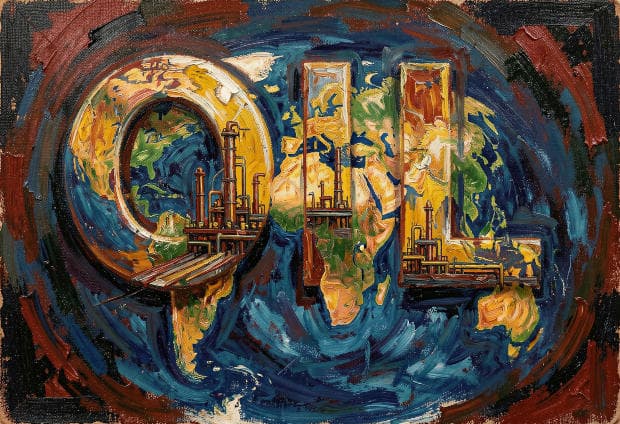
Before oil was discovered, the world ran on coal, animal power, and human labor. But after Edwin Drake drilled the first oil well in Pennsylvania in 1859, this black liquid gradually became the most valuable and most dangerous commodity on earth. Two world wars were shaped by oil strategy, Western companies seized control of Middle Eastern resources, the CIA overthrew a democratic government for oil, and OPEC was born as a counter-force. This is the origin story of oil politics.
1859. Titusville, Pennsylvania. A former railway conductor named Edwin Drake has been drilling into the ground for over a year. Everyone thinks he is insane. The money has run out. His company has sent a letter telling him to stop and come home.
But before that letter arrives, on August 27, 1859, black liquid rises from just 21 meters underground. The world's first oil well has been drilled.
Over the next 150 years, oil would cause wars, build empires, destroy empires, overthrow elected governments, and kill millions. Every major diplomatic decision today still traces back to one question: who controls the oil?
Born in 1839 to a poor New York family, Rockefeller started as a bookkeeper at age 16. In 1863, he invested in oil refining in Cleveland. While the oil industry was chaotic — prices fluctuated wildly, quality was inconsistent — Rockefeller saw an opportunity in imposing order.
On January 10, 1870, he founded the Standard Oil Company. His strategy was ruthlessly simple: control refining, and you control the entire industry.
By 1880, Standard Oil controlled 91% of US oil refining and 85% of final sales. It was the most powerful monopoly in American history.
Investigative journalist Ida Tarbell — whose father had been ruined by Rockefeller's tactics — published her explosive 19-part series "The History of the Standard Oil Company" (1902-1904). The public outrage it generated led President Theodore Roosevelt, the "trust-buster," to take action.
On May 15, 1911, the US Supreme Court ruled Standard Oil an illegal monopoly and ordered it broken into 34 separate companies. When Rockefeller heard the verdict while playing golf, he reportedly showed no emotion and simply said: "Good buying opportunity."
He was right — the individual companies became more valuable than the whole. Those 34 companies evolved into today's oil giants: ExxonMobil, Chevron, ConocoPhillips, and others. Rockefeller died in 1937 at age 97 with an estimated fortune of $400 billion in today's money — arguably the richest person in history.
In 1911, Winston Churchill became First Lord of the Admiralty and made a decision that would reshape global politics forever: switch the British Navy from coal to oil. Oil-powered ships were faster, had longer range, refueled quicker, and produced less smoke.
Churchill told Parliament: "The safety and certainty of oil depend on one thing — diversity, and diversity alone." But Britain had no domestic oil. This single decision tied the British Empire's survival to securing foreign oil supplies — particularly from the Middle East.
In WWI, oil proved decisive. At the Battle of the Marne in 1914, French General Gallieni requisitioned 600 Parisian taxis to rush 6,000 troops to the front — saving Paris. The "Taxi Miracle of the Marne" proved modern warfare was impossible without oil-powered vehicles.
French Prime Minister Clemenceau later declared: "A drop of oil is worth a drop of blood."
Hitler's Germany was militarily formidable but had a fatal weakness — no domestic oil. Germany depended on Romania's Ploesti fields (about 50% of supply) and synthetic fuel from coal.
In 1942, Hitler launched Operation Blue — a massive offensive aimed at capturing the Soviet Union's Baku oil fields, which produced 80% of the USSR's oil. Stalingrad was a key point on this route. The catastrophic German defeat at Stalingrad (1942-43) destroyed any hope of reaching Baku.
Historian David Glantz noted that by late 1944, German pilots were fully trained but had no fuel to fly. Germany's military machine did not run out of weapons or soldiers — it ran out of fuel.
Japan faced the same crisis. After the US imposed a complete oil embargo in 1941, Japan's reserves were just 18 months' worth. The attack on Pearl Harbor was designed to eliminate the US Pacific Fleet so Japan could seize Indonesian oil fields. The most consequential attack in Pacific War history was fundamentally about fuel.
In the early 1900s, Australian gold mining magnate William D'Arcy obtained an oil exploration concession from the Shah of Persia (Iran). The terms were extraordinarily one-sided — D'Arcy got exclusive rights to explore oil across most of Persia for 60 years, with Persia receiving just 16% of net profits.
After seven years of failed drilling, D'Arcy's team struck oil in 1908 at Masjid-i-Suleiman. This discovery led to the founding of the Anglo-Persian Oil Company (later renamed BP). In 1914, Churchill purchased a 51% government stake in the company to secure fuel for the Royal Navy — making the British government a direct beneficiary of Iranian oil.
While Britain dominated Persian and Iraqi oil, America took a different approach with Saudi Arabia. In 1933, Standard Oil of California (SoCal) obtained a concession from King Ibn Saud. In 1945, on his way back from the Yalta Conference, President Roosevelt met King Ibn Saud aboard the USS Quincy — a meeting that laid the foundation for the Saudi-American alliance that continues to this day.
By the 1950s, the "Seven Sisters" — seven Western oil companies — controlled over 85% of the world's oil reserves. These were: Exxon, Mobil, Chevron, Texaco, Gulf Oil (all American), plus BP (British) and Royal Dutch Shell (British-Dutch). Oil-producing countries received as little as 12% of profits — a system that amounted to legalized economic colonialism.
Mohammad Mossadegh was a respected Iranian politician who believed Iran's oil wealth should benefit Iranians — not British shareholders. In 1951, as Prime Minister, he nationalized the Anglo-Iranian Oil Company (BP), declaring that Iran's natural resources belonged to the Iranian people.
Britain responded with a naval blockade, preventing any country from buying Iranian oil. When economic pressure alone proved insufficient, Britain turned to the CIA. The Eisenhower administration agreed — framing the coup as necessary to prevent Iran from "falling to communism."
On August 19, 1953, the CIA executed "Operation Ajax." Paid mobs filled Tehran's streets, military units loyal to the Shah seized key buildings, and Mossadegh was arrested. He spent the rest of his life under house arrest and died in 1967.
The Shah was installed as an absolute ruler. His secret police SAVAK crushed all dissent. The repression fueled the 1979 Islamic Revolution, which created the US-Iran hostility that continues today. In 2013, the CIA officially acknowledged its role in the 1953 coup for the first time — 60 years after the fact.
The consequences of that single covert operation have been paid for with decades of conflict, revolution, and millions of lives.
Throughout the 1950s, Western oil companies unilaterally decided oil prices and production levels. Oil-producing countries had virtually no say over their own resources. When companies cut prices in 1959 and 1960 — directly reducing producer nations' revenue — the breaking point was reached.
Saudi Arabia's Abdullah al-Tariki and Venezuela's Juan Pablo Perez Alfonso recognized that oil-producing countries needed to unite. If producers coordinated their output and pricing, they could counter the Seven Sisters' dominance.
From September 10-14, 1960, representatives of five countries met in Baghdad and founded the Organization of Petroleum Exporting Countries (OPEC). The founding members were Iran, Iraq, Kuwait, Saudi Arabia, and Venezuela.
The West's initial reaction was dismissive — they called it a "talk shop" that would collapse within years. They were spectacularly wrong.
OPEC's first decade was spent quietly building strength — adding members (Qatar, Indonesia, Libya, UAE, Algeria, Nigeria, Ecuador, Gabon) and developing organizational capacity. By the early 1970s, OPEC controlled a significant portion of global oil production.
The real test of OPEC's power would come in 1973 — but that story belongs to Part 2 of this series.
In just over a century, oil went from a curiosity seeping out of Pennsylvania ground to the most powerful commodity in human history. Along the way, it created the world's first monopoly (Standard Oil), decided the outcome of two world wars, enabled Western colonization of Middle Eastern resources, destroyed Iranian democracy, and finally provoked the creation of OPEC as a counter-force.
Every chapter of this story teaches the same lesson: oil is never just about energy. It is about power, control, and the willingness to do whatever it takes to secure both.
Part 2 of this series continues the story from the 1973 oil embargo through the petrodollar system, the Iranian Revolution, and the Gulf War.
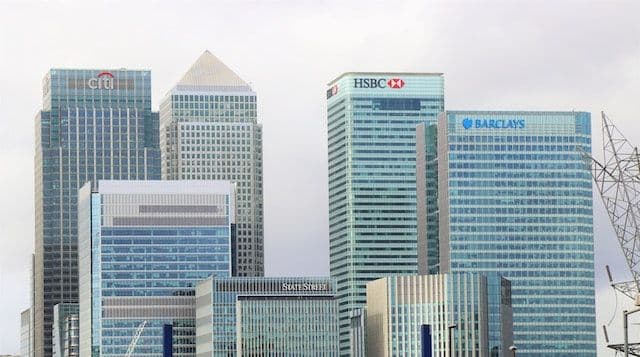
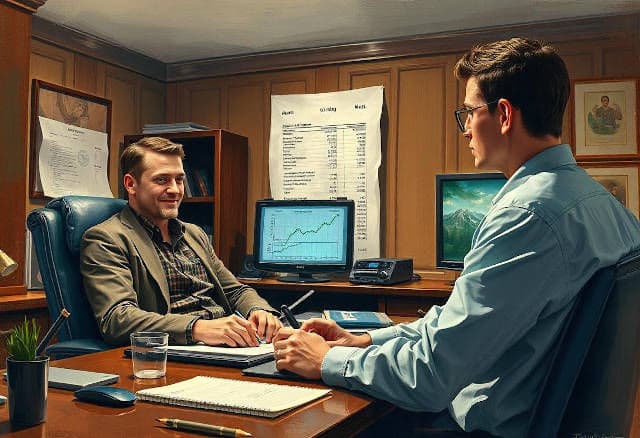
Most people use banks every single day — depositing salaries, withdrawing cash, transferring money, paying bills — without ever really thinking about how the whole system actually works. A bank is a licensed financial institution that accepts deposits from the public and uses those deposits to provide loans to individuals and businesses. Everything a bank does — from accepting your savings to issuing credit cards to printing cheques — falls under the broad category of banking. But banks are not just convenient places to store your money. They are the central nervous system of any economy — the institutions that keep money flowing productively through the system, connecting people who have surplus funds with people and businesses that need capital. And in Bangladesh, where Bangladesh Bank serves as the central authority overseeing the entire financial system, understanding how banking works is genuinely useful knowledge for anyone managing their personal finances, running a business, or simply trying to make smarter decisions with their money.