GeoPolitics
22 articles
G
GeoPolitics
April 4, 2026
Geopolitics Terminologies: The Essential Glossary for Understanding World Power Politics
You hear 'sanctions,' 'proxy war,' and 'hegemony' every day on CNN, BBC, and Al Jazeera — but without knowing what they mean, the news is just noise. This essential glossary covers 50+ critical geopolitical terms organized by category: from Hegemony and Soft Power to Hybrid Warfare, Chokepoints, Debt Trap Diplomacy, and the NPT. Each term comes with a clear definition and a real-world example. Whether you are a student, professional, or curious reader, this is your decoder ring for understanding world power politics.
1,030Read
G
GeoPolitics
April 4, 2026
What Is Geopolitics: The Invisible Power Game Behind World Politics — A Complete Guide
Why does fuel get expensive in Bangladesh when Russia invades Ukraine — 8,000 km away? Why does the taka lose value when the US Federal Reserve raises interest rates? Why is China building a port in Sri Lanka — and why does India care so deeply? The answer to all of these is one word: Geopolitics. This invisible game of geography, resources, and power shapes your rice price, your job security, and your currency's value every single day. This guide breaks down geopolitics from scratch — its definition, core theories, major players, current hotspots, and Bangladesh's own geopolitical position — in plain, conversational English.
959Read
G
GeoPolitics
April 4, 2026
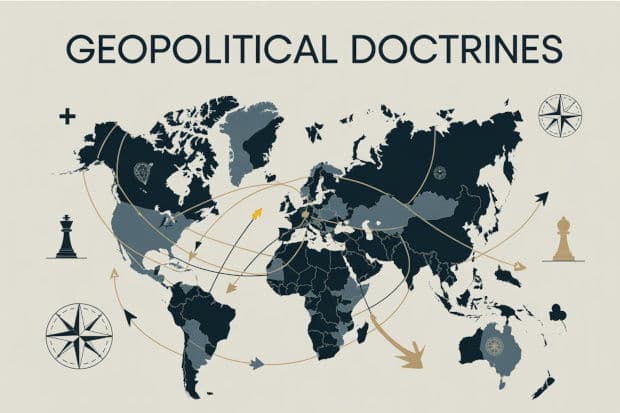
Geopolitical Doctrines: The Grand Strategies That Shaped the World Power Map
From the Monroe Doctrine to the Bush Doctrine, every major geopolitical doctrine is essentially a superpower's formal declaration of its world view. In 1823, Monroe told Europe to keep its hands off the Americas. In 1947, Truman declared the world must be saved from communism. Reagan said containment was not enough — roll it back. Bush said strike first, before the threat materializes. This article breaks down history's most influential geopolitical doctrines — their context, core arguments, real-world consequences, and relevance today — in plain, conversational English.
978Read
G
GeoPolitics
March 31, 2026
The Arab-Israeli Wars: The Conflict That Reshaped Middle Eastern Geopolitics and the Global Balance of Power
The Arab-Israeli conflict is far more than a territorial dispute between two peoples. Since 1948, every war has redrawn the global power map — spiking oil prices, triggering superpower proxy battles, and forging new geopolitical alliances. From the 1973 oil weapon that shook the world economy to October 7, 2023, the shockwaves of this conflict reach Bangladesh's remittance earnings, global shipping lanes, and the very architecture of the international order. This article covers the full arc: history, superpower rivalry, the oil weapon, the Iran factor, diplomacy's rise and fall, and what it all means for the rest of the world.
1,022Read
G
GeoPolitics
March 29, 2026
The British Pound: Rise, Dominance, and Fall — Part 3: Decades of Decline, the Modern Pound, and the Future
In Part 2, we traced the pound's golden age under the Gold Standard and its eventual dethroning by the US dollar at Bretton Woods in 1944. Part 3 — the final chapter — covers what came next: a string of post-war devaluations, the national humiliation of the 1976 IMF bailout, Thatcher's monetarist rollercoaster, George Soros defeating the Bank of England in 1992, the Brexit shock, Liz Truss's 45-day disaster, where the pound stands today, and what 1,200 years of this currency's history teaches every nation on earth.
952Read
G
GeoPolitics
March 29, 2026
The British Pound: Rise, Dominance, and Fall — Part 2: From the Peak of Empire to the Beginning of Decline
Part 1 traced the pound's origins from King Offa's silver pennies to the formal Gold Standard of 1816. Part 2 covers the dramatic middle act — the 130 years in which sterling ruled the world and then lost everything. The golden age of the Gold Standard, the British Empire at its peak, the shock of World War I, Churchill's catastrophic policy blunder, World War II bankruptcy, and the 1944 Bretton Woods conference where the dollar took the throne — the full story is here.
926Read
G
GeoPolitics
March 29, 2026
The British Pound: Rise, Dominance, and Fall — Part 1: From the Birth of Money to the Rise of Sterling
The British pound sterling is over 1,200 years old. This article traces the full prehistory of the pound — from the chaos of barter through commodity money, metal coins, Chinese paper currency, London goldsmith banking, the founding of the Bank of England in 1694, and the formal adoption of the Gold Standard in 1816. By that year, sterling was already the world's most trusted currency and London its financial capital.
1,000Read
E
Economics
March 28, 2026
Debt Trap Diplomacy: The Strategy of Buying Countries With Loans
Debt Trap Diplomacy is the geopolitical strategy where a powerful country lends massive sums to a weaker nation for infrastructure — knowing full well it cannot repay. When repayment fails, the borrower surrenders strategic assets like ports, mines, or military bases. China's Belt and Road Initiative is the biggest modern example, spanning 150+ countries with over $1 trillion in commitments. But debt diplomacy is not China's invention alone — the IMF, colonial powers, and Western nations have all played versions of the same game. The real question is whether borrowing countries have the institutional strength to protect their sovereignty.
1,180Read
G
GeoPolitics
March 28, 2026
Trade Routes: The Roads That Built Civilizations, Wealth, and Empires (Part 1)
The history of human civilization is, at its core, the history of trade routes. Since ancient times, people have carved paths across deserts, oceans, and rivers to exchange goods, ideas, and culture — and along those paths, empires rose, civilizations flourished, and the foundations of the world economy were laid. The Silk Road, the Spice Route, the Trans-Saharan Route, the Incense Route — behind every trade route lies a complex story of power, wealth, and politics. In this first part, we explore what trade routes are, why they were created, and how the great routes of the ancient world transformed the planet forever.
941Read
G
GeoPolitics
March 28, 2026
The Silk Road: The Trade Route That Created the World's First Globalization (Part 1)
The Silk Road was never a single road — it was the ancient world's most expansive trade network, stretching roughly 6,400 kilometers from China to the Mediterranean and far beyond via sea. For over 1,500 years, this web of routes carried far more than silk: spices, gold, paper, gunpowder, religion, language, and even deadly disease all traveled these paths. It was the original engine of globalization, reshaping every civilization it touched — from the Han dynasty in China to the Roman Empire in the west. Understanding the Silk Road means understanding how the modern world was built, one caravan at a time.
1,087Read
E
Economics
March 24, 2026
The Dollar Ecosystem: How a Piece of Paper Controls the Entire World
Whether you're buying oil, taking a loan, or booking a flight ticket anywhere in the world — there's one currency behind it all: the American dollar. But this dominance didn't happen overnight. Two world wars, a secret conference, the severing of gold ties, and an unwritten deal with oil — together they built the dollar's invisible empire. This article traces how a piece of paper became the world's most powerful financial weapon, and what the future may hold.
867Read
G
GeoPolitics
March 14, 2026
The Petrodollar: The Invisible Chain That Holds the World Together
The petrodollar is a system where all global oil trade is conducted in US dollars. Because of this single rule, every country on Earth must first acquire dollars before it can buy oil — keeping demand for the dollar permanently high and giving America an economic advantage no other nation enjoys. This system was born from a secret 1974 deal between the US and Saudi Arabia, and it remains the most powerful foundation of the global economy. But with China's petro-yuan push, Russia's forced de-dollarization, and Saudi Arabia's shifting calculations, the petrodollar is now facing its most serious challenges in half a century.
673Read
G
GeoPolitics
March 14, 2026
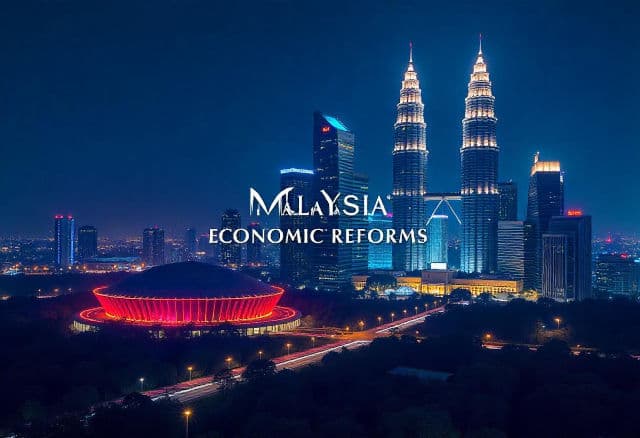
(Part 1) Malaysia's Economic Reforms: From Agrarian Roots to Industrial Powerhouse
Malaysia's transformation from an agrarian economy dependent on rubber and tin to a modern industrial powerhouse is one of Southeast Asia's most remarkable success stories. Beginning with the landmark New Economic Policy in 1971 — designed to reduce poverty and address ethnic economic disparities after the 1969 racial riots — Malaysia systematically built its manufacturing sector, attracted massive foreign investment, became the world's second-largest palm oil producer, and weathered the 1997 Asian financial crisis through unconventional policies. This first part traces that extraordinary journey from rural beginnings to the threshold of the new millennium.
625Read
G
GeoPolitics
March 14, 2026
(Part 2) Malaysia's Economic Reforms: From Agrarian Roots to Industrial Powerhouse
Malaysia's economic journey from 2000 to the present is a story of ambitious transformation, scandalous setbacks, and resilient recovery. The Economic Transformation Programme aimed to make Malaysia a high-income nation by 2020, the GST was introduced and controversially scrapped, the 1MDB scandal shook investor confidence to its core, and COVID-19 forced the government into unprecedented stimulus spending. Despite these challenges, Malaysia has reduced poverty to below 0.4%, built world-class infrastructure, and is now pursuing digital economy and renewable energy strategies to secure its economic future.
667Read
G
GeoPolitics
March 14, 2026
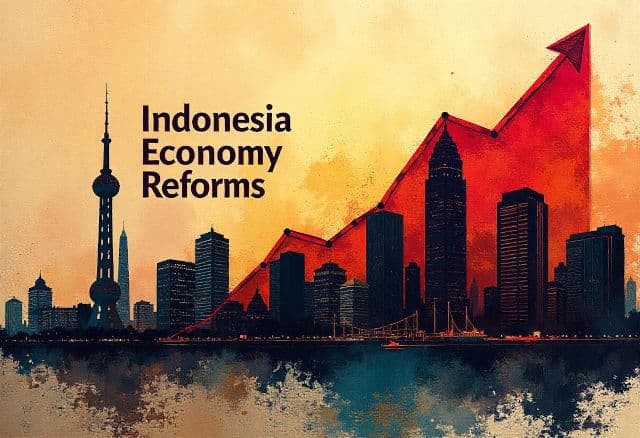
(Part 1) Indonesia's Journey to Economic Resilience: Key Reforms from Crisis to Growth
Indonesia was one of Southeast Asia's fastest-growing economies before the 1997 Asian financial crisis shattered its banking system, currency, and political stability. The rupiah lost over 80% of its value, GDP contracted by 13.1%, and mass protests toppled President Suharto's 32-year rule. This first part examines how Indonesia responded to the devastation through sweeping reforms in currency stabilization, banking sector restructuring, debt management, governance transparency, and fiscal policy — laying the foundation for one of Asia's most remarkable economic recoveries.
625Read
G
GeoPolitics
March 14, 2026
The Politics of Oil: How Black Gold Controls the World (A Complete Overview)
Oil is not just a fuel — it is the most powerful geopolitical weapon in the modern world. From the first oil wells in Pennsylvania to OPEC embargoes, from Russia's gas leverage over Europe to China's petro-yuan ambitions, oil has shaped wars, toppled governments, and redrawn global alliances. This comprehensive overview traces how a single natural resource became the centerpiece of world politics, economics, and power struggles that continue to define international relations today.
577Read
G
GeoPolitics
March 14, 2026
(Part 1) The Politics of Oil: How Black Gold Became the World's Most Dangerous Commodity
Before oil was discovered, the world ran on coal, animal power, and human labor. But after Edwin Drake drilled the first oil well in Pennsylvania in 1859, this black liquid gradually became the most valuable and most dangerous commodity on earth. Two world wars were shaped by oil strategy, Western companies seized control of Middle Eastern resources, the CIA overthrew a democratic government for oil, and OPEC was born as a counter-force. This is the origin story of oil politics.
500Read
G
GeoPolitics
March 14, 2026
(Part 2) The Politics of Oil: How Black Gold Controls the World
The 1973 oil embargo was the moment the world realized that oil is not just a commodity — it is a weapon as powerful as a nuclear bomb. After that event, every major power restructured its strategy around oil. America created the petrodollar system to maintain dollar dominance, Russia turned oil and gas into a geopolitical weapon against Europe, and China began challenging the dollar's oil monopoly. This article covers the 1973 embargo, the birth of petrodollars, the 1979 Iran crisis, and the Gulf War.
531Read
G
GeoPolitics
March 14, 2026
Oil and Geopolitics: The Complete History of Wars Fought Over Energy Resources
No commodity in human history has caused more bloodshed than oil. From World War II to the 2026 Venezuela and Iran crises, oil has been at the center of almost every major military conflict of the modern era. This article traces the full history of wars fought over energy resources — from Hitler's desperate march toward Baku's oil fields to America's 2003 invasion of Iraq, from Nigeria's resource curse to the ongoing battle for control of the Strait of Hormuz.
877Read
G
GeoPolitics
March 14, 2026
How Oil Controls the Global Economy: From Prices to Politics
Oil is the most traded commodity on earth and the central driving force of the modern economy. When oil prices rise, inflation increases, factory production costs climb, and transportation expenses soar — creating a chain reaction that destabilizes the entire global economy. From the 1973 Arab oil embargo to the 2022 Russia-Ukraine energy crisis, every major oil shock has been followed by an economic downturn. This article explores the five key mechanisms through which oil controls the world economy.
601Read
G
GeoPolitics
March 14, 2026
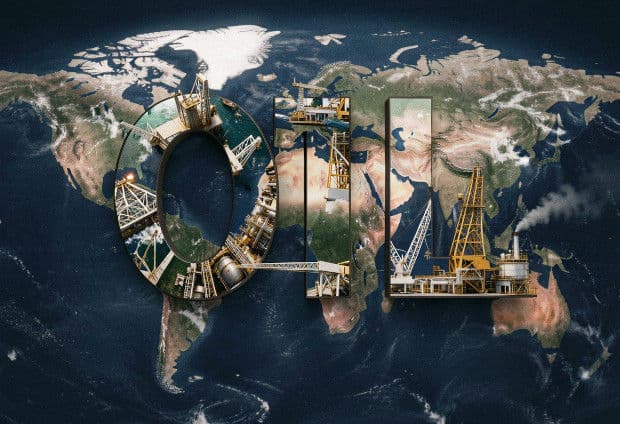
The Global Oil Map: Reserves, Production, Transportation, and Consumption Explained
Oil is the most traded commodity on Earth, with global production and consumption at about 103 million barrels per day and an annual market worth over $3 trillion. Venezuela holds the largest reserves (303.8 billion barrels) but the US leads production (13.3M bbl/day) thanks to the shale revolution. The Strait of Hormuz carries 21% of maritime oil and is the most critical chokepoint. The IEA projects peak oil demand by the late 2020s, but petrochemicals and developing-world growth will keep demand elevated for decades.
1,529Read
G
GeoPolitics
February 21, 2026
The U.S.-China Rivalry: What It Means for the World's Economy, Technology, and Military Balance
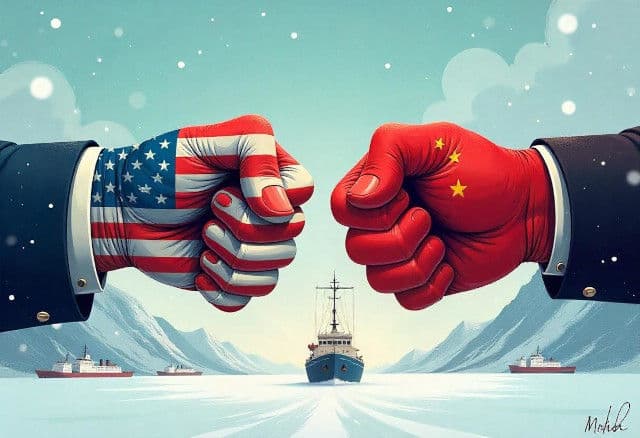
Two countries are competing to be the most powerful nation on earth — and the outcome of that competition will shape the future of every other country in between. The United States is the established superpower, the world's largest economy, and the global leader in financial services and technology. China is the rapidly rising challenger, the world's second largest economy, and a country that has made extraordinary advances in manufacturing, infrastructure, artificial intelligence, and military capability in just a few decades. The rivalry between these two giants is playing out across three major battlegrounds — economics, technology, and military power — and the tension between them is already affecting global trade, supply chains, investment flows, and geopolitical alliances around the world. Understanding this rivalry is no longer just for foreign policy experts. It matters for every business, every investor, and every country that trades with either of them — including Bangladesh.
1,194Read
About GeoPolitics
Geopolitics examines how geography, power, and economics intersect to shape global events. Understanding geopolitical forces — from trade wars and sanctions to resource competition and alliance shifts — is crucial for anyone making investment or business decisions in a connected world.
geopoliticsglobal politicstrade warsanctionsinternational relationseconomic warfarepetrodollarBRICS