The Petrodollar: The Invisible Chain That Holds the World Together
G
GeoRenus Editorial Team
739 views
GeoRenus Editorial Team
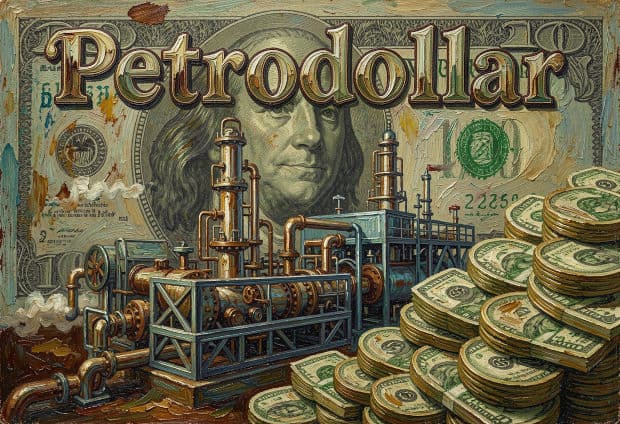
The petrodollar is a system where all global oil trade is conducted in US dollars. Because of this single rule, every country on Earth must first acquire dollars before it can buy oil — keeping demand for the dollar permanently high and giving America an economic advantage no other nation enjoys. This system was born from a secret 1974 deal between the US and Saudi Arabia, and it remains the most powerful foundation of the global economy. But with China's petro-yuan push, Russia's forced de-dollarization, and Saudi Arabia's shifting calculations, the petrodollar is now facing its most serious challenges in half a century.
Imagine you live in Bangladesh and want to buy oil from Saudi Arabia. You have Bangladeshi taka. But Saudi Arabia will not accept taka. They want dollars.
So first, you must buy dollars. Those dollars come from Bangladesh Bank's reserves. The dollars go to Saudi Arabia. And Saudi Arabia takes those dollars and parks them in US Treasury bonds.
This cycle does not just apply to Bangladesh. It applies to China, India, Japan, Brazil, Nigeria — every country on Earth. Every single day, approximately 103 million barrels of oil are purchased in US dollars.
Because of this one rule, America can do something no other country can — borrow in its own currency almost without limit, and the world keeps holding that currency because everyone needs dollars to buy oil.
This extraordinary power has a name: the petrodollar.
To understand the petrodollar, you need to go back to 1944.
Before World War II even ended, representatives from 44 nations gathered in Bretton Woods, New Hampshire, in 1944 to design the postwar global financial system. The question was simple but enormous: how would international trade and finance work once the war was over?
The answer they agreed upon was elegantly simple. All world currencies would be pegged to the US dollar at fixed exchange rates. And the dollar, in turn, would be pegged to gold at $35 per ounce. Any country could exchange its dollars for physical gold from the US government at that rate.
Under this system, the dollar was essentially as good as gold. Countries trusted it because it had a tangible guarantee behind it. For two decades, the arrangement worked remarkably well.
The trouble started in the 1960s. The Vietnam War was costing America staggering sums — and to pay for it, the US government started printing more and more dollars. But here was the problem: you cannot print unlimited dollars when each one is supposed to be backed by a fixed amount of gold. America's gold reserves were finite, but the dollars being printed were not.
European nations, particularly France, noticed the gap. French President Charles de Gaulle bluntly declared: "America is printing paper and using that paper to buy real goods from us. This is unacceptable."
France began exchanging its dollar holdings for gold from the US Treasury. Other countries followed. America's gold reserves were draining rapidly.
On August 15, 1971 — a Sunday evening — President Richard Nixon appeared on national television and made a historic announcement: the United States would no longer convert dollars to gold. Anyone holding dollars could no longer redeem them for gold from the US government.
This became known as the "Nixon Shock."
In one stroke, the Bretton Woods system was dead.
The world immediately asked the obvious question: if the dollar is no longer backed by gold, why should anyone hold it? What gives it value? Without that gold guarantee, the dollar was just paper — and the most powerful currency in the world suddenly had an existential crisis.
The solution to that crisis would become the petrodollar.
The 1973 oil embargo had hit America hard. But Henry Kissinger — Nixon's National Security Advisor and later Secretary of State — saw an extraordinary opportunity hidden within the crisis.
Kissinger understood two things simultaneously. First, Arab oil-producing nations were suddenly becoming fabulously wealthy. All that money had to go somewhere. Second, the dollar had lost its gold foundation and desperately needed a new one.
What if oil revenues flowed in dollars, and those dollars were then reinvested back into America? That would solve both problems at once. The dollar would have permanent global demand — because everyone needs oil, everyone would need dollars. And Arab wealth would flow into the US economy — strengthening American financial markets and funding government debt.
Kissinger focused on Saudi Arabia — OPEC's largest producer and the most influential nation in the Arab world.
In June 1974, US Treasury Secretary William Simon traveled to Saudi Arabia, accompanied by Federal Reserve officials. The meetings were conducted in extraordinary secrecy. Normally, diplomatic visits of this magnitude attract media attention. But this trip was kept so quiet that the full details remained hidden for the next 42 years.
Simon's proposal to the Saudi royal family was straightforward:
"Sell your oil exclusively in US dollars. Invest your surplus revenues in US Treasury bonds. In return, we will guarantee your security, supply you with weapons, and protect you from any threat."
For the Saudi royal family, the offer was compelling. The upheavals of 1973 had demonstrated how fragile Middle Eastern monarchies could be. They had watched what happened to the Shah of Iran. An American security guarantee meant the royal family's survival. They accepted.
The deal was never formally signed. It was never presented to any parliament or legislature. There was no official announcement. But both sides understood exactly what was expected — and both sides delivered.
For 42 years, the full scope of this arrangement remained hidden. Then in 2016, a Bloomberg News investigative team obtained declassified documents through the US Freedom of Information Act.
The documents revealed the complete picture. The US Treasury Department had maintained a special arrangement to keep Saudi Arabia's Treasury bond holdings secret. Every other country's holdings were publicly reported — but Saudi Arabia's were hidden for over four decades.
After the Bloomberg report, it was confirmed once and for all: the petrodollar was not a conspiracy theory or an academic abstraction. It was a real, deliberate, and meticulously maintained system.
To understand the petrodollar's mechanics, let us trace a complete cycle.
Step 1: Oil Production. Saudi Arabia, Iraq, the UAE, and other producing nations extract crude oil from the ground.
Step 2: Sales in Dollars Only. This oil is sold exclusively in US dollars. If China wants to buy Saudi oil, it must first convert yuan into dollars, then use those dollars to purchase the oil.
Step 3: Global Dollar Demand. Because every country needs oil, every country needs dollars. This creates constant, enormous, and virtually indestructible demand for the US currency.
Step 4: Petrodollar Recycling. The oil-producing nations take their dollar revenues and invest them in US Treasury bonds, American stock markets, and US real estate. This process is known as "petrodollar recycling."
Step 5: America Benefits. The world's money flows into America. The US can borrow cheaply. The dollar stays strong.
Step 6: The Cycle Repeats. America sells weapons and provides security to oil-rich nations. The money to buy those weapons comes from oil revenues earned in dollars. The cycle continues indefinitely.
This cycle explains why America is so deeply involved in Middle Eastern politics. Middle East stability means uninterrupted oil flow. Uninterrupted oil flow means uninterrupted dollar demand. Uninterrupted dollar demand means uninterrupted American financial dominance. Every link in the chain reinforces the next.
French Finance Minister Valery Giscard d'Estaing famously declared in the 1960s that the dollar's global status gave America an "exorbitant privilege" — an unfair advantage that no other nation could match. Just how big is that advantage? Let us look at the numbers.
When the entire world wants dollars, there is also massive demand for US Treasury bonds — the primary way the US government borrows money. High demand for bonds means the government can offer lower interest rates and still find eager buyers. According to economists' estimates, this advantage saves the United States hundreds of billions of dollars every year in reduced borrowing costs compared to what other nations pay.
When America faces an economic crisis, the Federal Reserve can print trillions of dollars to stabilize the economy. If any other country did this, its currency would collapse and hyperinflation would follow. But America can do it — because the world absorbs those newly printed dollars out of its constant need to buy oil.
During the 2008 financial crisis, the Federal Reserve created several trillion dollars through "quantitative easing" programs. If a country like Argentina, Turkey, or even the UK had attempted anything similar, its currency would have been destroyed. The dollar survived because global demand for it — driven largely by the petrodollar system — absorbed the extra supply.
Because oil is traded in dollars and dollar payments must flow through the American banking system, the United States has the power to cut any country off from this system. This makes US financial sanctions the most potent economic weapon in the world.
America has used this power against Iran — making it extremely difficult for Iran to sell its oil. It partially removed Russia from the SWIFT international payments system after the 2022 Ukraine invasion. This extraordinary leverage exists because the entire global oil trade runs through dollar-denominated channels that America controls.
| Petrodollar Advantage | Estimated Scale |
| Annual interest savings | $100-200 billion |
| Saudi Treasury bond holdings (2023) | $119 billion |
| Dollar's share of global reserves | 59% (IMF 2023) |
| Annual global oil market size | ~$3 trillion |
History records two notable cases where national leaders attempted to challenge the petrodollar system directly. Both ended badly.
In November 2000, Iraqi President Saddam Hussein announced that Iraq would begin selling oil under the United Nations' Oil-for-Food Programme in euros instead of dollars. His stated reason was protest against American sanctions.
The announcement created deep concern in Washington. If a major oil producer abandoned the dollar for the euro, others might follow — potentially unraveling the entire system.
Just two and a half years later, in 2003, the United States invaded Iraq citing weapons of mass destruction that were later proven not to exist. After the war, Iraq's oil sales quietly returned to dollars.
Whether Saddam's euro switch and the Iraq invasion are directly connected remains debated. But the timing has struck many analysts as deeply significant.
Libyan leader Muammar Gaddafi's plan was even more ambitious — and even more dangerous to the existing order.
Gaddafi proposed creating a gold-backed pan-African currency called the "Gold Dinar." All African oil, gold, and natural resources would be traded in this new currency instead of dollars or euros. At the time, Libya held approximately 144 tons of gold in reserves — enough to give the idea credibility.
Leaked French intelligence documents later revealed that one of France's motivations for supporting Gaddafi's removal was protecting French financial interests in Africa from the gold dinar plan.
In 2011, NATO-backed forces overthrew Gaddafi's government. Gaddafi was killed. The gold dinar plan died with him. Libya remains mired in civil conflict to this day.
From these two episodes, many analysts draw a simple lesson: directly challenging the petrodollar system is extraordinarily dangerous.
In 2023-24, the petrodollar system faces challenges unlike anything it has encountered before — not from individual rogue leaders, but from major world powers pursuing systematic alternatives.
China is the world's largest oil importer, purchasing approximately 11 million barrels per day. Needing vast quantities of dollars for this creates a significant strategic vulnerability — one that Beijing has been working systematically to reduce.
In 2018, China launched yuan-denominated oil futures trading on the Shanghai International Energy Exchange. Then in 2023, some oil transactions between China and Saudi Arabia were settled in yuan — a small step in volume, but historically enormous in significance. For the first time in nearly 50 years, a major oil producer conducted some business outside the dollar.
After Russia's invasion of Ukraine in 2022, Western sanctions partially cut Russia off from the SWIFT payment system. Forced out of the dollar system, Russia had no choice but to sell oil in rubles and yuan.
India is now buying Russian oil in rupees. Some transactions in the UAE are being conducted in dirhams. Individually, these shifts are small. But collectively, they reveal a clear trend: oil trade is slowly fragmenting away from exclusive dollar dominance.
This is the most consequential question of all. Saudi Arabia has been the petrodollar system's linchpin since 1974. If Saudi Arabia moves away, the entire structure is threatened.
The signals are mixed. In 2023, Saudi Arabia discussed joining the Shanghai Cooperation Organisation (SCO). It normalized relations with Iran through Chinese mediation. It sold some oil in yuan. All of these would have been unthinkable even a decade ago.
But Saudi Arabia still depends heavily on American security guarantees. The royal family's survival still rests under the US military umbrella. Completely abandoning the petrodollar would mean abandoning that protection — and no alternative security provider has yet proven willing or capable of replacing it.
| Currency | Share of Global Oil Trade (Est. 2023) |
| US Dollar | 80%+ |
| Euro | ~10% |
| Chinese Yuan | Less than 5% |
| Others | Remainder |
This is not a hypothetical question. Serious economists are actively modeling these scenarios.
If oil no longer needs to be purchased in dollars, countries around the world would reduce their dollar reserves. Dollar demand would fall, and the currency's value would decline. A weaker dollar means imported goods become more expensive for Americans — triggering inflation and reducing living standards.
America's enormous military budget — currently over $800 billion annually — is possible largely because the US can borrow cheaply. If dollar dominance erodes, borrowing costs rise, and sustaining that level of military spending becomes much harder. This would mean reduced American military presence globally and a fundamental shift in geopolitical power dynamics.
If the petrodollar ends, what replaces it? The answer is unclear. The yuan is not yet a fully open and convertible currency. The euro has Europe's political fragmentation behind it. The IMF's Special Drawing Rights (SDR) have limited practical use.
Most analysts believe the end of the petrodollar would not produce a single replacement currency. Instead, a multi-currency system would emerge — with the dollar, yuan, euro, and possibly digital currencies all being used regionally. This would be messier and less efficient than the current system, but potentially more equitable.
The petrodollar is not just a concern for superpowers. For oil-importing developing nations, it is an everyday economic reality with direct consequences.
Consider Bangladesh. According to the Bangladesh Petroleum Corporation, the country imports approximately 6-7 million metric tons of oil annually — all of which must be paid for in dollars. This means Bangladesh must constantly maintain dollar reserves, creating persistent pressure on its foreign exchange position.
When global oil prices spike, developing nations' dollar reserves come under severe stress. In 2022, this is exactly what happened — Bangladesh's reserves dropped from $44 billion to nearly $20 billion as oil import costs surged following the Russia-Ukraine war.
If the petrodollar system evolves and oil can be purchased in regional currencies, developing nations like Bangladesh would benefit directly — reducing their vulnerability to dollar shortages and the economic crises that follow.
The petrodollar system is one of the most ingenious financial arrangements in human history. Through a secret deal, America replaced gold with oil as the foundation of the dollar's value. As long as the world needs oil, the world needs dollars.
Bretton Woods died in 1971. But the petrodollar quietly filled that void — silently, secretly, and with extraordinary effectiveness.
The system is changing — slowly, uncertainly. China is chipping away at it from one side, Russia from another, and even Saudi Arabia is hedging its bets. But when the change comes in earnest, it will be a turning point in global history — as significant as the fall of Bretton Woods itself. The ripples will be felt from the markets of Dhaka to the trading floors of Wall Street.
As the saying goes in energy economics: "Oil is not just a commodity — it is a currency, a weapon, and a political system all in one." The petrodollar proves that point more powerfully than anything else.
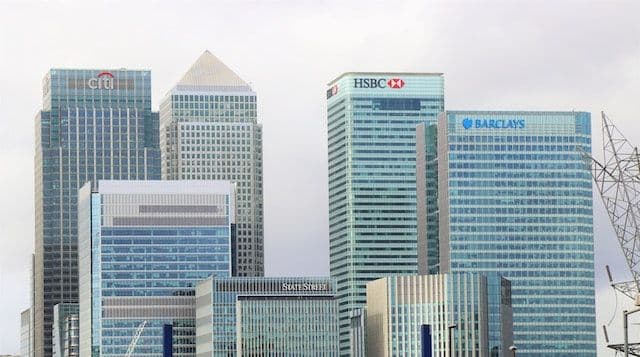
Most people use banks every single day — depositing salaries, withdrawing cash, transferring money, paying bills — without ever really thinking about how the whole system actually works. A bank is a licensed financial institution that accepts deposits from the public and uses those deposits to provide loans to individuals and businesses. Everything a bank does — from accepting your savings to issuing credit cards to printing cheques — falls under the broad category of banking. But banks are not just convenient places to store your money. They are the central nervous system of any economy — the institutions that keep money flowing productively through the system, connecting people who have surplus funds with people and businesses that need capital. And in Bangladesh, where Bangladesh Bank serves as the central authority overseeing the entire financial system, understanding how banking works is genuinely useful knowledge for anyone managing their personal finances, running a business, or simply trying to make smarter decisions with their money.