Business
46 articles
B
Business
April 28, 2026
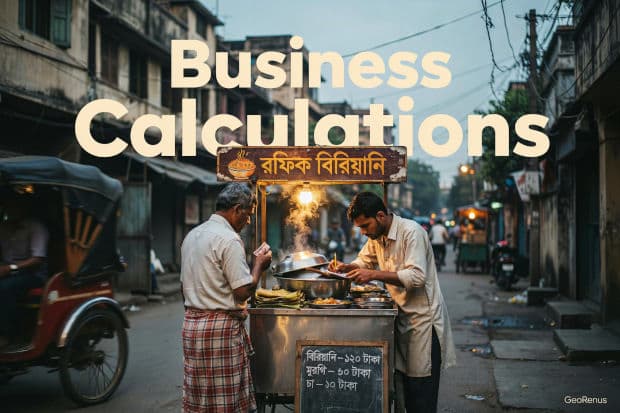
Business Calculations Part 1 -- Rafiq's Biryani: From Street Cart to First Shop
Rafiq has $500 and a dream: his own biryani business. This is Part 1 of a series that follows Rafiq's journey from street cart to multinational company, teaching every business calculation you need at exactly the moment you need it. In Part 1 (Basic Level), Rafiq starts selling from a cart and learns Revenue, Fixed vs Variable Costs, Gross and Net Profit, Profit Margin, ROI, Break-even Point, and Margin of Safety — all through his real numbers, not textbook formulas.
1,055Read
B
Business
April 14, 2026
Working Capital -- The Daily Oxygen Your Business Cannot Survive Without
Working Capital is the difference between a business's Current Assets (cash, accounts receivable, inventory) and Current Liabilities (accounts payable, short-term debt, accrued expenses). The formula is simple: Working Capital = Current Assets - Current Liabilities. Positive working capital means the business can meet its short-term obligations. Negative working capital is usually a danger sign -- unless you are Amazon, which deliberately operates with a Cash Conversion Cycle of -30 days by collecting from customers instantly while paying suppliers in 60-90 days. Deloitte's 2025 report found approximately $1.8 trillion in working capital is trapped in the world's top 1000 companies. This guide covers definitions, formulas (Current Ratio, Quick Ratio, Cash Conversion Cycle), all components explained, three real-world examples, industry benchmarks, 10 management strategies, warning signs, and practical optimization techniques.

138Read
B
Business
April 14, 2026
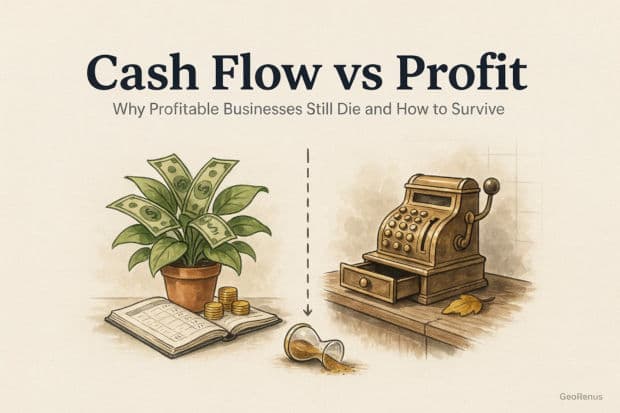
Cash Flow vs Profit -- Why Profitable Businesses Still Die and How to Survive
Profit is the difference between revenue and expenses on paper -- it appears on your income statement. Cash flow is the actual money moving in and out of your business -- it appears in your bank account. A business can be profitable on paper yet die from a cash crisis. According to US Bank (2025), 82% of business failures are caused by cash flow problems, not lack of profit. Toys R Us had $11.5 billion in revenue and showed profit, yet filed for bankruptcy because $5 billion in debt payments drained all cash. This guide explains the critical difference between profit and cash flow, why profitable businesses fail, how to read a cash flow statement, real-world case studies (Toys R Us, WeWork, Evergrande), and 10 strategies to improve your cash flow.
372Read
B
Business
April 14, 2026
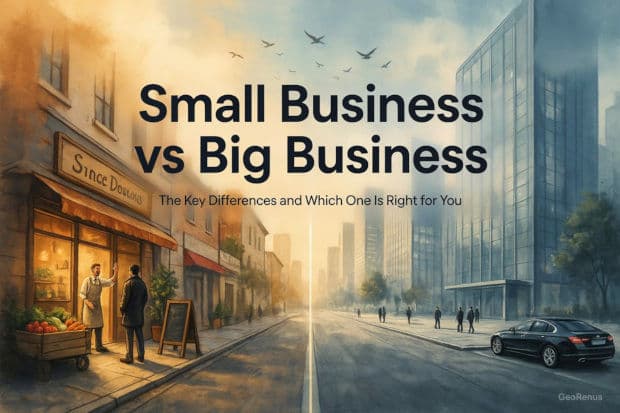
Small Business vs Big Business -- The Key Differences and Which One Is Right for You
A small business typically has fewer than 500 employees (SBA definition), limited capital, and operates in a local or niche market. A large business or corporation has hundreds to thousands of employees, massive capital, and operates nationally or internationally. According to the SBA (2025), 99.9% of all US businesses are small businesses, providing 46% of total employment. Meanwhile, Fortune 500 companies generate approximately two-thirds of US GDP. This guide examines the definitions, 10 key differences across capital, decision-making, risk, innovation, customer relationships, and more, along with advantages and disadvantages of each, real-world examples from Apple's garage to Amazon's empire, data-driven comparisons, and a practical roadmap for growing from small to big.
650Read
B
Business
April 13, 2026
Value Proposition -- Why It Is the Single Most Important Thing in Your Business
A Value Proposition is the clear, concise, and credible answer to why a customer should choose your product over any alternative. It explains what problem you solve, how life improves, and why you are different from competitors. CB Insights 2025 data shows 35% of startups fail due to no market need -- a weak value proposition. Apple sells an ecosystem, not phones. Uber sells convenience, not rides. Canva sells empowerment, not software. This guide covers definitions, 5 essential components, the Value Proposition Canvas framework, case studies from Apple to Stripe, common mistakes, testing methods, and a step-by-step guide to crafting a VP that converts.
1,119Read
B
Business
April 11, 2026
Gross Merchandise Value (GMV) -- The Most Important Metric in E-Commerce You Might Be Misunderstanding
Gross Merchandise Value (GMV) is the total dollar value of all merchandise sold through a marketplace or e-commerce platform over a given period -- before deducting discounts, returns, cancellations, or platform fees. For example, if 1,000 items sell at $50 each on your platform, GMV is $50,000 -- but that is NOT your revenue. Your actual revenue depends on your take rate (the percentage you keep as commission). GMV is the primary metric used by marketplaces like Amazon, Alibaba, and Airbnb, ride-sharing platforms like Uber, and food delivery services like DoorDash. This guide covers definitions, formulas, the critical difference between GMV and Revenue, real-world examples, top company GMV comparisons, limitations, and 10 strategies to grow GMV.
1,323Read
B
Business
April 11, 2026
Fixed Cost vs Variable Cost -- The Complete Guide to Understanding Your Business Expenses
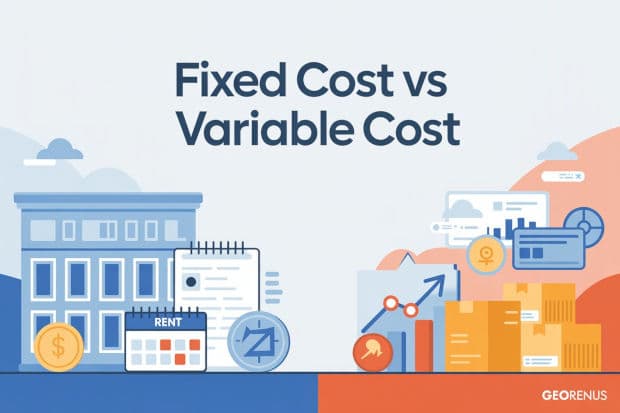
Fixed costs are expenses that remain constant regardless of how much you produce or sell -- such as rent, salaries, and insurance. Variable costs are expenses that rise or fall in direct proportion to production or sales volume -- such as raw materials, packaging, and shipping. Understanding the distinction between these two cost types is fundamental to pricing strategy, break-even analysis, profit planning, and business scalability. This guide covers definitions, formulas, three detailed real-world examples (restaurant, e-commerce, SaaS), industry cost structure benchmarks, operating leverage, and strategies for managing both cost types effectively.
1,068Read
B
Business
April 10, 2026
Business Networking — How the World's Most Successful Entrepreneurs Build Empires Through Relationships
Networking is one of the most powerful tools in business. The PayPal Mafia created a trillion-dollar network from a single team. This comprehensive guide covers 10 proven networking strategies, step-by-step process, real-world case studies from Airbnb to Y Combinator, data-driven insights, and practical tips for both extroverts and introverts.

1,030Read
B
Business
April 10, 2026
What Should You Read for Business — The Complete Knowledge Blueprint for Entrepreneurs
Warren Buffett reads 500 pages daily, Bill Gates reads 50 books a year — the world's most successful entrepreneurs are relentless readers. This comprehensive guide covers every knowledge area you need for business success: accounting, marketing, operations, law, leadership, strategy, and personal development — with curated book lists, data-backed insights, and a stage-by-stage reading blueprint.
990Read
B
Business
April 9, 2026
Business Time Management — How Successful Entrepreneurs Master Their Hours
Time is the most valuable asset in business. From Elon Musk to Jeff Bezos — how do successful entrepreneurs manage their hours? This comprehensive guide covers 7 proven methods including the Eisenhower Matrix, Pomodoro Technique, and Time Blocking, backed by data, real-world case studies, and actionable tips.

863Read
B
Business
April 9, 2026
How to Think About Risk in Business — Perspectives from Philosophers, Investors, and Entrepreneurs
Is risk really what you think it is? Five world-class thinkers — Nassim Taleb, Warren Buffett, Elon Musk, Daniel Kahneman, and Peter Thiel — each see risk from a radically different angle. Taleb says what you cannot see is the real danger (Black Swan). Buffett says not understanding is the risk (Circle of Competence). Musk says inaction is the biggest risk (First Principles). Kahneman says your brain's biases are the real enemy. Thiel says thinking like everyone else is the path to destruction. Together, these five perspectives form a complete risk-thinking framework for investors and entrepreneurs.

895Read
B
Business
April 7, 2026
Business Warfare: Sun Tzu's Logic of Market Control — The Philosophy That Made Google, Amazon, and Apple Unbeatable
Sun Tzu's 2,500-year-old military philosophy from The Art of War — applied to modern business. How Google (92% search, $307B revenue), Amazon (60%+ e-commerce searches, 175+ fulfillment centers), Apple (92% retention rate), and bKash (210M+ accounts) use a 5-step control framework — terrain, intelligence, supply, terms, and lock-in — to make competition irrelevant rather than winning it.
727Read
B
Business
April 7, 2026
How Does a Business Create Value? — The Complete Guide to Value Creation
In 2014, Facebook bought WhatsApp — a company with just 55 employees — for $19 billion. Meanwhile, a corner store with five workers might be worth a few thousand dollars at best. What explains that staggering difference? One answer: Value Creation. The more genuine value a business creates for people, the more it survives, grows, and becomes worth something. This guide covers the seven methods of value creation, Michael Porter's Value Chain, the Value Proposition Canvas, the critical balance between value creation and value capture, and a real look at where Bangladesh stands — a complete explanation of the most fundamental concept in all of business.
680Read
B
Business
April 6, 2026
18 Common Business Mistakes That Kill Startups (And How to Avoid Them)
Business failure is not random bad luck — it follows predictable patterns. CB Insights data shows 42% of startups fail from no market need, 29% from running out of cash, and 23% from the wrong team. This guide analyzes the 18 most common business mistakes across 6 categories — Research, Product/Market, Financial, People, Strategic, and Mindset — with real-world examples from global companies and Bangladesh's own business landscape. Every mistake comes with a clear, actionable fix.
586Read
B
Business
April 5, 2026
Revenue vs Profit: Does More Sales Always Mean More Money? — The Complete Guide
A Bangladesh garments factory sells BDT 10 crore worth of goods — but ends the year with just BDT 77 lakh in net profit. Amazon's annual revenue is $575 billion, yet its net margin is only 4%. WeWork had $1.8 billion in revenue and still lost $1.6 billion. Revenue and profit are two terms many people use interchangeably — but failing to understand the difference is one of the biggest reasons businesses fail. This guide covers a step-by-step income statement analysis, profit margin calculations, real-world examples from global companies, and everything you need to know to understand revenue vs profit in plain, practical English.
532Read
B
Business
April 5, 2026
Entrepreneur vs Business Owner: Are They the Same Thing? — A Complete Analysis
Everyone with an Instagram shop calls themselves an entrepreneur these days — but Elon Musk and your neighborhood grocery store owner are fundamentally different kinds of people, even if both run businesses. This article breaks down the real differences between entrepreneurs and business owners across 15+ dimensions, using global and Bangladesh examples, a self-assessment quiz, and honest pros and cons. Both roles are valuable — you just need to know which one you actually are.
489Read
B
Business
April 5, 2026
Business vs Job: What's the Real Difference and Which One Is Right for YOU? — A Self-Evaluation Guide
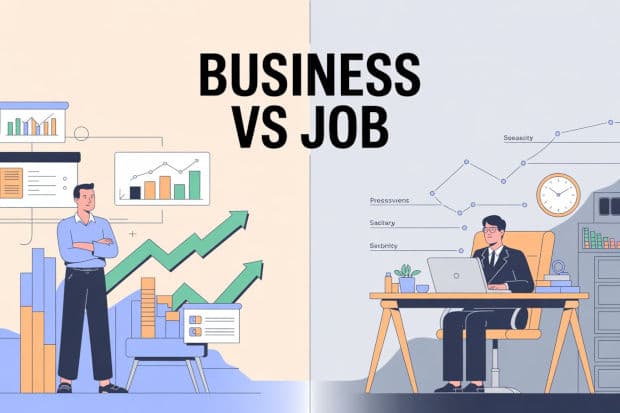
Should you start a business or stick with a job? Your parents say get a stable government job, your college friend says launch a startup, and social media is full of '22-year-old millionaire entrepreneur' stories. But the honest truth is — both paths are hard, and the right answer depends entirely on your personality, risk tolerance, financial situation, and life goals. This guide walks you through a 15-point comparison, a 10-question self-assessment quiz, age-based advice, and a final decision framework so you can find your own right path — not someone else's.
499Read
B
Business
April 3, 2026
How Profit Is Made: The Journey from Revenue to the Bottom Line — A Complete Guide
Most people assume more sales automatically mean more profit — that is one of the biggest misconceptions in business. Amazon generated $575 billion in revenue in 2023, yet its net profit margin was only around 4%. Revenue is where the journey starts; profit is what survives the journey. Between the two lie costs, interest, taxes, and hard business realities. This guide walks you through every step — from Gross Profit and Operating Profit to Net Profit, how to read an Income Statement, how to calculate your Break-Even Point, and what profit really looks like across different industries in Bangladesh.
431Read
B
Business
March 30, 2026
What Is Business Really? Different Types of Business Explained
Most people think business is just buying and selling — but it is far bigger than that. Business includes production, service delivery, distribution, risk-taking, and creating value for society. According to the World Bank, there are over 400 million formal businesses globally, and Bangladesh alone has more than 8 million SMEs. This article covers the definition of business from multiple perspectives, its five core pillars, types by ownership structure and activity, size classification, step-by-step startup guide, and the business landscape in Bangladesh with real data.
551Read
B
Business
March 28, 2026
White Elephant: When Your Biggest Investment Becomes Your Biggest Burden
A white elephant is an asset, project, or investment whose maintenance and operating costs far exceed any benefit it provides — yet walking away from it feels impossible. The term traces back to ancient Southeast Asia, where kings gifted rare sacred elephants to courtiers as a form of disguised punishment. In modern business, government, and personal finance, white elephants quietly drain resources while pride, sunk costs, and political pressure keep them alive long past their usefulness.

722Read
B
Business
March 15, 2026
How to Overcome Barriers to Entry: 10 Proven Strategies for New Businesses
Barriers to entry can feel overwhelming for new entrepreneurs, but they are not insurmountable. From building brand value through social media and quality products, to developing alternative distribution channels, leveraging affordable technology, securing smart funding, navigating regulatory requirements, and avoiding price wars — each barrier has a corresponding strategy to overcome it. This guide walks through 10 practical, proven approaches that new businesses can use to break into competitive markets, with real-world examples from companies that started small and succeeded.

776Read
B
Business
March 15, 2026
Barriers to Entry: What They Are, Why They Matter, and How They Shape Markets
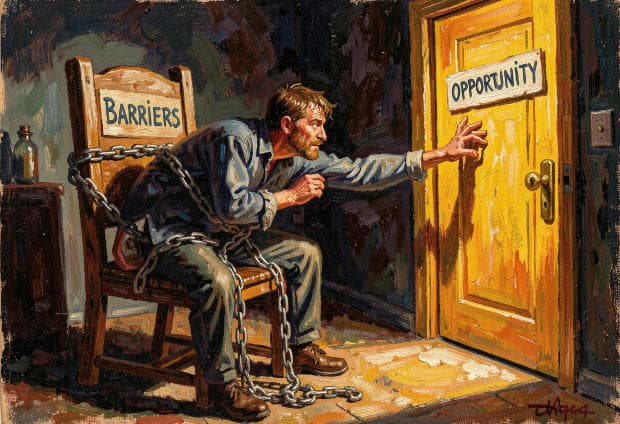
Barriers to entry are the obstacles that make it difficult for new companies to enter a market and compete with established players. These barriers include high capital requirements, government regulations, technological advantages held by incumbents, supply chain control, strong brand loyalty, and control over raw materials. While barriers protect existing businesses, they also reduce market competition, stifle innovation, and can negatively impact overall economic growth. Understanding these barriers is the first step for any entrepreneur looking to break into a competitive industry.
777Read
M
Marketing
March 11, 2026
STP Marketing -- The Complete Guide to Segmentation, Targeting, and Positioning
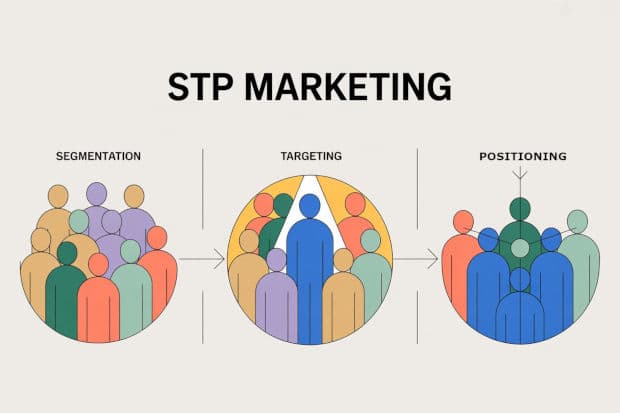
STP (Segmentation, Targeting, Positioning) is the foundational strategic marketing framework popularized by Philip Kotler. Segmentation means dividing a broad market into smaller groups based on demographics, geography, psychographics, and behavior. Targeting means choosing which segment to serve. Positioning means creating a distinct place for your brand in that segment's mind. According to Bain & Company (2025), businesses that follow STP strategy are approximately 25% more profitable than those that don't. This guide covers all three steps in depth with real-world examples from Nike, Spotify, and Coca-Cola, industry data, a step-by-step implementation process, and common mistakes to avoid.
1,290Read
M
Marketing
March 11, 2026
Target Market -- Who Is Your Ideal Customer and How to Find Them
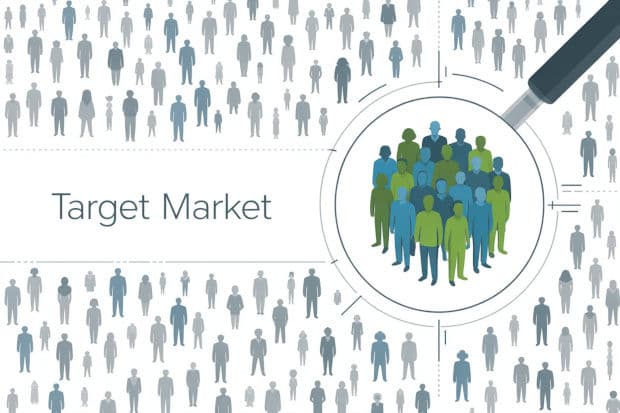
A Target Market is the specific group of consumers most likely to buy your product or service, defined by demographic (age, income, gender), geographic (location), psychographic (values, lifestyle), and behavioral (purchase habits) characteristics. According to HubSpot's 2025 State of Marketing report, businesses with well-defined target markets achieve approximately 200% higher marketing ROI. Nike does not sell shoes to 'everyone' -- per their published brand strategy, they target fitness-conscious, aspirational consumers aged 18-34. This guide covers definitions, the 4 segmentation types, Target Market vs Target Audience, a step-by-step identification process, real-world brand examples, common mistakes, tools, and data-backed insights on why precise targeting is the foundation of all effective marketing.
492Read
B
Business
March 7, 2026
Customer Acquisition Cost (CAC) -- The Complete Guide to Measuring and Reducing Your Cost Per Customer
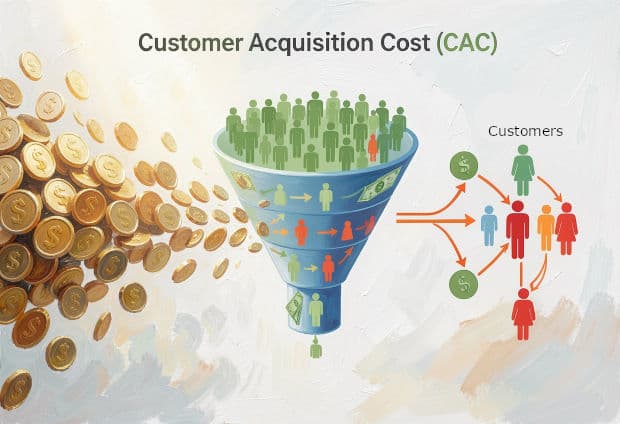
Customer Acquisition Cost (CAC) is the measure of how much a business spends on average to acquire one new customer, calculated by dividing total sales and marketing expenses by the number of new customers gained in that period — for example, spending $10,000 in a month to acquire 100 customers gives a CAC of $100 per customer. This cost includes everything that goes into bringing in new customers: advertising, sales team salaries and commissions, marketing tools and software, content creation, and agency fees. CAC matters because it tells you whether your business is actually profitable; if the total value a customer brings over their lifetime (Customer Lifetime Value or LTV) is lower than the CAC, you're losing money on every customer, and the general rule of thumb is that a healthy business should maintain an LTV:CAC ratio of at least 3:1. From Casper's $308 CAC disaster to Dropbox's near-zero referral-driven acquisition -- understanding CAC can make or break your business. This complete guide covers formulas, three real-world case studies, industry benchmarks, LTV:CAC ratios, 10 proven reduction strategies, and essential tracking tools.
741Read
B
Business
March 7, 2026
Key Performance Indicators (KPIs): Definition, Types, and How to Use Them
Key Performance Indicators (KPIs) are measurable values that show how effectively a company is achieving its key business objectives. From executive-level metrics like net profit margin to department-specific ones like customer acquisition cost, KPIs help organizations track progress, engage employees, and make data-driven decisions. This guide covers what KPIs are, how to create them, the SMART framework, and the best KPIs for every department.

714Read
B
Business
March 7, 2026
Return on Investment (ROI) — The Complete Guide to Measuring How Hard Your Money Works
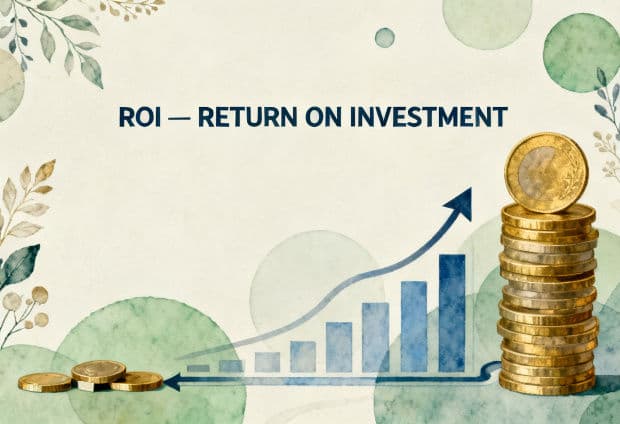
Return on Investment (ROI) measures net profit as a percentage of investment cost and is the most universally used financial metric for evaluating any investment. This guide covers the ROI formula, three calculation methods, real-world examples, industry benchmarks, key limitations, better alternatives like IRR and CAGR, and practical strategies to improve your returns in Bangladesh and globally.
637Read
M
Marketing
March 7, 2026
Niche Market: What It Is, How to Find One, and Real-World Examples
A niche market is a focused segment of a broader market defined by its own unique needs, preferences, or identity. By targeting a niche, businesses can serve a specific group of customers more effectively, build stronger brand loyalty, and face less competition. This guide explains what niche markets are, provides real-world examples, and walks you through how to find the right niche for your business.

798Read
B
Business
March 7, 2026
Competitive Advantage: Definition, Types, and Real-World Examples
Competitive advantage is what makes a company stand out from its rivals by offering better value to customers. This article explores the three main types of competitive advantage strategies defined by Michael Porter, along with real-world examples and why it matters for business success.

706Read
B
Business
March 7, 2026
What Is a Patent? A Complete Guide to Patents
A patent is an exclusive right granted by a government that prevents others from making, using, selling, or distributing your invention for a specific period. This guide covers patent types, costs, the application process, famous examples, and how to protect your invention.

646Read
B
Business
March 7, 2026
Customer Lifetime Value (CLV/LTV) -- How Much Is Each Customer Really Worth to Your Business?
Customer Lifetime Value (LTV) is the estimated total revenue a single customer will generate for your business over the entire duration of their relationship. For example, the average Starbucks customer has an LTV of approximately $14,099, while an Amazon Prime member generates roughly $2,283 per year. Understanding LTV helps businesses decide how much to spend on acquiring new customers (CAC), which customer segments deserve the most attention, and why retention is almost always more profitable than acquisition. This guide covers 4 LTV formulas, three detailed real-world examples (coffee shop, e-commerce, SaaS), a comparison of top global companies' LTVs, 10 proven strategies to increase LTV, and essential benchmarks including the critical LTV:CAC ratio.

632Read
M
Marketing
March 7, 2026
TAM, SAM, and SOM: How to Measure Your Market Size Before Launching a Startup
TAM, SAM, and SOM are three essential metrics that help entrepreneurs and investors measure market size and growth potential. TAM represents the total addressable market, SAM narrows it to the serviceable portion, and SOM reflects the realistic market share a company can capture. Understanding these concepts is critical for building a solid business plan and attracting investor funding.

768Read
B
Business
March 7, 2026
Break-Even Analysis: How to Know When Your Business Starts Making Money
Break-even analysis helps business owners figure out exactly how many units they need to sell before they start turning a profit. By comparing fixed costs, variable costs, and selling price, you can find your break-even point and make smarter decisions about pricing, budgeting, and growth. This guide walks you through the formula, a real-world example, the benefits, limitations, and practical tips to lower your break-even point.

893Read
B
Business
March 7, 2026
Gross Profit vs Net Profit -- The Complete Guide to Understanding Business Profitability
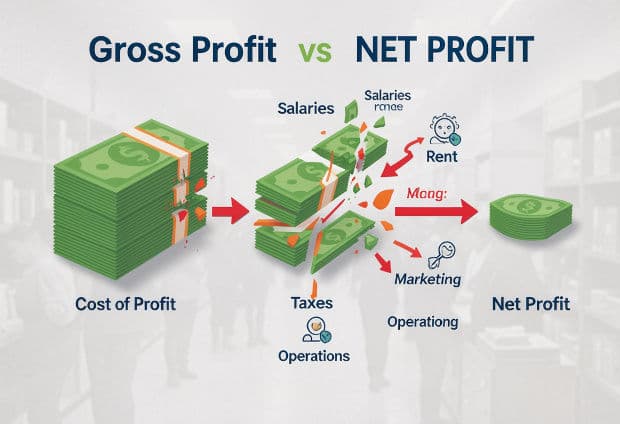
Gross Profit tells you how efficiently you produce; Net Profit tells you how much you actually keep. This guide explains both with three real-world examples (retail store, digital agency, e-commerce), a comparison of top global companies like Apple, Amazon, and Meta, 10 data tables, and actionable strategies to improve your margins.
602Read
B
Business
March 7, 2026
Mastering Gross Profit Margin: A Key Profitability Metric
Gross Profit Margin measures the percentage of revenue a company retains after subtracting the cost of goods sold. It is a critical profitability metric used by investors and business owners to evaluate pricing power, operational efficiency, and competitive positioning across industries.

452Read
B
Business
March 7, 2026
Decoding Net Worth: What It Really Means
Net worth is the difference between your total assets and total liabilities, serving as the most comprehensive measure of financial health for both individuals and businesses. This article explains how to calculate net worth, why it matters, how billionaire wealth is estimated, and highlights the world's wealthiest individuals and most valuable companies.

524Read
M
Marketing
March 7, 2026
The Backbone of Modern Business: Supply Chain
A supply chain is the end-to-end system that moves a product from raw materials to the final consumer, encompassing sourcing, manufacturing, warehousing, distribution, and retail. This article explores how supply chains work, six major supply chain models used by companies like Toyota, Amazon, and Zara, and the five critical areas of effective supply chain management.

606Read
B
Business
March 7, 2026
Corporate Social Responsibility (CSR)
Corporate Social Responsibility (CSR) is the commitment by businesses to operate ethically and contribute to economic development while improving the quality of life of employees, communities, and society at large. This article explores stakeholder responsibilities, types of CSR, its business benefits, and real-world examples from global and Bangladeshi companies.

366Read
B
Business
March 7, 2026
Net Profit: What it is and How to Calculate
Net profit, also known as net income or the bottom line, is the amount of money a business retains after subtracting all expenses from total revenue. It is calculated as Total Revenue minus COGS, operating expenses, interest, taxes, and other costs. Net profit and its percentage form — net profit margin — are critical metrics for evaluating a company's financial health, comparing profitability across businesses, and making informed investment decisions.

356Read
B
Business
March 7, 2026
Understanding Business Models: B2B, B2C, and B2G
This article explains the three major business models: B2B (Business-to-Business), B2C (Business-to-Consumer), and B2G (Business-to-Government). It covers the key characteristics, real-world examples, and critical differences of each model, along with market size data and revenue figures from major companies like Salesforce, Amazon, and Lockheed Martin.

589Read
B
Business
March 1, 2026
Break-Even Analysis — When Does Your Business Actually Start Making Money?
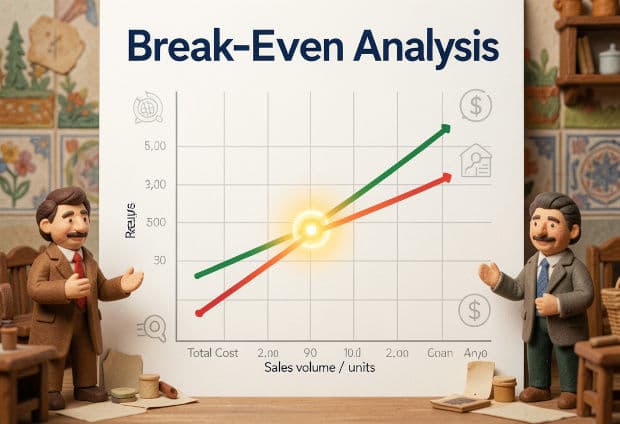
Before you invest a single dollar in your business, you need to answer one question: how many units must you sell to stop losing money? Break-even analysis gives you that answer. This guide walks through the formulas, three detailed real-world examples (coffee shop, e-commerce, SaaS), 10 data tables, limitations, and proven strategies to reach profitability faster.
998Read
B
Business
May 15, 2025
HORECA (Hotel Restaurant Catering Café): A Growing Marketing Channel in the Foodservice Industry
The term HORECA is itself an abbreviation of Hotel, Restaurant, Catering, or Café. This marketing channel, which originated in Europe, has now expanded across Asia, the United States, and many other parts of the world. Recognizing its growing importance, many businesses have adopted various software solutions to enhance the effectiveness and efficiency of operations within this sector. Over time, the scope of HORECA has expanded beyond traditional hospitality to include other retail foodservice sectors such as amusement parks, resorts, hotels, and the travel industry.

2,699Read
B
Business
May 15, 2025
What is Equity? A Comprehensive Guide to Ownership, Value, and ROE
Equity refers to a share or stock, which signifies an ownership interest in a company held by the owner or shareholders. There are different types of equity, such as: Owner's Equity: Refers to the control the owner has over the company. Shareholders' Equity: Also known as stockholders' equity, refers to the valuation of companies, especially those not publicly traded. Private Equity: Refers to companies whose shares are not publicly available for trading. A higher Return on Equity (ROE) is considered better.

1,243Read
B
Business
May 15, 2025
Understanding Gross Profit: The Foundation of Business Profitability
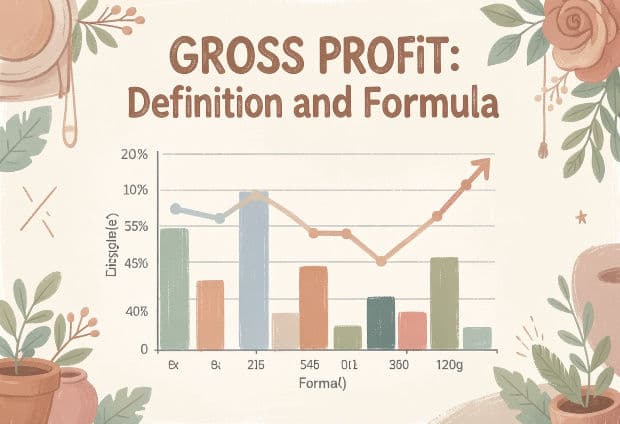
By subtracting the cost of goods sold from sales, we can determine the gross profit. Gross profit helps us understand whether the business is making any profit from selling its products. Among the three key profit indicators in business, the first is gross profit. If managed properly, a company can earn a healthy amount of gross profit, which in turn increases the net profit.
1,272Read
B
Business
May 15, 2025
Red Ocean and Blue Ocean Strategy: Fight the Competition or Make It Irrelevant — The Complete Guide
Red Ocean strategy means competing in an existing market where rivals fight over the same customers. Blue Ocean strategy means creating an entirely new, uncontested market where competition is irrelevant. W. Chan Kim and Renee Mauborgne's 2005 bestseller introduced the Four Actions Framework — Eliminate, Reduce, Raise, Create — to achieve Value Innovation. Netflix, Apple, Tesla, and Bangladesh's bKash are among the most celebrated Blue Ocean success stories.

1,370Read
B
Business
May 15, 2025
Needs, Wants, and Demands
Needs are what we lack or feel deprived of for survival or sustenance. These needs can be physical, mental, or social. Wants are the desires people express to fulfill their needs. These wants are often influenced by an individual's surroundings and many other factors. Demands occur when people have the purchasing power to satisfy their wants.

1,424Read
About Business
Business is the engine of economic growth and personal financial independence. Whether you're starting your first venture or scaling an established company, understanding business fundamentals — from strategy and operations to finance and marketing — is essential. Our articles provide actionable insights for every stage of the business journey.
businessentrepreneurshipbusiness managementbusiness strategybusiness operationssmall businessbusiness planrevenue model