Decoding Net Worth: What It Really Means
G
GeoRenus Editorial Team
568 views

GeoRenus Editorial Team
Net worth is the difference between your total assets and total liabilities, serving as the most comprehensive measure of financial health for both individuals and businesses. This article explains how to calculate net worth, why it matters, how billionaire wealth is estimated, and highlights the world's wealthiest individuals and most valuable companies.
If someone asked you right now, "How much are you really worth?", would you know the answer? Most people don't — and that's perfectly normal. Net worth is one of those financial terms that gets thrown around constantly in headlines ("Elon Musk's net worth surges past $250 billion!"), yet surprisingly few people understand what it actually means for their own finances.
Here's the thing: net worth isn't just a number for billionaires to brag about. It's the single most honest snapshot of where you stand financially. Think of it as your personal financial scoreboard — it tells you whether you're winning, losing, or just treading water. And the best part? Calculating it is far simpler than most people think.
In this guide, we'll break down everything you need to know about net worth — what it is, how to calculate it, why it matters, and how the world's wealthiest individuals and companies stack up. Whether you're a college student with a negative net worth (no shame in that!) or a seasoned investor looking to benchmark your progress, this article has something for you.
At its core, net worth is beautifully simple. It's the difference between what you own and what you owe. That's it. No complicated formulas, no advanced math — just basic subtraction.
The formula looks like this:
Net Worth = Total Assets - Total Liabilities
Your assets are everything of value that you own — your house, your car, the money in your bank accounts, your investment portfolio, even your grandmother's antique necklace if it has market value. Your liabilities are everything you owe — your mortgage, car loan, student debt, credit card balances, and any other obligations.
When your assets exceed your liabilities, you have a positive net worth. When your liabilities exceed your assets, you have a negative net worth. Neither situation is permanent — that's the whole point of tracking it.
As Warren Buffett once said, "Do not save what is left after spending, but spend what is left after saving." Building net worth starts with that mindset shift — prioritizing what you keep over what you spend.
To calculate your net worth accurately, you need to know exactly what counts as an asset and what counts as a liability. Let's break both down.
Assets are anything of monetary value that you own. The most common categories include:
Liabilities are your financial obligations — the money you owe to others. Common liabilities include:
Let's say you're Sarah, a 35-year-old marketing manager. Here's what her financial picture looks like:
Sarah's Assets:
Total Assets: $895,000
Sarah's Liabilities:
Total Liabilities: $340,000
Sarah's net worth = $895,000 - $340,000 = $555,000. That means despite owing $340,000 in various debts, Sarah is still worth over half a million dollars. Not bad at all.
The key takeaway from this example? Don't panic if you have debt. What matters is that your assets are growing faster than your liabilities over time.
You might be wondering — why should I bother calculating my net worth? Can't I just look at my bank balance? Well, not exactly. Here's why net worth is such a powerful metric:
Your bank balance only tells you how much cash you have right now. It doesn't account for the $200,000 in your retirement fund or the $50,000 you still owe on your car loan. Net worth captures everything — the good and the bad — in a single number.
Income can be misleading. Someone earning $300,000 a year but spending $310,000 is technically going backward. Net worth cuts through the noise and shows whether you're actually building wealth or just earning and burning.
Instead of vague goals like "save more money," net worth lets you set specific targets. For instance, "I want to increase my net worth by $50,000 this year" is concrete, measurable, and motivating.
Sometimes you don't realize how much debt has crept up on you until you see it all in one place. A net worth calculation can be a wake-up call — or a pleasant surprise. According to the Federal Reserve's Survey of Consumer Finances, the median net worth of American families was approximately $192,900 in 2022. Knowing where you stand relative to that benchmark can be illuminating.
Whether you're deciding to buy a house, retire early, start a business, or send your kids to college — your net worth is the foundation for all of those decisions. Lenders, financial advisors, and even potential business partners look at net worth to gauge financial stability.
Net worth isn't a one-size-fits-all concept. The way it's calculated and interpreted depends on whether we're talking about an individual or a business.
Personal net worth is what most people think of when they hear the term. It's the total value of everything an individual owns minus everything they owe. This includes all the categories we discussed above — cash, investments, property, and debts.
What makes personal net worth interesting is that it varies wildly across different life stages. A fresh college graduate might have a negative net worth of -$30,000 due to student loans, while a mid-career professional might be sitting at $500,000+. Neither number is inherently good or bad — context matters.
Financial planners often use a simple rule of thumb: by the time you're 30, your net worth should be roughly equal to your annual salary. By 40, it should be about twice your salary, and by 60, about eight times your salary. These are rough benchmarks, not rigid rules — but they give you something to aim for.
For companies, net worth goes by different names — book value, shareholders' equity, or owner's equity. But the underlying principle is exactly the same: total assets minus total liabilities.
You'll find a company's net worth on its balance sheet. For example, if a company owns $10 million in assets (offices, equipment, cash, intellectual property) and has $4 million in liabilities (loans, accounts payable, bonds), its net worth — or shareholders' equity — is $6 million.
It's worth noting that a company's book value (net worth on paper) often differs significantly from its market capitalization (what investors collectively say the company is worth). Apple, for instance, has a book value of around $60 billion, yet its market cap exceeds $3.5 trillion. The difference reflects investor confidence, brand value, growth expectations, and intangible assets that don't appear on the balance sheet.
Ever wondered how Forbes or Bloomberg comes up with those jaw-dropping net worth figures? It's not like Elon Musk emails them his bank statements. The process is actually quite involved — and it's more of an estimation than an exact science.
Organizations like the Forbes Real-Time Billionaires List and the Bloomberg Billionaires Index use a combination of methods to estimate ultra-wealthy individuals' net worth:
The result is an educated estimate, not an exact figure. That's why you'll often see different numbers on different platforms — Forbes might say someone is worth $210 billion while Bloomberg puts it at $215 billion. The figures fluctuate daily with stock prices, currency movements, and new information.
Because most billionaire wealth is tied up in publicly traded stocks, their net worth can swing by billions of dollars in a single day. When Tesla's stock drops 5%, Musk's net worth might fall by $10-15 billion overnight. This is paper wealth — not cash in the bank — which is why billionaire net worth rankings shuffle so frequently.
As of early 2026, these are the five wealthiest individuals on the planet, based on approximate figures from Forbes and Bloomberg. Remember, these numbers change daily with market movements.
Estimated Net Worth: ~$250 billion+
The CEO of Tesla and SpaceX, owner of X (formerly Twitter), and founder of multiple ventures including Neuralink and The Boring Company, Musk has held the top spot on and off for several years. The bulk of his wealth comes from his ~13% stake in Tesla and his ownership of SpaceX, which was valued at over $180 billion in its latest funding round. Musk's net worth is notoriously volatile — it has swung by tens of billions in a single week depending on Tesla's stock performance.
Estimated Net Worth: ~$200 billion+
The chairman and CEO of LVMH (Moet Hennessy Louis Vuitton), Arnault controls the world's largest luxury goods empire. His portfolio includes brands like Louis Vuitton, Dior, Tiffany & Co., Hennessy, and Sephora. Arnault briefly held the title of world's richest person in 2023 and remains firmly in the top tier, buoyed by the resilience of the global luxury market.
Estimated Net Worth: ~$200 billion+
The founder of Amazon and owner of Blue Origin and The Washington Post, Bezos remains one of the planet's wealthiest individuals. While he stepped down as Amazon's CEO in 2021, he still holds a significant stake in the company. His wealth also includes major real estate holdings across the United States.
Estimated Net Worth: ~$180 billion+
The co-founder and CEO of Meta Platforms (formerly Facebook) has seen his net worth surge as Meta's stock recovered strongly. Zuckerberg controls Facebook, Instagram, WhatsApp, and is heavily investing in AI and the metaverse through Meta's Reality Labs division. His ~13% stake in Meta forms the cornerstone of his wealth.
Estimated Net Worth: ~$160 billion+
The co-founder of Oracle Corporation and one of the most enduring figures in the tech industry, Ellison has seen his wealth climb steadily as Oracle pivoted to cloud computing. He also holds a significant stake in Tesla (he serves on Tesla's board) and owns the Hawaiian island of Lanai. At over 80 years old, Ellison shows no signs of slowing down.
When people talk about a company's "net worth" in headlines, they're usually referring to market capitalization — the total value of all its outstanding shares. Market cap reflects what investors believe a company is worth, which often far exceeds the company's book value. Here are the five most valuable companies as of early 2026:
Market Cap: ~$3.5 trillion
Apple remains the world's most valuable publicly traded company. With its ecosystem of iPhones, Macs, iPads, Apple Watch, and a rapidly growing Services segment generating over $85 billion annually, Apple has built a moat that competitors struggle to breach. The company also sits on a massive cash pile exceeding $160 billion.
Market Cap: ~$3.1 trillion
Microsoft's transformation under CEO Satya Nadella has been remarkable. The company's Azure cloud platform, its strategic investment in OpenAI, and its dominant position in enterprise software with Microsoft 365 have made it a close rival to Apple for the most valuable company title. Microsoft's annual revenue now exceeds $230 billion.
Market Cap: ~$3 trillion
NVIDIA's meteoric rise has been fueled by the AI revolution. The company's GPUs are the backbone of AI training and inference, and its data center revenue has exploded. NVIDIA went from a $300 billion company in early 2023 to a $3 trillion giant — one of the fastest value creation stories in stock market history.
Market Cap: ~$2 trillion
The parent company of Google, YouTube, Waymo, and DeepMind, Alphabet generates the majority of its revenue from digital advertising. But the company has also made significant strides in cloud computing (Google Cloud) and artificial intelligence (Gemini), positioning itself as a diversified tech powerhouse with annual revenues exceeding $340 billion.
Market Cap: ~$1.8 trillion
The Saudi Arabian oil giant is the world's most profitable company, earning over $100 billion in annual net income. While its market cap has been surpassed by several tech companies, Aramco remains a juggernaut. The Saudi government owns approximately 98% of the company, making it a cornerstone of the kingdom's sovereign wealth.
Net worth is, at its heart, a simple equation — but the insights it provides are anything but simple. Whether you're calculating your own personal net worth for the first time or analyzing the financial health of a multinational corporation, the principle remains the same: what you own minus what you owe equals what you're worth.
For individuals, tracking net worth over time is one of the most powerful habits you can develop. It forces honesty, encourages saving, and creates accountability. You don't need to be worth millions — you just need to be moving in the right direction.
For businesses, net worth (or shareholders' equity) is a fundamental measure of financial health that investors, analysts, and creditors rely on every day.
And for the world's billionaires and trillion-dollar companies? Their net worth figures remind us of the extraordinary scale of wealth creation in the modern economy — and the volatility that comes with it.
We'll leave you with one of our favorite Warren Buffett quotes: "It takes 20 years to build a reputation and five minutes to ruin it. If you think about that, you'll do things differently." The same is true for net worth. Build it patiently, protect it wisely, and let compound growth do the heavy lifting.
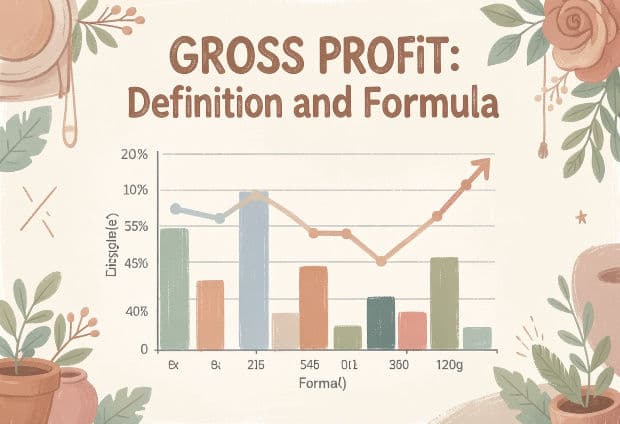
By subtracting the cost of goods sold from sales, we can determine the gross profit. Gross profit helps us understand whether the business is making any profit from selling its products. Among the three key profit indicators in business, the first is gross profit. If managed properly, a company can earn a healthy amount of gross profit, which in turn increases the net profit.