Inflation: What It Is, Types, Causes, How It's Measured, and Why It Matters
G
GeoRenus Editorial Team
558 views
Summary
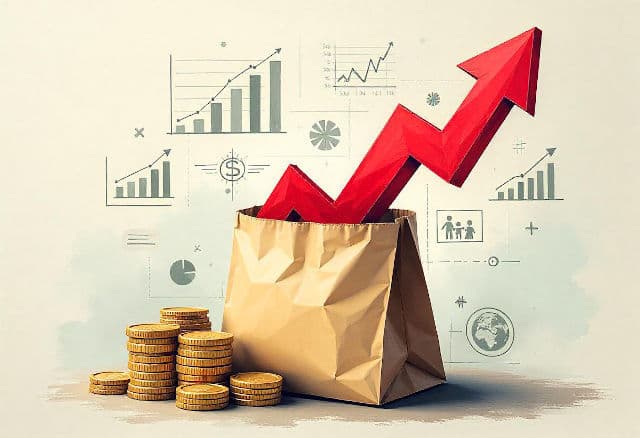
Inflation is the sustained increase in the general price level of goods and services over time, reducing the purchasing power of money. It is caused by excess money supply, government spending, credit expansion, and production declines. The five main types are demand-pull, cost-push, built-in, imported, and monetary inflation. Measured through CPI and WPI, moderate inflation (2-3%) is considered healthy for economic growth.
Key Takeaways
- Inflation is the sustained increase in the general price level of goods and services, reducing purchasing power.
- Key causes include excess money supply, government spending, credit expansion, production decline, and political instability.
- Five types: demand-pull, cost-push, built-in (wage-price spiral), imported, and monetary inflation.
- Inflation is measured using the Consumer Price Index (CPI) and Wholesale Price Index (WPI).
- Moderate inflation (2-3%) stimulates economic growth; high inflation erodes purchasing power and creates uncertainty.
- The inflation rate formula: ((Current CPI - Previous CPI) / Previous CPI) x 100.
- Central banks combat inflation by raising interest rates and tightening monetary policy.
What Is Inflation?
Inflation is the sustained increase in the general price level of goods and services over time. When inflation occurs, each unit of currency buys fewer items than before — meaning your money loses purchasing power.
Inflation is not always a bad thing. Most economists agree that a moderate inflation rate of 2-3% per year is healthy for an economy because it encourages spending and investment rather than hoarding cash. However, when inflation spirals out of control, it can devastate economies and livelihoods.
"Inflation is taxation without legislation." — Milton Friedman, Nobel Laureate in Economics
Understanding Inflation Through a Simple Example
Imagine in January 2022, a kg of rice cost $1.00. By December 2022, the same rice costs $1.10. That 10-cent increase means you now need more money to buy the same product. Multiply that across thousands of goods and services, and you have inflation.
Now think bigger: if a family's monthly grocery bill was $500 last year and the inflation rate is 8%, that same basket of groceries now costs $540 — an extra $40 per month without buying anything additional.
What Causes Inflation?
Inflation doesn't happen randomly. Several economic forces drive prices upward:
1. Excess Money Supply
When too much money circulates in the economy relative to the goods available, prices rise. If the central bank prints excessive amounts of currency, each unit of money becomes worth less. Zimbabwe's hyperinflation in 2008 reached 79.6 billion percent — a textbook example of what happens when money supply spirals out of control.
2. Government Spending
Large government projects and spending programs inject money into the economy. While this stimulates growth, excessive government spending — especially when funded by borrowing — can push prices up.
3. Credit Expansion
When banks make it easy to borrow money with low interest rates, consumers and businesses spend more. This increased demand, without a matching increase in supply, drives prices higher.
4. Production Decline
When production of goods falls — due to natural disasters, supply chain disruptions, or other shocks — the reduced supply against steady demand pushes prices up. The COVID-19 pandemic caused significant production disruptions worldwide, contributing to the inflation surge of 2021-2022.
5. Defaulted Loans
When a large volume of loans go unpaid, banks have less capital to lend. This can destabilize the financial system and indirectly contribute to inflationary pressures. According to Bangladesh Bank, non-performing loans exceeded 1.3 trillion taka by 2023.
6. Population Growth
Rapid population growth increases demand for food, housing, and services. If production doesn't keep pace, prices inevitably rise.
7. Political Instability
Political uncertainty disrupts economic activity, scares away investment, and can lead to excessive wage increases and hoarding — all of which fuel inflation.
Types of Inflation
1. Demand-Pull Inflation
Occurs when aggregate demand exceeds aggregate supply. Too many dollars chasing too few goods. This is the most common type during economic booms.
2. Cost-Push Inflation
Occurs when production costs rise — raw materials, wages, energy — forcing businesses to raise prices. The 2022 oil price spike following Russia's invasion of Ukraine is a classic example of cost-push inflation.
3. Built-In Inflation
Also called the wage-price spiral. When prices rise, workers demand higher wages. Higher wages increase production costs, which leads to even higher prices — creating a self-reinforcing cycle.
4. Imported Inflation
When the cost of imported goods rises — due to currency depreciation or global price increases — domestic prices follow. Countries heavily dependent on imports are especially vulnerable.
5. Monetary Inflation
When the central bank increases the money supply faster than the economy grows. More money in circulation means each unit is worth less, directly causing prices to rise.
How Is Inflation Measured?
Two primary indices are used to measure inflation:
1. Wholesale Price Index (WPI)
Tracks price changes at the wholesale (bulk) level — before goods reach consumers. It measures prices between businesses and is often used in India and some developing countries.
2. Consumer Price Index (CPI)
Tracks price changes of a basket of goods and services that a typical household buys. The CPI is the most widely used inflation measure globally. In the U.S., the Bureau of Labor Statistics publishes CPI data monthly.
The Inflation Rate Formula
Inflation Rate = ((Current Year CPI - Previous Year CPI) / Previous Year CPI) x 100
For example, if the CPI was 300 last year and 315 this year:
Inflation Rate = ((315 - 300) / 300) x 100 = 5%
Advantages of Moderate Inflation
- Stimulates economic growth — Mild inflation encourages spending rather than saving, boosting economic activity
- Benefits wages — Nominal wages tend to rise with inflation, and wage increases improve worker morale
- Increases asset values — Property and stock prices generally rise during moderate inflation, benefiting investors
- Reduces real debt burden — Borrowers benefit because they repay loans with money that is worth less than when they borrowed it
Disadvantages of High Inflation
- Erodes purchasing power — People can buy less with the same amount of money, especially hard on fixed-income households
- Creates economic uncertainty — Businesses struggle to plan and invest when prices are unpredictable
- Hurts savers — Savings lose real value if interest rates don't keep up with inflation
- Increases cost of living — Essential goods become more expensive, disproportionately affecting the poor
- Can trigger unemployment — If businesses can't pass on costs, they may cut jobs to maintain profitability
The Broader Impact of Inflation
Economists generally agree that mild inflation (2-3%) is the lubricant of economic growth. It keeps money circulating and encourages investment. But when inflation exceeds 5-10%, the negative effects start to dominate.
In Bangladesh, inflation has been a persistent concern. Rising food prices, currency depreciation, and global commodity price increases have pushed inflation rates higher. The central bank has responded by raising interest rates and tightening monetary policy — the standard tools for combating inflation.
"Inflation is always and everywhere a monetary phenomenon." — Milton Friedman
The Bottom Line
Inflation is an inevitable part of any growing economy. While moderate inflation can be healthy, excessive inflation destroys purchasing power, creates uncertainty, and widens inequality. Understanding its causes, types, and measurement helps individuals and policymakers make better financial decisions.
For the average person, the key takeaway is this: inflation means your money buys less over time. The best defense is to invest wisely, stay informed, and understand how economic policies affect the prices you pay every day.
Recommended for you
Banking: What It Is, How Banks Work, and Everything You Need to Know
Most people use banks every single day — depositing salaries, withdrawing cash, transferring money, paying bills — without ever really thinking about how the whole system actually works. A bank is a licensed financial institution that accepts deposits from the public and uses those deposits to provide loans to individuals and businesses. Everything a bank does — from accepting your savings to issuing credit cards to printing cheques — falls under the broad category of banking. But banks are not just convenient places to store your money. They are the central nervous system of any economy — the institutions that keep money flowing productively through the system, connecting people who have surplus funds with people and businesses that need capital. And in Bangladesh, where Bangladesh Bank serves as the central authority overseeing the entire financial system, understanding how banking works is genuinely useful knowledge for anyone managing their personal finances, running a business, or simply trying to make smarter decisions with their money.
Business Models
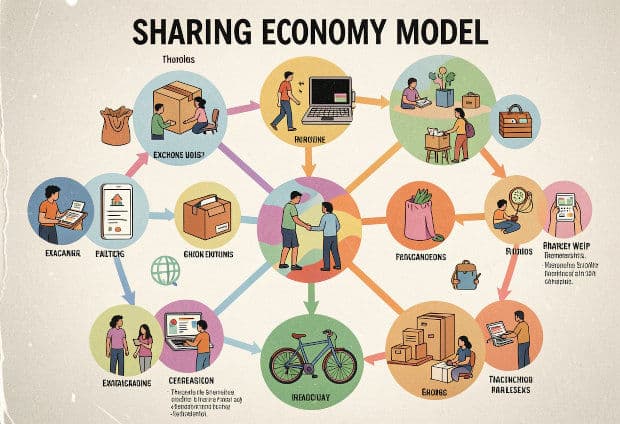
Sharing Economy Model: How Businesses Make Money Without Owning Anything
E-Commerce
E-Commerce: The Complete Guide to Online Business
Investment
Investment: What It Is, Types, and Real Life Examples
Sales
What Is Sales and How Does It Work?
Accounting
Gross Profit: Definition, Formula, and Why It Matters
Accounting
Accounting for Startups: A Complete Guide to Getting It Right

Accounting
Financial Recording and Transactions: The Complete Guide

Agreement
General Agreement on Tariffs and Trade (GATT)

Agreement
Teesta Water Sharing Treaty