Bangladesh Bank: History, Functions, and Key Events
G
GeoRenus Editorial Team
665 views
GeoRenus Editorial Team
Bangladesh Bank is the central bank and supreme monetary authority of Bangladesh, established on December 16, 1971, under Presidential Order No. 127. It manages currency issuance, monetary policy, banking regulation, foreign reserves, and payment systems. The bank gained global notoriety in 2016 when hackers stole $81 million from its Federal Reserve Bank of New York account in one of the largest cyber heists in history.
Bangladesh Bank is the central bank and the highest monetary authority of the People's Republic of Bangladesh. Established on December 16, 1971, under Presidential Order No. 127 of 1972, it serves as the backbone of the country's financial system. From issuing the national currency to regulating the entire banking sector, Bangladesh Bank plays a role that touches virtually every economic transaction in the country. In this guide, we will walk through its history, core responsibilities, branch network, leadership, and one of the most audacious cyber heists in modern banking history.
Every sovereign nation needs a central bank to anchor its financial system, and for Bangladesh, that institution is Bangladesh Bank. Headquartered in Motijheel, Dhaka, the bank was born out of the country's struggle for independence in 1971. It operates under the Bangladesh Bank Order, 1972, and has since grown into one of the most important regulatory bodies in South Asia.
The bank's mandate is broad: it issues currency, formulates monetary policy, supervises commercial banks, manages foreign exchange reserves, and acts as the banker to the government. Think of it as the financial nervous system of the entire country. Without it, the flow of money, credit, and economic stability would grind to a halt.
As of recent years, Bangladesh Bank oversees a banking sector that includes over 60 scheduled banks, multiple non-bank financial institutions, and a rapidly growing mobile financial services ecosystem. Its policies directly impact the lives of more than 170 million Bangladeshis.
Before Bangladesh gained independence, the territory that is now Bangladesh was part of East Pakistan. The banking infrastructure in this region was managed by the State Bank of Pakistan's Dhaka branch. When Bangladesh emerged as an independent nation after the Liberation War of 1971, there was an urgent need to create a sovereign monetary authority.
The transition was not simple. The new government had to untangle the financial apparatus inherited from Pakistan and build a central bank from scratch. The Bangladesh Bank Order, 1972 (Presidential Order No. 127) formally established Bangladesh Bank, absorbing the staff, assets, and liabilities of the former State Bank of Pakistan's operations in the eastern wing. A.N.M. Hamidullah was appointed as the first Governor, tasked with the enormous responsibility of stabilizing a war-torn economy and building a credible financial institution.
In its early years, the bank focused on nationalizing commercial banks, stabilizing the new currency (the Bangladeshi Taka), and establishing basic monetary frameworks. Over the decades, it has evolved into a modern central bank with sophisticated regulatory tools, digital payment oversight, and active participation in international financial governance.
Bangladesh Bank wears many hats. Its functions extend well beyond simply printing money. Here is a detailed look at each of its core responsibilities.
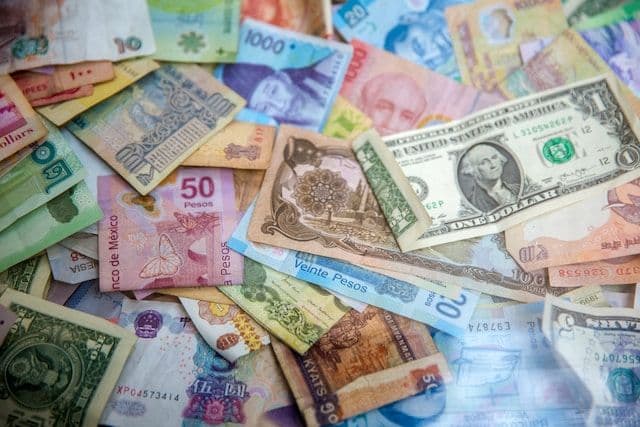
One of the most visible functions of Bangladesh Bank is the issuance and management of the national currency, the Bangladeshi Taka (BDT). The bank is the sole authority responsible for printing banknotes and minting coins. It determines the denominations in circulation, manages the supply of physical currency, and works to prevent counterfeiting.
For example, when the economy grows and more transactions take place, Bangladesh Bank must ensure there is enough currency in circulation to facilitate trade without causing inflation. Conversely, during periods of excess liquidity, it may withdraw currency from circulation. The bank currently issues notes in denominations of 2, 5, 10, 20, 50, 100, 500, and 1,000 Taka.
Monetary policy is the set of tools a central bank uses to control the money supply and interest rates. Bangladesh Bank formulates and implements monetary policy with the primary objective of maintaining price stability and supporting economic growth. It uses instruments such as the repo rate, reverse repo rate, cash reserve ratio (CRR), and statutory liquidity ratio (SLR) to influence the cost and availability of credit in the economy.
To put it simply, if inflation is rising too fast, the bank can raise interest rates or increase reserve requirements to cool down spending. If the economy is sluggish, it can lower rates to encourage borrowing and investment. "Monetary policy is the art of balancing growth with stability, and Bangladesh Bank must navigate this tightrope in one of the world's most dynamic emerging economies."
Bangladesh Bank acts as the regulator and supervisor of all scheduled banks, non-bank financial institutions, and microfinance organizations in the country. It grants banking licenses, sets capital adequacy requirements, conducts inspections, and has the power to intervene in or restructure troubled banks.
This function is crucial. Without effective regulation, the banking system could become a breeding ground for fraud, mismanagement, and systemic risk. Bangladesh Bank has, over the years, tightened its regulatory framework significantly, particularly after several high-profile loan default scandals that shook public confidence. It currently supervises 61 scheduled banks, including 6 state-owned commercial banks, 3 specialized development banks, 43 private commercial banks, and 9 foreign commercial banks.
Managing the country's foreign exchange reserves is another critical function. These reserves, held primarily in US dollars, euros, British pounds, and gold, serve as a buffer against external economic shocks and are essential for financing imports and servicing foreign debt.
Bangladesh's foreign exchange reserves peaked at approximately $48 billion in August 2021, driven by strong remittance inflows and export earnings. However, reserves have fluctuated since then due to rising import costs and global economic pressures. Bangladesh Bank actively manages these reserves through diversified investment portfolios and careful exchange rate management.
Bangladesh Bank is also a major producer of economic research and data. It publishes regular reports on inflation, GDP growth, trade balances, banking sector health, and other macroeconomic indicators. These publications serve as essential resources for policymakers, academics, investors, and international organizations.
The bank's Quarterly Economic Review and Annual Report are widely referenced documents that provide a comprehensive snapshot of the Bangladeshi economy. This research function helps the bank make informed policy decisions and provides transparency to the public.
In the digital age, the regulation of payment systems has become increasingly important. Bangladesh Bank oversees the national payment infrastructure, including the Bangladesh Electronic Funds Transfer Network (BEFTN), the National Payment Switch Bangladesh (NPSB), and the rapidly expanding mobile financial services (MFS) sector.
Mobile banking, led by services like bKash, Nagad, and Rocket, has transformed financial inclusion in Bangladesh. Bangladesh Bank regulates these platforms to ensure consumer protection, prevent fraud, and maintain the integrity of the payment system. As of recent data, there are over 200 million registered mobile financial service accounts in the country, a testament to the central bank's forward-looking regulatory approach.
Bangladesh Bank serves as the banker, adviser, and fiscal agent of the Government of Bangladesh. It manages government accounts, handles public debt issuance, and provides short-term credit to the government when needed. It also represents Bangladesh in international financial institutions such as the International Monetary Fund (IMF) and the World Bank.
When the government needs to borrow money domestically, it does so through treasury bills and bonds that are auctioned by Bangladesh Bank. This function makes the central bank an indispensable partner in the government's fiscal operations.
Combating money laundering and terrorist financing is a growing priority for Bangladesh Bank. It enforces the Money Laundering Prevention Act, 2012, and the Anti-Terrorism Act, 2009, requiring banks and financial institutions to implement know-your-customer (KYC) procedures, report suspicious transactions, and maintain robust compliance frameworks.
Bangladesh Bank operates the Bangladesh Financial Intelligence Unit (BFIU), which is responsible for collecting, analyzing, and disseminating financial intelligence related to money laundering and terrorist financing. This unit works closely with international counterparts and law enforcement agencies to combat cross-border financial crime.
Bangladesh Bank maintains a network of 10 branches across the country to ensure its services and oversight reach every corner of Bangladesh. These branches are not retail banking outlets; rather, they serve as regional offices for currency distribution, banking supervision, and government transactions.
The branches are located in: Dhaka (Head Office), Motijheel (Main Branch), Chattogram, Khulna, Rajshahi, Sylhet, Rangpur, Barishal, Mymensingh, and Bogura. The Chattogram branch is particularly important given that the city is home to the country's largest port and handles a significant share of international trade transactions.
Each branch plays a vital role in distributing fresh currency notes, withdrawing soiled notes from circulation, settling inter-bank transactions at the regional level, and supervising local banking operations. This decentralized presence ensures that the central bank's mandate is effectively implemented nationwide.
The Governor of Bangladesh Bank is the institution's chief executive and its public face. The Governor is appointed by the Government of Bangladesh and typically serves a four-year term. Here is a list of the Governors who have led the institution since its founding:
Each Governor has left their mark on the institution. Some are remembered for navigating financial crises, others for introducing landmark reforms. "The Governor of Bangladesh Bank is not just a technocrat; they are the custodian of an entire nation's economic confidence."
No article about Bangladesh Bank would be complete without discussing the infamous reserve heist of 2016, one of the largest and most brazen cyber thefts in the history of global banking. This event sent shockwaves through the international financial system and exposed critical vulnerabilities in the SWIFT messaging network used by banks worldwide.
On the night of February 4-5, 2016, hackers breached the systems of Bangladesh Bank and attempted to steal nearly $951 million from the bank's account at the Federal Reserve Bank of New York. The attackers used stolen SWIFT credentials to send 35 fraudulent transfer requests to the New York Fed, instructing it to move funds to various accounts in the Philippines and Sri Lanka.
The timing was calculated with surgical precision. The hackers launched the attack on a Thursday evening in Bangladesh, knowing that Friday and Saturday are the weekend in Bangladesh, while Saturday and Sunday are the weekend in the United States. This gap bought them precious time before anyone at either institution would notice the unauthorized transfers.
Of the 35 transfer requests, 30 were flagged and blocked by the New York Fed's automated systems. However, five transfers totaling $101 million slipped through. Of that amount, $20 million was directed to a Sri Lankan entity. Fortunately, this transfer was halted because the hackers had misspelled the recipient's name, typing "fandation" instead of "foundation". This single typo raised a red flag at Deutsche Bank, which was routing the transaction, and the transfer was reversed.
The remaining $81 million was successfully transferred to accounts at the Rizal Commercial Banking Corporation (RCBC) in the Philippines. The money landed in four accounts at RCBC's Jupiter Street branch in Makati, Manila. Investigations later revealed that these accounts had been opened using fictitious identities as early as May 2015, months before the heist, suggesting extensive pre-planning.
Once the funds arrived in the Philippines, they were quickly converted into Philippine pesos and funneled into the country's casino industry. At the time, Philippine casinos were exempt from the country's anti-money laundering laws, making them an ideal vehicle for laundering stolen money. The funds were moved through casino junket operators, converted into chips, played through games, and then cashed out, effectively washing the money clean.
The heist was eventually attributed to the Lazarus Group, a North Korean state-sponsored hacking collective. The FBI, along with investigators from Bangladesh, the Philippines, and other countries, traced the digital fingerprints of the attack back to North Korea. The Lazarus Group had previously been linked to the 2014 Sony Pictures hack and various other cyber attacks targeting financial institutions around the world.
The aftermath was significant. Governor Atiur Rahman resigned in the wake of the scandal. RCBC was fined a record $21 million by the Philippine central bank (Bangko Sentral ng Pilipinas) for its compliance failures. Several RCBC employees were charged with money laundering. The incident prompted a global review of SWIFT security protocols, leading to the introduction of the Customer Security Programme (CSP) by SWIFT to strengthen cybersecurity across its member institutions.
Only a small fraction of the stolen $81 million has been recovered. As of the latest reports, approximately $15 million was returned to Bangladesh Bank through legal proceedings in the Philippines. The rest remains unaccounted for, lost in the labyrinth of casino transactions and offshore accounts.
"The Bangladesh Bank heist was a wake-up call for the entire global banking system. It demonstrated that even the most trusted financial networks are only as strong as their weakest link." The incident fundamentally changed how central banks and financial institutions around the world approach cybersecurity, making it one of the most consequential financial crimes of the 21st century.
Bangladesh Bank has come a long way since its founding in the aftermath of a liberation war. From a fledgling institution tasked with stabilizing a war-ravaged economy, it has grown into a modern central bank that manages a complex financial ecosystem serving over 170 million people. Its responsibilities span currency management, monetary policy, banking regulation, foreign reserve management, and the oversight of a rapidly digitalizing payment landscape.
The 2016 reserve heist remains a defining chapter in the bank's history, a painful reminder that even the most critical financial institutions are vulnerable to sophisticated cyber threats. However, the incident also spurred meaningful reforms in cybersecurity practices both within Bangladesh Bank and across the global financial system.
As Bangladesh continues its march toward middle-income status, the role of Bangladesh Bank will only grow more important. Whether it is navigating inflationary pressures, managing a floating exchange rate, promoting financial inclusion through digital banking, or safeguarding the financial system against emerging threats, Bangladesh Bank remains the indispensable institution at the heart of the nation's economic life.

Since the dawn of human civilization, people have engaged in trade through barter. However, around 5,000 years ago, humans gradually abandoned the barter system and began using metallic coins. These coins were made from copper, silver, and gold. Around 1260 AD, the first paper currency was introduced in China and eventually spread throughout the world. In the 1930s, the first credit cards were issued by commercial establishments, and by the 1950s, banks began issuing them as well.