10 Common Sales Mistakes That Are Killing Your Deals (And How to Fix Them)
G
GeoRenus Editorial Team
490 views

GeoRenus Editorial Team
Even the most talented salespeople make mistakes that cost them deals. The difference between good and great in sales often comes down to avoiding the same avoidable errors over and over. From talking too much to ignoring follow-ups, these 10 common sales mistakes are quietly undermining your results — and fixing them could transform your close rate almost overnight.
Selling is an art form. A successful salesperson needs to understand human psychology, communicate with clarity, handle rejection gracefully, and consistently deliver value. But even experienced salespeople fall into the same traps over and over again — sometimes without even realizing it.
The frustrating truth about sales mistakes is that most of them are completely avoidable. They are not caused by a lack of talent or effort. They are caused by bad habits, poor preparation, and a failure to see the process from the customer's perspective.
Whether you are just starting your sales career or you have been in the field for decades, recognizing and eliminating these common mistakes can make a dramatic difference in your results. Research from the Sales Benchmark Index shows that top-performing salespeople make fewer mistakes — not more sales calls — than their average-performing peers.
Let us walk through the 10 most damaging sales mistakes and, more importantly, how to fix each one.
This is the single most common mistake salespeople make, especially when trying to close a deal quickly. The temptation is to lead with price — to compete on being the cheapest option. But here is the problem: when you compete on price alone, you turn your product into a commodity. And commodities are interchangeable.
Customers who buy on price alone will leave you the moment they find something cheaper. There is zero loyalty in a price-driven relationship.
Instead, focus on the value your product delivers. How does it solve the customer's problem? How much time, money, or frustration does it save? According to Gartner, 77% of B2B buyers say their latest purchase was very complex or difficult. They are not looking for the cheapest option — they are looking for the most trustworthy guide through that complexity.
The fix: always frame the conversation around value and outcomes. Price should come last, not first.
If you want to sell something, you need to understand what the customer actually needs. And you cannot understand what the customer needs if you are the one doing all the talking.
This is a mistake that plagues new salespeople in particular. They feel the need to fill every silence with product information, feature lists, and persuasive arguments. But the best salespeople know that silence is a tool. When you stop talking and truly listen, the customer tells you exactly how to close the deal.
A study by Gong.io, which analyzed over 25,000 sales calls, found that the top-performing salespeople had a talk-to-listen ratio of 43:57 — meaning they listened more than they talked. Average performers, on the other hand, talked for 65-75% of the call.
The fix: before your next sales call, commit to asking at least three open-ended questions and then actually listening to the answers. You will be surprised at how much more effective you become.
In the rush to impress, salespeople often exaggerate what their product can do. They promise the moon, over-inflate benefits, and gloss over limitations. This might work in the short term — you might even close the deal. But what happens when the customer discovers that the product does not live up to the hype?
They leave. They write negative reviews. They tell their friends. And your reputation takes a hit that no amount of future selling can fix.
Honesty is the most underrated sales skill. According to a study by Edelman, 81% of consumers say that trust is a deciding factor in their purchase decisions. When you are transparent about what your product can and cannot do, you build trust that leads to long-term customer relationships and referrals.
The fix: be honest about your product's strengths and limitations. Customers respect salespeople who set realistic expectations.
Many salespeople get so focused on pushing their product that they forget to ask: is this actually the right solution for this customer? Sometimes it is not — and that is okay.
Imagine you sell mobile phones and a customer comes in asking for a basic device to make calls and send texts. Instead of understanding their needs, you launch into a pitch about the latest flagship smartphone with all its advanced features. The customer does not need or want those features. They feel overwhelmed and walk out.
The fix: always start by understanding the customer's problem before presenting a solution. The right product for the right customer at the right time — that is the formula for a deal that sticks. Top performers qualify their leads carefully, focusing energy on prospects where there is a genuine fit rather than trying to force every interaction into a sale.
Every salesperson encounters objections. That is a normal, healthy part of the sales process. But some salespeople react to objections by getting defensive or argumentative. They treat objections as personal attacks rather than opportunities to understand the customer's concerns.
Here is the hard truth: you will never win an argument with a prospect. Even if you "prove" them wrong, you lose the relationship. The customer walks away feeling dismissed and disrespected.
The fix: when a prospect objects, acknowledge their concern first. Say something like "That is a really valid point" or "I completely understand why you feel that way." Then, calmly and respectfully address the concern. Empathy beats arguments every single time.
Not everyone is your customer, and that is perfectly fine. One of the biggest mistakes salespeople make is trying to sell to anyone and everyone — wasting time and energy on prospects who were never going to buy in the first place.
This happens when salespeople do not have a clear ideal customer profile. They chase every lead with equal intensity, spreading themselves thin instead of focusing on the prospects most likely to convert. Research from MarketingSherpa found that companies that properly qualify and segment their leads see a 451% increase in qualified leads.
The fix: define your ideal customer clearly. Who benefits most from your product? What industry are they in? What is their budget? Focus your energy on high-probability prospects, and your conversion rate will skyrocket.
Discounts can be a useful tool in sales, but many salespeople use them as a crutch. The moment a customer hesitates, they slash the price. The problem? This approach trains customers to always expect discounts, erodes your margins, and signals that your product was never worth the original price.
Even worse, frequent discounting often attracts price-sensitive customers who are the least loyal and the most demanding. A study by McKinsey found that a 1% price decrease reduces operating profit by an average of 8% — making unnecessary discounts one of the most expensive mistakes a salesperson can make.
The fix: instead of dropping the price, add value. Offer a bonus, extend a warranty, include extra support. If you must offer a discount, make sure it is strategic, time-limited, and tied to a specific action the customer needs to take.
Walking into a sales conversation without knowing anything about the prospect is like showing up to a job interview without knowing what the company does. It is immediately obvious, and it destroys your credibility.
In today's world, there is no excuse for being unprepared. LinkedIn, company websites, social media, industry publications — the information is readily available. According to Salesforce, 72% of buyers expect salespeople to already understand their business needs before the first conversation.
The fix: spend at least 10-15 minutes researching every prospect before your call or meeting. Understand their industry, recent company news, potential pain points, and who the decision-makers are. This preparation sets you apart from 90% of salespeople who wing it.
This is where most deals go to die. A salesperson has a great initial conversation, the prospect seems interested, and then... nothing. No follow-up email. No call. The lead goes cold, and the opportunity vanishes.
The numbers on this are staggering. According to the National Sales Executive Association, 80% of sales require at least five follow-up contacts after the initial meeting. Yet 44% of salespeople give up after just one follow-up. That means nearly half of all salespeople are leaving deals on the table simply because they stopped trying too soon.
The fix: build a systematic follow-up process. Use a CRM to track every interaction and set reminders for follow-ups. Be persistent without being annoying — each follow-up should add value, not just say "checking in."
When a customer comes to you with a problem, the last thing they want is to feel pressured. Aggressive selling — pushing for a close before the customer is ready, using high-pressure tactics, or making the customer feel cornered — almost always backfires.
Modern customers are more informed and more skeptical than ever before. They have access to reviews, comparisons, and alternatives at their fingertips. A Zendesk survey found that 87% of customers said they would never buy from a company that used high-pressure sales tactics.
The fix: adopt a consultative approach. Focus on understanding the customer's problem first, then present your solution as the natural answer. Let the customer feel like they are making the decision — not being pushed into one. The best closers are the ones who make selling feel effortless.
No matter what business you are in, selling is part of the equation. Whether you sell products, services, ideas, or even yourself in a job interview, the principles of good selling remain the same: listen more than you talk, understand the customer's needs, deliver genuine value, and build trust at every step.
These 10 mistakes are not rare. They happen every day, in every industry, at every level of experience. The difference between a mediocre salesperson and a top performer is not talent — it is awareness. Once you see these mistakes for what they are, you can systematically eliminate them from your approach.
As sales legend Zig Ziglar once said: "You do not have to be great to start, but you have to start to be great." Start by fixing these mistakes, and watch your sales numbers climb.
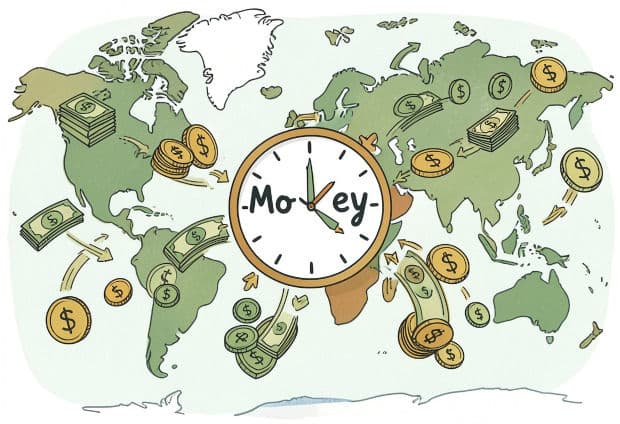
Every single day you go to a shop, hand over some notes, and walk away with what you need. The shopkeeper happily accepts those notes without any hesitation. But have you ever stopped and thought — why does that work? What is actually behind those pieces of paper that makes everyone willing to accept them? Why does a 500 taka note say "চাহিবামাত্র ইহার বাহককে দিতে বাধ্য থাকিবে" — meaning the bearer must be paid on demand? Money is so deeply embedded in our daily lives that most of us never question how it actually works. But understanding money — what it really is, how it functions, where it came from, and what different types exist — is the foundation of understanding any economy. At its core, money is simply a medium of exchange that people use to trade goods and services, repay debts, and measure value. It sounds simple. But the story behind it spans thousands of years and several fascinating transformations — from cowrie shells and whale teeth to gold coins, paper notes, and digital deposits.