6 Proven Strategies to Increase Sales Using the Psychology of Persuasion
G
GeoRenus Editorial Team
469 views

GeoRenus Editorial Team
Understanding what makes people say yes is the ultimate sales superpower. These six persuasion strategies, rooted in decades of behavioral psychology research, can help you connect with customers on a deeper level and consistently close more deals without resorting to pushy tactics.
We all know that selling is tough. Whether you are a seasoned sales professional or someone just starting out, the fundamental challenge remains the same: how do you convince another human being to part with their hard-earned money?
The answer, it turns out, has a lot less to do with your product's features and a lot more to do with understanding how people think. Robert Cialdini, a professor of psychology at Arizona State University, spent decades studying the science of persuasion. His groundbreaking book "Influence: The Psychology of Persuasion" identified six core principles that drive human decision-making — and every single one of them can be applied directly to sales.
Think about it this way: if you deeply understand the psychological triggers behind why people say yes, you do not need to rely on high-pressure tactics or gimmicks. Instead, you can build genuine connections, earn trust, and let the psychology work in your favor naturally.
Let us walk through each of these six strategies and see exactly how they can help you close more deals.
Have you ever received a free sample at a grocery store and then felt oddly compelled to buy the product? That is reciprocity in action. When someone gives us something — even something small — we feel a powerful, almost automatic urge to give something back.
In sales, reciprocity is incredibly effective. When you provide genuine value upfront — a free consultation, a helpful resource, an insightful tip — your prospect feels a natural pull toward returning that favor. According to Cialdini's research, the rule of reciprocity is so strong that it often overrides personal preferences about the gift giver.
Here is a practical example. Suppose you run a blog where you regularly share useful industry insights for free. Over time, your readers begin to trust you and appreciate the value you provide. When you eventually offer a paid product or service, those same readers are significantly more likely to buy — not just because of the product itself, but because they feel they owe you something in return.
The biggest companies in the world use reciprocity in their marketing and sales strategies constantly. Free trials, free tools, free content — all of these are designed to trigger the reciprocity response. A study published in the Journal of Applied Social Psychology found that restaurant servers who gave customers a mint with the bill saw tips increase by 3%, and giving two mints raised tips by 14%.
The lesson? Give first. Give generously. The returns will follow.
Humans have a deep psychological need to be consistent with their past actions and commitments. Once we make a choice or take a stand, we experience internal pressure to behave in ways that are consistent with that commitment.
This is why the "foot-in-the-door" technique works so well in sales. If you can get a customer to agree to something small — signing up for a free newsletter, attending a free webinar, downloading a free guide — they become much more likely to agree to larger requests down the line.
Consider this scenario: a software company offers a free 14-day trial. The user signs up, starts using the tool, customizes their dashboard, and integrates it into their workflow. By the time the trial ends, they have already invested time and effort. Switching away would mean being inconsistent with the commitment they already made — so they convert to a paid plan.
In new customer acquisition, companies pour enormous resources into getting that first small commitment. Because once a customer takes one step forward, the psychological momentum keeps them moving. Research shows that people who make a small initial commitment are up to 4 times more likely to comply with a larger request later.
Humans are social creatures. We look to the actions and opinions of others to guide our own decisions — especially when we are uncertain. This is social proof, and it is everywhere.
Think about the last time you chose a restaurant. Did you check reviews online first? Did you notice one restaurant had a long line and assume it must be good? That is social proof shaping your behavior.
In sales, you can leverage social proof in several powerful ways:
Here is a classic example: imagine you are walking down a street and see two pizza shops side by side. One is packed with customers, the other is empty. Most people will choose the busy one — even without knowing anything about the food quality — simply because the crowd signals that it must be the better option.
You can apply this same concept in your sales process. Share success stories, display logos of well-known clients, and let your satisfied customers do the selling for you.
This one seems obvious, but its power is often underestimated. We are far more likely to say yes to someone we like. And liking is driven by some fairly predictable factors: physical attractiveness, similarity, compliments, familiarity, and association with positive things.
Think about it from your own experience. When you have limited time and two salespeople approach you — one is warm, friendly, and genuinely interested in your needs, while the other is cold and transactional — who do you buy from? The answer is almost always the person you like.
This is why relationship-building is so critical in sales. A study by the Harvard Business Review found that customers who felt an emotional connection with a salesperson were 5 times more likely to purchase and 6 times more likely to forgive a mistake.
Practical ways to build liking in sales include:
The bottom line: people buy from people they like. Invest in relationships, and the sales will come naturally.
We trust experts. When a doctor recommends a medication, we take it. When a financial advisor suggests an investment, we consider it seriously. Authority is a shortcut our brains use to make decisions faster — if someone is an expert, their recommendation must be good.
In sales, positioning yourself or your brand as an authority can dramatically increase conversions. Cialdini's research showed that people are significantly more likely to comply with requests from perceived authority figures, even when the request seems unreasonable.
How can you establish authority? Here are some proven approaches:
For example, when a small consulting firm publishes a detailed industry report that gets cited by larger media outlets, their authority skyrockets overnight. Prospects who read that report start viewing the firm not as a small player, but as a trusted industry expert. And experts close more deals.
Imagine you have been thinking about buying a watch for a long time. One day, you see that the exact model you want is available — but there are only 3 left in stock. Suddenly, that casual interest transforms into urgent desire. That is scarcity at work.
The fear of missing out — or FOMO — is one of the most powerful motivators in human behavior. When something is rare or limited, we automatically assign it more value. Behavioral economists have consistently found that the pain of losing something is roughly twice as powerful as the pleasure of gaining something equivalent — a concept known as loss aversion.
In sales and marketing, scarcity takes many forms:
This is exactly how businesses create artificial urgency to accelerate purchase decisions. Amazon's "Only X left in stock" label is one of the most famous examples — it has been estimated to increase conversion rates by up to 226% on certain product pages.
However, a word of caution: scarcity must be genuine to be effective long-term. If customers discover that your "limited-time" sale happens every other week, you will lose credibility fast. Use scarcity honestly, and it becomes a powerful tool.
Each of these six strategies is powerful on its own. But the real magic happens when you combine them thoughtfully. A sales approach that incorporates reciprocity, builds commitment through small steps, leverages social proof, creates genuine rapport, establishes authority, and introduces authentic scarcity is extremely difficult for prospects to resist.
Here is what a combined approach might look like in practice:
The beauty of these principles is that they are not manipulative tactics — they are natural human tendencies. When used ethically, they help customers make better decisions faster while also helping you grow your business.
Sales is not about tricking people into buying things they do not need. The best salespeople understand that selling is about solving problems, building trust, and making it easy for customers to say yes to something that genuinely helps them.
These six persuasion strategies — reciprocity, commitment and consistency, social proof, liking, authority, and scarcity — give you a framework for doing exactly that. They are backed by decades of psychological research and used by the most successful companies in the world.
As Cialdini himself wrote: "The key to successful persuasion is not in the message itself, but in the key moment before the message is delivered." Master these principles, and you will not just close more deals — you will build lasting customer relationships that fuel sustainable growth.
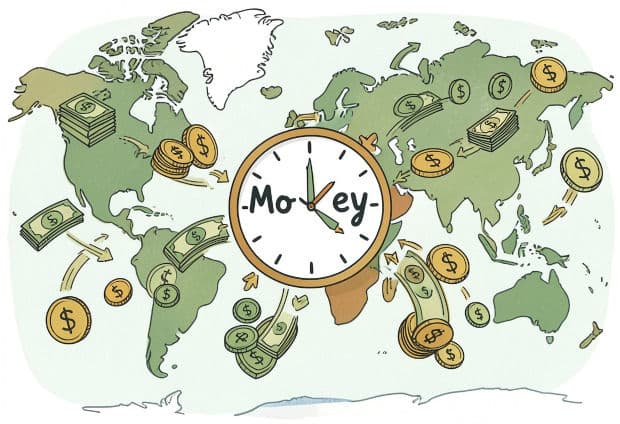
Every single day you go to a shop, hand over some notes, and walk away with what you need. The shopkeeper happily accepts those notes without any hesitation. But have you ever stopped and thought — why does that work? What is actually behind those pieces of paper that makes everyone willing to accept them? Why does a 500 taka note say "চাহিবামাত্র ইহার বাহককে দিতে বাধ্য থাকিবে" — meaning the bearer must be paid on demand? Money is so deeply embedded in our daily lives that most of us never question how it actually works. But understanding money — what it really is, how it functions, where it came from, and what different types exist — is the foundation of understanding any economy. At its core, money is simply a medium of exchange that people use to trade goods and services, repay debts, and measure value. It sounds simple. But the story behind it spans thousands of years and several fascinating transformations — from cowrie shells and whale teeth to gold coins, paper notes, and digital deposits.