Sales vs Marketing: Key Differences and How They Work Together
G
GeoRenus Editorial Team
404 views

GeoRenus Editorial Team
Many people assume sales and marketing are the same thing. They are not. While both aim to drive revenue, they approach that goal in fundamentally different ways. Understanding the distinction between sales and marketing — and more importantly, how to align them — is critical for any business that wants to grow sustainably.
If you have ever worked in business, you have probably heard someone use the words "sales" and "marketing" interchangeably. And honestly, it is easy to see why — both departments exist to bring in revenue. But confusing the two is a mistake that can cost your company real money.
Here is the simplest way to understand the difference: Marketing is about attracting people to your brand. Sales is about converting those people into paying customers. Marketing casts the wide net. Sales reels in the fish.
Marketing involves activities like advertising, content creation, social media, email campaigns, SEO, and brand building. Its primary job is to generate awareness, build interest, and create a pipeline of qualified leads. Sales, on the other hand, involves direct conversations — phone calls, meetings, demos, negotiations, and closing deals.
Think of it this way. When you see a billboard for a new smartphone, that is marketing. When you walk into the store and a salesperson helps you choose the right model and convinces you to buy it, that is sales. Both are essential. Neither can succeed without the other.
As legendary management consultant Peter Drucker once said: "The aim of marketing is to know and understand the customer so well that the product or service fits them and sells itself." But until that utopia arrives, you still need a sales team to close the deal.
Understanding the difference between sales and marketing is important, but here is what truly matters: knowing how to make them work together. When these two departments are aligned — a concept increasingly called "smarketing" — the results can be extraordinary.
At their core, sales and marketing share nearly identical objectives. Both exist to grow the business, acquire customers, and increase revenue. The methods are different, but the destination is the same.
When both teams clearly understand that they are working toward the same target — and when that target is defined with shared metrics — collaboration becomes natural rather than forced. Companies with tightly aligned sales and marketing teams achieve an average of 20% annual revenue growth, compared to a 4% revenue decline in companies with poor alignment.
When sales and marketing operate in silos, the results are predictably mediocre. Marketing generates leads that sales considers unqualified. Sales complains that marketing does not understand the customer. Both teams waste time and resources pointing fingers.
But when they are aligned, magic happens. Marketing creates content and campaigns that directly address the objections sales encounters every day. Sales provides real-time customer feedback that helps marketing refine its messaging. According to a study by the Aberdeen Group, companies with strong sales-marketing alignment achieve 36% higher customer retention rates and 38% higher sales win rates.
Both teams need to have a deep, shared understanding of the product or service being sold. Marketing needs to know the product inside and out to create compelling messaging. Sales needs to know every feature, benefit, and competitive advantage to handle objections and close deals.
When both teams sit at the same table during product discussions, the result is more consistent messaging and a smoother customer experience. A customer who sees a specific benefit highlighted in a marketing email should hear the same message reinforced when they speak with a salesperson.
This sounds basic, but it is where most companies fail. Sales and marketing teams that do not communicate regularly will inevitably drift apart. Different priorities, different language, different metrics — before you know it, they are essentially two separate companies operating under the same roof.
The fix is simple: schedule regular joint meetings. Weekly syncs, monthly strategy sessions, quarterly reviews. HubSpot's research found that organizations where sales and marketing teams meet at least weekly are 2.5 times more likely to report strong revenue growth.
In these meetings, share everything — what campaigns are running, what leads are coming in, what objections customers are raising, what is working, and what is not. Transparency is the glue that holds alignment together.
Here is a common problem: marketing creates campaigns based on assumptions about what customers want, while sales talks to customers every single day and knows exactly what they want. The result? A disconnect.
The solution is to give both teams direct access to customer insights. Sales should share call recordings, customer feedback, and common objections with marketing. Marketing should share survey data, website analytics, and social media insights with sales. When both teams have a complete picture of the customer, they make better decisions.
In the digital age, data is everything. Marketing has data on which channels drive the most leads, which content resonates, and which campaigns convert. Sales has data on deal sizes, close rates, customer lifetime value, and common reasons for lost deals.
When these data sets are combined, you get a 360-degree view of the entire customer journey — from first touchpoint to final purchase and beyond. Organizations that share data between sales and marketing report a 15-20% increase in marketing ROI because both teams can optimize based on complete information rather than partial insights.
One of the biggest misconceptions in business is that great marketing eliminates the need for a sales team. This is almost never true — especially in B2B or high-ticket B2C environments.
Marketing's job is to warm up the audience, generate awareness, and deliver qualified leads. But those leads still need human interaction — someone to answer specific questions, address unique concerns, negotiate terms, and guide the customer through the final buying decision.
Think of marketing as the air force and sales as the ground troops. The air force softens the battlefield and creates favorable conditions. But it is the ground troops who take and hold the territory. You need both to win the war.
Ultimately, sales-marketing alignment has to come from the top. Company leadership needs to make it clear that these two departments are partners, not competitors. This means creating shared goals, shared incentives, and a shared definition of what constitutes a qualified lead.
When the CEO or VP of Revenue treats sales and marketing as one unified revenue team — rather than two separate departments with separate budgets — alignment becomes part of the company culture rather than a one-time initiative.
If you are still not convinced that alignment matters, consider what happens when sales and marketing are not aligned:
According to HubSpot, misalignment between sales and marketing costs businesses an estimated $1 trillion per year in the United States alone. That is not a typo. One trillion dollars — lost to inefficiency, wasted spend, and missed opportunities.
Sales and marketing are not the same thing — but they are two halves of the same coin. Sales is the handshake. Marketing is the introduction that makes the handshake possible. One without the other is incomplete.
The most successful companies in the world understand this. They do not pit their sales and marketing teams against each other. Instead, they align them around a shared vision, shared data, and shared accountability for results.
As Philip Kotler, the father of modern marketing, famously said: "Marketing is not the art of finding clever ways to dispose of what you make. It is the art of creating genuine customer value." When sales and marketing both focus on creating that value, growth becomes inevitable.
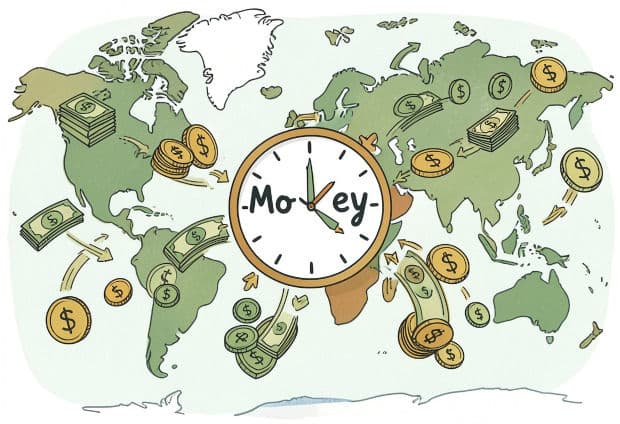
Every single day you go to a shop, hand over some notes, and walk away with what you need. The shopkeeper happily accepts those notes without any hesitation. But have you ever stopped and thought — why does that work? What is actually behind those pieces of paper that makes everyone willing to accept them? Why does a 500 taka note say "চাহিবামাত্র ইহার বাহককে দিতে বাধ্য থাকিবে" — meaning the bearer must be paid on demand? Money is so deeply embedded in our daily lives that most of us never question how it actually works. But understanding money — what it really is, how it functions, where it came from, and what different types exist — is the foundation of understanding any economy. At its core, money is simply a medium of exchange that people use to trade goods and services, repay debts, and measure value. It sounds simple. But the story behind it spans thousands of years and several fascinating transformations — from cowrie shells and whale teeth to gold coins, paper notes, and digital deposits.