Monetary Policy: Definition, Types, Tools, and How It Works
G
GeoRenus Editorial Team
674 views
GeoRenus Editorial Team
Monetary policy refers to the actions taken by a central bank to manage the money supply and interest rates in an economy. Central banks like the Federal Reserve, the European Central Bank, and the Bank of England use tools such as adjusting the bank rate, conducting open market operations, and setting reserve requirements to influence inflation, employment, and economic growth. This article explains how monetary policy works, its main types including expansionary and contractionary approaches, the key tools central banks rely on, and how monetary policy differs from fiscal policy.
Every time you hear that the Federal Reserve has raised or lowered interest rates, you are witnessing monetary policy in action. But what exactly does that mean for your wallet, your mortgage, or the price of groceries? Monetary policy is one of the most powerful forces shaping the global economy, yet it often flies under the radar for everyday people.
At its core, monetary policy is about a central bank pulling specific levers to influence how much money flows through an economy and at what cost. When done well, it keeps prices stable, jobs plentiful, and growth sustainable. When done poorly, it can trigger recessions, hyperinflation, or financial crises. As former Federal Reserve Chairman Ben Bernanke once said, "Monetary policy is 98 percent talk and only two percent action." The mere signaling of policy direction can move markets and shape economic expectations.
Monetary policy refers to the strategies and actions taken by a nation's central bank to manage the money supply and interest rates in order to achieve broad economic goals. These goals typically include controlling inflation, maximizing employment, and maintaining stable economic growth.
In the United States, the Federal Reserve (the Fed) is responsible for monetary policy. In Europe, it is the European Central Bank (ECB), and in the United Kingdom, the Bank of England takes charge. Each of these institutions operates independently of the government to ensure that political pressures do not distort economic decision-making.
Think of the central bank as the economy's thermostat. When the economy overheats with rising inflation, the central bank cools it down by tightening the money supply. When the economy slows and unemployment rises, the central bank warms things up by making money cheaper and more accessible. The goal is always balance: not too hot, not too cold.
Monetary policy works through a chain of cause and effect. When a central bank changes its key interest rate, it sets off a ripple effect across the entire financial system. Here is how the transmission mechanism typically operates:
It is important to note that monetary policy operates with a time lag of roughly 6 to 18 months. This means that a rate cut today may not fully impact the economy until a year or more later. Central bankers must therefore act on forecasts and projections, not just current conditions.
Central banks have several tools at their disposal to influence the economy. Each tool works differently, but they all aim to adjust how much money is available and how expensive it is to borrow.
The bank rate, also known as the discount rate, is the interest rate a central bank charges commercial banks for short-term loans. When the central bank raises this rate, borrowing becomes more expensive for commercial banks, and they pass that cost on to consumers and businesses through higher loan rates. When the rate is lowered, the opposite happens.
For example, the Federal Reserve's federal funds rate serves as the benchmark for nearly all other interest rates in the U.S. economy. In March 2022, the Fed began raising the federal funds rate from near zero to over 5.25% by mid-2023 to combat the highest inflation in four decades. This aggressive tightening cycle was one of the fastest in the Fed's history.
Open market operations (OMOs) are the most frequently used tool of monetary policy. They involve the central bank buying or selling government securities (like Treasury bonds) in the open market.
During the 2008 financial crisis, the Fed introduced a special form of OMOs called quantitative easing (QE). Through QE, the Fed purchased trillions of dollars worth of government bonds and mortgage-backed securities to flood the financial system with liquidity. The Fed's balance sheet expanded from roughly $900 billion in 2008 to over $4.5 trillion by 2015. During the COVID-19 pandemic, the balance sheet surged past $8.9 trillion by early 2022.
Reserve requirements dictate the minimum percentage of deposits that commercial banks must hold in reserve and not lend out. By increasing the reserve ratio, the central bank reduces the amount of money banks can lend, tightening the money supply. By lowering it, banks can lend more, expanding the money supply.
In a historic move during the COVID-19 pandemic, the Federal Reserve reduced reserve requirements to zero percent in March 2020, effectively eliminating this requirement for all depository institutions. This was done to encourage maximum lending and support the economy during the crisis.
Monetary policy generally falls into two broad categories, depending on whether the central bank wants to stimulate the economy or slow it down.
Expansionary monetary policy, sometimes called "loose" or "easy" monetary policy, is used when the economy is slowing down, unemployment is rising, or there is a risk of recession. The central bank lowers interest rates and increases the money supply to make borrowing cheaper, encouraging businesses to invest and consumers to spend.
A textbook example is the Fed's response to the 2008 Global Financial Crisis. The Fed slashed the federal funds rate to a range of 0% to 0.25% and launched multiple rounds of quantitative easing. Similarly, during the COVID-19 pandemic in 2020, the Fed again cut rates to near zero and purchased over $120 billion in securities per month to keep financial markets functioning.
The risk of expansionary policy is that too much stimulus for too long can lead to asset bubbles and higher inflation. Many economists argue that the prolonged low-rate environment after 2008 contributed to inflated housing and stock prices.
Contractionary monetary policy, also known as "tight" or "hawkish" monetary policy, is deployed when inflation is running too high. The central bank raises interest rates and reduces the money supply to cool down spending and borrowing.
The most dramatic example in modern history is Paul Volcker's war on inflation in the early 1980s. When Volcker became Fed Chairman in 1979, U.S. inflation was running at nearly 13%. He raised the federal funds rate to an astonishing 20% by June 1981, the highest in American history. The result was a painful recession, but inflation was eventually tamed, falling to around 3.2% by 1983. Volcker later reflected, "It is a sobering fact that the prominence of central banks in this century has coincided with a general tendency towards more inflation, not less."
More recently, following the post-pandemic inflation surge, the Fed raised rates 11 times between March 2022 and July 2023, bringing the federal funds rate to a range of 5.25% to 5.50%, the highest level in over two decades.
Monetary policy and fiscal policy are the two primary tools governments and central banks use to manage the economy, but they work in fundamentally different ways.
In practice, the best economic outcomes tend to occur when monetary and fiscal policy work in coordination. During the COVID-19 crisis, both tools were deployed simultaneously: the Fed slashed rates and launched QE while Congress passed trillions of dollars in stimulus spending, including direct payments to households. Economist John Maynard Keynes famously argued that during severe downturns, "The boom, not the slump, is the right time for austerity at the Treasury."
Central banks around the world share several core objectives when conducting monetary policy. While the specific mandate varies by country, the following goals are nearly universal:
These objectives can sometimes conflict with one another. For instance, aggressively fighting inflation by raising interest rates can increase unemployment in the short term. This trade-off is often described by the Phillips Curve, which illustrates the inverse relationship between inflation and unemployment. Central bankers must constantly balance these competing priorities.
Monetary policy is one of the most powerful tools available for managing a modern economy. Through interest rate adjustments, open market operations, and reserve requirements, central banks shape the cost and availability of money, influencing everything from mortgage rates to stock prices to the value of a nation's currency.
Whether the approach is expansionary or contractionary, the goal remains the same: to maintain a stable economy where prices do not spiral out of control and where people can find jobs. History has shown, from Paul Volcker's inflation fight in the 1980s to the unprecedented interventions during the 2008 crisis and the COVID-19 pandemic, that monetary policy decisions have profound and lasting consequences.
As economist Milton Friedman once observed, "Inflation is always and everywhere a monetary phenomenon." Understanding how monetary policy works is not just for economists and policymakers. It is essential knowledge for anyone who wants to make informed decisions about saving, investing, and planning for the future.
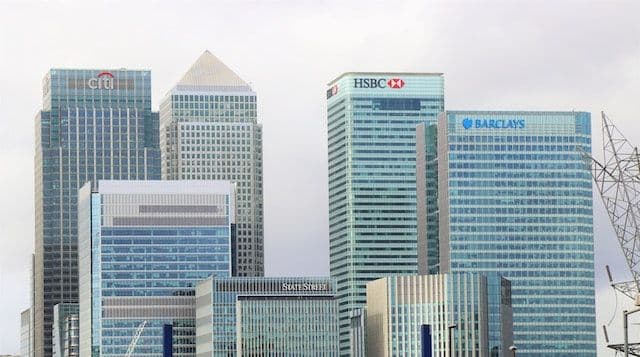
Most people use banks every single day — depositing salaries, withdrawing cash, transferring money, paying bills — without ever really thinking about how the whole system actually works. A bank is a licensed financial institution that accepts deposits from the public and uses those deposits to provide loans to individuals and businesses. Everything a bank does — from accepting your savings to issuing credit cards to printing cheques — falls under the broad category of banking. But banks are not just convenient places to store your money. They are the central nervous system of any economy — the institutions that keep money flowing productively through the system, connecting people who have surplus funds with people and businesses that need capital. And in Bangladesh, where Bangladesh Bank serves as the central authority overseeing the entire financial system, understanding how banking works is genuinely useful knowledge for anyone managing their personal finances, running a business, or simply trying to make smarter decisions with their money.