10 Things to Consider Before Making an Investment Decision
G
GeoRenus Editorial Team
516 views

GeoRenus Editorial Team
Investing can transform your financial future, but only if you approach it with the right preparation. This comprehensive guide walks you through the 10 most important things every investor should consider before putting money into any investment. From defining clear financial goals and understanding your risk tolerance to building an emergency fund, managing fees, and avoiding emotional decision-making, these foundational principles will help you make smarter, more confident investment decisions that align with your personal financial situation and long-term objectives.
Investing can be one of the most powerful ways to build wealth over time. But here is the thing — it is not as simple as picking a stock and hoping for the best. If it were that easy, everyone would be rich. The reality is that successful investing requires careful planning, self-awareness, and a solid understanding of the financial landscape.
According to a 2023 Gallup survey, only about 58% of Americans own stocks, down from 62% before the 2008 financial crisis. Many people shy away from investing because they have been burned before or simply do not know where to start. Others jump in too quickly without doing their homework, and that can lead to devastating losses.
As Warren Buffett once said, "Risk comes from not knowing what you are doing." That single line captures the essence of why preparation matters. The more you understand about yourself as an investor — your preferences, your abilities, and your limitations — the easier it becomes to make decisions that actually align with your financial life.
Think of investing like building a house. You would never start laying bricks without a blueprint, right? The same logic applies here. Before you put a single dollar into any investment, there are critical factors you need to evaluate. Let us walk through the ten most important things you should consider before making an investment decision.
Before you invest a single penny, you need to ask yourself a fundamental question: what exactly are you investing for? This might sound obvious, but you would be surprised how many people start investing without a clear goal in mind.
Your financial goals will shape every investment decision you make. Someone saving for retirement in 30 years will have a completely different strategy than someone saving for a house down payment in 3 years. Here are some common financial goals investors typically have:
A vague goal like "I want to be rich" is not helpful. Instead, make your goals Specific, Measurable, Achievable, Relevant, and Time-bound (SMART). For example, instead of saying "I want to save for retirement," try this: "I want to accumulate $1,000,000 in my retirement portfolio by age 60, contributing $500 per month starting at age 30." That is a goal you can actually plan around.
Here is a practical example. If you start investing $500 per month at age 25 with an average annual return of 8%, you would have approximately $1.74 million by age 65. But if you wait until age 35 to start, that number drops to roughly $745,000 — less than half. The difference? Ten years of compound growth.
Risk tolerance is your ability and willingness to endure drops in the value of your investments. It is arguably the single most important factor in determining your investment strategy. If you cannot sleep at night because your portfolio dropped 10%, then aggressive growth stocks are probably not for you.
Risk tolerance is influenced by several factors, including your age, income stability, financial obligations, and even your personality. A 25-year-old with a stable tech job and no dependents can typically afford to take more risk than a 55-year-old nearing retirement with a mortgage and kids in college.
Consider this: during the 2008 financial crisis, the S&P 500 dropped nearly 57% from its peak. Investors who panicked and sold locked in those losses permanently. Those who stayed the course saw their portfolios recover and eventually reach new highs. Knowing your risk tolerance ahead of time helps you avoid panic-selling during downturns.
This one is non-negotiable. Before you start investing, you need to have an emergency fund in place. Financial experts typically recommend keeping three to six months' worth of living expenses in a liquid, easily accessible account like a high-yield savings account.
Why is this so important? Because life is unpredictable. You could lose your job, face a medical emergency, or deal with an unexpected car repair. Without an emergency fund, you might be forced to sell your investments at the worst possible time — possibly at a loss — just to cover basic expenses.
A 2024 Bankrate survey found that 56% of Americans cannot cover a $1,000 unexpected expense with savings. That is a staggering number. If you fall into this category, building your emergency fund should be your top priority before investing.
Let us say your monthly expenses are $3,500. A solid emergency fund would be between $10,500 and $21,000. Park this money in a high-yield savings account earning around 4-5% APY — you will earn some interest while keeping the funds accessible. Only after this safety net is in place should you start directing money toward investments.
Here is a simple math problem that many new investors overlook. If your credit card charges 22% annual interest and your investments earn an average of 8-10% per year, you are actually losing money by investing instead of paying off that debt. It does not matter how great your stock picks are — the math just does not work in your favor.
The average American household carries about $6,500 in credit card debt according to TransUnion data. At a 22% interest rate, that debt costs you roughly $1,430 per year in interest alone. Paying it off is essentially a guaranteed 22% return on your money — something no investment can reliably promise.
Not all debt is created equal. Low-interest debt like a mortgage at 3-4% or federal student loans at 5-6% may not need to be paid off aggressively before investing. In these cases, the expected return from investing could exceed the interest cost of the debt. The key threshold to remember: if the debt interest rate is above 7-8%, prioritize paying it off first.
Your time horizon is the length of time you plan to hold an investment before you need the money. This is directly connected to your financial goals and has a massive impact on what types of investments are appropriate for you.
Here is why this matters so much. The S&P 500 has never had a negative return over any 20-year rolling period in its history. But over any given 1-year period, it has lost money about 26% of the time. Time smooths out volatility. The longer your horizon, the more risk you can comfortably take on.
The investment world offers a wide range of options, and each comes with its own set of characteristics, risks, and potential rewards. Before putting your money to work, take the time to understand what is available to you.
Peter Lynch, the legendary Fidelity fund manager, put it perfectly: "Know what you own, and know why you own it." Never invest in something you do not understand. If you cannot explain to a friend how your investment makes money, you probably should not be in it.
You have probably heard the old saying, "do not put all your eggs in one basket." In investing, this wisdom is called diversification, and it is one of the most effective risk management strategies available to any investor.
Diversification means spreading your investments across different asset classes, sectors, and geographic regions. The idea is simple: when one investment goes down, others may go up or stay stable, cushioning your overall portfolio against big losses.
Imagine you had invested 100% of your portfolio in tech stocks in early 2022. The Nasdaq Composite fell about 33% that year. But if you had a diversified portfolio with 40% in a total stock market fund, 30% in bonds, 20% in international stocks, and 10% in real estate, your overall loss would have been significantly smaller — likely in the range of 10-15%. That is the protective power of diversification.
A well-diversified portfolio does not guarantee profits or eliminate risk entirely, but it does help you avoid catastrophic losses. Even Nobel Prize-winning economist Harry Markowitz called diversification "the only free lunch in finance."
Fees are the silent killers of investment returns. They might seem small — a fraction of a percent here, a few dollars there — but over time, they can eat away a massive chunk of your wealth. Understanding and minimizing fees is one of the smartest moves you can make as an investor.
Let us look at a concrete example. Say you invest $100,000 over 30 years with an average return of 7%. With a 0.10% expense ratio (typical index fund), you would end up with approximately $744,000. But with a 1.00% expense ratio (typical actively managed fund), you would end up with only about $574,000. That is a difference of $170,000 — lost entirely to fees. That is money that could have funded years of retirement.
Emotions are the number one enemy of smart investing. Fear and greed drive most bad investment decisions, and even experienced investors are not immune to their effects. Understanding your emotional tendencies is critical to long-term investing success.
When markets are booming, greed kicks in. You see your neighbor bragging about their stock gains, and you feel the urge to jump in — often right at the peak. When markets crash, fear takes over. You watch your portfolio value plummet and want to sell everything before it gets worse — often right at the bottom. This classic pattern of buying high and selling low is the exact opposite of what you should be doing.
Warren Buffett offers timeless wisdom on this topic: "Be fearful when others are greedy, and greedy when others are fearful." The best way to combat emotional investing is to create a written investment plan and stick to it regardless of market conditions. Automated investing through dollar-cost averaging can also remove emotion from the equation.
One of the biggest myths about investing is that you need a lot of money to get started. That is simply not true anymore. Many brokerages now allow you to open an account with as little as $1 and buy fractional shares of stocks and ETFs. The barrier to entry has never been lower.
The real key to building wealth through investing is not timing the market or picking the perfect stock. It is consistency. Contributing a fixed amount on a regular schedule — whether it is $50 a week or $500 a month — and doing it rain or shine is far more effective than trying to invest large lump sums at the "perfect" time.
Dollar-cost averaging (DCA) is the practice of investing a fixed amount at regular intervals, regardless of market conditions. When prices are high, your fixed amount buys fewer shares. When prices are low, it buys more shares. Over time, this strategy lowers your average cost per share and removes the stress of trying to time the market.
For example, if you invested $200 per month into an S&P 500 index fund starting in January 2000 — right before the dot-com crash — and kept investing through the 2008 financial crisis, the COVID crash, and every market dip in between, your total contributions of $57,600 by 2024 would have grown to approximately $230,000. Consistency and patience turned modest monthly contributions into substantial wealth.
Do not wait until you "have enough" to start investing. Start with whatever you can afford, automate your contributions, and let time and compound growth do the heavy lifting.
Investing is not a point-and-shoot activity. It requires thoughtful preparation, honest self-assessment, and a commitment to continuous learning. The ten factors we have covered — from defining your goals and understanding your risk tolerance to managing fees and controlling your emotions — form the foundation of a sound investment strategy.
Here is a quick recap of the essential steps before you invest:
Remember, a successful investment can open doors to financial freedom, but a poorly planned one can cause serious financial damage. The difference between the two often comes down to preparation. Take the time to build your knowledge, understand your own financial situation, and create a strategy that aligns with your unique goals and abilities.
As Benjamin Graham, the father of value investing, wisely noted: "The investor's chief problem — and even his worst enemy — is likely to be himself." Know yourself, plan carefully, and invest wisely. Your future self will thank you.
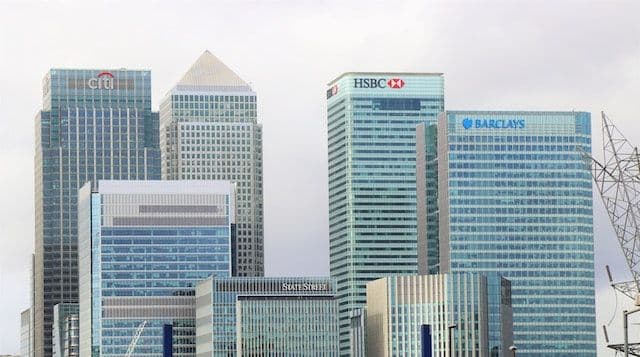
Most people use banks every single day — depositing salaries, withdrawing cash, transferring money, paying bills — without ever really thinking about how the whole system actually works. A bank is a licensed financial institution that accepts deposits from the public and uses those deposits to provide loans to individuals and businesses. Everything a bank does — from accepting your savings to issuing credit cards to printing cheques — falls under the broad category of banking. But banks are not just convenient places to store your money. They are the central nervous system of any economy — the institutions that keep money flowing productively through the system, connecting people who have surplus funds with people and businesses that need capital. And in Bangladesh, where Bangladesh Bank serves as the central authority overseeing the entire financial system, understanding how banking works is genuinely useful knowledge for anyone managing their personal finances, running a business, or simply trying to make smarter decisions with their money.