Understanding Brand Equity
G
GeoRenus Editorial Team
751 views

Summary
Brand equity refers to the perceived value of a brand in the eyes of consumers, shaped by their experiences, perceptions, and emotional connections. It is built on five core components: brand awareness, brand loyalty, brand image, brand value, and brand association. Strong brand equity allows companies like Apple and Coca-Cola to charge premium prices, retain loyal customers, and dominate their markets. Conversely, negative brand equity — as seen with Evaly in Bangladesh — can erode trust, drive away customers, and take years to recover from.
Key Takeaways
- Brand equity is a marketing term describing the perceived value of a brand, determined by how customers view and interact with it.
- The five core components of brand equity are brand awareness, brand loyalty, brand image, brand value, and brand association.
- Building brand equity requires emotional customer connections, excellent service, strong branding strategy, and continuous product innovation.
- Positive brand equity enables price premiums, customer loyalty, and easier market expansion — as demonstrated by companies like Apple and Rokomari.
- Negative brand equity, as seen with Evaly, can destroy customer trust and take years to recover from, even with a fresh start.
Understanding Brand Equity
Have you ever wondered why iPhones are so expensive — often well beyond the average person's budget — yet still sell in staggering numbers every single year? Or why someone would pay $6 for a Starbucks latte when they could brew a cup at home for a few cents? The answer to both questions is the same: brand equity.
Brand equity is the invisible force that makes customers choose one product over another, even when the alternatives are cheaper or functionally similar. Companies like Apple, Nike, Coca-Cola, and Toyota have spent decades building brand equity so strong that their names alone carry immense value. When a customer sees the bitten-apple logo, they don't just see a tech company — they see innovation, quality, and status.
In this article, we will explore what brand equity really means, break down its core components, examine the factors that influence it, and walk through practical steps to build it. We will also look at real-world examples of both positive and negative brand equity to understand why it matters so much in today's competitive marketplace.
What Is Brand Equity?
Brand equity is a marketing term that describes the perceived value of a brand in the minds of consumers. It is not about the physical product sitting on a shelf — it is about what customers think, feel, and believe when they hear a brand's name. When customers develop a genuine interest in a brand's products or services, the level of that interest represents the brand's equity.
Think of it this way: two smartphones can have nearly identical specifications — the same processor, the same camera resolution, the same storage capacity. Yet one carries a $999 price tag while the other is priced at $499. If customers consistently choose the more expensive option, it is because the brand behind it has built strong equity. That ability to charge a higher price than competitors is called a price premium, and it is one of the clearest indicators of powerful brand equity.
Building brand equity means making your product more attractive, delivering consistent quality, and shaping a stronger perception in your customers' minds. It is not something that happens overnight. Apple did not become the world's most valuable brand by accident. It took decades of relentless innovation, flawless marketing, and an almost obsessive focus on customer experience.
"A brand is no longer what we tell the consumer it is — it is what consumers tell each other it is." — Scott Cook, co-founder of Intuit. This quote captures the essence of brand equity perfectly. Your brand equity lives in the minds of your customers, not on your balance sheet.
Consider Apple's iPhone versus an equivalent Android device from a lesser-known manufacturer. Both may run similar apps, take similar photos, and offer similar features. But people willingly pay 40% to 60% more for the iPhone because of Apple's brand equity. That premium is the tangible result of intangible perception.
Components of Brand Equity
Brand equity is not a single, monolithic concept. It is built from several interconnected components that work together to shape how customers perceive and interact with a brand. According to marketing experts and frameworks like Keller's Brand Equity Model, there are five core components that every business should understand.
1. Brand Awareness
Brand awareness refers to how well customers recognize and recall a brand. It is the foundation of brand equity because if people don't know your brand exists, nothing else matters. Brand awareness operates on two levels: brand recognition (identifying the brand when you see it) and brand recall (remembering the brand without any visual cue).
Consider this: when you see the colors red and white together, your mind probably jumps to Coca-Cola. When you see a bitten apple silhouette, you immediately think of Apple. That is the power of brand awareness — these companies have embedded themselves so deeply into public consciousness that their visual identity alone triggers instant recognition.
2. Brand Loyalty
Brand loyalty describes the tendency of customers to repeatedly purchase from the same brand instead of switching to competitors. Loyal customers are the backbone of any successful business because they provide consistent, predictable revenue and often become voluntary brand ambassadors.
A classic example is the Apple ecosystem. Once a customer buys an iPhone, they are far more likely to purchase an iPad, a MacBook, an Apple Watch, and subscribe to Apple Music. Studies show that Apple's customer retention rate exceeds 90%. Apple users rarely switch to Samsung or other Android devices because they are deeply invested — both financially and emotionally — in the Apple experience.
3. Brand Image
Brand image is the perception that customers hold about a brand based on their experiences, associations, and the messages the brand communicates. It is essentially the brand's reputation in the public eye.
For instance, Coca-Cola has carefully cultivated a brand image centered around happiness, togetherness, and celebration. Their advertisements almost always feature people smiling, sharing moments, and enjoying life. Meanwhile, Volvo has built its entire brand image around safety. When people think of Volvo, they think of the safest car on the road — and that image has been consistently reinforced for decades.
4. Brand Value
Brand value represents the overall financial worth of a brand, combining both perceived and actual value. While brand image is about perception, brand value puts a monetary figure on that perception.
According to Interbrand's 2024 Best Global Brands report, Apple holds the title of the world's most valuable brand with an estimated brand value of $947 billion. To put that in perspective, Apple's brand value alone is larger than the GDP of most countries. Microsoft follows at approximately $472 billion, while Amazon comes in third. These numbers demonstrate that brand equity translates directly into financial power.
5. Brand Association
Brand association refers to the mental and emotional connections that customers make with a brand. These associations can be based on a slogan, a feeling, a celebrity endorsement, or even a national identity.
When you hear "Just Do It," you immediately think of Nike — and beyond the brand itself, you feel a sense of motivation, athleticism, and determination. That emotional trigger is brand association at work. In Bangladesh, Walton has successfully built brand association around the phrase "Our Pride," positioning itself as a symbol of national achievement and self-reliance. These associations are powerful because they go beyond rational thought and tap into emotion.
Factors That Affect Brand Equity
Brand equity does not exist in a vacuum. Several factors influence whether a brand's equity grows or erodes over time. Understanding these factors helps businesses make informed decisions about where to invest their resources. Here are the key factors that affect brand equity:
- Product and Service Quality — This is the most fundamental factor. If your product does not deliver on its promises, no amount of marketing can save your brand equity. Companies like Toyota have built decades of brand equity on the back of reliable, high-quality vehicles.
- Branding and Marketing — How you present your brand to the world matters enormously. Consistent messaging, memorable visuals, and strategic advertising campaigns build awareness and shape perception. Nike's marketing campaigns are a masterclass in brand building.
- Customer Experience — Every interaction a customer has with your brand — from browsing your website to contacting support — shapes their perception. A single bad experience can undo years of positive brand building.
- Brand Reputation — Public perception, media coverage, online reviews, and word-of-mouth all contribute to your brand's reputation. In the age of social media, reputation can change overnight.
- Brand Loyalty — Existing loyal customers reinforce brand equity by providing repeat business, positive reviews, and organic referrals. The more loyal your customer base, the stronger your brand equity becomes.
- Customer Preference — When customers actively prefer your brand over competitors — not out of habit, but out of genuine choice — it signals strong brand equity. Preference is the ultimate test of whether your brand resonates with your audience.
Each of these factors is interconnected. Excellent product quality leads to better customer experiences, which builds loyalty, which strengthens reputation, which ultimately increases brand equity. It is a virtuous cycle — or a vicious one, if any link in the chain breaks.
How to Build Brand Equity
Building brand equity is a long-term process that requires strategic thinking, consistent execution, and genuine care for your customers. There is no shortcut. However, there are proven steps that successful brands have followed to build lasting equity.
1. Build Connection with Customers
The most powerful brands in the world do not just sell products — they build emotional connections with their customers. Transactional relationships are fragile. A competitor can always offer a lower price. But emotional bonds are difficult to break.
Share your brand's story, values, and mission with your audience. Let them see the humans behind the logo. Patagonia, for example, has built incredible brand equity by connecting with customers on shared values of environmental sustainability. Their customers don't just buy jackets — they buy into a movement. "People don't buy what you do; they buy why you do it." — Simon Sinek.
2. Provide Excellent Customer Service
The relationship with your customer does not end at the point of sale — that is where it truly begins. Brands with strong equity understand that post-purchase experience is just as important as the purchase itself.
Follow up with customers after they buy. Gather feedback. Resolve issues quickly and graciously at every touchpoint. Amazon has built enormous brand equity in part because of its legendary customer service — easy returns, fast shipping, and responsive support. When customers know they will be taken care of, they come back again and again.
3. Develop a Branding Strategy
Before you can build brand equity, you need to decide what kind of brand you want to be. What do you want people to think when they hear your name? What values do you stand for? What makes you different from every other player in your market?
A well-crafted branding strategy serves two purposes. Externally, it helps you communicate clearly and consistently with your customers. Internally, it aligns your team around a shared vision and purpose. Coca-Cola's branding strategy has remained remarkably consistent for over a century — happiness, refreshment, sharing — and that consistency is a major reason why it remains one of the most recognized brands on the planet.
4. Innovate Your Product
In a crowded marketplace, customers often see most products as interchangeable. If your product looks, feels, and works just like everything else on the shelf, you are competing on price alone — and that is a race to the bottom.
Innovation is what sets great brands apart. Apple did not invent the smartphone, but the iPhone revolutionized the category by reimagining what a phone could be. That innovation became the foundation of Apple's brand equity. Bring something new to the table — whether it is a feature, a design, an experience, or a business model — and customers will notice.
"Innovation distinguishes between a leader and a follower." — Steve Jobs. This principle applies directly to brand equity. The brands that innovate are the ones that lead, and the ones that lead are the ones with the strongest equity.
Positive Brand Equity: An Example
To understand positive brand equity in a local context, consider Rokomari.com — Bangladesh's largest online bookstore. Founded in 2012, Rokomari started with a simple mission: make books accessible to everyone in Bangladesh through an online platform.
Today, Rokomari has built such strong brand equity that many customers visit the website regularly even when they have no immediate intention to buy. They browse new releases, read descriptions, and create wishlists — treating Rokomari almost like a digital library. That level of engagement, where customers interact with your platform purely out of interest and trust, is a hallmark of powerful positive brand equity.
Several competitors have entered the online book-selling space in Bangladesh, but none have come close to dethroning Rokomari. The reason is simple: Rokomari owns the "online bookstore" space in the Bangladeshi consumer's mind. When someone in Bangladesh thinks about buying a book online, they think of Rokomari — the same way people around the world think of Google when they want to search for something. That kind of mental dominance is the ultimate expression of brand equity.
Negative Brand Equity: An Example
If Rokomari represents the power of positive brand equity, Evaly stands as a cautionary tale of how quickly brand equity can turn negative.
Evaly was a Bangladeshi e-commerce platform that gained rapid popularity by offering flashy deals and steep discounts. At its peak, the platform attracted enormous attention and built significant initial brand equity. However, the company began failing to deliver products on time, and customer complaints started piling up. What began as delivery delays soon turned into outright allegations of fraud, with thousands of customers reporting that they had paid for products they never received.
The fallout was devastating. Evaly faced legal action, its founders were arrested, and the brand became synonymous with deception and broken promises. Even after attempting a restart with a new management system and revised business model, customers remained deeply skeptical. The trust that was destroyed proved nearly impossible to rebuild.
Evaly's story illustrates a critical truth about brand equity: "It takes 20 years to build a reputation and five minutes to ruin it." — Warren Buffett. Negative brand equity does not just mean lost customers — it means an uphill battle to win back trust that may never fully return.
Why Is Brand Equity Important?
At this point, you might be asking: why does brand equity matter so much? The answer is that brand equity affects nearly every aspect of a business's performance and long-term survival. Here are the key reasons:
Customer Loyalty: Loyal customers are the most valuable asset any business can have. They buy more frequently, spend more per transaction, and are far less likely to be lured away by competitors. Strong brand equity creates a loyal customer base that provides stable, recurring revenue. Research by Bain & Company suggests that increasing customer retention by just 5% can increase profits by 25% to 95%.
Price Premium: Higher brand equity gives you the ability to charge more than competitors for similar products — and customers will gladly pay. Starbucks is perhaps the best example. A cup of coffee that costs a few cents to produce is sold for $5 or more, and customers line up every morning to buy it. That is the price premium in action, powered entirely by brand equity.
Market Share: Brands with strong equity naturally capture a larger share of their market. When customers trust your brand and prefer it over alternatives, they choose you more often — and they bring their friends and family along. Samsung and Apple together hold the lion's share of the global smartphone market, largely because of their powerful brand equity.
Easier New Product Launches: When you have strong brand equity, launching new products becomes significantly easier. Customers already trust your brand, so they are willing to try new offerings without much persuasion. When Apple launched the Apple Watch, millions of customers bought it based on trust in the Apple brand — even though Apple had never made a watch before. Compare that to a no-name brand trying to launch a smartwatch from scratch.
Conclusion
Brand equity is not just a marketing buzzword — it is the single most important factor that determines whether customers choose your product or walk past it on the shelf. It is the reason Apple can charge a premium, the reason Coca-Cola dominates global beverages, and the reason Nike can sell a pair of sneakers for three times the price of a functionally identical shoe.
Positive brand equity creates a powerful flywheel: customer loyalty drives repeat purchases, which support price premiums, which fund further innovation and marketing, which strengthens brand equity even more. It is a cycle of growth that, once established, becomes extremely difficult for competitors to disrupt.
Conversely, negative brand equity triggers a downward spiral of customer loss, revenue decline, and reputational damage that can take years — even decades — to reverse. As we saw with Evaly, the damage from broken trust can outlast the company itself.
Whether you are building a startup or managing an established enterprise, investing in brand equity is investing in your future. Build genuine connections with your customers, deliver on your promises, maintain consistent quality, and never stop innovating. Your brand equity will follow.
Recommended for you

Accounting: The Language of Business
Accounting is like a notebook for a business where all the money-related activities are recorded and tracked. Just like students track their exam scores to understand how they are doing, businesses use accounting to see if they are making a profit or loss. It acts like the financial backbone of a company. Accountants organize these records into different sections to make things easier to understand. To show their performance to shareholders, companies prepare documents called financial statements.
Money
Money: What It Is, How It Works, and Its Complete History
Business
Red Ocean and Blue Ocean Strategy: Fight the Competition or Make It Irrelevant — The Complete Guide

Business
What is Equity? A Comprehensive Guide to Ownership, Value, and ROE

Branding
Branding: How to Make Your Business Stand Out
Business Models
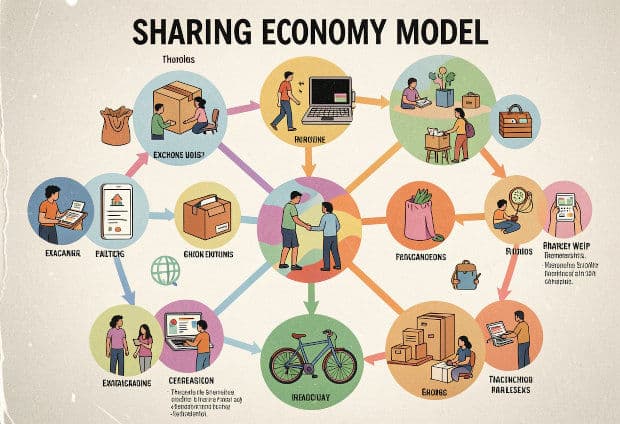
Sharing Economy Model: How Businesses Make Money Without Owning Anything
GeoPolitics
The U.S.-China Rivalry: What It Means for the World's Economy, Technology, and Military Balance

Startup
How to Calculate Startup Valuation: Methods, Tools, and Examples

Accounting
Auditing: Definition, Types, Principles, and How It Works
Accounting
Income Statement, Balance Sheet and Cash Flow