Social Business and the Paris 2024 Olympics: How It Changed the Game
G
GeoRenus Editorial Team
470 views

GeoRenus Editorial Team
The Paris 2024 Olympics pioneered the integration of social business principles into a major global event. The Games targeted a 50% reduction in carbon footprint compared to London 2012, used 100% renewable energy, and prioritized social enterprises in procurement. By engaging local communities, creating jobs for disadvantaged populations, and promoting sustainability, Paris 2024 demonstrated that profitability and social responsibility can coexist at the largest scale.
The Paris 2024 Olympic Games weren't just a celebration of athletic excellence — they were a bold experiment in integrating social business principles into one of the world's largest events. The Paris Olympic Committee made a deliberate choice to go beyond traditional corporate sponsorship and embed social responsibility into every aspect of the Games.
This wasn't accidental. The organizing committee specifically embraced the social business model — ensuring that the Olympics would not only generate excitement and revenue but also create lasting social and environmental benefits for the host city and beyond.
A social business, as defined by Muhammad Yunus, is a company where profits are reinvested to solve social problems rather than distributed to shareholders. Unlike traditional profit-maximizing businesses, social businesses measure success by their social impact — lives improved, communities strengthened, and environments protected.
The Paris Olympics took this concept to an unprecedented scale, demonstrating how social business thinking can transform even the most commercially driven events into forces for good.
The Paris 2024 Olympics integrated social business principles across several key areas:
The Paris Olympics aimed to be the most sustainable Games in history. The organizing committee committed to halving the carbon footprint compared to the London 2012 Olympics. This meant using existing infrastructure wherever possible, powering venues with 100% renewable energy, and minimizing single-use plastics.
Athletes slept on recycled cardboard beds in the Olympic Village, and over 95% of venues were either existing or temporary structures — dramatically reducing construction waste compared to previous Games.
The Paris Olympics focused on engaging local communities — particularly disadvantaged ones — in the Games. Social enterprises were given priority for contracts, ensuring that benefits flowed to small businesses and underserved populations rather than only to large corporations.
The organizing committee partnered with numerous social businesses to provide services ranging from catering and cleaning to event management and transportation. This created thousands of jobs and training opportunities for people from marginalized communities.
Unlike previous Olympics that relied heavily on traditional corporate sponsors, Paris 2024 actively sought partnerships with companies committed to social responsibility. Sponsors were expected to demonstrate measurable commitments to sustainability, diversity, and community development.
The contrast with previous Olympics is striking:
These numbers demonstrate that large-scale events can be organized sustainably when social business principles guide decision-making from the start.
The social impact of the Paris 2024 Olympics extended well beyond environmental metrics:
Despite the ambitious social business approach, the Paris 2024 Olympics faced criticisms:
However, most observers agreed that Paris 2024 set a new benchmark for how major events can incorporate social and environmental responsibility.
The Paris 2024 Olympics demonstrated that social business principles can be applied at massive scale. If an event serving billions of viewers and millions of visitors can prioritize sustainability, community impact, and social inclusion, then any business or organization can do the same.
As Muhammad Yunus has long argued, business doesn't have to be a zero-sum game. The Paris Olympics proved that economic value and social value can be created simultaneously — and that doing so makes both the event and the host community stronger.
The Paris 2024 Olympics will be remembered not just for the medals and athletic achievements, but for pioneering a new model of how global events can serve society. By integrating social business principles — sustainability, community engagement, and responsible sponsorship — Paris set a template for future Olympics and major events worldwide.
The message is clear: profitability and social responsibility are not opposing forces. When aligned properly, they create outcomes that benefit everyone — athletes, communities, businesses, and the planet.
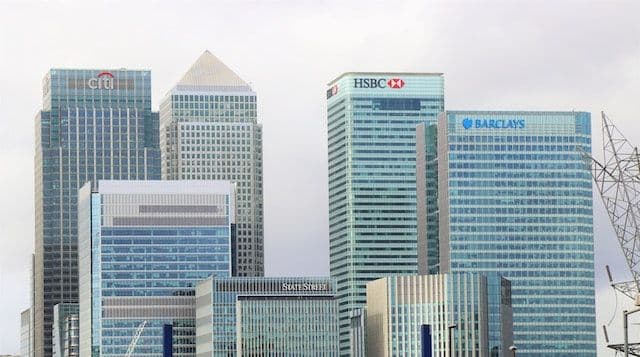
Most people use banks every single day — depositing salaries, withdrawing cash, transferring money, paying bills — without ever really thinking about how the whole system actually works. A bank is a licensed financial institution that accepts deposits from the public and uses those deposits to provide loans to individuals and businesses. Everything a bank does — from accepting your savings to issuing credit cards to printing cheques — falls under the broad category of banking. But banks are not just convenient places to store your money. They are the central nervous system of any economy — the institutions that keep money flowing productively through the system, connecting people who have surplus funds with people and businesses that need capital. And in Bangladesh, where Bangladesh Bank serves as the central authority overseeing the entire financial system, understanding how banking works is genuinely useful knowledge for anyone managing their personal finances, running a business, or simply trying to make smarter decisions with their money.







Social Impact by the Numbers