The Bond Market: A Comprehensive Guide to Fixed-Income Investing
G
GeoRenus Editorial Team
451 views
GeoRenus Editorial Team
The bond market is a vast financial marketplace where debt securities are traded. With a global value exceeding $130 trillion, it dwarfs the stock market in size. Bonds work as IOUs: investors lend money to governments, municipalities, or corporations in exchange for regular interest payments and the return of principal at maturity. This guide covers the different types of bonds, how prices and interest rates interact, key metrics like yield and credit ratings, the risks and benefits of bond investing, and practical steps to get started.
The bond market -- sometimes called the debt market or fixed-income market -- is a financial marketplace where participants buy and sell debt securities, most commonly bonds. Think of it as a giant lending platform: when you buy a bond, you are essentially lending money to the issuer in exchange for periodic interest payments and the return of your principal at a specified date.
The global bond market is enormous. As of 2024, the total value of outstanding bonds worldwide stands at approximately $130 trillion, making it significantly larger than the global stock market. The U.S. bond market alone accounts for roughly $51 trillion of that figure, according to the Securities Industry and Financial Markets Association (SIFMA).
Bond markets involve multiple participants. On one side, you have bond issuers -- governments, municipalities, and corporations that need to raise capital. On the other side, you have bondholders -- investors who purchase those bonds. And in between, you will find third parties such as brokerage houses, credit rating agencies, and regulatory institutions that keep the entire system running smoothly.
"The bond market is the backbone of the global financial system. It finances governments, builds infrastructure, and provides a relatively stable income stream for millions of investors." -- Bill Gross, co-founder of PIMCO and widely known as the "Bond King."
A bond is essentially an IOU. When an organization needs to raise money, instead of going to a bank for a loan, it can issue bonds directly to investors. Here is how the process works in simple terms:
For example, suppose you purchase a 10-year U.S. Treasury bond with a face value of $1,000 and a coupon rate of 4.5%. Each year, you would receive $45 in interest payments ($22.50 every six months). After 10 years, you get your $1,000 back. It is that straightforward.
The key thing to understand is that bonds represent a contractual obligation. Unlike stocks, where dividends are optional and returns are uncertain, bond issuers are legally bound to make their scheduled interest payments and return the principal at maturity.
Not all bonds are created equal. They come in many different flavors, each with its own risk and reward profile. Let us break down the major categories:
These are bonds issued by national governments. In the United States, they are called Treasury securities and come in three main forms: Treasury Bills (T-Bills) with maturities under one year, Treasury Notes (T-Notes) with maturities of 2 to 10 years, and Treasury Bonds (T-Bonds) with maturities of 20 or 30 years. U.S. Treasuries are considered among the safest investments in the world because they are backed by the full faith and credit of the U.S. government.
Often called "munis," municipal bonds are issued by state and local governments, counties, or public entities to fund public projects like schools, highways, and hospitals. A significant advantage of munis is that the interest income is often exempt from federal income tax and, in many cases, state and local taxes as well.
Companies issue corporate bonds to fund operations, expansions, or acquisitions. These bonds typically offer higher yields than government bonds because they carry more risk. Corporate bonds are further divided into investment-grade bonds (issued by financially strong companies) and high-yield bonds or junk bonds (issued by companies with lower credit ratings).
These bonds do not make periodic interest payments. Instead, they are sold at a deep discount to their face value and pay the full face value at maturity. For instance, you might buy a zero-coupon bond for $600 today that will pay $1,000 in 10 years. The difference of $400 represents your return.
The bond market operates through two distinct channels, and understanding the difference between them is crucial for any investor:
This is where new bonds are born. When a government or corporation issues a brand-new bond for the first time, it sells the bond directly to investors in the primary market. The issuer receives the proceeds from the sale. The U.S. Treasury, for example, holds regular auctions to sell new Treasury securities directly to institutional and individual investors through the website TreasuryDirect.gov.
Once bonds have been issued, they can be bought and sold among investors in the secondary market, much like stocks trade on exchanges. However, unlike stocks, most bonds trade over-the-counter (OTC) through broker-dealers rather than on a centralized exchange. The secondary market provides liquidity, meaning bondholders can sell their bonds before maturity if they need cash or want to adjust their portfolio.
Approximately $900 billion worth of bonds trade daily in the U.S. secondary market alone, highlighting the sheer scale and importance of this marketplace.
One of the most important concepts to grasp about bonds is the inverse relationship between bond prices and interest rates. When interest rates rise, bond prices fall -- and when interest rates fall, bond prices rise. This might sound counterintuitive, but it makes perfect sense once you think about it.
Here is a simple example. Imagine you hold a bond that pays a 3% coupon rate. Now suppose the Federal Reserve raises interest rates, and new bonds are being issued with a 5% coupon rate. No one would want to buy your 3% bond at full price when they can get a brand-new 5% bond instead. So the market price of your 3% bond drops to compensate for the lower interest rate.
The reverse is also true. If interest rates fall to 1%, your older bond paying 3% becomes very attractive, and its price will rise above par value.
"Interest rates are to bond prices what gravity is to the apple. They define its trajectory." -- Warren Buffett, Chairman of Berkshire Hathaway
This inverse relationship is particularly important for investors who might need to sell bonds before maturity. If you hold a bond to maturity, short-term price fluctuations do not affect your return. But if you sell early, you could gain or lose money depending on how interest rates have moved.
Understanding a few essential metrics will help you evaluate and compare bonds effectively:
Yield represents the actual return you earn on a bond based on the price you pay and the coupon payments you receive. There are several types of yield, but the most commonly referenced is the yield to maturity (YTM), which calculates the total return you would earn if you held the bond until it matures. As of early 2025, the 10-year U.S. Treasury yield hovers around 4.2% to 4.6%, a figure closely watched by investors worldwide as a benchmark for other interest rates.
The coupon rate is the annual interest rate stated on the bond when it is issued. For example, a bond with a $1,000 face value and a 5% coupon rate pays $50 per year in interest. The coupon rate stays fixed for the life of the bond (in most cases), even though the market price of the bond may fluctuate.
Maturity refers to the length of time until the bond's principal is repaid. Bonds are classified as short-term (under 3 years), medium-term (3 to 10 years), or long-term (over 10 years). Generally, longer-maturity bonds offer higher yields to compensate investors for the added risk of tying up their money for a longer period.
Credit ratings are assessments issued by agencies like Moody's, Standard & Poor's (S&P), and Fitch that evaluate the issuer's ability to repay its debt. Ratings range from AAA (highest quality, lowest risk) to D (in default). Bonds rated BBB or above by S&P are considered investment grade, while those below BBB are classified as high-yield or junk bonds.
The bond market attracts a wide range of participants, from massive institutions to everyday savers:
Credit risk is the possibility that a bond issuer will fail to make its scheduled interest payments or repay the principal. This is perhaps the single biggest risk in bond investing, and it is why credit ratings matter so much.
The three major rating agencies -- Moody's, S&P, and Fitch -- analyze the financial health of bond issuers and assign ratings. Here is a simplified breakdown:
Historically, the average annual default rate for investment-grade bonds is about 0.1%, while for high-yield bonds it is roughly 4% to 5%. This stark difference illustrates why credit ratings are so crucial for bond investors.
Like any investment, bonds come with their own set of advantages and disadvantages. Let us examine both sides:
Getting started with bond investing is more accessible today than ever before. Here are several practical approaches:
You can purchase U.S. Treasury securities directly through TreasuryDirect.gov with no fees or commissions. For corporate and municipal bonds, you will typically need a brokerage account with firms like Fidelity, Charles Schwab, or Vanguard. Most brokerages allow you to buy individual bonds with a minimum investment of $1,000 to $5,000.
If you prefer diversification without picking individual bonds, consider bond mutual funds or exchange-traded funds (ETFs). Popular options include the iShares Core U.S. Aggregate Bond ETF (AGG) and the Vanguard Total Bond Market ETF (BND). These funds hold hundreds or thousands of bonds, spreading risk across many issuers.
A bond ladder is a strategy where you buy bonds with staggered maturity dates. For example, you might invest in bonds maturing in 1, 3, 5, 7, and 10 years. As each bond matures, you reinvest the principal into a new long-term bond. This approach provides regular income, reduces interest rate risk, and maintains liquidity.
Before investing, ask yourself: Are you looking for income, capital preservation, or diversification? Your answer will guide which types of bonds are best suited for your portfolio. Younger investors with a long time horizon might allocate a smaller percentage to bonds, while those nearing retirement might shift 40% to 60% of their portfolio into fixed-income securities.
The bond market plays a vital role in the global financial system. It provides governments and corporations with a mechanism to raise capital, and it offers investors a relatively stable way to earn income and preserve wealth. With approximately $130 trillion in outstanding bonds globally, it dwarfs the stock market in size and is central to economic policy, retirement planning, and portfolio management.
Whether you are a conservative investor seeking steady income, a retiree looking to preserve capital, or simply someone who wants to diversify beyond stocks, understanding the bond market is essential. By grasping the basics -- how bonds work, the inverse relationship between prices and interest rates, the role of credit ratings, and the different types of bonds available -- you equip yourself with the knowledge to make smarter, more informed investment decisions.
As with any investment, the key is to do your research, understand your own risk tolerance, and build a diversified portfolio that aligns with your financial goals. Bonds may not be as flashy as stocks, but they remain one of the most reliable tools in any investor's toolkit.
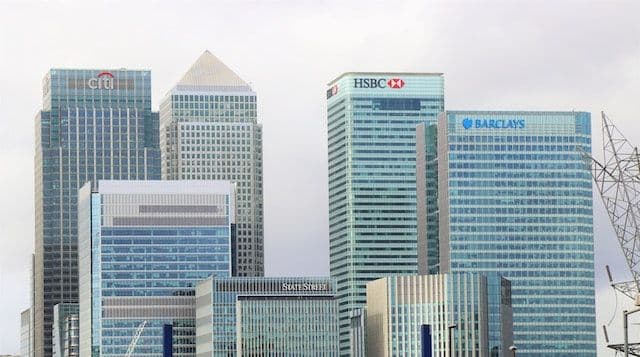
Most people use banks every single day — depositing salaries, withdrawing cash, transferring money, paying bills — without ever really thinking about how the whole system actually works. A bank is a licensed financial institution that accepts deposits from the public and uses those deposits to provide loans to individuals and businesses. Everything a bank does — from accepting your savings to issuing credit cards to printing cheques — falls under the broad category of banking. But banks are not just convenient places to store your money. They are the central nervous system of any economy — the institutions that keep money flowing productively through the system, connecting people who have surplus funds with people and businesses that need capital. And in Bangladesh, where Bangladesh Bank serves as the central authority overseeing the entire financial system, understanding how banking works is genuinely useful knowledge for anyone managing their personal finances, running a business, or simply trying to make smarter decisions with their money.