Cost of Capital: What It Is, WACC Formula, and How to Calculate It
G
GeoRenus Editorial Team
853 views

GeoRenus Editorial Team
The cost of capital is the minimum rate of return a company must earn to satisfy its investors. This guide explains the Weighted Average Cost of Capital (WACC), how to calculate the cost of debt and equity using the CAPM model, the factors that influence cost of capital, and the limitations financial professionals should understand.
Every business needs capital to operate and grow — whether it is to build a new factory, develop a product, or expand into new markets. But capital is never free. There is always a cost associated with raising money, and understanding that cost is crucial for making smart financial decisions.
The cost of capital is the minimum rate of return that a company must earn on its investments to satisfy its investors — both debt holders (lenders) and equity holders (shareholders). Think of it as the "hurdle rate" that any new project or investment must clear to be considered worthwhile.
For analysts, investors, and corporate finance professionals, the cost of capital is one of the most important metrics in finance. It directly influences decisions about which projects to pursue, how to structure financing, and whether a company is creating or destroying value.
Most companies use a mix of debt and equity to finance their operations. The Weighted Average Cost of Capital (WACC) combines the cost of both sources, weighted by their proportion in the company's capital structure. WACC is arguably the most widely used measure of cost of capital in corporate finance.
The cost of debt is the effective interest rate a company pays on its borrowed funds. Since interest payments are tax-deductible in most countries, the after-tax cost of debt is calculated as:
Cost of Debt = (Interest Expense / Total Debt) x (1 - Tax Rate)
For example, if a company has $10 million in debt with an interest rate of 6% and a tax rate of 25%, the after-tax cost of debt would be 6% x (1 - 0.25) = 4.5%. The tax shield makes debt cheaper than equity in most cases, which is why many companies use significant amounts of debt financing.
The cost of equity is more complex to calculate because equity holders do not receive fixed payments like bondholders do. Instead, they expect returns through dividends and capital appreciation. The most widely used model for estimating cost of equity is the Capital Asset Pricing Model (CAPM):
Cost of Equity (CAPM) = Rf + Beta x (Rm - Rf)
Where:
For instance, if the risk-free rate is 4%, the market risk premium is 6%, and the company's beta is 1.2, the cost of equity would be 4% + 1.2 x 6% = 11.2%. Notice how the cost of equity is significantly higher than the cost of debt — this reflects the additional risk that equity investors bear.
Once you know the cost of debt and the cost of equity, you can calculate WACC using this formula:
WACC = (E/V x Re) + (D/V x Rd x (1 - T))
Where E = equity value, D = debt value, V = total value (E + D), Re = cost of equity, Rd = cost of debt, and T = tax rate.
Let us work through an example. Suppose a company has:
WACC = (0.70 x 10%) + (0.30 x 7%) = 7% + 2.1% = 9.1%
This means the company needs to earn at least 9.1% on its investments to satisfy both its lenders and shareholders. Any project earning less than 9.1% would destroy value, while projects earning more would create value.
A company's cost of capital is not fixed — it changes over time based on several internal and external factors:
The cost of capital is directly linked to prevailing interest rates. When central banks raise interest rates (as the Federal Reserve did aggressively in 2022-2023), the cost of borrowing increases for everyone. Higher interest rates mean a higher cost of debt and, indirectly, a higher cost of equity as investors demand greater returns to compensate for the higher risk-free rate.
Inflation erodes the purchasing power of money. When inflation is high, lenders demand higher interest rates to compensate, which increases the cost of debt. Similarly, equity investors expect higher returns to maintain their real purchasing power, driving up the cost of equity.
In a stable, bull market, investors are generally willing to accept lower returns, which reduces the cost of capital. In volatile or bear markets, investors demand a higher risk premium, which increases the cost of capital. The market risk premium has historically ranged from 4% to 7%, depending on economic conditions.
A company's credit rating directly affects its cost of debt. Companies with strong credit ratings (like AAA or AA) can borrow at lower interest rates than companies with poor credit ratings (like BB or B). Maintaining a strong credit profile through disciplined financial management can significantly reduce a company's overall cost of capital.
The proportion of debt versus equity in a company's capital structure affects its WACC. While debt is cheaper than equity (due to the tax shield), too much debt increases financial risk and can raise both the cost of debt and equity. Finding the optimal capital structure — the mix of debt and equity that minimizes WACC — is a key goal of corporate finance.
While cost of capital is an essential tool, it has several important limitations:
The cost of capital is one of the most fundamental concepts in corporate finance and investing. It serves as the benchmark against which all investment decisions are measured — if a project's expected return exceeds the cost of capital, it creates value; if it falls short, it destroys value.
Understanding WACC and its components (cost of debt and cost of equity) is essential for anyone involved in financial analysis, corporate strategy, or investment management. While the calculation involves estimates and assumptions, a well-calculated cost of capital provides invaluable guidance for capital allocation decisions.
As Aswath Damodaran, the "Dean of Valuation," emphasizes: "The cost of capital is the price of risk." Understanding that price is the first step toward making smarter financial decisions.
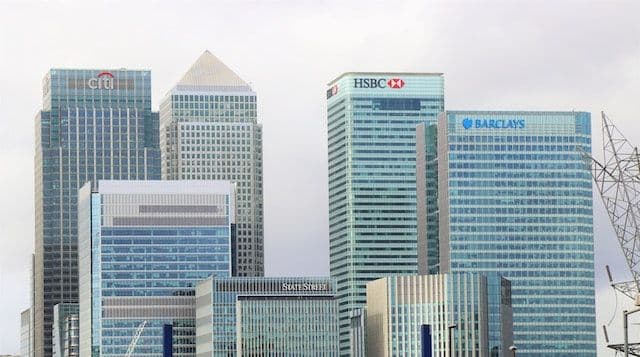
Most people use banks every single day — depositing salaries, withdrawing cash, transferring money, paying bills — without ever really thinking about how the whole system actually works. A bank is a licensed financial institution that accepts deposits from the public and uses those deposits to provide loans to individuals and businesses. Everything a bank does — from accepting your savings to issuing credit cards to printing cheques — falls under the broad category of banking. But banks are not just convenient places to store your money. They are the central nervous system of any economy — the institutions that keep money flowing productively through the system, connecting people who have surplus funds with people and businesses that need capital. And in Bangladesh, where Bangladesh Bank serves as the central authority overseeing the entire financial system, understanding how banking works is genuinely useful knowledge for anyone managing their personal finances, running a business, or simply trying to make smarter decisions with their money.