What Is Social Empathy Mapping?
G
GeoRenus Editorial Team
587 views

GeoRenus Editorial Team
Social Empathy Mapping is a visual tool that helps businesses understand their customers on a deeper, more human level. Originally created by Dave Gray, co-founder of the strategy consultancy XPlane, the empathy map captures what customers see, think and feel, hear, say and do, along with their pains and gains. By organizing customer insights into these six distinct quadrants, businesses can make better decisions about products, marketing, and brand strategy based on genuine understanding rather than assumptions.
If someone asked you what the lifeblood of any business is, the answer would undoubtedly be customers. Without customers, there is no revenue, no growth, and no reason for the business to exist. But here is the real question: how well do you actually understand your customers? Not just their age or location, but what they think, what they fear, what influences their decisions, and what keeps them coming back or drives them away?
Social Empathy Mapping is a powerful visual tool designed to answer exactly these questions. It is a structured template that captures your customer's thoughts, feelings, behaviors, observations, pains, and aspirations in a single, easy-to-read chart. Instead of relying on spreadsheets full of demographic data, the empathy map puts you inside your customer's head and heart.
In this article, we will explore what empathy mapping is, how it works, and why it has become an essential tool for product teams, marketers, and entrepreneurs worldwide.
"People do not buy products. They buy better versions of themselves."
The empathy map was created by Dave Gray, co-founder of XPlane, a strategy consultancy known for using visual thinking to solve complex business problems. Gray developed the tool as a way to help teams quickly align around a shared understanding of their target audience. His idea was simple but revolutionary: instead of treating customers as data points, treat them as human beings with complex inner lives.
The empathy map Gray created primarily focuses on four quadrants that capture different dimensions of the customer experience: what they See, Think and Feel, Hear, and Say and Do. Below these quadrants sit two additional sections: Pain (frustrations and challenges) and Gain (desires and goals). Together, these six areas provide a holistic view of who your customer really is beyond the surface.
A customer's thoughts, feelings, words, actions, sensory experiences, and emotional states all come together in this single visual. When used correctly, the empathy map transforms abstract customer research into something tangible, actionable, and deeply human. It has since been adopted by organizations worldwide as a foundational tool in design thinking and customer-centric strategy.
To use an empathy map effectively, you need to understand each of its components. Think of each section as a different lens through which you view your customer. When you combine all six lenses, you get a remarkably complete picture.
This quadrant asks: What does your customer see? It covers the visual environment your customer lives in. What do they encounter daily? What kind of products, advertisements, social media content, and competitors are they exposed to? What does their physical and digital environment look like?
For example, if your target customer is a young professional in a major city, they might see subway ads for competing products, LinkedIn posts from industry thought leaders, and colleagues using specific tools. Understanding this visual landscape helps you identify how and where your brand needs to show up to be noticed.
This is the emotional core of the empathy map. What is going on inside your customer's mind? What are they worried about? What excites them? What are their deepest concerns and highest aspirations?
You can uncover these insights through interviews, surveys, and careful observation. For instance, a small business owner might think, "I need to grow my customer base but I cannot afford expensive marketing tools." That mix of ambition and constraint is incredibly valuable for product positioning. According to a Deloitte study, companies that lead with empathy outperform competitors by 20% in customer satisfaction.
What influences your customer from the outside? This quadrant captures what your customer hears from friends, family, coworkers, social media influencers, news outlets, and industry experts. People are constantly influenced by the voices around them, and understanding these influences helps you craft messaging that aligns with or constructively challenges what they are hearing.
If a customer's friends are raving about a competitor's product, that is important to know. If industry experts are warning about a particular trend, that shapes your customer's decisions. Mapping these external influences gives you a clearer picture of the information ecosystem your customer operates in.
This quadrant focuses on observable behavior. What does your customer actually say in conversations, reviews, and social media posts? What actions do they take? Do they say they value sustainability but buy the cheapest option every time? The gap between what people say and what they do is one of the most revealing insights in customer research.
Pay attention to daily routines, purchasing habits, decision-making processes, and how customers interact with products in real life. Observational research and user testing are particularly effective for filling out this quadrant. Remember, actions speak louder than words, and this section captures both.
Beyond the four main quadrants, the empathy map includes two additional sections that complete the picture:
What are your customer's biggest frustrations, worries, and obstacles? Pain points are the problems that keep your customer from achieving their goals. These could be financial constraints, lack of time, confusing technology, poor customer service from competitors, or unmet needs in the market. Understanding pain points is critical because your product or service should directly address one or more of these frustrations.
On the flip side, what are your customer's wishes, dreams, goals, and desires? What does success look like for them? What would make their life easier or better? Gains represent the positive outcomes your customer is seeking. A freelance designer might dream of a tool that automates invoicing so they can spend more time on creative work. A parent might want a meal delivery service that makes weeknight dinners stress-free. Understanding gains helps you position your product as the bridge between where your customer is now and where they want to be.
And just like that, by filling out all six sections, you have created a comprehensive empathy map that captures the full human experience of your target customer.
First, the empathy map is a compact visual template, which makes it incredibly easy to create a visual representation of your customer that anyone on your team can understand at a glance. No more wading through lengthy research reports to find key insights.
Second, the map's structure is deliberate and organized. Customer information is collected and categorized systematically across the six sections, ensuring nothing important falls through the cracks. This structured approach prevents the common problem of having scattered, disconnected pieces of customer knowledge spread across different teams and documents.
Third, and perhaps most importantly, the better you understand your customers, the better you can serve them. Companies that deeply understand their customers grow revenue 4-8% faster than the market average, according to research by Bain & Company. Empathy mapping is one of the most effective ways to build that deep understanding.
"If you want to make something great, you have to understand the people you are making it for."
Empathy mapping is useful across a wide range of business functions, but two areas stand out for delivering the highest return.
The empathy map is a goldmine for product development and strategic planning. When your product team understands what customers genuinely think, feel, and struggle with, they can design features and experiences that truly resonate. Instead of building what you think customers want, you build what they actually need. This applies to everything from new product launches to feature updates to strategic pivots.
For example, if your empathy map reveals that customers feel overwhelmed by too many choices, your product strategy might focus on simplification and guided recommendations. If it shows that customers worry about data privacy, you can prioritize transparent security features. The map turns abstract strategy discussions into customer-grounded decision making.
The structured, organized data from your empathy map allows you to see your brand through your customer's eyes. What do they perceive when they think of your brand? Does your messaging align with their values? Does your visual identity resonate with their aesthetic preferences?
A strong brand is built on emotional connection, and empathy mapping gives you the raw material to build that connection authentically. When customers feel that a brand "gets" them, loyalty follows naturally. Nike does not just sell shoes; they understand their customers' desire to push boundaries and be their best selves, and every piece of communication reflects that understanding.
Empathy mapping offers significant advantages for businesses looking to deepen their customer understanding:
While empathy mapping is a powerful tool, it does come with some limitations:
In a world where businesses have access to more data than ever before, the irony is that many still struggle to truly understand their customers. Data tells you what customers do, but empathy tells you why they do it. And the "why" is where the real business insights live.
Social Empathy Mapping gives you a practical, structured way to bridge the gap between data and understanding. Whether you are launching a new product, refining your brand, or simply trying to connect more authentically with your audience, this tool can transform how you think about and serve your customers.
"Empathy is about finding echoes of another person in yourself." — Mohsin Hamid
Take 30 minutes, gather your team, and build an empathy map for your most important customer segment. The insights you uncover might just change the way you do business.
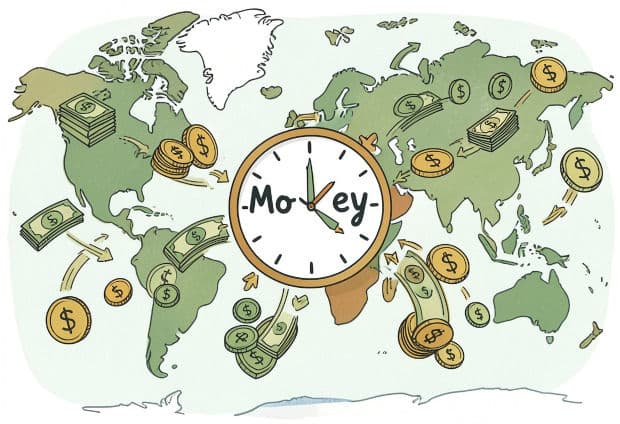
Every single day you go to a shop, hand over some notes, and walk away with what you need. The shopkeeper happily accepts those notes without any hesitation. But have you ever stopped and thought — why does that work? What is actually behind those pieces of paper that makes everyone willing to accept them? Why does a 500 taka note say "চাহিবামাত্র ইহার বাহককে দিতে বাধ্য থাকিবে" — meaning the bearer must be paid on demand? Money is so deeply embedded in our daily lives that most of us never question how it actually works. But understanding money — what it really is, how it functions, where it came from, and what different types exist — is the foundation of understanding any economy. At its core, money is simply a medium of exchange that people use to trade goods and services, repay debts, and measure value. It sounds simple. But the story behind it spans thousands of years and several fascinating transformations — from cowrie shells and whale teeth to gold coins, paper notes, and digital deposits.