What Is the Business Model Canvas?
G
GeoRenus Editorial Team
551 views

GeoRenus Editorial Team
The Business Model Canvas is a powerful one-page strategic tool that allows entrepreneurs and business leaders to visually map out all the critical components of their business. Developed by Alexander Osterwalder in 2005, this framework organizes your business idea into nine essential building blocks covering everything from value proposition and customer segments to cost structures and revenue streams. Instead of writing lengthy business plans, you can use this canvas to quickly prototype, test, and communicate your business model to teams and investors alike.
Starting or running a business without a clear roadmap is like navigating uncharted waters without a compass. You need a plan, but traditional business plans can stretch to 30 or 40 pages, making them time-consuming to create and difficult to update. That is where the Business Model Canvas comes in.
The Business Model Canvas is a strategic management tool that lets you visualize all the critical components of your business on a single page. Think of it as a one-page snapshot of your entire business strategy. It covers everything from what value you offer to customers, who your customers are, how you reach them, and how you make money.
Instead of spending weeks drafting a lengthy business plan, you can use the canvas to quickly map out your ideas, identify gaps, and communicate your strategy to your team or potential investors. As a visual tool, it makes complex business concepts surprisingly simple and accessible.
"The Business Model Canvas helps you systematically understand, design, and differentiate your business model."
Whether you are launching a brand-new startup or revisiting the strategy of an established company, the Business Model Canvas provides a structured yet flexible framework to organize your thoughts and align your team around a common vision.
The Business Model Canvas was first introduced by Alexander Osterwalder in his 2005 publication titled "Business Model Ontology." In this work, Osterwalder proposed a framework that breaks down a business into nine fundamental building blocks, each representing a key area that every business needs to address.
The model was officially released as a fully structured framework in 2008 and has since become freely available for anyone to use. Osterwalder later expanded on the concept in his bestselling book "Business Model Generation," which provided detailed explanations, case studies, and practical guidance on how to use the canvas effectively.
According to Strategyzer, the company co-founded by Osterwalder, more than 5 million people worldwide now use the Business Model Canvas for their business planning needs. From scrappy startups in co-working spaces to Fortune 500 boardrooms, the canvas has proven its versatility across industries and business sizes.
The beauty of the canvas lies in its simplicity. Instead of getting lost in pages of narrative, you fill in nine blocks on a single page, and suddenly your entire business model becomes clear, not just to you but to anyone who looks at it.
The Business Model Canvas is built around nine core components. Each block represents a critical aspect of your business, and together they paint a complete picture of how your business creates, delivers, and captures value. Let us walk through each one.
Every business exists to solve a problem or fulfill a need. Your value proposition answers the fundamental question: What value do you deliver to your customers? It is the reason customers choose you over your competitors. Think about it this way: if you are selling organic skincare products, your value proposition might be providing chemical-free, sustainable beauty solutions. Your value proposition should be clear, compelling, and directly tied to a real customer need.
Not everyone is your customer, and trying to sell to everyone is one of the biggest mistakes new entrepreneurs make. Customer segmentation helps you identify exactly who your target audience is. Are you targeting young professionals, small business owners, or budget-conscious families? For example, Netflix targets entertainment seekers across age groups, while LinkedIn focuses on professionals and job seekers. Understanding your segments helps you tailor your value proposition, marketing, and pricing accordingly.
Once you know your product and your customers, the next question is: how do you reach them? Channels refer to the pathways through which you deliver your value proposition to customers. These can be online channels like social media, websites, and email marketing, or offline channels like retail stores, trade shows, or direct sales teams. The key is to be where your customers already are. If your target audience spends most of their time on Instagram, that is where your marketing efforts should focus.
Acquiring customers is one thing; keeping them is another. The Customer Relationships block focuses on how you interact with and retain your customers. Do you offer personal assistance through phone support? Do you build community through forums or social media groups? Companies like Amazon excel at this by combining personalized recommendations with fast customer service. Remember, customer satisfaction drives loyalty, and loyalty drives revenue.
What are the most important things your business must do to make its model work? Key activities include everything from product development and marketing to logistics and customer support. For a software company, key activities might include coding, testing, and deploying updates. For a restaurant, it could be sourcing ingredients, cooking, and maintaining hygiene standards. The point is to identify the core actions that drive your value proposition forward.
Every business needs resources to operate. Key resources can be physical (office space, equipment), human (skilled employees, freelancers), intellectual (patents, brand reputation), or financial (funding, credit lines). A tech startup might need talented developers and cloud infrastructure, while a delivery service needs vehicles and drivers. Mapping out your key resources helps you understand what you need before you even launch.
No business operates in isolation. Key partners are the external companies, suppliers, or allies that help your business function. A clothing brand might partner with manufacturers and logistics providers. A SaaS company might rely on cloud hosting partners like AWS or Google Cloud. Strategic partnerships can help you reduce costs, mitigate risks, and access resources that would be difficult or expensive to build in-house.
Understanding where your money goes is just as important as knowing where it comes from. The cost structure block outlines all the expenses involved in running your business, from production costs and salaries to marketing budgets and rent. Are you running a cost-driven model (minimizing expenses like budget airlines) or a value-driven model (focusing on premium quality like Apple)? Keeping a clear picture of your costs helps you price your products correctly and maintain healthy profit margins.
At the end of the day, every business needs to make money. Revenue streams define how your business earns income. Are you selling products directly? Charging subscription fees like Netflix or Spotify? Using a freemium model where the basic version is free but premium features cost money? Most successful businesses have multiple revenue streams to reduce dependency on a single source of income.
The Business Model Canvas offers several powerful advantages that make it a go-to tool for entrepreneurs, startups, and established businesses alike.
First, it forces you to think through every critical aspect of your business. When you are filling in all nine blocks, nothing slips through the cracks. You cannot accidentally forget about your cost structure or overlook your customer relationships.
Second, because the entire model fits on a single page, it is incredibly easy to share and present. Imagine walking into a meeting with investors and showing them your complete business strategy on one visual document instead of handing them a 40-page business plan. They can grasp your concept in minutes, ask targeted questions, and give you meaningful feedback.
"The Business Model Canvas is not just a planning tool; it is a communication tool that bridges the gap between your vision and your stakeholders' understanding."
Third, the canvas is incredibly flexible. Unlike rigid traditional plans, you can easily update, revise, and iterate on your canvas as your business evolves. Market conditions changed? Customer preferences shifted? Simply update the relevant blocks and you have a fresh strategy ready to go.
While the Business Model Canvas is useful across the board, there are certain areas where it truly excels.
Since the canvas fits on a single page, it is perfect for team workshops and group discussions. You can print it out, project it on a screen, or use digital collaboration tools to fill it in together. Instead of having everyone read through a massive document, the whole team can see the big picture at once and contribute ideas in real time. This makes brainstorming sessions far more productive and engaging.
The canvas makes it easy to evaluate whether your product or service is a good fit for the current market. By reviewing your value proposition alongside your customer segments, channels, and cost structure, you can quickly spot potential problems. For instance, you might realize that your target audience cannot afford your pricing, or that your distribution channels do not reach your ideal customers. The canvas helps you catch these mismatches early before they become costly mistakes.
For businesses that involve physical products, the canvas provides excellent clarity on your supply chain. From production and sourcing through key partners to distribution via channels, you can trace the entire journey of your product from creation to customer on a single page. This bird's-eye view is invaluable for identifying bottlenecks, reducing costs, and optimizing efficiency.
Here are some specific advantages that entrepreneurs and small business owners can gain from the canvas:
While the Business Model Canvas is widely used and highly effective, it is not without its limitations. Being aware of these shortcomings can help you use the tool more effectively.
Despite these limitations, the canvas remains an excellent starting point for strategic planning. Many businesses use it alongside other tools like SWOT analysis, Lean Canvas, or detailed financial projections to build a more comprehensive strategy.
The Business Model Canvas has earned its place as one of the most popular strategic planning tools in the business world, and for good reason. It simplifies complex business concepts, encourages structured thinking, and makes communication effortless. Whether you are a first-time entrepreneur with a brilliant idea or a seasoned business leader looking to pivot your strategy, the canvas gives you a clear, visual framework to work with.
That said, no single tool can capture every aspect of running a business. The canvas is best used as a starting point, a foundation that you can build upon with more detailed planning as your business grows. Combine it with market research, financial modeling, and regular customer feedback, and you will have a robust strategy that evolves with your business.
"In the world of startups, speed matters. The Business Model Canvas lets you go from idea to structured plan in hours, not weeks."
So the next time you are brainstorming a new business idea or rethinking your current strategy, grab a Business Model Canvas template and start filling in those nine blocks. You might be surprised at how much clarity a single page can bring to your entrepreneurial journey.
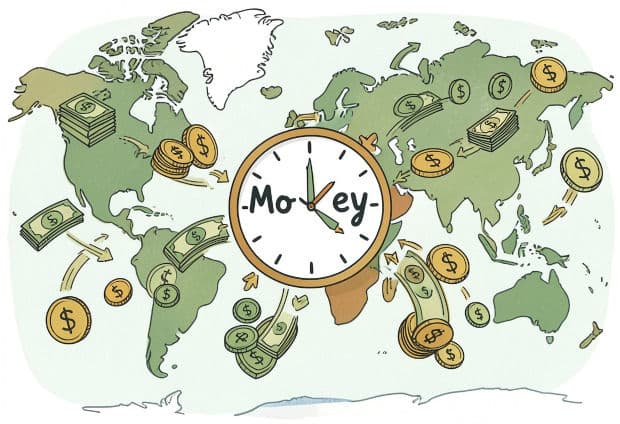
Every single day you go to a shop, hand over some notes, and walk away with what you need. The shopkeeper happily accepts those notes without any hesitation. But have you ever stopped and thought — why does that work? What is actually behind those pieces of paper that makes everyone willing to accept them? Why does a 500 taka note say "চাহিবামাত্র ইহার বাহককে দিতে বাধ্য থাকিবে" — meaning the bearer must be paid on demand? Money is so deeply embedded in our daily lives that most of us never question how it actually works. But understanding money — what it really is, how it functions, where it came from, and what different types exist — is the foundation of understanding any economy. At its core, money is simply a medium of exchange that people use to trade goods and services, repay debts, and measure value. It sounds simple. But the story behind it spans thousands of years and several fascinating transformations — from cowrie shells and whale teeth to gold coins, paper notes, and digital deposits.