What Is the Customer Exploration Map?
G
GeoRenus Editorial Team
583 views

GeoRenus Editorial Team
The Customer Exploration Map is a structured template or chart that helps entrepreneurs and businesses systematically discover, analyze, and understand their target customers. It guides you through identifying who your customers are, what they like and dislike, what challenges they face, what assumptions you hold, what solutions already exist, and how to empathize with their real-world experiences. Used by startups and established businesses alike, this tool transforms guesswork about customers into actionable insights.
Every business, whether it is a neighborhood bakery or a billion-dollar tech company, depends on one thing: customers. Without a deep understanding of who your customers are, what they want, and what problems they face, you are essentially building a business on assumptions. And assumptions, as any experienced entrepreneur will tell you, are expensive when they turn out to be wrong.
The Customer Exploration Map is a structured template or chart that helps you systematically discover everything you need to know about your target customers. Think of it as a visual roadmap that guides you through the process of identifying, analyzing, and empathizing with the people who will ultimately determine whether your business succeeds or fails.
This tool is particularly valuable for startups, but it is equally useful for established businesses launching new products or entering new markets. By filling out a Customer Exploration Map, you move from vague hunches about your audience to concrete, actionable insights that can drive every aspect of your business, from product development to marketing strategy.
"The goal is not to find customers for your product. The goal is to find products for your customers."
The concept of customer exploration is rooted in the Customer Discovery methodology pioneered by Steve Blank, a Silicon Valley entrepreneur and educator. Blank argued that most startups fail not because of bad products, but because founders never take the time to truly understand their customers. His framework encourages entrepreneurs to "get out of the building" and talk directly to real potential customers.
The Customer Exploration Map takes this philosophy and puts it into a structured, visual format. It provides a clear template where you can document your findings about customers, track patterns, and identify opportunities. Whether the customer is an individual consumer, a business client, or a stakeholder, this map helps you organize everything you learn into a format that is easy to act on.
Once you collect data through customer interviews, surveys, observation, and market research, the map helps you distill all that information into key characteristics, behaviors, and pain points. The entire process follows a structured, disciplined approach, ensuring that your customer insights are thorough and reliable rather than scattered and incomplete.
Startups of all sizes, from bootstrapped solo ventures to venture-backed companies, use this template to reduce the risk of building something nobody wants. And that, at its core, is what customer exploration is all about: reducing risk through understanding.
To get the most out of the Customer Exploration Map, you need to understand its individual sections. Each component is designed to answer a specific question about your target customer. When completed together, they paint a comprehensive picture of who you are serving and how to serve them better.
This is the starting point of any customer exploration exercise. You need to clearly define who your customer, user, or investor actually is. The success of any business depends on this clarity. Are you targeting college students, working professionals, small business owners, or corporate enterprises? What is their age range, income level, education, and geographic location?
But demographics are just the beginning. You also need to understand psychographics: their values, attitudes, lifestyle, and decision-making process. A 30-year-old software developer in New York has very different needs and preferences than a 30-year-old teacher in a small town. The more specific you are in defining your customer, the more effectively you can design solutions for them.
Beyond basic demographics, you need to understand your customer's preferences, tastes, and pet peeves. What do they enjoy about existing products or services in your category? What frustrates them? What would they change if they could?
For example, if you are building a food delivery app, knowing that your target customers love fast delivery but dislike hidden fees is incredibly valuable. These preferences directly influence your product design, pricing strategy, and marketing messaging. Customer reviews, social media conversations, and direct interviews are great sources for uncovering likes and dislikes.
The Jobs to Be Done (JTBD) framework, popularized by Harvard professor Clayton Christensen, asks a simple but powerful question: What job is your customer hiring your product to do? Customers do not buy products just for the sake of buying them. They buy products to solve problems, fulfill needs, or make progress in their lives.
This section of the map identifies the specific tasks, goals, and challenges your customer faces. What are they trying to accomplish? What obstacles stand in their way? For instance, a busy parent might "hire" a meal kit service not just for food but for the "job" of feeding the family a healthy dinner without spending an hour cooking. Understanding these jobs and challenges helps you position your product as the ideal solution.
Every entrepreneur starts with assumptions about their customers. The problem is that many founders treat these assumptions as facts without ever validating them. This section of the Customer Exploration Map forces you to explicitly list your assumptions so you can test them systematically.
What do you assume about your customer's willingness to pay? What do you assume about how they currently solve their problem? What do you assume about their buying behavior? Writing these assumptions down is the first step toward validating or invalidating them through real customer conversations and data. As Steve Blank famously said, "No business plan survives first contact with customers."
Your customers are not sitting around waiting for your product to come along. They already have ways of solving their problems, even if those solutions are imperfect. This section maps out the current alternatives and workarounds your target customers are using.
Understanding existing solutions is critical because it tells you what you are competing against. If customers are using spreadsheets to manage projects and you are building a project management tool, you need to understand why they use spreadsheets (familiarity, cost, flexibility) and what frustrates them about it (lack of collaboration, no automation). Your product needs to be meaningfully better than what they already have, or they simply will not switch.
The final and arguably most important component of the Customer Exploration Map is empathy. After gathering all the data, facts, and analysis, you need to step into your customer's shoes and feel what they feel. This is where you compare your hypothetical customer exploration with real-world experiences.
Are there gaps between what you assumed and what customers actually experience? Do their emotions, frustrations, and motivations align with your product's value proposition? Empathy is what separates good businesses from great ones. Companies like Apple, Airbnb, and Spotify built their success not just on technology but on a deep, empathetic understanding of what their customers truly wanted.
First, it is a compact, visual template that creates a clear snapshot of your target customer on a single page. Instead of sifting through pages of research notes, you have an organized chart that anyone on your team can quickly understand.
Through customer exploration mapping, you can systematically and methodically gather, organize, and analyze customer data in a way that is both efficient and comprehensive. It prevents the common trap of relying on gut feelings or anecdotal evidence when making business decisions.
Perhaps most importantly, the Customer Exploration Map helps you identify problems before you invest in solutions. According to CB Insights, 35% of startups fail because there is no market need for their product. The Customer Exploration Map directly addresses this by ensuring you deeply understand the market need before building anything.
"Get closer than ever to your customers. So close that you tell them what they need well before they realize it themselves." — Steve Jobs
The Customer Exploration Map is useful across many business functions, but there are specific areas where it delivers outsized returns.
The Customer Exploration Map gives you detailed insights into customer characteristics, needs, and preferences that directly fuel your sales and marketing strategies. When you know exactly what language your customers use, what problems keep them up at night, and what channels they use to discover products, you can craft messaging that resonates deeply. Marketing stops being a guessing game and becomes a precision tool.
By understanding your target customer's perspective and mindset, you gain clarity on how to position your brand in a way that connects emotionally. A strong brand is not just about a logo or tagline. It is about alignment between what you stand for and what your customers care about. The Customer Exploration Map helps you find that alignment by revealing the values, aspirations, and pain points that your brand should address.
Ultimately, the Customer Exploration Map strengthens your relationship with your customers. When customers feel understood, they become loyal. When they feel ignored, they leave. By continuously updating your exploration map with new insights, you build a living document that evolves with your customer base, helping you maintain strong, lasting relationships over time.
The Customer Exploration Map offers several practical advantages for businesses of all sizes:
While the Customer Exploration Map is a valuable tool, it is important to be aware of its limitations:
Whether you are a first-time entrepreneur launching a startup or an established business expanding into new markets, the Customer Exploration Map is one of the most practical tools you can use to reduce uncertainty and build with confidence. It transforms the often overwhelming task of "understanding your customer" into a manageable, step-by-step process.
The businesses that win in the long run are not the ones with the best product ideas. They are the ones that understand their customers better than anyone else. The Customer Exploration Map gives you a systematic way to build that understanding, one insight at a time.
"Your most unhappy customers are your greatest source of learning." — Bill Gates
Start mapping your customers today, and you will be surprised at how much clarity it brings to every decision you make for your business.
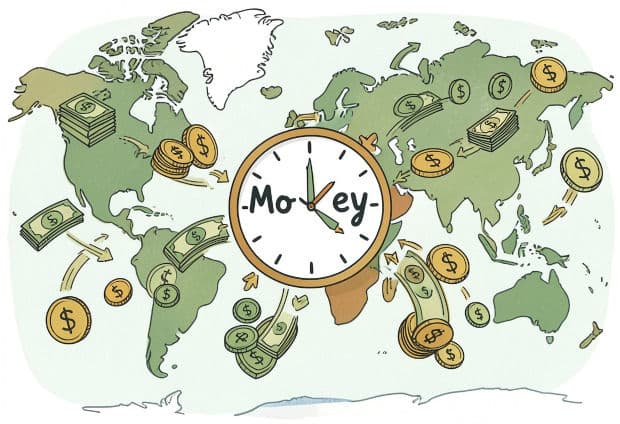
Every single day you go to a shop, hand over some notes, and walk away with what you need. The shopkeeper happily accepts those notes without any hesitation. But have you ever stopped and thought — why does that work? What is actually behind those pieces of paper that makes everyone willing to accept them? Why does a 500 taka note say "চাহিবামাত্র ইহার বাহককে দিতে বাধ্য থাকিবে" — meaning the bearer must be paid on demand? Money is so deeply embedded in our daily lives that most of us never question how it actually works. But understanding money — what it really is, how it functions, where it came from, and what different types exist — is the foundation of understanding any economy. At its core, money is simply a medium of exchange that people use to trade goods and services, repay debts, and measure value. It sounds simple. But the story behind it spans thousands of years and several fascinating transformations — from cowrie shells and whale teeth to gold coins, paper notes, and digital deposits.