The Five Biggest Stock Market Scams
G
GeoRenus Editorial Team
558 views

GeoRenus Editorial Team
From Enron's accounting deception to Bernie Madoff's record-breaking Ponzi scheme, the history of stock markets is littered with massive frauds that cost investors billions of dollars. This article examines five of the most infamous stock market scams in history: the Enron scandal of 2001, the Bernie Madoff Ponzi scheme of 2008, the WorldCom accounting fraud of 2002, the Tyco International embezzlement case, and the Volkswagen Dieselgate scandal of 2015. Each case offers critical lessons about corporate governance, regulatory oversight, and the importance of investor vigilance.
While the pages of financial history are filled with stories of innovation and wealth creation, they are equally stained with massive frauds that destroyed billions in investor wealth. The period between 2000 and 2015 saw some of the most devastating stock market scams ever recorded. Industry giants, trusted executives, and supposedly bulletproof corporations were exposed as fraudsters operating behind a facade of legitimacy.
These were not small-time cons. These were multi-billion dollar deceptions carried out by some of the most powerful people in corporate America and Europe. Let us take a deep dive into five of the most infamous stock market scams that shook the financial world to its core.
"In the business world, the rearview mirror is always clearer than the windshield." — Warren Buffett
At the dawn of the 21st century, Enron Corporation was a shining star in the energy industry. The Houston-based company was valued at approximately $90 billion at its peak and was consistently ranked among America's most innovative companies by Fortune magazine.
Enron's meteoric rise began in the 1990s under CEO Kenneth Lay and later Jeffrey Skilling. The company expanded aggressively from natural gas into electricity trading, broadband, and international markets. On the surface, it looked like a company that could do no wrong.
But behind the scenes, Enron was using complex financial instruments and accounting strategies to hide massive amounts of debt and inflate profits. At the center of the scandal were Special Purpose Entities (SPEs), essentially shell companies that Enron used to keep billions of dollars in debt off its balance sheet. This made the company appear far more profitable and financially stable than it actually was.
The truth began to unravel in 2001 when courageous employees, most notably vice president Sherron Watkins, raised alarms about the company's accounting practices. As scrutiny intensified, Enron's executives made increasingly desperate and unethical moves to prop up the company's stock price.
On December 2, 2001, Enron filed for bankruptcy, marking the largest corporate bankruptcy in American history at that time. Thousands of employees lost their jobs and retirement savings. Shareholders lost billions. The scandal also brought down Arthur Andersen, one of the world's Big Five accounting firms, which was found guilty of shredding documents related to the Enron audit.
Few financial crimes in history match the sheer scale and devastation of Bernard Madoff's Ponzi scheme. When it was finally exposed in 2008, the world learned that the former chairman of NASDAQ had been running the largest financial fraud in history.
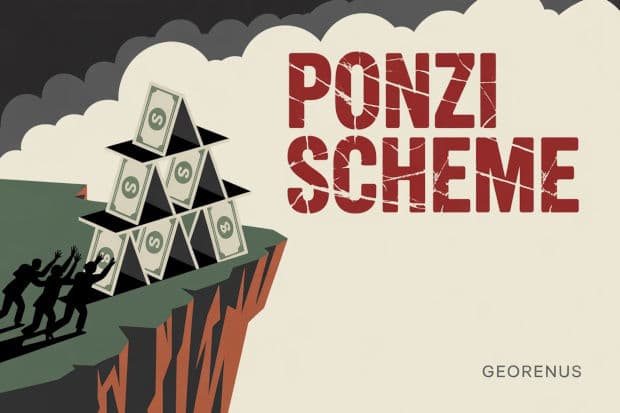
Madoff's operation was elegant in its simplicity. Named after Italian con artist Charles Ponzi, a Ponzi scheme uses money from new investors to pay returns to earlier investors, creating the illusion of legitimate profits. Madoff promised his clients consistent annual returns of 10-12%, which seemed remarkable but not impossibly high, exactly the kind of returns that attracted wealthy individuals, charities, pension funds, and institutional investors.
The facade cracked during the 2008 global financial crisis. When panicked investors rushed to withdraw their funds, Madoff could not meet the redemption requests. His sons, Mark and Andrew, confronted him, and Madoff confessed that the entire operation was a fraud.
The fallout was catastrophic. People lost their life savings. Several individuals connected to the scandal died by suicide, including Madoff's son Mark. Charities were wiped out. The total estimated losses were approximately $65 billion.
In June 2009, Madoff was sentenced to 150 years in prison, the maximum allowed. He died in federal prison in April 2021. His case remains a stark reminder of how trust, when abused, can cause unimaginable damage.
In 2002, WorldCom was a telecommunications giant that commanded enormous respect and market value. Behind the public image of success, however, the company was engaged in one of the largest accounting frauds ever committed.
WorldCom's CFO Scott Sullivan and other high-profile executives orchestrated the fraud by classifying ordinary operating expenses as capital expenditures, which inflated the company's reported assets and earnings. They also manipulated reserve accounts to create the appearance of consistent profitability.
There is a saying: "Fraudsters never prosper." And indeed, the deception could not last forever. An internal audit team led by Cynthia Cooper uncovered the irregularities. The discovery revealed that WorldCom had inflated its assets by approximately $11 billion through fraudulent accounting entries.
The consequences were devastating. WorldCom filed for bankruptcy in July 2002, at that time the largest bankruptcy filing in U.S. history, surpassing even Enron. Thousands of employees lost their jobs. Investors lost billions. CEO Bernie Ebbers was sentenced to 25 years in prison, while Sullivan received a 5-year sentence.
The story of Tyco International is a case study in corporate greed. CEO Dennis Kozlowski and CFO Mark Swartz treated the company's funds as their personal piggy bank, funding lavish lifestyles that included luxury apartments, fine art, and even a now-infamous $6,000 shower curtain.
Investigations revealed that Kozlowski and Swartz had stolen over $150 million from the company through unauthorized bonuses, fraudulent stock sales, and expense manipulations. They also inflated the company's earnings to boost its stock price and their own compensation.
When the scandal broke, Tyco's market value evaporated almost overnight. Investors who had trusted the company's leadership faced massive losses. Both Kozlowski and Swartz were eventually convicted of grand larceny, fraud, and conspiracy. Each received sentences of 8 to 25 years in prison.
The Tyco scandal became a cautionary tale about the dangers of unchecked executive power and the critical importance of corporate governance and board oversight.
The Volkswagen emissions scandal, known as "Dieselgate," was one of the most shocking corporate frauds of the 2010s. Volkswagen, the world's largest automaker at the time, was caught systematically cheating on emissions tests for its diesel vehicles.
Volkswagen had marketed its diesel cars as environmentally friendly, attracting customers who cared about green technology. Sales soared. But in reality, the company had installed sophisticated "defeat device" software in approximately 11 million vehicles worldwide that could detect when a car was being tested for emissions and temporarily reduce pollutant output to pass the test. In normal driving conditions, the cars emitted up to 40 times the legal limit of nitrogen oxide.
In 2015, the U.S. Environmental Protection Agency (EPA) publicly exposed the fraud. The news spread worldwide overnight. Volkswagen's stock price plummeted, wiping out roughly $30 billion in market value within days. The company eventually paid over $30 billion in fines, settlements, and vehicle buybacks. Several executives were criminally charged, and former CEO Martin Winterkorn was indicted on fraud charges.
Every year, billions of dollars are stolen through stock market scams orchestrated by corporations that people trusted with their savings. From fake financial statements to elaborate Ponzi schemes to emissions cheating, these cases prove that no company is too big or too respected to commit fraud.
Despite countless regulations and oversight bodies, corporate fraud continues because the incentives are enormous and the detection systems, while improved, remain imperfect. The SEC, PCAOB, and other regulators have strengthened rules since these scandals, including the landmark Sarbanes-Oxley Act of 2002, but the human tendency toward greed ensures that new schemes will always emerge.
"It takes 20 years to build a reputation and five minutes to ruin it." — Warren Buffett
For investors, the lesson is clear: always look beyond the headlines, question extraordinary claims, diversify your portfolio, and remember that if something seems too good to be true, it probably is.
Accounting is like a notebook for a business where all the money-related activities are recorded and tracked. Just like students track their exam scores to understand how they are doing, businesses use accounting to see if they are making a profit or loss. It acts like the financial backbone of a company. Accountants organize these records into different sections to make things easier to understand. To show their performance to shareholders, companies prepare documents called financial statements.