The Harshad Mehta Scam: India's Biggest Stock Market Fraud of 1992
G
GeoRenus Editorial Team
633 views
GeoRenus Editorial Team
The 1992 Harshad Mehta scam was one of the most notorious financial frauds in Indian history. Harshad Mehta, known as the Big Bull of Dalal Street, exploited loopholes in India's banking system by using fake Bank Receipts and ready forward deals to siphon approximately Rs. 4,000 crore from banks into the stock market. His manipulation caused the BSE Sensex to skyrocket from 1,000 to over 4,500 points before the fraud was exposed by journalist Sucheta Dalal. The scam led to sweeping reforms in India's financial regulatory framework.
The Harshad Mehta scam is one of the biggest financial frauds in Indian history. It shook the Bombay Stock Exchange (BSE) in 1992 and exposed massive loopholes in India's banking and financial system. To this day, the scam remains a landmark case study in market manipulation and regulatory failure.
Harshad Shantilal Mehta was born on July 29, 1954, in a modest Gujarati Jain family in Paneli Moti, Rajkot, Gujarat. Growing up in Mumbai, he came from humble beginnings. His father ran a small business, and the family lived in Kandivali. Despite ordinary circumstances, Mehta had extraordinary ambition.
To secure his future, his parents sent him to Bombay for higher education. He graduated from Lajpatrai College and initially worked odd jobs, including a stint at an insurance company. But fate had a different plan for him.
Mehta eventually landed in the stock market as a jobber at the Bombay Stock Exchange. He quickly learned the ropes and in 1986, founded his own brokerage firm called 'GrowMore Research and Asset Management'. His aggressive trading style and deep understanding of market mechanics soon made him one of the most prominent brokers in the country.
He was nicknamed the "Big Bull of Dalal Street" and the "Amitabh Bachchan of the Stock Market" because of his larger-than-life persona. He lived lavishly, owning 15 to 20 luxury cars, including a Lexus Starlet that was the only one of its kind in India at the time.
On December 31, 2001, Harshad Mehta passed away in Thane jail at the age of 47 due to a cardiac arrest while facing trial. At the time of his death, he had 27 criminal cases and over 600 civil lawsuits pending against him.
In the early 1990s, India's banking system operated on a largely manual, paper-based settlement process. Government securities, bonds, and other financial instruments were traded between banks through physical documents called Bank Receipts (BRs). This outdated system was ripe for exploitation, and Harshad Mehta found a way to do exactly that.
The scam revolved around what Mehta called his "ready forward" deals. In a ready forward transaction, a bank sells securities to another bank with an agreement to buy them back at a later date at a predetermined price. It is essentially a short-term, secured loan between banks.
Here is how Mehta exploited this system:
Many people admired Mehta's lavish lifestyle without knowing the truth behind his wealth. He lived like a king while running what was essentially a Ponzi-like scheme, using bank funds to inflate stock prices and creating artificial demand.
Through his brokerage career, Mehta became one of the most influential figures on Dalal Street. He used his market knowledge and connections to drive up stock prices of specific companies to extraordinary levels.
His primary method was simple but effective: he would identify undervalued or mid-cap stocks, take large positions, and then use the massive cash obtained through the ready forward scheme to keep buying, pushing prices higher and higher. Other investors, seeing the rapid price increases, would pile in, creating a self-reinforcing cycle of rising prices.
At the peak of the scam, Mehta had siphoned approximately Rs. 4,000 crore (around $800 million at the time) from the banking system into the stock market. The BSE Sensex, India's benchmark index, surged from about 1,000 points to over 4,500 points in a matter of months, an unprecedented and unsustainable rise.
"When everyone is making money, nobody asks questions. That is the environment Harshad Mehta thrived in."
Mehta's manipulation was not limited to the stock market. As his next move, he exploited the interbank securities market and the government bond market.
He used fake Bank Receipts (BRs) from smaller, cooperative banks, particularly the Bank of Karad and Metropolitan Co-operative Bank, to obtain funds from larger banks. These BRs were essentially IOUs for government securities that did not exist. The banks that issued them did so either out of negligence or collusion.
Mehta also exploited the Subsidiary General Ledger (SGL) system, which was used by the Reserve Bank of India (RBI) to track government securities. By manipulating SGL transfer forms and misusing the settlement process, he was able to divert enormous amounts of public funds for his personal trading activities.
When Mehta's methods were eventually exposed, it was revealed that the advice he gave about fund deployment had led to banks losing thousands of crores in public money. The sheer scale of the fraud was staggering.
During the lockdown era, a renewed interest in the Harshad Mehta scam was sparked by the popular web series "Scam 1992: The Harshad Mehta Story", directed by Hansal Mehta and streaming on SonyLIV. The show brought the story to a new generation of viewers.
The series was based on the book "The Scam: Who Won, Who Lost, Who Got Away" by journalists Sucheta Dalal and Debashis Basu. It was Sucheta Dalal, a journalist at The Times of India, who first broke the story in April 1992. Her investigative reporting exposed how Mehta had been systematically exploiting loopholes in the banking system.
The story is considered one of India's greatest financial scandals and remains a powerful case study in how unchecked ambition combined with regulatory failure can bring an entire financial system to its knees.
The Harshad Mehta scam was a watershed moment for India's financial markets. It exposed serious weaknesses and led to sweeping reforms:
The scam fundamentally changed how India's stock market and banking system operated, moving toward greater transparency and accountability.
In 2019 value terms, the Harshad Mehta scam was estimated to be worth approximately Rs. 24,000 crore. It remains one of the most significant financial frauds in Indian history.
The entire episode is a stark reminder that systemic awareness and strong regulatory oversight are not optional. Without them, even the most sophisticated financial systems are vulnerable to manipulation by individuals willing to exploit their weaknesses.
"Harshad Mehta did not create the loopholes. He simply walked through them. The real failure was a system that left the doors wide open."
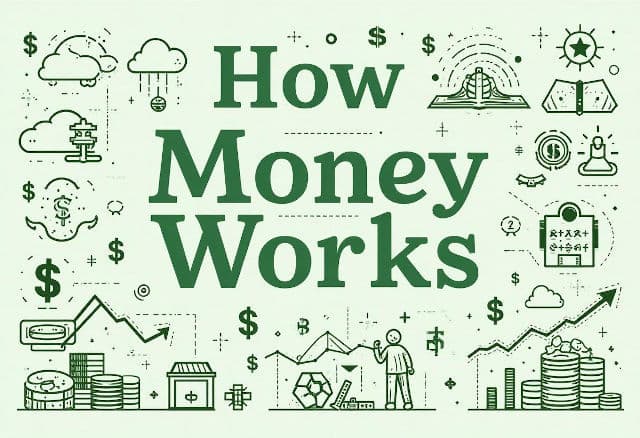
In our daily lives, money acts as a medium of exchange in almost all transactions. Through money, we purchase goods and services and repay debts. The primary functions of money are: serving as a unit of account, storing value, and acting as a medium of exchange. For anything to be considered money, it must fulfill several conditions, such as recognition, portability, stability, durability, and uniformity. Today, we commonly see three types of money: physical, digital, and cryptocurrency.