Recession: What It Is, Causes, Historical Examples, and How to Prepare
G
GeoRenus Editorial Team
446 views
GeoRenus Editorial Team
A recession is a significant decline in economic activity lasting two or more consecutive quarters of negative GDP growth. Recessions are part of the natural business cycle and are caused by financial crises, tight monetary policy, external shocks, and loss of consumer confidence. The Great Depression of 1929 remains the most severe example. Preparation through emergency savings, reduced debt, and wise investing helps individuals weather economic downturns.
A recession is a significant decline in economic activity that lasts for an extended period. The most commonly accepted definition is two or more consecutive quarters of negative GDP growth. During a recession, businesses produce less, unemployment rises, consumer spending drops, and the overall economy contracts.
Recessions are a normal — though painful — part of the business cycle. Between 1960 and 2008, there were 21 recessions recorded in advanced economies. While they vary in severity, every recession shares common features: declining output, rising joblessness, and reduced confidence.
"In the middle of every difficulty lies opportunity." — Albert Einstein (often quoted during recessions)
Every economy moves through a recurring pattern called the business cycle. This cycle has several key phases:
When a country's GDP growth drops from 3 or more consecutive quarters of positive growth to negative territory, it signals a recession. The key question isn't whether recessions will happen — they always do — but how severe they'll be and how quickly the economy recovers.
The Great Depression of 1929 remains the most devastating economic downturn in modern history. It started in the United States and spread worldwide, lasting roughly a decade.
After the 1920s boom — known as the "Roaring Twenties" — American industries thrived and stock prices soared. But the bubble couldn't last. Excessive speculation, easy credit, and overleveraged investments created a fragile house of cards.
On October 24, 1929 ("Black Thursday"), stock market selling began to accelerate. Just four days later, on October 29 ("Black Tuesday"), Wall Street experienced its worst crash in history. Nearly $30 billion in market value vanished in two days — equivalent to roughly $500 billion in today's dollars.
The consequences were catastrophic: unemployment reached 25%, thousands of banks failed, industrial production dropped by nearly half, and global trade collapsed by 65%. The Depression only truly ended with the massive government spending required by World War II.
Recessions can be triggered by various factors, often in combination:
While you can't prevent a recession, you can prepare for one. Here are five essential strategies:
Financial experts recommend saving at least 4-6 months' worth of living expenses in a readily accessible account. This cushion gives you breathing room if you lose your job or face unexpected costs.
Cut back on non-essential purchases. Focus on needs over wants. Small savings — skipping daily takeout coffee, canceling unused subscriptions — add up quickly during tough times.
Don't take on loans for things you don't truly need. During a recession, interest rates may rise and your ability to repay may decrease. High-interest credit card debt is especially dangerous during economic downturns.
During recessions, companies look for ways to cut costs — often through layoffs. Make yourself indispensable by developing new skills, taking on extra responsibilities, and demonstrating your value.
Ironically, recessions can be excellent buying opportunities for long-term investors. Asset prices — stocks, real estate — often drop significantly. Warren Buffett famously advised: "Be fearful when others are greedy, and greedy when others are fearful."
Gold and other safe-haven assets tend to hold their value during downturns. Diversifying your portfolio is key.
Developing nations face unique recession risks. The COVID-19 pandemic, the Russia-Ukraine conflict, and rising global commodity prices have all threatened economic stability in countries like Bangladesh.
According to economists, Bangladesh's inflation has been rising, foreign currency reserves have declined, and the economy faced significant headwinds from global economic slowdowns. Between July and March of the 2022-23 fiscal year, Bangladesh's foreign reserves dropped significantly, and Bangladesh Bank raised interest rates six times in response to inflationary pressures.
However, Bangladesh's economy has shown resilience. Within the past 40 years, inflation averaged around 7.6%, and economists predict that while the economy may slow, a full-blown recession is unlikely due to strong domestic demand and remittance inflows.
Recessions are an inevitable part of the economic cycle. They happen roughly every 15-20 years at a global scale, though individual countries may experience them more frequently. While they bring hardship — job losses, business failures, and declining living standards — they also create opportunities for reset and renewal.
The best approach is preparation: build savings, reduce debt, diversify investments, and stay adaptable. History shows that every recession eventually ends, and the economies that emerge are often stronger and more efficient than before.
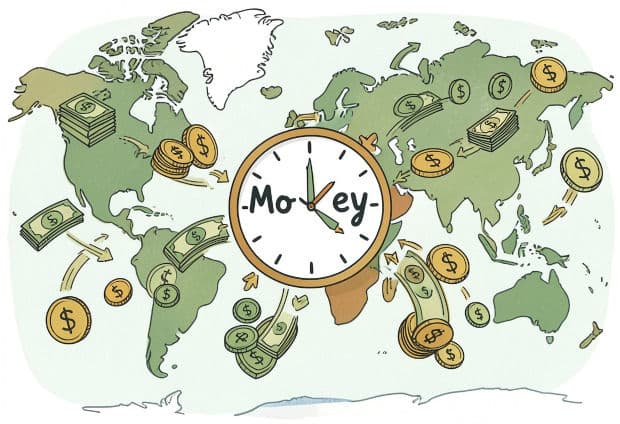
Every single day you go to a shop, hand over some notes, and walk away with what you need. The shopkeeper happily accepts those notes without any hesitation. But have you ever stopped and thought — why does that work? What is actually behind those pieces of paper that makes everyone willing to accept them? Why does a 500 taka note say "চাহিবামাত্র ইহার বাহককে দিতে বাধ্য থাকিবে" — meaning the bearer must be paid on demand? Money is so deeply embedded in our daily lives that most of us never question how it actually works. But understanding money — what it really is, how it functions, where it came from, and what different types exist — is the foundation of understanding any economy. At its core, money is simply a medium of exchange that people use to trade goods and services, repay debts, and measure value. It sounds simple. But the story behind it spans thousands of years and several fascinating transformations — from cowrie shells and whale teeth to gold coins, paper notes, and digital deposits.