Banking 101 - Understanding Banking Products and Services
G
GeoRenus Editorial Team
858 views
GeoRenus Editorial Team
Banking products and services form the foundation of modern personal finance. Banks act as intermediaries between depositors and borrowers, offering a wide range of products including checking accounts, savings accounts, fixed deposits, debit and credit cards, personal loans, mortgages, and investment services. This comprehensive guide covers everything from the basics of what a bank is and the different types of banks (commercial banks, credit unions, central banks, and investment banks) to core banking products, essential digital banking services like online and mobile banking, loan and credit options, investment and wealth management tools, and additional services such as safe deposit boxes, foreign currency exchange, and wire transfers. Understanding these products and services empowers you to make smarter financial decisions and take full control of your financial future.
Banking is one of those things most of us interact with every single day, yet few people truly understand how it all works under the hood. Whether you are swiping your debit card at a coffee shop, transferring money through a mobile app, or applying for a mortgage to buy your first home, you are engaging with a vast network of banking products and services that have been refined over centuries.
According to the Federal Deposit Insurance Corporation (FDIC), there are over 4,600 commercial banks operating in the United States alone, collectively holding more than $23 trillion in assets. That is an enormous ecosystem, and it touches nearly every aspect of modern economic life.
In this guide, we will walk you through the fundamentals of banking, from what a bank actually is and the different types you will encounter, to the core products and services that banks offer. Think of this as your Banking 101 crash course. By the end, you will have a solid understanding of how banks operate, what products are available to you, and how to make smarter financial decisions.
At its most basic level, a bank is a financial institution licensed to accept deposits and make loans. But that one-line definition barely scratches the surface. Banks serve as the critical intermediary between people who have money to save (depositors) and people who need money to borrow (borrowers). This intermediation function is the beating heart of modern finance.
Here is a simple way to think about it: when you deposit $1,000 into your savings account, the bank does not just lock that cash in a vault. Instead, it lends a portion of that money to someone else, perhaps a small business owner who needs capital to expand her bakery, or a young couple buying their first car. The bank pays you interest on your deposit (because it is essentially borrowing your money) and charges a higher interest rate to the borrower. The difference between what the bank earns on loans and what it pays on deposits is called the net interest margin, and it is one of the primary ways banks make money.
As the International Monetary Fund (IMF) puts it: "Banks are intermediaries between depositors (who lend money to the bank) and borrowers (to whom the bank lends money). The amount banks pay for deposits, and the income they receive on their loans, are both called interest."
Banks are regulated by government authorities to ensure stability and protect consumers. In the United States, key regulators include the Federal Reserve, the Office of the Comptroller of the Currency (OCC), and the FDIC, which insures deposits up to $250,000 per depositor, per institution. This regulatory framework is what gives people confidence to entrust their money to banks rather than stuffing it under a mattress.
Banks do far more than just accept deposits and issue loans. Modern banking institutions engage in a wide range of activities designed to serve individuals, businesses, and governments. Let us break down the five key activities that define what banks do.
The most fundamental function of a bank is accepting deposits. When you open a checking or savings account, you are using the bank's depository service. The bank holds your money safely, and in return, you get easy access to it whenever you need it. The global deposits held in commercial banks exceeded $105 trillion in 2024, according to data from the Bank for International Settlements.
Depository services also include certificates of deposit (CDs), money market accounts, and other instruments that allow you to earn interest while keeping your funds relatively accessible. For example, a 12-month CD from a bank like Marcus by Goldman Sachs might offer an annual percentage yield (APY) of around 4.5%, significantly higher than a standard savings account.
Lending is where banks generate the bulk of their revenue. They take the deposits they have collected and lend them out at higher interest rates. This includes personal loans, auto loans, mortgages, business loans, and lines of credit.
Consider this example: JPMorgan Chase, the largest bank in the United States, reported a total loan portfolio of over $1.3 trillion in 2024. That is an astonishing amount of capital being deployed into the economy, funding everything from home purchases to corporate expansions.
Banks facilitate the movement of money. Every time you write a check, use a debit card, send a wire transfer, or set up an automatic bill payment, the bank's payment infrastructure is at work. The Federal Reserve's payment systems process more than 600 million transactions per day in the United States.
Payment services have evolved dramatically with technology. Services like Zelle (owned by a consortium of major US banks), real-time payment networks, and international transfer systems like SWIFT have made it possible to move money across the globe in seconds.
Many banks, especially large ones, offer investment services through their wealth management or brokerage divisions. This includes access to stocks, bonds, mutual funds, exchange-traded funds (ETFs), and other securities. For instance, Bank of America provides investment services through its Merrill Lynch division, allowing customers to manage their portfolios alongside their everyday banking.
Investment services at banks are particularly appealing because they offer a one-stop-shop experience. You can check your savings balance, pay a bill, and review your investment portfolio all within the same app or branch visit.
Wealth management goes a step beyond basic investment services. It is a holistic approach to managing a client's financial life, including tax planning, estate planning, retirement strategies, and philanthropic advising. The global wealth management industry managed approximately $128 trillion in assets as of 2024, according to Boston Consulting Group.
Banks like UBS, Morgan Stanley, and Citibank have dedicated wealth management arms that cater to high-net-worth individuals. However, many banks now offer scaled-down versions of these services to everyday customers through robo-advisors and digital planning tools.
Banks are not just businesses; they are pillars of the economy. Their role extends far beyond individual transactions. Let us look at why banks matter so much to economic health.
First, banks create liquidity. By accepting deposits and making loans, they ensure that money flows through the economy rather than sitting idle. When a bank lends money to a business, that business can hire employees, buy supplies, and generate revenue, all of which stimulate economic activity.
Second, banks enable the money multiplier effect. Through fractional reserve banking, every dollar deposited can support several dollars in loans. For example, with a 10% reserve requirement, a $1,000 deposit can theoretically support up to $10,000 in total economic activity. This multiplier effect is one of the most powerful mechanisms in economics.
Third, banks serve as a transmission mechanism for monetary policy. When the Federal Reserve raises or lowers interest rates, banks pass those changes along to consumers and businesses through their lending and deposit rates. This is how central bank decisions ripple through the entire economy.
Former Federal Reserve Chairman Ben Bernanke once noted: "The financial crisis of 2008 demonstrated just how central banks are to the functioning of the modern economy. Without a healthy banking system, credit freezes, businesses fail, and unemployment soars."
Finally, banks promote financial inclusion. By offering basic deposit accounts, affordable credit, and payment services, banks help individuals participate in the formal economy. The World Bank has made financial inclusion a key development goal, and as of 2022, about 76% of adults globally had a bank account, up from just 51% in 2011.
Not all banks are created equal. Different types of banks serve different purposes, cater to different customers, and operate under different regulatory frameworks. Here are the four main types you should know about.
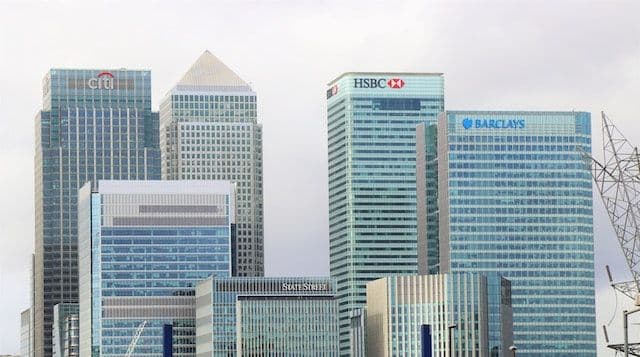
Commercial banks are what most people think of when they hear the word "bank." These are the institutions that accept deposits, issue loans, and provide basic financial services to individuals and businesses. Examples include JPMorgan Chase, Bank of America, Wells Fargo, and Citibank in the US, and HSBC, Barclays, and Deutsche Bank globally.
Commercial banks can be further divided into retail banks (serving individual consumers) and corporate banks (serving businesses). The four largest commercial banks in the United States, often called the "Big Four," collectively hold over $10 trillion in assets. They operate thousands of branches and ATMs across the country, making banking accessible to millions of Americans.
Credit unions are member-owned, not-for-profit financial cooperatives. Unlike commercial banks, which answer to shareholders, credit unions exist to serve their members. This often translates into lower fees, better interest rates on savings, and lower rates on loans.
For example, the average interest rate on a 60-month new car loan at a credit union was about 5.3% compared to 7.5% at a commercial bank in 2024, according to the National Credit Union Administration (NCUA). To join a credit union, you typically need to meet certain membership criteria, such as living in a specific area, working for a particular employer, or belonging to a certain organization. Navy Federal Credit Union, the largest in the US with over 13 million members, is a great example.
A central bank is a national institution that manages a country's currency, money supply, and interest rates. Unlike commercial banks, central banks do not deal directly with the public. Instead, they regulate and oversee the banking system as a whole.
The Federal Reserve (commonly called "the Fed") is the central bank of the United States. Other prominent central banks include the European Central Bank (ECB), the Bank of England, and the Bank of Japan. The Fed's decisions on interest rates, known as the federal funds rate, directly influence borrowing costs for consumers and businesses across America.
As economist Milton Friedman famously said: "Money is too important to be left to central bankers," highlighting the immense power and responsibility these institutions carry.
Investment banks operate in a different world from your neighborhood branch. They help companies raise capital by underwriting and issuing securities, facilitate mergers and acquisitions (M&A), and provide advisory services to corporations and governments.
Goldman Sachs and Morgan Stanley are two of the most well-known pure-play investment banks. In 2024, global investment banking fees totaled approximately $86 billion, with M&A advisory and equity underwriting being the largest revenue drivers. While regular consumers rarely interact with investment banks directly, their activities shape the financial markets and the broader economy in profound ways.
Now let us get into the products that you, as a consumer, are most likely to use. These are the core banking products that form the foundation of personal finance.
A checking account is your everyday transaction account. It is designed for frequent use: paying bills, receiving your paycheck via direct deposit, writing checks, and making purchases with a linked debit card. Most checking accounts offer unlimited transactions and come with features like online bill pay and mobile check deposit.
Many banks offer free checking accounts with no monthly maintenance fees, especially if you maintain a minimum balance or set up direct deposit. For example, Chase Total Checking requires a minimum daily balance of $1,500 or a monthly direct deposit of $500 to waive its $12 monthly fee. According to Bankrate's 2024 survey, the average monthly checking account fee in the US was $5.77, though many online banks like Ally and Discover offer completely fee-free checking.
A savings account is where you park money you do not need immediately but want to keep safe and earn a little interest on. Savings accounts are ideal for emergency funds, short-term goals (like saving for a vacation), or simply building a financial cushion.
High-yield savings accounts (HYSAs) offered by online banks have become incredibly popular. As of early 2025, several online banks were offering APYs above 4.5%, compared to the national average of just 0.46% at traditional brick-and-mortar banks. For example, if you deposited $10,000 in a high-yield savings account at 4.5% APY, you would earn roughly $450 in interest over a year, compared to just $46 at the national average rate. That is a meaningful difference.
Federal regulations previously limited savings account withdrawals to six per month (Regulation D), but this rule was relaxed in 2020 during the COVID-19 pandemic, and many banks have kept the more flexible rules in place.
A fixed deposit, commonly known as a certificate of deposit (CD) in the United States, is a time-bound deposit where you agree to leave your money in the bank for a set period (the "term") in exchange for a higher interest rate. Terms typically range from 3 months to 5 years.
The trade-off is simple: you get a better rate, but you cannot withdraw your money before the term ends without paying an early withdrawal penalty. A 1-year CD from a top-paying bank might offer an APY of around 4.75% to 5.0%, which is a guaranteed return regardless of what happens in the stock market.
CDs are a favorite tool for conservative investors and retirees who want predictable returns. A popular strategy is called a "CD ladder," where you spread your money across CDs of different maturities (e.g., 1-year, 2-year, 3-year) so that a portion of your funds becomes available each year while the rest continues to earn higher long-term rates.
Beyond the core deposit products, banks offer a suite of services that make managing your money more convenient and secure. These services have evolved significantly with technology, and today they are more accessible than ever.
Debit cards and credit cards may look similar, but they work in fundamentally different ways. A debit card draws money directly from your checking account. When you swipe it, the purchase amount is deducted from your balance, essentially in real time. There is no borrowing involved.
A credit card, on the other hand, is a short-term loan. The card issuer (often a bank like Chase, Citi, or Capital One) pays the merchant on your behalf, and you repay the card issuer later. If you pay your balance in full each month, you pay no interest. If you carry a balance, you will be charged interest, often at steep rates. The average credit card interest rate in the US reached 20.7% APR in 2024, the highest level in decades.
Credit cards also come with perks like cash back, travel rewards, and purchase protection. For example, the Chase Sapphire Preferred card offers 2x points on travel and dining, making it a popular choice among travelers. The key is to use credit cards responsibly: pay your balance in full, and you can benefit from the rewards without paying a dime in interest.
Online and mobile banking have transformed how people interact with their banks. Instead of visiting a branch during business hours, you can now check balances, transfer funds, pay bills, deposit checks, and even apply for loans from your smartphone or computer, 24 hours a day, 7 days a week.
A 2024 survey by the American Bankers Association found that 48% of Americans now prefer mobile banking as their primary banking method, surpassing online banking (22%), branches (9%), and ATMs (4%). The rise of digital-only banks (neobanks) like Chime, SoFi, and Varo has accelerated this trend, offering streamlined experiences with lower fees since they do not maintain expensive branch networks.
Security features have also improved dramatically. Most banking apps now offer biometric login (fingerprint or face recognition), real-time transaction alerts, and the ability to instantly freeze your card if you suspect fraud. These features give customers peace of mind in an increasingly digital world.
Automated Teller Machines (ATMs) remain a vital banking service, even in the age of digital payments. ATMs allow you to withdraw cash, check your balance, deposit funds, and sometimes even pay bills, all without visiting a bank branch.
There are approximately 470,000 ATMs across the United States, according to the National ATM Council. While many banks offer fee-free access to their own ATM network, using an out-of-network ATM can cost you. The average out-of-network ATM fee was $4.73 in 2024, combining the fee charged by the ATM operator and the surcharge from your own bank.
To avoid these fees, look for banks that offer extensive ATM networks or reimburse ATM fees. For instance, Charles Schwab's checking account reimburses all ATM fees worldwide, making it a favorite among frequent travelers.
Lending is a core function of banking, and the range of loan products available today is broader than ever. Whether you need to cover an unexpected expense, buy a home, or manage cash flow, there is likely a loan product designed for your situation.
A personal loan is an unsecured loan, meaning you do not need to put up collateral (like a house or car) to qualify. These loans are typically used for debt consolidation, home improvements, medical expenses, or other large purchases. You receive a lump sum and repay it in fixed monthly installments over a set period, usually 2 to 7 years.
The average personal loan interest rate in the US was approximately 12.3% in 2024, according to the Federal Reserve. However, rates vary widely based on your credit score. Borrowers with excellent credit (750+) may qualify for rates as low as 6% to 8%, while those with poor credit could face rates above 25%.
For example, imagine you have $15,000 in high-interest credit card debt at 22% APR. By taking out a personal loan at 9% APR and paying off those cards, you could save thousands of dollars in interest over the life of the loan. This strategy, called debt consolidation, is one of the most common uses of personal loans.
A mortgage is a secured loan used to purchase real estate. The property itself serves as collateral, which means the bank can foreclose on the home if you fail to make your payments. Mortgages are typically the largest loan most people will ever take on.
The most common types are the 30-year fixed-rate mortgage and the 15-year fixed-rate mortgage. As of 2024, the average 30-year fixed mortgage rate hovered around 6.8%, while the 15-year rate was approximately 6.1%, according to Freddie Mac. There are also adjustable-rate mortgages (ARMs), which start with a lower rate that adjusts periodically based on market conditions.
To put it in perspective, on a $350,000 home with a 30-year mortgage at 6.8%, your monthly principal and interest payment would be approximately $2,280. Over the life of the loan, you would pay a total of about $820,800, meaning you would pay roughly $470,800 in interest alone. That is why even a small difference in mortgage rates can save or cost you tens of thousands of dollars.
While we touched on credit cards earlier as a banking service, they also function as a revolving line of credit. Unlike a personal loan with a fixed repayment schedule, a credit card allows you to borrow up to your credit limit, repay it, and borrow again. This revolving nature makes credit cards incredibly flexible but also potentially dangerous if misused.
Total US credit card debt surpassed $1.14 trillion in 2024, a record high, according to the Federal Reserve Bank of New York. The average American household carries about $6,500 in credit card debt. With average APRs exceeding 20%, carrying a balance can quickly become a financial burden.
The golden rule of credit cards is simple: treat them like debit cards. Spend only what you can afford to pay off in full each month. Doing so lets you enjoy the benefits, such as rewards, purchase protection, and credit score building, without the pain of interest charges.
Banks have expanded well beyond deposits and loans. Today, many banks offer a full range of investment and wealth management products designed to help you grow and protect your money over the long term.
An investment account (also called a brokerage account) allows you to buy and sell securities such as stocks, bonds, mutual funds, and ETFs. Many major banks offer integrated brokerage services. For example, Bank of America customers can invest through Merrill Edge, while JPMorgan Chase offers J.P. Morgan Self-Directed Investing.
The advantage of having your investment account at the same institution as your bank account is convenience. You can easily transfer funds between accounts, view everything in one dashboard, and sometimes get relationship benefits like reduced fees. Historically, the S&P 500 has delivered an average annual return of about 10% over the long term, making stock market investing one of the most effective ways to build wealth.
Retirement accounts are tax-advantaged accounts specifically designed to help you save for retirement. The most common types include Individual Retirement Accounts (IRAs) and employer-sponsored 401(k) plans.
A Traditional IRA allows you to contribute pre-tax dollars (up to $7,000 per year in 2024, or $8,000 if you are over 50), reducing your taxable income today. A Roth IRA, on the other hand, is funded with after-tax dollars, but your withdrawals in retirement are completely tax-free. According to Fidelity Investments, the average 401(k) balance reached approximately $118,600 in the first quarter of 2024.
Warren Buffett has famously advised: "Do not save what is left after spending; instead, spend what is left after saving." Starting early with retirement savings, even in small amounts, can make an enormous difference thanks to the power of compound interest.
A financial advisor is a professional who helps you make informed decisions about your money. Banks often employ financial advisors who can assist with investment planning, retirement planning, tax strategies, estate planning, and more.
Traditional financial advisors at banks typically charge a fee based on a percentage of assets under management (AUM), usually around 0.5% to 1.5% per year. For someone with a $500,000 portfolio, that translates to $2,500 to $7,500 annually. However, many banks now also offer robo-advisor services, which use algorithms to manage your investments at a fraction of the cost, often around 0.25% to 0.50% AUM.
For example, J.P. Morgan Personal Advisors combines human financial advisors with digital tools, offering personalized guidance at a competitive fee. Whether you choose a human advisor or a robo-advisor, the key is to have a plan rather than making financial decisions on the fly.
Beyond the core products and major service categories, banks offer several additional services that can be incredibly useful in specific situations. These often-overlooked services round out the full picture of what modern banks can do for you.
Safe deposit boxes (often called locker services) allow you to store valuable items, such as jewelry, important documents, property deeds, and collectibles, in a secure vault at your bank. These boxes are protected by the bank's physical security systems, including vaults, alarms, and restricted access.
The annual rental fee for a safe deposit box varies by size and location, ranging from about $20 for a small box to $200 or more for larger ones. It is important to note that safe deposit box contents are generally not insured by the FDIC, so you may want to purchase separate insurance for high-value items.
If you are traveling internationally or conducting business overseas, your bank can help you exchange currencies. Banks typically offer competitive exchange rates compared to airport kiosks or standalone currency exchange shops.
For example, if you are planning a trip to Europe and need euros, you can order them from your bank ahead of time and often receive a better rate than you would at a currency exchange counter at the airport, where markups can be as high as 7% to 15% above the mid-market rate. Some banks, like Citibank, offer fee-free currency exchange for their account holders, making it even more economical.
A wire transfer is an electronic method of sending money from one bank account to another, either domestically or internationally. Wire transfers are one of the fastest and most secure ways to move large sums of money, which is why they are commonly used for real estate transactions, business payments, and international remittances.
Domestic wire transfers in the US typically cost between $15 and $30 for outgoing transfers, while international wires can cost $35 to $50 or more. The money usually arrives the same day for domestic wires and within 1 to 2 business days for international ones. While services like PayPal, Venmo, and Wise have introduced cheaper alternatives for smaller amounts, traditional wire transfers remain the standard for large, time-sensitive transactions.
Banking is the backbone of personal and global finance. From the simple act of depositing your paycheck into a checking account to the complex world of investment banking and wealth management, banking products and services touch virtually every aspect of our financial lives.
Here is what you should take away from this guide: banks are intermediaries that keep money flowing through the economy. They offer a wide range of products, from checking and savings accounts to mortgages and investment portfolios, each designed to serve a specific financial need. Understanding these products is the first step toward making smarter financial decisions.
Whether you are choosing your first bank account, comparing mortgage rates, or exploring investment options, the key is to be informed. Shop around, compare fees and interest rates, read the fine print, and never hesitate to ask questions. Your financial well-being depends on making good choices with the banking tools available to you.
As Benjamin Franklin wisely observed: "An investment in knowledge pays the best interest." The time you spend understanding banking products and services today will pay dividends for years to come.
Accounting is like a notebook for a business where all the money-related activities are recorded and tracked. Just like students track their exam scores to understand how they are doing, businesses use accounting to see if they are making a profit or loss. It acts like the financial backbone of a company. Accountants organize these records into different sections to make things easier to understand. To show their performance to shareholders, companies prepare documents called financial statements.