Currency: What It Is, How It Works, Types, and How Its Value Is Determined
G
GeoRenus Editorial Team
386 views
GeoRenus Editorial Team
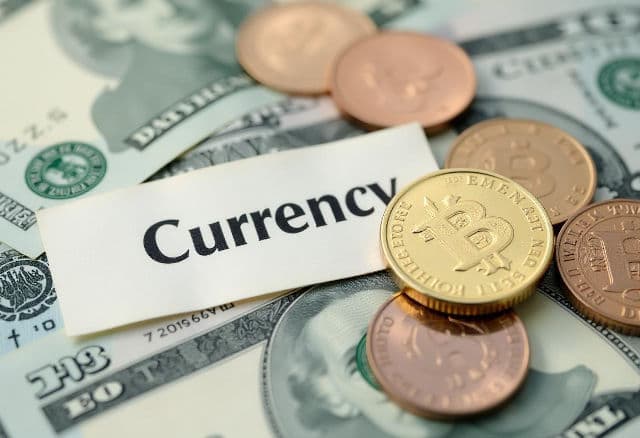
Currency is a medium of exchange used in everyday transactions, issued by governments and central banks. It comes in three main types: fiat currency (government-backed, like the dollar and euro), commodity money (backed by physical goods like gold), and cryptocurrency (decentralized digital money like Bitcoin). A currency's value is determined by factors including interest rates, inflation, foreign investment, and trade balance. Exchange rates measure currency value, operating under either fixed or floating systems.
What really holds up a country's economy? Is it the factories, the workforce, the natural resources? All of those matter, of course. But there's one element that ties them all together — currency. Without currency, trade would grind to a halt, investments would stall, and the modern economy as we know it simply wouldn't function.
From the smallest street vendor to the largest multinational corporation, every economic transaction relies on currency. Yet most people don't fully understand what currency actually is, how it works, or what determines its value. Let's break it all down.
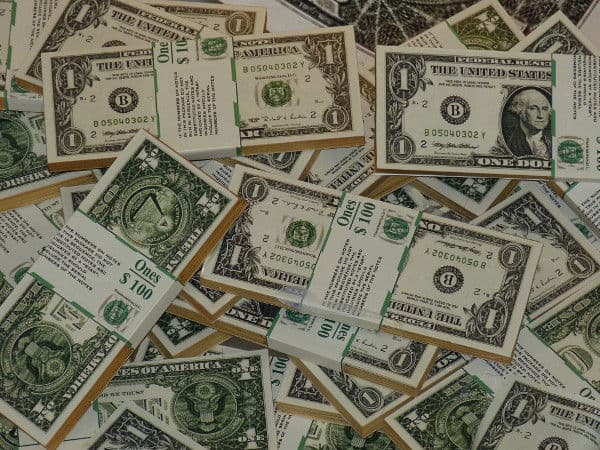
Currency is a medium of exchange — a system of money in general use within a particular country or economic region. In simple terms, currency is the physical or digital form of money that people use to buy goods and services, pay debts, and conduct everyday transactions.
In today's world, currency primarily takes the form of banknotes and coins issued by a country's government or central bank. The U.S. dollar, the euro, the British pound, and the Japanese yen are all examples of widely used currencies. Each country typically has its own currency, though some regions (like the eurozone) share one.
But currency wasn't always paper and metal. In earlier civilizations, people used everything from cowrie shells to cattle as currency. The concept evolved over thousands of years into what we use today. And in the 21st century, a completely new form of currency has emerged — cryptocurrency — which exists purely in the digital realm.
For roughly 3,000 years, human civilizations have used some form of currency to facilitate trade. Before currency existed, people relied on the barter system — directly exchanging goods and services. But barter had a fundamental problem: it required a "double coincidence of wants." You had to find someone who had what you wanted AND wanted what you had. That's not always easy.
Currency solved this problem brilliantly. By assigning a common value to goods and services, currency made it possible for anyone to trade with anyone else, regardless of what each party produced. A farmer could sell wheat for currency and then use that currency to buy tools — even if the toolmaker had no need for wheat.
Modern currency works on a system of trust and government backing. When you hold a $100 bill, that piece of paper has no real intrinsic value. Its value comes from the fact that the government says it's worth $100, and everyone in the economy agrees to accept it at that value. This is known as fiat money — money that has value because a government declares it legal tender.
One major feature of modern currency is that its value is not tied to any physical commodity like gold or silver (as it once was). This gives central banks the flexibility to manage the money supply and respond to economic conditions — but it also means currency value can fluctuate based on confidence, economic performance, and government policies.
People often use the words "money" and "currency" interchangeably, but they're not exactly the same thing. Understanding the difference is important.
Money is the broader concept. It's anything that serves as a store of value, a unit of account, and a medium of exchange. Gold, for instance, is money — it stores value and has been used for trade throughout history. But gold isn't currency in most countries today.
Currency is a specific subset of money. It's the government-issued, officially recognized form of money used in daily transactions. Think of it this way: all currency is money, but not all money is currency.
Here's an analogy: "Money is like water — it can take many forms. Currency is the specific container we pour it into for everyday use."
In the modern world, there are primarily three types of currency:
Fiat currency is the most common type of currency in use today. It's issued by a government and is not backed by a physical commodity like gold or silver. Instead, its value is based on the trust people place in the issuing government and the stability of its economy.
Examples include the U.S. dollar, the euro, the Indian rupee, and the Bangladeshi taka. Every country's paper bills and metal coins fall into this category.
The advantage of fiat currency is that the central bank can control its supply to manage economic conditions. The disadvantage? If people lose confidence in the government, the currency can rapidly lose value — as seen in cases of hyperinflation in Zimbabwe and Venezuela.
Commodity money has intrinsic value — the material it's made of is itself valuable. Gold coins, silver coins, and even salt or spices historically served as commodity money.
While commodity money is largely a thing of the past, it played a critical role in the development of modern financial systems. The gold standard — where a country's currency was directly tied to a fixed amount of gold — was the dominant monetary system until the 20th century. The U.S. abandoned the gold standard in 1971 under President Nixon, moving to a fully fiat system.
Cryptocurrency is digital or virtual currency that uses cryptography for security. Unlike fiat currency, it isn't issued or controlled by any government or central bank. Instead, it operates on decentralized networks using blockchain technology.
Bitcoin, launched in 2009, was the first cryptocurrency. Since then, thousands of others have emerged — Ethereum, Solana, Ripple (XRP), and many more. As of 2025, the total cryptocurrency market cap has exceeded $3 trillion at its peak.
Cryptocurrencies offer benefits like borderless transactions, transparency, and resistance to censorship. However, they also face challenges including extreme price volatility, regulatory uncertainty, and energy consumption concerns.
You might wonder: why is the U.S. dollar stronger than, say, the Indian rupee? What makes one currency more valuable than another? Several key factors determine a currency's value:
Countries with higher interest rates tend to attract more foreign investment. Investors want better returns on their money, so they buy that country's currency to invest there — driving up demand and value. Conversely, when a country lowers interest rates, its currency often weakens.
For example, when the U.S. Federal Reserve raises interest rates, the dollar typically strengthens because investors around the world want to park their money in higher-yielding U.S. assets.
Countries with lower inflation rates generally have stronger currencies. When inflation is low, the purchasing power of the currency remains relatively stable, making it more attractive to hold. High inflation erodes currency value — your money buys less and less over time.
This is why currencies in countries with chronic high inflation (like Argentina or Turkey in recent years) tend to depreciate rapidly against more stable currencies.
When foreign investors pour money into a country — buying stocks, bonds, real estate, or starting businesses — they need to convert their money into the local currency. This increases demand for that currency and pushes its value up.
China, India, and other emerging markets have seen their currencies strengthen during periods of heavy foreign direct investment (FDI).
When a country exports more than it imports, foreign buyers need its currency to pay for those exports, increasing demand and strengthening the currency. A trade deficit (importing more than exporting) has the opposite effect.
Similarly, if a central bank floods the market with too much currency, the supply exceeds demand and the currency loses value. This is essentially what happens during episodes of money printing — more currency in circulation means each unit is worth less.
Currency value is typically measured through exchange rates — the price of one currency in terms of another. There are two main systems:
Under a fixed exchange rate system, a country's government or central bank pegs its currency to another currency (usually the U.S. dollar) at a set rate. The central bank actively intervenes in currency markets to maintain this rate.
For example, Hong Kong has maintained a fixed exchange rate of approximately HKD 7.80 per USD since 1983. Saudi Arabia pegs its riyal at 3.75 per dollar.
Fixed rates provide stability and predictability for international trade, but they limit the central bank's ability to respond independently to domestic economic conditions.
Most major economies use a floating exchange rate system, where currency values are determined by market forces — supply and demand in the foreign exchange (forex) market. The U.S. dollar, euro, British pound, and Japanese yen all float freely.
The advantage of a floating rate is flexibility — the currency can naturally adjust to economic conditions. The downside is volatility: exchange rates can swing dramatically in short periods, creating uncertainty for businesses involved in international trade.
The forex market is the largest financial market in the world, with a daily trading volume exceeding $7.5 trillion as of 2024. Exchange rates shift constantly, driven by economic data releases, geopolitical events, and market sentiment.
From government-issued banknotes to decentralized cryptocurrencies, currency is the backbone of the global economy. It enables trade, stores value, and connects markets across borders. Understanding how currency works — what gives it value, what types exist, and how exchange rates function — is fundamental to making sense of the financial world.
Whether you're traveling abroad, investing in foreign assets, or simply trying to understand why prices are rising at the grocery store, the concepts behind currency affect your daily life more than you might realize. In the words of economist John Maynard Keynes: "There is no subtler, no surer means of overturning the existing basis of society than to debauch the currency." Currency matters — and understanding it gives you a powerful lens on the world.
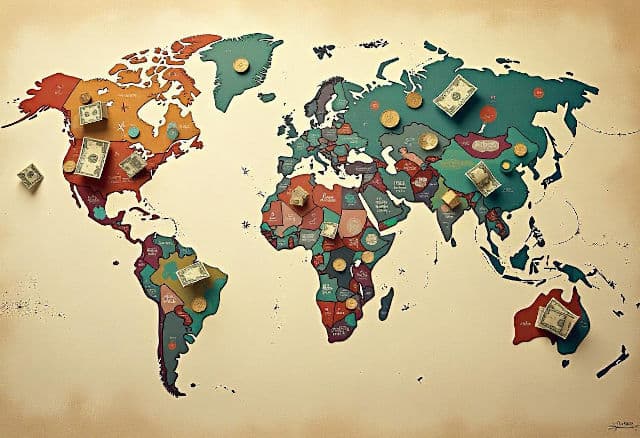
Since the dawn of human civilization, people have engaged in trade through barter. However, around 5,000 years ago, humans gradually abandoned the barter system and began using metallic coins. These coins were made from copper, silver, and gold. Around 1260 AD, the first paper currency was introduced in China and eventually spread throughout the world. In the 1930s, the first credit cards were issued by commercial establishments, and by the 1950s, banks began issuing them as well.