Add-On Business Model Explained: How Companies Turn Extras Into Revenue
G
GeoRenus Editorial Team
624 views

GeoRenus Editorial Team
The add-on business model is a pricing strategy where companies offer a base product or service at a low or even free price and then generate additional revenue by selling extra features, upgrades, or complementary products. This model is widely used across industries from automobiles and airlines to mobile gaming and software. By keeping the entry price attractive, businesses draw in customers and then monetize through optional add-ons that enhance the core experience.
Have you ever bought a product at what seemed like a great deal, only to find yourself spending more on extras and upgrades? If so, you have experienced the add-on business model firsthand. This strategy is everywhere, from the car dealership that offers you leather seats and a sunroof to the mobile game that tempts you with power-ups. The core idea is simple: hook customers with an attractive base price, then generate real profits from the optional extras.
In this article, we will break down exactly how the add-on model works, why so many companies rely on it, and what makes it succeed or fail. Whether you are a business owner exploring pricing strategies or an investor evaluating a company's revenue streams, understanding this model is essential.
The add-on business model, sometimes called the razor-and-blades model or bait-and-hook strategy, is a pricing approach where a company offers its core product or service at a low, competitive, or even free price. The real revenue comes from selling additional features, accessories, services, or upgrades on top of the base offering.
Think of it this way. A printer company might sell you a printer for $49, barely covering the manufacturing cost. But over the next two years, you will spend $200 or more on ink cartridges. That is the add-on model in action. The printer is the hook. The ink is where the money lives.
This model works because it lowers the barrier to entry for customers. When the upfront cost feels manageable, people are more likely to commit. Once they are invested in the ecosystem, purchasing add-ons becomes a natural extension of their experience.
"The goal is not to make money on the initial sale. The goal is to create a customer who keeps coming back for more." This philosophy sits at the heart of every successful add-on strategy.
The mechanics of the add-on model follow a clear, logical pattern. Let us walk through the key steps that make this approach tick.
First, the company designs a base product that delivers genuine value on its own. This is crucial. If the base product feels incomplete or useless without add-ons, customers will feel deceived rather than delighted. The base product must stand on its own two feet, even if it is a stripped-down version.
Second, the company prices the base product at or below market expectations. This aggressive pricing attracts a large volume of customers who might otherwise choose a competitor. In some cases, the company actually loses money on the base product, a strategy known as a loss leader.
Third, the company develops a range of optional add-ons with high profit margins. These extras enhance the base product and give customers reasons to spend more. The key word here is optional. Customers should feel they are choosing to upgrade, not being forced.
Fourth, the company uses strategic marketing to present add-ons at the right moment in the customer journey. Timing matters enormously. Offering an upgrade when a customer is already excited about their purchase is far more effective than bombarding them with options before they have committed.
According to research, companies using add-on pricing strategies can generate 20% to 50% of their total revenue from ancillary products and services. In the airline industry, this figure can be even higher, with some budget carriers earning more from add-ons than from ticket sales.
Not every company that tries the add-on model succeeds. The difference between a thriving add-on strategy and a failed one often comes down to a few critical factors.
Deliver real value in the base product. This cannot be overstated. Customers who feel the base product is a hollow shell will leave negative reviews, demand refunds, and warn others to stay away. The base product needs to solve a real problem or fulfill a genuine need, even without any add-ons.
Make add-ons genuinely useful. The extras you sell should enhance the customer experience in meaningful ways. If customers perceive add-ons as overpriced fluff, they will resent the upsell. Each add-on should feel like a smart purchase, not a forced expense.
Price add-ons fairly. There is a fine line between healthy profit margins and price gouging. Customers today have access to price comparison tools and online reviews. If your add-ons are wildly overpriced compared to alternatives, customers will find out, and they will not be happy.
Be transparent about what is included. Hidden costs erode trust faster than almost anything else. The best add-on businesses are upfront about what comes with the base product and what costs extra. Transparency builds loyalty, and loyalty drives repeat purchases.
Create an ecosystem. The most powerful add-on models create ecosystems where products and services work together seamlessly. Apple is a masterclass in this approach. Once you own an iPhone, the Apple Watch, AirPods, iCloud storage, and Apple Music all feel like natural extensions. Each add-on reinforces the value of the others.
"The best business models do not just sell products. They create worlds that customers want to live in." When add-ons feel like a natural part of the experience rather than an afterthought, the model works beautifully.
Like any business model, the add-on approach carries real risks that companies must navigate carefully.
The biggest risk is customer backlash from aggressive upselling. When customers feel nickel-and-dimed at every turn, frustration builds. This has been a recurring complaint in the airline industry, where passengers sometimes feel that basic comfort has been stripped away and sold back to them piece by piece.
Another significant challenge is competitor disruption. If a rival offers a comparable product with more features included in the base price, your add-on strategy can collapse overnight. Customers will migrate to the competitor that offers better perceived value.
There is also the risk of cannibalization. If you offer too many features in the base product to attract customers, there may not be enough compelling add-ons left to sell. Conversely, if the base product is too bare, nobody wants it in the first place. Finding the right balance requires constant testing and adjustment.
Regulatory scrutiny is another concern. In some industries, governments have stepped in to regulate add-on pricing. For example, the U.S. Department of Transportation has introduced rules requiring airlines to be more transparent about the total cost of travel, including fees for baggage, seat selection, and other extras.
Finally, customer lifetime value can be unpredictable. If the company subsidizes the base product expecting to recoup costs through add-ons, but customers never buy extras, the business model fails. This is why understanding customer behavior and conversion rates is critical before committing to an add-on strategy.
When executed well, the add-on model offers several powerful advantages that explain its popularity across industries.
Companies like Amazon have mastered this model. Amazon Prime started as a simple shipping upgrade for $79 per year. Today, at $139 per year, it bundles streaming video, music, reading, cloud storage, and exclusive deals. Each add-on reinforces the value proposition and reduces churn.
Despite its strengths, the add-on model has notable downsides that businesses must consider.
"A business that makes nothing but money is a poor business." Henry Ford's famous words remind us that the add-on model must serve the customer, not just the balance sheet. When companies prioritize short-term add-on revenue over long-term customer satisfaction, the model eventually breaks down.
The add-on model shows up across countless industries, but a few examples stand out as particularly instructive. Let us explore how different sectors use this strategy in practice.
The automobile industry is one of the oldest and most visible practitioners of the add-on model. Car manufacturers advertise a base MSRP (Manufacturer's Suggested Retail Price) that grabs attention. A new sedan might start at $28,000, but by the time you add leather upholstery, a premium sound system, advanced driver assistance features, a sunroof, and an extended warranty, the final price could easily reach $38,000 to $42,000.
Tesla has taken this concept into the digital age. Tesla sells software-locked features that can be unlocked through paid upgrades. For example, Full Self-Driving capability costs an additional $12,000 to $15,000 on top of the vehicle price. The hardware is already in the car. You are paying for a software unlock, which is an incredibly high-margin add-on.
Dealerships add another layer to the add-on strategy with dealer-installed accessories, paint protection packages, extended service plans, and financing products. According to industry data, dealerships earn an average of $2,000 to $3,000 in add-on revenue per vehicle sold, making these extras a critical part of their profit model.
The airline industry has transformed itself around the add-on model over the past two decades. Budget carriers like Ryanair, Spirit Airlines, and Frontier Airlines pioneered the approach, but today even legacy carriers like Delta and United have adopted elements of it.
The base product is a seat on a plane. Everything else is an add-on. Checked baggage, carry-on bags in some cases, seat selection, extra legroom, priority boarding, in-flight meals, Wi-Fi, and entertainment are all sold separately. Spirit Airlines generated over $65 per passenger in ancillary revenue in recent years, demonstrating just how lucrative this approach can be.
Globally, airlines earned a combined $102.8 billion in ancillary revenue in 2022, according to IdeaWorksCompany research. This figure has grown dramatically from just $22.6 billion in 2011. The add-on model has fundamentally reshaped airline economics.
"We are not an airline that happens to sell extras. We are a retail company that happens to fly planes." This quote, often attributed to Ryanair's leadership, captures the mindset perfectly. The flight is the hook. The add-ons are the business.
Perhaps no industry has embraced the add-on model more enthusiastically than mobile gaming. The free-to-play or freemium model is essentially the add-on approach taken to its logical extreme. The base product, the game itself, costs nothing. Revenue comes entirely from in-app purchases.
Games like Candy Crush Saga, Clash of Clans, and Genshin Impact have generated billions of dollars through this approach. Candy Crush earns an estimated $1.5 billion annually from in-app purchases alone. Players buy extra lives, power-ups, cosmetic items, and premium characters, all optional but carefully designed to be tempting.
The software-as-a-service (SaaS) industry uses a similar approach. Tools like Slack, Zoom, and Dropbox offer free tiers with basic functionality. Need more storage, more users, or advanced features? Those are available as paid upgrades. Slack's free tier, for instance, limits message history, encouraging teams to upgrade to a paid plan for full access.
The mobile gaming industry shows both the promise and the peril of the add-on model. While the revenue potential is enormous, roughly 95% to 98% of free-to-play gamers never spend a single dollar. Revenue is heavily concentrated among a small group of high-spending users, sometimes called whales. This concentration creates risk. If the high-spending segment shrinks, revenue can drop sharply.
The add-on business model is one of the most versatile and widely used strategies in modern commerce. From cars and airplanes to smartphone apps and cloud software, the principle remains the same: attract customers with an accessible entry point, then create genuine value through optional enhancements. The companies that do this with transparency, fairness, and a focus on customer satisfaction build durable, profitable businesses. Those that abuse the model by hiding costs or delivering hollow base products will eventually face the consequences. For business owners and investors alike, understanding the add-on model is not optional. It is essential knowledge in today's economy.
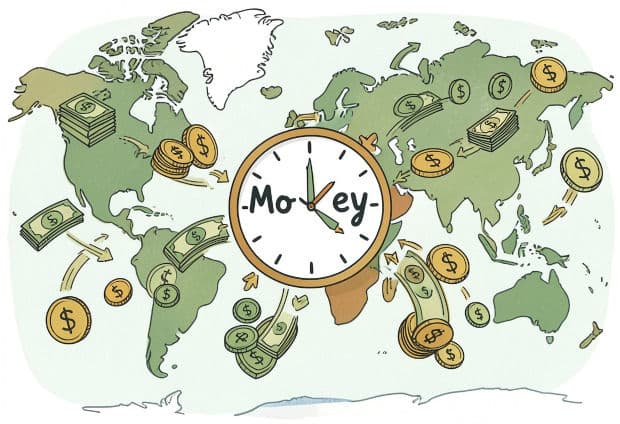
Every single day you go to a shop, hand over some notes, and walk away with what you need. The shopkeeper happily accepts those notes without any hesitation. But have you ever stopped and thought — why does that work? What is actually behind those pieces of paper that makes everyone willing to accept them? Why does a 500 taka note say "চাহিবামাত্র ইহার বাহককে দিতে বাধ্য থাকিবে" — meaning the bearer must be paid on demand? Money is so deeply embedded in our daily lives that most of us never question how it actually works. But understanding money — what it really is, how it functions, where it came from, and what different types exist — is the foundation of understanding any economy. At its core, money is simply a medium of exchange that people use to trade goods and services, repay debts, and measure value. It sounds simple. But the story behind it spans thousands of years and several fascinating transformations — from cowrie shells and whale teeth to gold coins, paper notes, and digital deposits.