Freemium Business Model Explained: How Free Becomes Profitable
G
GeoRenus Editorial Team
789 views

GeoRenus Editorial Team
The freemium business model lets companies offer basic services for free while charging for premium features. Popularized by tech giants like Spotify, Dropbox, and Skype, this strategy turns free users into paying customers over time. This article explains how the freemium model works, its advantages, risks, real-world examples, and the keys to making it successful.
Imagine walking into a restaurant where you can eat a solid meal for free, but if you want the chef's special steak, you have to pay. That is essentially how the freemium business model works. Companies give you a useful product at no cost, hoping you will eventually love it enough to pay for the upgraded version. It sounds risky, right? But some of the world's biggest companies, including Spotify, Dropbox, and Slack, have built billion-dollar businesses on this exact idea.
In this article, we will break down exactly what the freemium model is, how it works, why some companies thrive with it while others fail, and what makes it one of the most popular business strategies in the digital age.
The word "freemium" is a blend of two words: "free" and "premium." The term was coined by venture capitalist Jarid Lukin in 2006, after tech blogger Fred Wilson asked his readers to come up with a name for this growing business strategy. But the concept itself is much older than the name.
In simple terms, a freemium business model offers a basic version of a product or service for free, while charging money for advanced features, extra functionality, or premium content. The idea is straightforward: let people try before they buy. Once they see the value, a portion of them will be willing to open their wallets.
Think of it like a gym that lets you use the treadmills for free but charges for personal training sessions or access to the sauna. You get real value from the free offering, but there is always something better waiting behind the paywall.
The roots of freemium go back to the 1980s when software companies started offering limited free versions of their programs. These were called "shareware" or "lite versions." Companies like McAfee used this approach to spread their antivirus software across millions of computers. The free version did the basics, but you needed to pay for the full protection suite.
"Give your service away for free, possibly ad-supported but maybe not, acquire a lot of customers very efficiently through word of mouth, referral networks, organic search marketing, etc., then offer premium-priced value-added services or an enhanced version of your service to your customer base."
That quote from Fred Wilson pretty much captures the essence of freemium. It is not about giving everything away. It is about being smart with what you give and what you charge for.
The freemium model works on a simple but powerful principle: attract millions of users with a free product, then convert a small percentage into paying customers. The revenue from those paying users needs to be large enough to cover the cost of serving everyone, including the free users.
Here is how it typically unfolds, step by step:
Now, you might think that 2% to 5% sounds incredibly low. And you would be right to question it. But here is the math that makes it work: if you have 100 million free users and just 3% convert to a $10 per month plan, that is $30 million in monthly recurring revenue. Suddenly, that small percentage looks pretty impressive.
The key is scale. Freemium only works when you can serve a massive number of free users at a relatively low cost per user. That is why this model thrives in the software and digital services industry, where the marginal cost of adding one more user is close to zero.
Spotify is a perfect example. Their free tier includes ads between songs and limited skips. For $9.99 per month, you get ad-free listening, offline downloads, and higher audio quality. As of 2023, Spotify had over 600 million total users, with about 220 million paying subscribers. That is roughly a 37% conversion rate, which is exceptionally high in the freemium world.
Not every company can just slap a free tier on their product and expect magic to happen. A successful freemium strategy requires careful planning and execution. Let us look at the three most important ingredients.
Before launching a freemium product, you need to answer some critical questions. What is your target conversion rate? How many free users can your infrastructure handle? What is the lifetime value of a paying customer, and does it justify the cost of supporting free users?
Companies that skip this step often find themselves bleeding cash. Evernote, for instance, struggled for years because their free tier was too generous. Users had very little reason to upgrade. The company eventually had to dramatically cut free features and raise premium prices to survive.
"The biggest mistake in freemium is making your free product so good that nobody needs to upgrade, or so bad that nobody wants to stay."
Your goals should include specific metrics: a target number of free users within the first year, a target conversion rate within the first 90 days, and a clear understanding of how long it takes a free user to become a paying customer.
Understanding your audience is absolutely essential. In a freemium model, you essentially have two types of customers: those who will never pay and those who might. The trick is to design your product so that the free tier appeals to both groups while creating natural upgrade triggers for the second.
For example, Dropbox understood that individual users might be happy with 2 GB of free storage, but business teams sharing large files would quickly need more. Their freemium model was designed so that as users' needs grew, so did the incentive to upgrade.
You also need to think about the viral potential of your free users. Even if they never pay, free users can still generate value by spreading the word, creating content on your platform, or inviting others. LinkedIn's free users, for instance, make the network more valuable for everyone, including the premium subscribers who pay for advanced recruiting and sales tools.
The product itself is where the rubber meets the road. Your free version needs to do two seemingly contradictory things at once: it must be good enough to keep users engaged, and it must leave enough value on the table to justify upgrading.
There are several common approaches to structuring freemium products:
The best freemium products create what marketers call an "aha moment" early in the user journey. This is the point where the user realizes the product is valuable and becomes invested in using it. Once they hit that moment, the likelihood of eventual conversion skyrockets.
The freemium model is not all sunshine and rainbows. It comes with significant risks that have sunk many promising companies. Here are the big ones to watch out for.
Free users cost money. They use server resources, bandwidth, storage, and customer support. If your conversion rate is too low or your infrastructure costs are too high, you can end up in a situation where the revenue from paying customers cannot cover the cost of supporting the free users.
This is sometimes called the "penny gap" problem. There is a massive psychological difference between free and even one cent. Many users who are happy to use a free product would never consider paying any amount at all. Studies show that the gap between $0 and $1 is far wider than the gap between $1 and $100 in terms of user willingness to pay.
"Free is not a price point. Free is a state of mind. And changing someone's state of mind from free to paying is one of the hardest things in business."
Freemium is not a get-rich-quick scheme. Building a large enough user base and converting a meaningful percentage of them takes time, often years, not months. During that period, the company needs to sustain itself financially, which usually means raising significant venture capital.
Slack, for example, operated for years with a generous free tier before reaching profitability. The company was valued at over $7 billion before it ever turned a profit. Not every startup has the runway to wait that long.
Companies must be prepared for a long burn period where they are investing heavily in growth without seeing immediate returns. This requires patient investors, a solid financial plan, and the discipline to stick with the strategy even when the numbers look scary.
Perhaps the trickiest aspect of freemium is finding the right balance between what you give away and what you charge for. Get it wrong in either direction, and you are in trouble.
If the free version is too generous, users have no reason to upgrade. Your conversion rate drops to nearly zero, and you are essentially running a charity. If the free version is too limited, users will leave before they ever experience the value of your product. They will find a competitor who offers more for free.
The sweet spot is what the industry calls a "value cliff" — the point where users are getting great value from the free tier but can clearly see that significantly more value exists in the premium tier. Finding this cliff requires constant experimentation, A/B testing, and close attention to user behavior.
Despite the risks, freemium has some powerful advantages that explain its popularity:
On the flip side, freemium has some notable drawbacks:
Let us look at two companies that have used the freemium model with remarkable success, each taking a slightly different approach.
Skype is one of the earliest and most famous examples of the freemium model in action. Launched in 2003 by Niklas Zennstrom and Janus Friis, Skype offered something revolutionary: free voice and video calls over the internet. At a time when long-distance phone calls could cost a fortune, Skype was a game changer.
The free version allowed unlimited calls between Skype users. The premium product, called SkypeOut (later Skype Credit), let users call landlines and mobile phones at rates far below traditional carriers. They also offered a premium subscription for businesses that included features like screen sharing, group video calls, and integration with office phone systems.
Skype's freemium strategy worked brilliantly. By 2005, just two years after launch, the service had over 50 million registered users. Microsoft acquired Skype in 2011 for $8.5 billion, making it one of the largest tech acquisitions at the time. At its peak, Skype carried an estimated 40% of all international phone traffic.
"Skype proved that if you give people a genuinely useful free product, they will not only use it but also become your most powerful marketing channel."
Skype's success was built on a simple truth: the free product was so good that people naturally told their friends about it. Every new user made the network more valuable, creating a virtuous cycle of growth.
MailChimp tells a different but equally compelling freemium story. Founded in 2001 by Ben Chestnut and Dan Kurzius, the company started as a paid email marketing service. For its first eight years, MailChimp grew steadily but unremarkably.
Then, in September 2009, MailChimp introduced a freemium plan called "Forever Free." The free tier allowed users to send up to 12,000 emails per month to up to 2,000 subscribers. For small businesses and startups just getting started with email marketing, this was incredibly generous.
The results were staggering. Within one year of launching the free plan, MailChimp's user base grew by 150%. Within five years, it went from about 85,000 users to over 7 million. And because the company had extremely efficient operations, the cost of serving free users was manageable.
MailChimp's genius was in the upgrade path. As small businesses grew, their email lists grew too. Eventually, they would exceed the free tier's limits and naturally transition to a paid plan. By the time they needed to pay, they were already deeply invested in the platform and comfortable with the tool.
"MailChimp did not just acquire users with freemium. They acquired loyal customers who grew with them. That is the holy grail of SaaS business."
In November 2021, Intuit acquired MailChimp for approximately $12 billion, making it the largest acquisition in Intuit's history. From a bootstrapped startup with no venture capital to a $12 billion exit, MailChimp's freemium strategy played a central role in its journey.
The freemium model is not for every business. It requires patience, scale, and a deep understanding of your customers. But when done right, as Skype and MailChimp have demonstrated, it can be one of the most powerful growth strategies in the modern business world. The key is to remember that "free" is not a loss. It is an investment in your future paying customers.
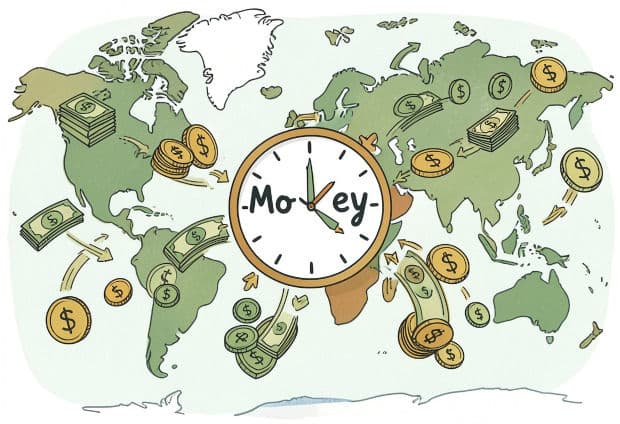
Every single day you go to a shop, hand over some notes, and walk away with what you need. The shopkeeper happily accepts those notes without any hesitation. But have you ever stopped and thought — why does that work? What is actually behind those pieces of paper that makes everyone willing to accept them? Why does a 500 taka note say "চাহিবামাত্র ইহার বাহককে দিতে বাধ্য থাকিবে" — meaning the bearer must be paid on demand? Money is so deeply embedded in our daily lives that most of us never question how it actually works. But understanding money — what it really is, how it functions, where it came from, and what different types exist — is the foundation of understanding any economy. At its core, money is simply a medium of exchange that people use to trade goods and services, repay debts, and measure value. It sounds simple. But the story behind it spans thousands of years and several fascinating transformations — from cowrie shells and whale teeth to gold coins, paper notes, and digital deposits.