Customer Data Monetization Model
G
GeoRenus Editorial Team
634 views

GeoRenus Editorial Team
Customer data monetization is a business model where companies offer free or low-cost services to users, collect their personal data, and then sell or leverage that data for revenue. Companies like Facebook, Google, and PatientsLikeMe have built multi-billion dollar empires using this approach. This article explains how the model works, what makes it successful, the risks involved, and real-world examples of companies that profit from user data.
Have you ever wondered why some of the most popular apps and platforms in the world are completely free to use? Think about it. You do not pay a single dollar to scroll through Facebook, search on Google, or browse TikTok. Yet these companies are worth hundreds of billions of dollars. The answer lies in a powerful business model called customer data monetization. In simple terms, you are not the customer. You are the product. These companies collect your data and turn it into cold, hard cash.
This model has reshaped the global economy. According to a report by McKinsey, data-driven organizations are 23 times more likely to acquire customers and 6 times more likely to retain them. The data economy is booming, and understanding how it works is essential for anyone interested in modern business models.
Customer data monetization is a business model where a company provides a free or low-cost product or service, collects data from the users of that product, and then generates revenue by selling, licensing, or leveraging that data. The data can be sold directly to third parties, used to power targeted advertising, or analyzed to create insights that other businesses will pay for.
Think of it like a trade. You get a free email service, a social media platform, or a health tracking app. In return, the company gets your browsing habits, your location history, your purchase preferences, and sometimes even your medical information. That data is then packaged and sold to advertisers, researchers, or other companies who want to understand consumer behavior.
As the famous saying goes, "If you are not paying for the product, you are the product." This phrase perfectly captures the essence of customer data monetization. The real customers are the advertisers and data buyers. The users are the source of the raw material, which is data.
The global big data market was valued at approximately $274 billion in 2023 and is expected to grow to over $655 billion by 2029. This massive growth is largely driven by companies that have mastered the art of turning user data into revenue streams.
The process of customer data monetization follows a relatively straightforward path, even though the technology behind it can be incredibly complex. Here is how it typically works, step by step.
First, the company builds a product or service that attracts a large number of users. This could be a social media platform, a search engine, a messaging app, or even a fitness tracker. The key is that the product must be compelling enough to attract millions, or ideally billions, of users. The more users, the more data, and the more valuable the entire operation becomes.
Second, the company collects data from those users. This data can include demographic information like age and gender, behavioral data like browsing history and purchase patterns, location data, device information, and even social connections. Most users agree to this data collection when they accept the terms of service, often without reading them.
Third, the company analyzes and organizes the data. Raw data is not very useful on its own. Companies use sophisticated algorithms, machine learning models, and artificial intelligence to process and categorize the data into meaningful segments. For example, they might identify a group of users who are interested in luxury cars, or another group that frequently searches for healthy recipes.
Fourth, the company monetizes the data. This can happen in several ways. The most common method is targeted advertising. Companies like Facebook and Google sell advertising space and use the data they have collected to show each user ads that are specifically relevant to them. Another method is direct data sales, where the company sells raw or processed data to other businesses. A third method is creating data products, like market research reports or consumer insight dashboards, and selling those to corporate clients.
Tim Cook, CEO of Apple, once said, "You are not our product. Our product is the iPhone. We design our products to do more and require less of your data." This was a direct jab at companies that rely on data monetization, highlighting the philosophical divide between companies that sell products and companies that sell data.
Not every company that collects data can successfully monetize it. Building a profitable data monetization model requires careful planning and execution across several key areas.
The foundation of any data monetization model is a product or service that people actually want to use. If nobody downloads your app or visits your website, you will have no data to monetize. The product must solve a real problem or fulfill a genuine desire. Facebook solved the problem of staying connected with friends. Google solved the problem of finding information on the internet. Spotify solved the problem of discovering and listening to music.
The product also needs to encourage frequent and prolonged engagement. The more time users spend on the platform, the more data the company can collect. This is why social media apps are designed to be addictive. Features like infinite scrolling, push notifications, and algorithmic content feeds are all designed to keep you coming back.
A McKinsey study found that companies with strong digital engagement generate up to 5 times more data per user than companies with low engagement. That is a massive difference in potential revenue.
Before a company starts monetizing data, it needs to define clear goals. What kind of revenue does it want to generate? Does it want to sell advertising, license data to partners, or build data products? Each approach requires different infrastructure, partnerships, and strategies.
For example, if the goal is advertising revenue, the company needs to build an ad platform, recruit advertisers, and develop targeting algorithms. If the goal is data licensing, the company needs to build data pipelines, create clean datasets, and establish relationships with data buyers. Without clear goals, a company can waste millions of dollars building infrastructure that does not align with its revenue strategy.
Setting measurable targets is also critical. A company might aim to reach $10 million in annual data revenue within three years or to increase average revenue per user (ARPU) by 15% year over year. These targets keep the team focused and accountable.
Not all data is equally valuable. A company needs to identify which types of data it collects that are most valuable to potential buyers. Purchase intent data, for example, is extremely valuable to advertisers because it indicates that a user is likely to buy something soon. Demographic data is useful but less valuable on its own because it is widely available.
Companies must also invest in data analysis capabilities. This means hiring data scientists, building data warehouses, and deploying machine learning models. The goal is to transform raw data into actionable insights. A retailer might use customer data to predict which products will be popular next season. A healthcare company might analyze patient data to identify trends in disease prevalence.
According to Harvard Business Review, "The companies that win at data monetization are not the ones with the most data. They are the ones that can extract the most value from the data they have."
Data privacy regulations are one of the biggest challenges facing companies that monetize customer data. The European Union's General Data Protection Regulation (GDPR), which took effect in 2018, gives users the right to know what data is being collected, request deletion of their data, and opt out of data sales. Violations can result in fines of up to 4% of global annual revenue or 20 million euros, whichever is greater.
In the United States, the California Consumer Privacy Act (CCPA) provides similar protections for California residents. Other states and countries are following suit with their own data privacy laws. Companies that monetize data must invest heavily in compliance to avoid massive fines and reputational damage.
A successful data monetization model must be built with privacy and compliance at its core, not as an afterthought. Companies that treat data privacy as a strategic priority tend to build stronger trust with users, which ironically leads to more data sharing and better monetization outcomes.
While the potential rewards of data monetization are enormous, the risks are equally significant. Companies that fail to manage these risks can face devastating consequences.
One of the biggest risks is that data sold to third parties can be misused. Once data leaves a company's control, it is difficult to ensure that it is used responsibly. The Cambridge Analytica scandal is a perfect example. Data from approximately 87 million Facebook users was harvested and used for political advertising without their consent. This led to a massive public backlash, congressional hearings, and a $5 billion fine from the Federal Trade Commission (FTC).
Companies must carefully vet their data partners and establish strict contracts that govern how data can be used. Even so, the risk of misuse can never be completely eliminated.
Storing vast amounts of personal data creates a significant cybersecurity risk. Data breaches can expose sensitive information like names, addresses, credit card numbers, and even medical records. The cost of a data breach is staggering. According to IBM's Cost of a Data Breach Report, the average cost of a data breach in 2023 was $4.45 million, a record high.
Beyond the financial cost, data breaches destroy consumer trust. Once users learn that their data has been compromised, many will leave the platform entirely. Rebuilding that trust can take years and cost far more than the breach itself.
There are several other risks to consider. Regulatory risk is constantly evolving as governments around the world introduce new data privacy laws. Reputational risk can arise even from legal data practices if the public perceives them as invasive or unethical. Competitive risk exists because if a company's data monetization practices drive users away, competitors who offer better privacy protections may gain market share.
There is also the risk of data becoming obsolete. Consumer preferences change rapidly, and data that was valuable six months ago may be worthless today. Companies must continuously refresh and update their data to maintain its value.
Shoshana Zuboff, author of The Age of Surveillance Capitalism, famously wrote, "Surveillance capitalism claims human experience as free raw material for translation into behavioral data." This perspective highlights the deeper ethical tensions at the heart of the data monetization model.
To truly understand how customer data monetization works in practice, let us look at two very different companies that have built their businesses around this model.
Facebook, now known as Meta, is arguably the most famous example of customer data monetization in the world. Founded by Mark Zuckerberg in 2004, Facebook started as a simple social networking site for college students. Today, it has over 3 billion monthly active users and generates more than $130 billion in annual revenue, with approximately 97% of that revenue coming from advertising.
Here is how it works. When you use Facebook, Instagram, or WhatsApp, the company collects an enormous amount of data about you. This includes your posts, likes, comments, friend list, groups, events, location, device type, browsing history on and off Facebook, and much more. Facebook then uses this data to build a detailed profile of each user.
Advertisers can then use Facebook's ad platform to target specific groups of users based on their profiles. For example, a luxury watch brand might target men aged 30 to 50 who earn more than $100,000 per year and have shown interest in luxury goods. Because the targeting is so precise, advertisers are willing to pay premium prices for Facebook ads.
However, Facebook's data practices have not been without controversy. The Cambridge Analytica scandal in 2018 revealed that a political consulting firm had accessed the personal data of millions of Facebook users without their knowledge. This led to widespread public outrage and a $5 billion settlement with the FTC, the largest privacy-related fine in history at the time. Mark Zuckerberg was called to testify before the United States Congress, and the incident sparked a global conversation about data privacy.
Despite these challenges, Facebook remains one of the most profitable companies in the world. Its ability to collect, analyze, and monetize user data at scale is virtually unmatched. The company's advertising platform is so effective that many small businesses rely on it as their primary marketing channel.
PatientsLikeMe offers a very different take on customer data monetization. Founded in 2004, PatientsLikeMe is a health-focused social network where patients with chronic diseases can connect, share experiences, and track their symptoms and treatments. The platform covers more than 2,800 medical conditions and has hundreds of thousands of members.
The platform is free for patients. In return, PatientsLikeMe collects detailed health data, including symptoms, treatments, side effects, and outcomes. This data is anonymized and then sold to pharmaceutical companies, medical researchers, and healthcare organizations. These buyers use the data to understand how patients experience diseases in the real world, identify unmet medical needs, and develop new treatments.
What makes PatientsLikeMe unique is its transparency about data monetization. The company openly tells its users that their data will be shared with partners. The company's co-founder, Ben Heywood, explained, "We believe that sharing health data openly can lead to better treatments and better outcomes for patients everywhere." Many users are willing to share their data because they believe it can contribute to medical research and help other patients.
In 2019, UnitedHealth Group acquired PatientsLikeMe for an undisclosed amount, recognizing the immense value of the platform's health data. The acquisition raised some concerns about data privacy, particularly given that UnitedHealth is one of the largest health insurance companies in the world. Critics worried that patient data could be used to deny coverage or increase premiums, although UnitedHealth stated that it would not use the data for insurance underwriting.
PatientsLikeMe demonstrates that data monetization is not limited to tech giants. Even niche platforms with relatively small user bases can build successful data monetization models if they collect highly specialized and valuable data.
The customer data monetization model is one of the most powerful and controversial business models of the digital age. It has enabled the creation of products that billions of people use every day, while also raising profound questions about privacy, consent, and the value of personal information. Whether you view it as an innovative business model or a threat to individual privacy, there is no denying that data monetization will continue to shape the global economy for decades to come. As consumers, the best thing we can do is stay informed about how our data is being used and make conscious choices about which platforms we trust with our personal information.
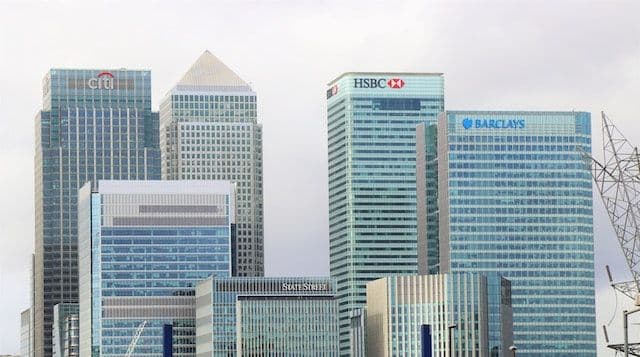
Most people use banks every single day — depositing salaries, withdrawing cash, transferring money, paying bills — without ever really thinking about how the whole system actually works. A bank is a licensed financial institution that accepts deposits from the public and uses those deposits to provide loans to individuals and businesses. Everything a bank does — from accepting your savings to issuing credit cards to printing cheques — falls under the broad category of banking. But banks are not just convenient places to store your money. They are the central nervous system of any economy — the institutions that keep money flowing productively through the system, connecting people who have surplus funds with people and businesses that need capital. And in Bangladesh, where Bangladesh Bank serves as the central authority overseeing the entire financial system, understanding how banking works is genuinely useful knowledge for anyone managing their personal finances, running a business, or simply trying to make smarter decisions with their money.