Money vs Currency: What's the Difference and Why It Matters
G
GeoRenus Editorial Team
460 views
GeoRenus Editorial Team
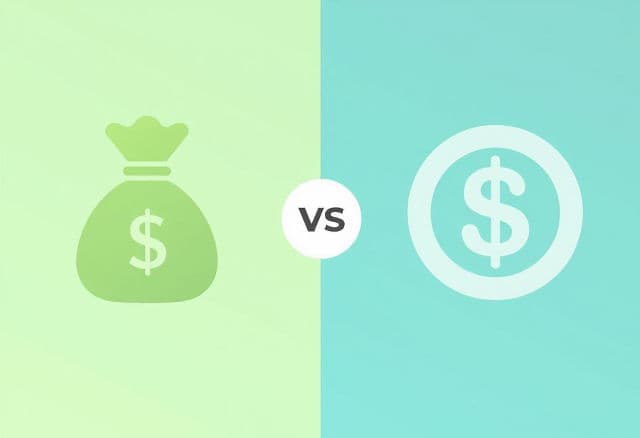
Money and currency are related but distinct concepts. Money is a broad term for any universally accepted medium of exchange, unit of account, and store of value — it can take many forms including gold, digital assets, and physical cash. Currency is a specific type of money issued by a government or central bank for use within a particular country. Key differences include their nature, forms, backing, intrinsic value, stability, and international acceptance. All currency is money, but not all money is currency.
Money and currency — we use these two words interchangeably in our daily lives. When someone says "I need some money," they probably mean they need cash. And when someone talks about "foreign currency," most people think of the notes and coins used in another country.
But here's the thing: in economics and finance, money and currency are not the same thing. They overlap, yes, but they have fundamentally different characteristics. Understanding this distinction isn't just an academic exercise — it can change how you think about saving, investing, and building wealth.
To understand the difference between money and currency, you first need to understand what each term actually means. Let's start with the basics.
Money is a universally accepted medium of exchange that serves as a unit of account and a store of value. It can take many different forms — government-issued notes and coins, digital currencies, gold, silver, or even cryptocurrencies like Bitcoin.
The key characteristic that makes something "money" is that it fulfills three core functions:
Here's an important point: money doesn't have to be physical. Gold has been considered money for thousands of years. Bitcoin, which exists only digitally, is increasingly recognized as money. Even real estate or valuable artwork can function as money in the sense that they store value.
Currency is a specific type of money — it's the officially recognized medium of exchange issued by a country's government or central bank. In simpler terms, currency is the banknotes and coins (and increasingly, digital representations) that you use in everyday transactions within a specific country or region.
For example, the U.S. dollar is America's currency. The Bangladeshi taka is Bangladesh's currency. The euro is the shared currency of 20 European nations. Each currency gets its value from the government's backing and legal tender laws — meaning businesses and individuals within that country are legally required to accept it for transactions.
Unlike money (the broader concept), currency is always issued by a government authority and is accepted only within a specific geographic area or economic system.
Currency comes in several forms in the modern world:
This is what most people think of when they hear "currency." It includes the paper bills and metal coins issued by a country's central bank. Fiat currency has no intrinsic value — a $100 bill is just a piece of paper. Its value comes entirely from government decree and public trust.
In the 21st century, we've seen the rise of decentralized digital currencies like Bitcoin, Ethereum, and thousands of other cryptocurrencies. While not issued by any government, some countries have started recognizing them as legal payment methods. El Salvador, for example, made Bitcoin legal tender in 2021.
Historically, currencies were often backed by physical commodities — most notably gold and silver. Under the gold standard, you could theoretically exchange your paper money for a fixed amount of gold at the bank. While commodity-backed currencies are mostly a thing of the past, they played a crucial role in shaping today's monetary systems.
For something to work as an effective currency, it needs certain characteristics:
Now that we understand both concepts, let's look at the specific differences:
Money is the broader concept — a universally recognized medium of exchange that serves as a unit of account and store of value. It can take many forms.
Currency is a subset of money. It's the specific, government-issued form of money used within a particular country.
Money can take various forms — banknotes, coins, digital currencies, gold, silver, real estate, stocks, and more.
Currency typically takes only two forms in today's world: physical (banknotes and coins) and digital (bank balances and mobile money).
Money fulfills three functions: medium of exchange, unit of account, and store of value.
Currency primarily functions as a medium of exchange within a specific geographic area. Its store of value function is limited because inflation erodes its purchasing power over time.
Money can have intrinsic value. Gold, for example, is valuable because of its physical properties — it's scarce, durable, and universally desired.
Currency is mostly backed by government decree (fiat). A $100 bill has no intrinsic value — its worth comes entirely from the government's promise and the public's trust.
Money can be issued or created by anyone — governments, banks, private institutions, or even decentralized networks (like Bitcoin).
Currency is exclusively issued by a government's central bank or authorized monetary authority.
Money — particularly forms like gold — can be accepted globally, regardless of borders. Gold holds value in virtually every country on Earth.
Currency is typically accepted only within its issuing country or region. You can't walk into a store in Tokyo and pay with Bangladeshi taka.
Money can have intrinsic value — gold and silver coins, for instance, are worth something even if the government that issued them no longer exists.
Currency generally has no intrinsic value. If a government collapses, its currency often becomes worthless paper. Zimbabwe's hyperinflation in 2008 turned 100 trillion dollar notes into collector's items rather than spendable money.
Money (in forms like gold) tends to be relatively stable over long periods. Gold has maintained its purchasing power for centuries.
Currency is subject to inflation, monetary policy changes, and economic conditions. The purchasing power of most currencies decreases over time. A dollar today buys roughly what 7 cents could buy in 1920.
Money in certain forms (gold, Bitcoin, widely-traded financial assets) is recognized and valued across borders.
Currency is usually limited to its country of origin. International transactions require currency exchange — converting one currency into another at the prevailing exchange rate.
Money has various digital forms — cryptocurrencies, digital gold, tokenized assets, and more.
Currency is increasingly digital too, but typically only in forms recognized by the banking system — bank transfers, mobile payments, and the emerging concept of Central Bank Digital Currencies (CBDCs).
Now that you know the differences, here's a practical guide on when to use each term:
You're talking about wealth, value, or the general concept of financial resources. For example:
You're referring to the specific monetary unit of a country or discussing exchange rates. For example:
Money is a vast, multifaceted concept that encompasses everything from gold bars to Bitcoin to the balance in your savings account. Currency, on the other hand, is just one specific form of money — the government-issued notes and coins (and their digital equivalents) that we use for daily transactions.
Here's the key takeaway: all currency is money, but not all money is currency. Understanding this distinction helps you think more clearly about wealth, savings, and investment. Currency loses value over time due to inflation. Money — in the right forms — can preserve and even grow your wealth for generations.
As the famous saying goes: "Currency is what you earn. Money is what you keep." The wealthiest people in history have always understood this difference — and now, so do you.
Since the dawn of human civilization, people have engaged in trade through barter. However, around 5,000 years ago, humans gradually abandoned the barter system and began using metallic coins. These coins were made from copper, silver, and gold. Around 1260 AD, the first paper currency was introduced in China and eventually spread throughout the world. In the 1930s, the first credit cards were issued by commercial establishments, and by the 1950s, banks began issuing them as well.