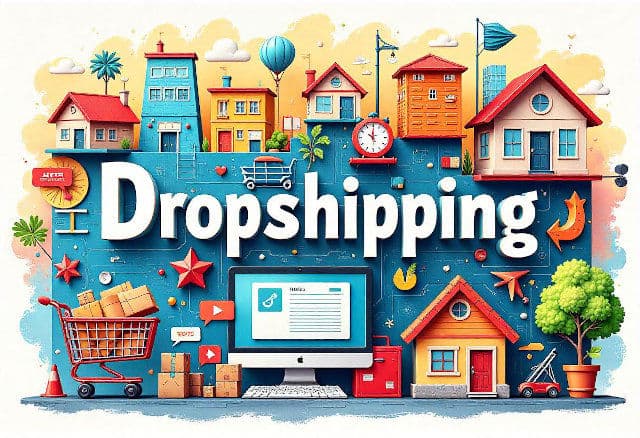
Dropshipping: What It Is, How It Works, Advantages, and Disadvantages
G
GeoRenus Editorial Team
972 views
Summary
Dropshipping is an online retail business model where the seller markets and sells products without holding inventory. When a customer places an order, the seller forwards it to a third-party supplier who ships the product directly to the customer. This guide covers the complete dropshipping process from niche selection and store setup to supplier management and scaling, along with its key advantages like low investment and location independence, and disadvantages including low margins and intense competition.
Key Takeaways
- Dropshipping is an online retail model where the seller markets and sells products without holding inventory—suppliers ship directly to customers on the seller's behalf.
- The process involves 10 key steps: niche selection, market research, store setup, supplier selection, product selection, pricing, marketing, order fulfillment, customer support, and scaling.
- Key advantages include low initial investment, minimal risk, location independence, wide product range, scalability, and the ability to focus on marketing.
- Major disadvantages include low profit margins (typically 15-45%), lack of quality control, shipping complications, and intense market competition.
- Dropshipping is a type of e-commerce but not all e-commerce is dropshipping—it's one business model within the broader online retail ecosystem.
- Popular platforms for dropshipping include Shopify, WooCommerce, and BigCommerce, with suppliers found on AliExpress, Oberlo, SaleHoo, and Spocket.
What Is Dropshipping?
Dropshipping is an online retail business model where the seller doesn't keep the products in stock. Instead, when a customer places an order, the seller purchases the item from a third-party supplier, who then ships it directly to the customer. In other words, the seller acts as a middleman—they market and sell the products without ever touching or storing them.
In more detail, dropshipping is a business model where you don't need to buy products upfront or manage inventory. You simply create an online store, list products from suppliers, and when someone buys from your store, the supplier handles the packaging and shipping directly to your customer.
So if you're a seller, and you only sell products—not manufacture them—then dropshipping might be the ideal model for you. You focus on marketing and customer acquisition while your suppliers handle the logistics. According to eMarketer, global e-commerce sales were projected to surpass $6.3 trillion by 2024, and dropshipping has been a major driver of this growth.
How Dropshipping Works: A Step-by-Step Breakdown
Dropshipping isn't a single process—it involves multiple interconnected steps. Each phase is crucial for building a successful business. Here's how it works from start to finish:
1. Niche Selection
The first and most important step is choosing a specific niche for your online store. A niche is a focused segment of the market that caters to a particular audience. Instead of trying to sell everything, pick a category you're passionate about or one that has strong demand.
For example, instead of a general "electronics store," you might focus on "wireless earbuds and accessories." A well-defined niche helps you stand out from competitors and target the right customers.
2. Market Research
Before diving in, research the selected niche thoroughly. Study the competition, analyze trending products, and understand your target audience's preferences and buying behavior. Tools like Google Trends, SEMrush, and social media analytics can provide valuable insights into market demand and competition levels.
3. Store Setup
The critical step in dropshipping is setting up an online store. Platforms like Shopify, WooCommerce, and BigCommerce make it easy to create professional-looking stores without coding knowledge. Your store should have a clean design, easy navigation, and secure payment options.
4. Supplier Selection
Dropshippers typically source products from wholesale suppliers or manufacturers. The reliability of your supplier directly affects your business reputation. Popular supplier platforms include:
- AliExpress – One of the largest dropshipping supplier platforms worldwide
- Oberlo – Integrates directly with Shopify for easy product importing
- SaleHoo – A directory of vetted wholesale suppliers
- Spocket – Focuses on US and EU-based suppliers for faster shipping
5. Product Selection and Pricing
From your chosen supplier's catalog, select products that align with your niche and have strong demand. When setting prices, consider the product cost, shipping fees, and your desired profit margin. A common formula is:
Selling Price = Product Cost + Shipping Fee + Profit Margin
For example, if a product costs $10 from the supplier and shipping is $3, you might set your price at $25, giving you a $12 profit per unit.
6. Marketing Your Store
To attract potential customers, you'll need effective marketing strategies. The most common methods for dropshipping businesses include:
- Facebook and Instagram Ads – Targeted advertising based on demographics and interests
- Google Ads – Capture customers who are actively searching for your products
- SEO – Optimize your store for organic search traffic
- Influencer Marketing – Partner with social media influencers to promote your products
- Email Marketing – Build a subscriber list and nurture leads with targeted campaigns
7. Order Processing and Fulfillment
When a customer places an order on your store, the process goes like this: you receive the order and payment, then forward the order details to your supplier, who packages and ships the product directly to the customer. The customer receives the product as if it came from your store.
To solve fulfillment challenges, modern dropshippers often use shipping tracking tools that automatically update customers on their order status, improving the overall experience.
8. Customer Support
Handling customer queries, complaints, reviews, and returns is a crucial part of running a dropshipping business. Since you don't control the product quality or shipping speed, having a responsive customer support system is essential.
Use live chat, email, phone support, and chatbots to address customer concerns promptly. "Customer service shouldn't just be a department, it should be the entire company." — Tony Hsieh
9. Monitor and Optimize
Regularly monitor your store's performance by tracking key metrics like conversion rates, average order value, customer acquisition cost, and return rates. Use analytics tools to identify what's working and what needs improvement.
10. Scale Your Business
As your business grows, focus on expanding your product range, testing new marketing channels, and improving supplier relationships. You can also consider adding complementary products to increase average order value and customer lifetime value.
Why You Should Consider Dropshipping
Dropshipping has become one of the most popular e-commerce models, and for good reason. Here are the key advantages:
Low Initial Investment
Unlike traditional retail, dropshipping requires minimal upfront capital. You don't need to buy inventory in bulk, rent warehouse space, or hire fulfillment staff. Your main expenses are your online store platform, domain name, and marketing budget.
Low Risk
Since you don't purchase products until a customer has already paid for them, you're not stuck with unsold inventory. If a product doesn't sell well, you simply remove it from your store and try something new—no financial loss.
Wide Product Range
Without storage limitations, you can offer a diverse range of products across different categories. You can test new products quickly without committing to bulk purchases.
Location Independence
You can run a dropshipping business from anywhere in the world with an internet connection. Whether you're at home, in a coffee shop, or traveling, your store runs 24/7. This flexibility is one of the biggest draws for aspiring entrepreneurs.
Scalability
Scaling a dropshipping business is relatively easy compared to traditional retail. Since your suppliers handle fulfillment, taking on more orders doesn't mean proportionally more work for you. You can focus on marketing and growth while suppliers manage the operations.
Focus on Marketing
Because inventory management is outsourced, dropshippers can dedicate their time and resources to marketing, branding, and customer acquisition—the activities that truly drive revenue growth.
Easy Product Testing
Without committing to bulk purchases, you can easily test new products in your store. Today you might sell jewelry, tomorrow you could pivot to fitness accessories—all without financial risk.
Disadvantages of Dropshipping
While dropshipping offers many benefits, it's important to understand the challenges:
Low Profit Margins
The per-unit profit in dropshipping is typically lower than traditional retail because you're buying products at a higher per-unit cost. Average dropshipping margins range from 15% to 45%, depending on the niche and competition level.
Lack of Quality Control
Since you never see or touch the products, you can't personally verify their quality before they reach your customers. This can lead to customer complaints and returns if suppliers ship defective or subpar items.
Shipping Complications
Long shipping durations and product quality concerns are common challenges. If your supplier is based overseas, customers may wait weeks for delivery. Managing returns and exchanges can also be more complex than in traditional retail.
Intense Competition
The dropshipping market is highly saturated, especially in popular niches. Since barriers to entry are low, thousands of sellers may be offering the same products at similar prices. Standing out requires strong branding, excellent customer service, and effective marketing.
Is Dropshipping the Same as E-Commerce?
While dropshipping is a type of e-commerce, not all e-commerce is dropshipping. E-commerce is the broader term for buying and selling products online, which includes various models like wholesale, private labeling, and dropshipping. Dropshipping is simply one business model within the larger e-commerce ecosystem.
The Bottom Line
In the 21st century, dropshipping has emerged as a dynamic and profitable business model within the e-commerce landscape. It allows aspiring entrepreneurs to start an online business with minimal investment and risk while offering the flexibility to work from anywhere.
However, success in dropshipping isn't automatic. It requires careful niche selection, reliable suppliers, effective marketing, and excellent customer service. The growing number of online shoppers, changing consumer preferences, and the expanding e-commerce market all point to continued opportunities in this space. As "The best time to plant a tree was 20 years ago. The second best time is now." — Chinese Proverb
Recommended for you
From Barter to Bitcoin: The Evolution of Money
Since the dawn of human civilization, people have engaged in trade through barter. However, around 5,000 years ago, humans gradually abandoned the barter system and began using metallic coins. These coins were made from copper, silver, and gold. Around 1260 AD, the first paper currency was introduced in China and eventually spread throughout the world. In the 1930s, the first credit cards were issued by commercial establishments, and by the 1950s, banks began issuing them as well.
Money
How Money Works?

Business
Needs, Wants, and Demands

Business
Red Ocean and Blue Ocean Strategy: Fight the Competition or Make It Irrelevant — The Complete Guide

Canvas & Methods
Minimum Viable Product (MVP): The Smart Way to Launch Your Business With Less Risk
GeoPolitics
The U.S.-China Rivalry: What It Means for the World's Economy, Technology, and Military Balance

Logo
Types of Logos: A Complete Guide to Every Logo Style You See Every Day

Accounting
Assets, Liabilities, and Equity: The Building Blocks of Finance

Accounting
Auditing: Definition, Types, Principles, and How It Works

Accounting
Four Flavors of Accounting: Tax, Project, Financial, and Cost Accounting Explained