Rich Dad Poor Dad: Lessons on Money, Wealth, and Financial Freedom
G
GeoRenus Editorial Team
648 views

GeoRenus Editorial Team
Rich Dad Poor Dad by Robert Kiyosaki is a groundbreaking personal finance book that contrasts the money philosophies of two father figures—one rich, one poor—to teach essential lessons about assets versus liabilities, escaping the rat race, building passive income, and achieving financial freedom. Through simple language and real-world examples, Kiyosaki challenges conventional wisdom about money and provides a blueprint for thinking like an investor, not just an employee.
Published in 1997, Robert Kiyosaki's Rich Dad Poor Dad became one of the best-selling personal finance books of all time, with over 32 million copies sold worldwide. Co-authored with Sharon Lechter, this 336-page business classic challenges conventional wisdom about money and work, offering a radical perspective on building wealth that has inspired millions to rethink their financial futures.
The book tells the story of Kiyosaki's two fathers: his biological father (the "Poor Dad"), a highly educated professor who struggled financially despite his impressive credentials, and his best friend's father (the "Rich Dad"), a successful entrepreneur who became one of the wealthiest men in Hawaii despite never finishing eighth grade. Through contrasting their philosophies and approaches to money, Kiyosaki reveals the fundamental differences between how the rich and the poor think about wealth, work, and financial security.
At its core, Rich Dad Poor Dad is about financial education—something Kiyosaki argues is critically missing from our schools and homes. The book doesn't just teach you about investing or saving; it fundamentally challenges you to change the way you think about money, assets, and what it truly means to be wealthy. Whether you're drowning in debt, living paycheck to paycheck, or already on the path to financial freedom, this book offers insights that can transform your relationship with money forever.
Rich Dad Poor Dad is structured around six major lessons that form the foundation of Kiyosaki's financial philosophy. Each lesson challenges traditional thinking and provides a new framework for understanding wealth creation.
Lesson 1: The Rich Don't Work for Money — This opening lesson flips conventional wisdom on its head. While most people believe hard work and a good salary are the paths to wealth, Kiyosaki argues that the rich focus on making money work for them instead. The chapter introduces the concept of the rat race—that endless cycle where people work harder to earn more, only to spend more and remain trapped in their jobs. Rich Dad teaches young Robert that fear and desire drive most people's financial decisions, keeping them enslaved to their paychecks. The wealthy, however, use their minds to overcome these emotions and build systems where money generates more money through investments and businesses.
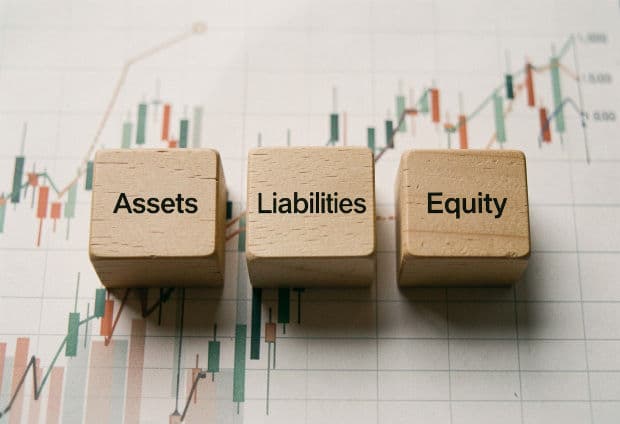
Lesson 2: Why Teach Financial Literacy? — This is perhaps the most critical lesson in the book. Kiyosaki introduces the fundamental distinction between assets and liabilities. According to him, an asset is anything that puts money in your pocket, while a liability is anything that takes money out of your pocket. This simple definition leads to a shocking revelation: most things people think are assets—like their primary residence—are actually liabilities because they drain money through mortgage payments, taxes, insurance, and maintenance without generating income.
The wealthy focus on acquiring assets: rental properties, stocks that pay dividends, bonds, businesses, and intellectual property that generates royalties. The poor and middle class, meanwhile, acquire liabilities thinking they're assets: expensive cars, boats, and houses that consume their income. Kiyosaki emphasizes that true financial literacy means understanding cash flow—reading financial statements, understanding how money moves, and making decisions based on how things affect your bottom line.
Lesson 3: Mind Your Own Business — This lesson urges readers to focus on building their asset column rather than just increasing their income. Many people confuse their profession with their business. You might be an accountant, teacher, or engineer by profession, but your real business should be acquiring income-producing assets. Kiyosaki recommends keeping your day job for steady income while simultaneously building a portfolio of assets on the side—real estate investments, stocks, bonds, or side businesses that generate passive income.
Lesson 4: The History of Taxes and the Power of Corporations — Kiyosaki explains how the rich use corporations and tax laws to their advantage. Employees earn money, get taxed, and then spend what's left. Business owners earn money, spend it on legitimate business expenses, and get taxed on what's left. This fundamental difference in the order of operations gives business owners significant advantages. The lesson introduces the cash flow quadrant—four ways people earn money: as an Employee (E), Self-Employed (S), Business Owner (B), or Investor (I). The left side (E and S) trades time for money and pays the highest taxes, while the right side (B and I) leverages systems and money to create wealth with better tax advantages.
Lesson 5: The Rich Invent Money — This lesson is about developing financial intelligence and creativity in spotting opportunities others miss. Kiyosaki shares examples of real estate deals where he created value through knowledge and negotiation rather than large amounts of capital. He emphasizes that opportunities are everywhere, but most people can't see them because they lack financial education. The lesson encourages readers to develop skills in accounting, investing, understanding markets, and the law—the components of financial IQ that allow you to "invent money" by creating deals and opportunities.
Lesson 6: Work to Learn—Don't Work for Money — The final lesson advises choosing jobs based on what skills you'll learn rather than just the paycheck. Kiyosaki himself worked in various positions—joining the Marine Corps to learn leadership, working for Xerox to learn sales, and pursuing different ventures to understand various aspects of business. He criticizes over-specialization, arguing that becoming an expert in one narrow field makes you valuable to employers but doesn't necessarily help you build wealth. Instead, learn broadly: sales, marketing, communication, management, and negotiation skills are crucial for building businesses and creating wealth.
Nearly three decades after its publication, Rich Dad Poor Dad remains profoundly relevant. Here's why this book deserves a place on your reading list, regardless of where you are in your financial journey.
Most of us leave school knowing calculus or the history of ancient civilizations but have no idea how to read a balance sheet, understand compound interest, or make our money grow. Rich Dad Poor Dad fills this critical gap. Kiyosaki demystifies financial concepts like assets, liabilities, cash flow, and financial statements in simple, accessible language. You don't need an MBA to understand his teachings—just an open mind and willingness to question what you've been taught about money.
The book teaches you to think like an investor rather than just an employee or consumer. You'll learn to evaluate opportunities based on their impact on your cash flow, to distinguish between good debt and bad debt, and to understand how the wealthy use financial instruments and structures that most people never learn about. This foundational knowledge is essential in a world where financial complexity is increasing and personal responsibility for retirement and wealth building has shifted from employers to individuals.
Perhaps the book's most valuable contribution is its power to fundamentally change how you think about money. Kiyosaki challenges the conventional path: go to school, get good grades, find a secure job, work for 40 years, and retire on a pension. He calls this the industrial age mentality—a mindset that no longer serves us in the information age where job security is an illusion, pensions are disappearing, and the cost of living continues to outpace wage growth.
The book encourages you to shift from thinking "I can't afford it" to asking "How can I afford it?"—a subtle but powerful reframe that opens your mind to possibilities rather than closing it with limitations. It pushes you to see problems as opportunities, to view failures as learning experiences, and to understand that financial struggle is often a symptom of limited thinking rather than limited income. This mindset shift alone can be worth far more than the book's modest price tag.
Rich Dad Poor Dad is an excellent primer for anyone interested in entrepreneurship or investing. While it doesn't provide step-by-step investment strategies or detailed business plans, it lays the philosophical and conceptual groundwork that's essential before diving into those areas.
Kiyosaki shares real examples from his own investing career, particularly in real estate. He explains how he used leverage (using borrowed money to amplify returns), creative financing, and market knowledge to build wealth. He discusses investing in the stock market, building businesses, and creating passive income streams—multiple sources of income that flow in whether you're actively working or not. These concepts provide a roadmap for moving beyond just saving money to actually building wealth through strategic investments and business ownership.
If you grew up in a family where money was always tight, where discussions about finances caused stress and conflict, or where you were taught that "money is the root of all evil" or "rich people are greedy," this book can help you break generational patterns of financial struggle.
Kiyosaki demonstrates that poverty and middle-class struggle are often perpetuated not by lack of opportunity, but by lack of financial education and limiting beliefs about money. His Poor Dad—despite being highly educated and hard-working—remained trapped in financial insecurity because he followed conventional wisdom without questioning it. By contrast, Rich Dad—despite less formal education—achieved extraordinary wealth by thinking differently and seeking financial knowledge outside traditional channels.
The book empowers you to make different choices than previous generations, to teach your children about money in ways you were never taught, and to create a legacy of financial literacy and wealth rather than debt and struggle.
While critics sometimes claim the book is too conceptual, it actually contains numerous practical takeaways. Kiyosaki advises readers to start small—perhaps buying a book on accounting or attending a real estate seminar. He recommends looking for opportunities in your local area, studying successful investors, and constantly expanding your financial vocabulary and knowledge.
He suggests specific actions: pay yourself first by investing in assets before paying bills, reinvest your profits rather than spending them on luxuries, surround yourself with people who support your financial goals, and overcome fear and cynicism that prevent most people from taking action. The book includes exercises at the end of each chapter to help you apply the lessons to your own life, making it more than just inspirational reading—it's a call to action.
Rich Dad Poor Dad is filled with memorable insights that have been quoted millions of times across the world. Here are some of the most powerful quotes that capture the essence of Kiyosaki's teachings:
"The poor and the middle class work for money. The rich have money work for them."
This foundational quote encapsulates the entire philosophy of the book. It's not about working harder or earning a higher salary—it's about changing the relationship between you and your money. Instead of trading hours for dollars indefinitely, the wealthy build systems and acquire assets that generate income without their constant active involvement.
"It's not how much money you make, but how much money you keep, how hard it works for you, and how many generations you keep it for."
This quote challenges the common obsession with high salaries. Many high-income professionals—doctors, lawyers, executives—still struggle financially because they spend everything they earn on liabilities and lifestyle inflation. True wealth is measured not by income but by what you do with that income: saving it, investing it wisely, making it multiply, and building generational wealth.
"The single most powerful asset we all have is our mind. If it is trained well, it can create enormous wealth."
Kiyosaki emphasizes that wealth begins in the mind. Financial intelligence, creativity, and the ability to spot opportunities are more valuable than any amount of starting capital. With the right knowledge and mindset, you can create opportunities from nothing. Without financial education, even winning the lottery often leads to bankruptcy—as statistics about lottery winners sadly demonstrate.
"Workers work hard enough to not be fired, and owners pay just enough so that workers won't quit."
This stark observation reveals the inherent conflict in the employer-employee relationship. It's not meant to be cynical, but rather to wake people up to the reality that job security is largely an illusion and that true financial security comes from ownership—owning assets, businesses, and investments rather than just trading time for money.
"The love of money is the root of all evil. The lack of money is the root of all evil."
Kiyosaki plays with the famous Biblical quote to make a point: money itself is neutral, but both obsessing over it and lacking it can cause problems. The solution is to develop a healthy, educated relationship with money—understanding it, respecting it, and using it as a tool for creating freedom and opportunity rather than being controlled by either greed or scarcity.
"Intelligence solves problems and produces money. Money without financial intelligence is money soon gone."
This quote explains why so many professional athletes, entertainers, and lottery winners end up broke despite earning millions. Without the financial education to manage, invest, and protect wealth, money disappears quickly. Financial intelligence is what allows wealth to compound and last across generations.
"The more a person seeks security, the more that person gives up control over their life."
This powerful insight challenges the conventional pursuit of job security. When you depend entirely on an employer for your livelihood, you surrender control over your time, your earning potential, and your future. The layoff, the bad boss, the company reorganization—any of these can devastate your financial life when you've put all your eggs in the employment basket. True security comes from financial education and multiple income streams, not from a single job.
Beyond the six main lessons, Rich Dad Poor Dad explores several fascinating topics that challenge conventional financial wisdom. These discussions provide depth and nuance to Kiyosaki's philosophy and offer practical insights for building wealth.
Kiyosaki describes what he calls "the downward spiral"—a vicious cycle that traps most people in financial mediocrity. It starts with waking up, going to work, paying bills, earning a paycheck, and then starting the cycle over again. As people earn more money, instead of investing the increase, they upgrade their lifestyle: a bigger house, a nicer car, more expensive vacations. This phenomenon, known as lifestyle inflation, keeps people perpetually broke regardless of income level.
The trap deepens because as expenses increase, so does financial stress, which drives people to work harder and longer hours. This leaves even less time to learn about investing or start a side business, further cementing their dependence on their employer. Credit cards and consumer debt add fuel to this fire, creating monthly obligations that demand ever-higher incomes just to maintain the status quo. Before long, people find themselves in "golden handcuffs"—earning substantial salaries but unable to leave their jobs because their lifestyle expenses have grown to match or exceed their income.
Breaking this spiral requires conscious effort and financial education. Instead of increasing spending with every raise, Kiyosaki advises investing the extra income in assets. Rather than buying a new car with a promotion, use the additional money as a down payment on rental property or to invest in dividend-paying stocks. This reverses the spiral: assets generate income, reducing dependence on employment, creating time to learn and invest more, leading to more assets and more freedom.
One of the most transformative concepts in Rich Dad Poor Dad is passive income—money you earn without actively working for it. This is the holy grail of financial freedom because it breaks the direct link between your time and your income. While you sleep, vacation, or pursue hobbies, passive income continues to flow in.
Kiyosaki emphasizes several sources of passive income. Real estate rental income is one of his favorites—buying properties that generate monthly rent exceeding the mortgage, taxes, insurance, and maintenance costs. The cash flow goes into your pocket while tenants pay down your mortgage, building equity over time. He shares examples of using creative financing and foreclosure opportunities to acquire properties with minimal money down, allowing you to build a real estate portfolio even without substantial capital.
Stock market dividends represent another passive income stream. By investing in dividend-paying stocks or index funds, you receive regular payments simply for owning shares. As you reinvest these dividends to buy more shares, your income compounds over time. Business ownership where you're not actively involved in daily operations also generates passive income—you own the system, hire people to run it, and collect profits. Royalties from books, music, patents, or licensing agreements provide income long after the initial creative work is done.
The goal is to build enough passive income streams that they eventually exceed your living expenses. At that point, you've achieved financial independence—work becomes optional. You can continue working because you love what you do, not because you need the paycheck to survive. This freedom is the ultimate measure of wealth, far more meaningful than net worth or annual income.
The entire narrative of Rich Dad Poor Dad underscores the critical role of mentorship in financial success. Young Robert Kiyosaki was fortunate to have access to two fathers with radically different perspectives, allowing him to compare their approaches and choose the path that resonated with him.
Rich Dad served as Kiyosaki's financial mentor, teaching him lessons that weren't available in school or from his well-educated biological father. These weren't formal lessons in a classroom; they were practical experiences—working in Rich Dad's businesses, attending real estate deals, learning to read financial statements, and most importantly, learning to think like an investor and entrepreneur rather than an employee.
Kiyosaki emphasizes that learning from someone who has actually achieved what you want to achieve is invaluable. If you want to build a successful business, learn from successful business owners, not from professors who have never run a business. If you want to invest in real estate, find investors who are doing deals and learn from their experiences. Books, seminars, and courses are valuable, but nothing replaces learning from someone who has walked the path you want to walk.
He also warns against taking financial advice from people who are struggling financially. Your parents, friends, or colleagues may mean well, but if they're living paycheck to paycheck, their advice will likely keep you in the same situation. This doesn't mean disrespecting them—it simply means recognizing that you need to seek wisdom from those who have the results you desire. Join investment clubs, attend real estate meetups, find successful people in your field and ask them to mentor you or at least share their insights.
Perhaps no idea in Rich Dad Poor Dad generated more controversy than Kiyosaki's assertion that your house is not an asset. This statement contradicts deeply held beliefs about homeownership being the foundation of the American Dream and a guaranteed path to building wealth.
Kiyosaki's argument is based on his strict definition of assets and liabilities. Since an asset puts money in your pocket and a liability takes money out, your primary residence is a liability. Every month, you pay a mortgage, property taxes, insurance, maintenance, utilities, and HOA fees. Money flows out of your pocket, not in. Even if your home appreciates in value, you can't access that appreciation without selling (and needing somewhere else to live) or taking on debt through a home equity loan.
He argues that buying an expensive house early in life is one of the biggest financial mistakes middle-class people make. Young couples, eager to start their lives together, take on massive mortgages—often 3-4 times their annual income—committing themselves to 30 years of debt payments. This mortgage payment becomes their largest monthly expense, consuming money that could have been invested in actual income-producing assets.
Additionally, homeownership creates opportunity costs. The down payment—often tens of thousands of dollars—could have been used to purchase rental properties, invest in the stock market, or start a business. Instead, it's locked in home equity that generates no cash flow. The large monthly payment forces both spouses to work full-time, preventing them from taking risks like starting a business or investing time in education that could increase their earning potential.
Kiyosaki's advice isn't "never buy a house"—it's "don't buy a house until your assets are generating enough passive income to cover the payment." He recommends first building a portfolio of income-producing assets. Then, when your rental properties, dividends, and business income can cover your house payment, buy whatever home you want. At that point, your house is effectively paid for by your assets, making it less of a financial burden. Better yet, the passive income continues to grow, funding not just your mortgage but your entire lifestyle.
This approach requires patience and delayed gratification—living modestly while building wealth rather than immediately buying the biggest house the bank will approve. But it's this discipline that separates those who build lasting wealth from those who remain trapped in the rat race despite high incomes.
Rich Dad Poor Dad isn't just a book about money—it's a book about freedom, choice, and taking control of your financial destiny. Nearly three decades after publication, its core message remains as relevant as ever: the education system teaches us to be employees, not wealth builders; conventional wisdom about money often keeps people trapped in financial struggle; and the key to breaking free is financial education.
The book's greatest strength lies not in providing a detailed investment blueprint—it's deliberately conceptual rather than tactical—but in changing how you think about money. It challenges you to question assumptions, to see opportunities where others see obstacles, and to understand that wealth is a skill that can be learned, not something you're either born with or without.
Kiyosaki's lessons about assets versus liabilities, the rat race, passive income, and the cash flow quadrant provide a framework for evaluating financial decisions. Should you buy that new car or invest in stocks? Should you pursue a higher-paying job or start a side business? Should you save that bonus or use it as a down payment on rental property? The principles in this book help you answer these questions in ways that build wealth rather than just increase spending.
Critics have pointed out that some of Kiyosaki's advice is oversimplified, that he doesn't provide enough specific investment guidance, and that his story of Rich Dad may be embellished or even fabricated. These criticisms have merit—the book should be a starting point, not your only source of financial education. After reading it, you'll need to study accounting, learn about specific investment vehicles, understand tax laws, and develop expertise in your chosen wealth-building strategy whether that's real estate, stocks, businesses, or a combination.
But dismissing Rich Dad Poor Dad because it's not a detailed how-to manual misses the point. The book's purpose is to awaken you to possibilities, to make you uncomfortable with the status quo, and to inspire you to seek financial education. It plants a seed that can grow into genuine wealth if you nurture it with continued learning and action.
Perhaps the most important lesson from Rich Dad Poor Dad is this: financial literacy is the real wealth. You can lose money in a market crash, a bad investment, or a failed business. But if you have financial intelligence—if you understand how money works, how to evaluate opportunities, how to manage risk, and how to create value—you can always rebuild. Knowledge is the one asset that can never be taken away, that never depreciates, and that compounds in value throughout your lifetime.
Whether you're a recent graduate drowning in student loans, a mid-career professional feeling trapped in the rat race, an aspiring entrepreneur dreaming of starting a business, or someone simply wanting to secure a comfortable retirement, Rich Dad Poor Dad offers insights that can change your financial trajectory. The question is: will you just read it, or will you let it change how you think and act?
As Kiyosaki himself says: "The most important word in the world of money is cash flow. The second most important word is leverage." This book teaches you to understand both, positioning you to build wealth in ways that transcend any single market condition, economic cycle, or career path. That knowledge—that financial literacy—is worth far more than the book's cover price. It might just be priceless.

In 1944, as the world was still engulfed in the devastation of World War II, the global economy had collapsed and people’s living standards had plummeted. In an effort to stabilize the international economy and address pressing global financial issues, the Allied nations convened a historic summit. Nearly 730 delegates from 44 countries gathered at the Mount Washington Hotel in Bretton Woods, New Hampshire, for the United Nations Monetary and Financial Conference. The outcome of this summit was the landmark Bretton Woods Agreement, which gave birth to the Bretton Woods System.