The Financial Times: What It Is, History, Content, and Global Influence
G
GeoRenus Editorial Team
788 views
GeoRenus Editorial Team
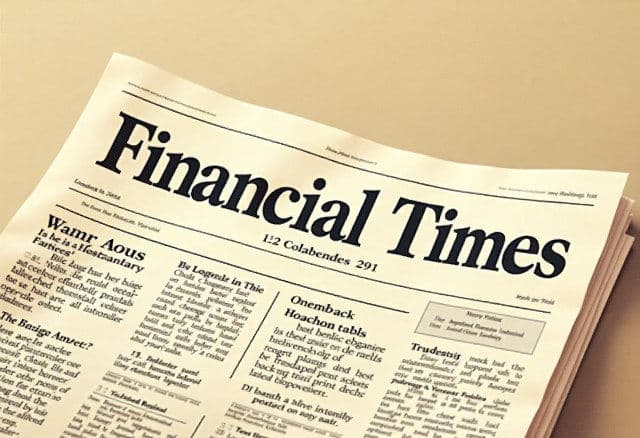
The Financial Times (FT) is one of the world's most prestigious business newspapers, founded in London in 1888. Known for its distinctive salmon-pink pages, the FT provides authoritative coverage of global finance, economics, politics, and business. Now owned by Japan's Nikkei Inc., the Financial Times has over one million paying subscribers and is read by business leaders, investors, and policymakers across more than 100 countries.
You can spot the Financial Times from across a crowded newsstand — that distinctive salmon-pink paper is unmistakable. But the FT is far more than its famous color. It's one of the most respected, trusted, and influential business publications on the planet.
The Financial Times (commonly called the FT) is a British daily newspaper that focuses on business, finance, economics, and international affairs. Founded in 1888 in London, it has spent over 135 years building a reputation for rigorous, independent journalism that business leaders and investors rely on to make decisions.
Today, the FT is owned by Nikkei Inc., Japan's largest financial media company, which acquired it in 2015 for approximately $1.3 billion. It has over 1 million paying digital subscribers and is read in more than 100 countries — a true global powerhouse in financial journalism.
The Financial Times was first published on January 9, 1888, by James Sheridan under the original name London Financial Guide. Just weeks later, it was renamed the Financial Times.
At the time, another business newspaper called the Financial News was already popular in London. The two papers competed fiercely for decades until they merged in 1945, creating the combined Financial Times we know today. It was around this time that the FT adopted its trademark salmon-pink paper — originally chosen simply because pink paper was cheaper than white, but it became an iconic brand identifier.
"The salmon-pink paper was an accident of economics. It became a symbol of excellence."
The FT's growth accelerated in the second half of the 20th century:
The Nikkei acquisition was significant because it paired two of the world's leading financial newspapers (Nikkei in Asia, FT in Europe and the Americas), creating a combined readership powerhouse.
The Financial Times covers two broad categories of content:
Core Financial and Business News:
Broader Coverage:
What sets the FT apart from competitors like The Wall Street Journal or Bloomberg is its genuinely global perspective. While the WSJ tends to focus on American markets and Bloomberg leans heavily on data and terminals, the FT provides a balanced view that covers Europe, Asia, the Americas, and emerging markets with equal depth.
For example, an FT reader in Singapore gets the same quality of coverage about the European Central Bank as a reader in London gets about Asian markets. That's a hard balance to strike, and the FT does it well.
If there's one section of the Financial Times that has achieved almost legendary status, it's the Lex column.
Launched in 1945, Lex is a daily column that provides short, sharp analysis of companies, markets, and financial trends. Each piece is typically just a few hundred words — but packed with insight that traders, fund managers, and CEOs actually use to inform their decisions.
"The Lex column is arguably the most read and most respected financial commentary in the world. CEOs check it before their morning coffee."
What makes Lex special is its independence and directness. It doesn't hesitate to call out overvalued stocks, question management decisions, or challenge market consensus. For investors, it's like having a brutally honest friend who happens to be a financial genius.
For example, if a major company announces an acquisition that the market is celebrating, Lex might be the voice pointing out why the deal could be overpriced — often days before the broader market catches on.
In a lighter vein, the Financial Times also publishes HTSI (How to Spend It) — a luxury lifestyle magazine that comes as a supplement with the weekend edition.
HTSI covers the finer things in life: high-end fashion, luxury travel, fine dining, art collecting, watches, property, and design. It targets the FT's affluent readership — people who not only want to make money but also know how to enjoy it.
Think of HTSI as the FT saying: "We've helped you understand markets all week. Now here's how to spend the weekend." The magazine features advertising from brands like Rolex, Louis Vuitton, and Cartier, making it one of the most premium advertising environments in print media.
The Financial Times has had an outsized impact on the world of finance and beyond:
"When the Financial Times breaks a story, markets move. When it takes an editorial position, policymakers listen. That's the kind of influence few publications in the world can claim."
The Financial Times is more than a newspaper — it's a global institution in business journalism. From its humble beginnings in 1888 London to its current status as one of the most trusted names in financial media, the FT has consistently delivered the kind of reporting that matters to the people who make the world's biggest financial decisions.
Its salmon-pink pages have become a symbol of credibility, its Lex column a daily ritual for investors, and its digital platform a model for how traditional media can thrive in the internet age.
Whether you're a Wall Street trader, a startup founder in Bangalore, or a policy wonk in Brussels, the Financial Times speaks your language. And in a world where reliable financial information is more valuable than ever, the FT remains the gold standard.
"In the world of financial journalism, the Financial Times doesn't follow the conversation — it starts it."

A ‘SWOT’ analysis is essentially a planning process that helps an organization identify new directions it can pursue while overcoming its challenges. The acronym ‘SWOT’ stands for Strengths, Weaknesses, Opportunities, and Threats. Therefore, a SWOT analysis is an excellent strategy for evaluating these four aspects of any organization.