Target Market -- Who Is Your Ideal Customer and How to Find Them
G
GeoRenus Editorial Team
501 views
Summary
A Target Market is the specific group of consumers most likely to buy your product or service, defined by demographic (age, income, gender), geographic (location), psychographic (values, lifestyle), and behavioral (purchase habits) characteristics. According to HubSpot's 2025 State of Marketing report, businesses with well-defined target markets achieve approximately 200% higher marketing ROI. Nike does not sell shoes to 'everyone' -- per their published brand strategy, they target fitness-conscious, aspirational consumers aged 18-34. This guide covers definitions, the 4 segmentation types, Target Market vs Target Audience, a step-by-step identification process, real-world brand examples, common mistakes, tools, and data-backed insights on why precise targeting is the foundation of all effective marketing.
Key Takeaways
- A target market is the specific group of consumers your product is designed for, defined by demographic, geographic, psychographic, and behavioral characteristics.
- Philip Kotler's STP Framework (Segmentation, Targeting, Positioning) is the foundational model for target market strategy.
- HubSpot's 2025 State of Marketing report shows businesses with well-defined target markets achieve approximately 200% higher marketing ROI.
- The 4 types of market segmentation are demographic, geographic, psychographic, and behavioral -- most effective strategies combine all four.
- Target Market (broad, long-term, strategic) is different from Target Audience (narrow, campaign-specific, tactical).
- Identifying your target market requires 6 steps: define the problem, analyze customer data, study competitors, create buyer personas, test, and write a target market statement.
- Nike's $51B+ 2025 revenue is built on targeting fitness-conscious aspirational consumers aged 18-34 -- not 'everyone who wears shoes.'
- The 6 most common targeting mistakes include 'everyone is my customer,' demographics-only targeting, founder bias, copying competitors, set-and-forget strategy, and gut feeling over data.
- McKinsey 2025 research shows 71% of consumers expect personalization -- 76% feel frustrated when brands fail to deliver it.
- Top target market research tools include Google Analytics (free), Facebook Audience Insights (free), SEMrush ($130+/mo), and SparkToro ($50+/mo).
Introduction -- Why Nike Doesn't Sell to Everyone
Nike posted over $51 billion in revenue for fiscal year 2025 according to their annual report -- yet their marketing does not talk to a 7-year-old, a 65-year-old retiree, or a couch potato. It talks to a very specific person: a fitness-conscious, aspirational consumer aged 18 to 34 who sees sport as a lifestyle, not just exercise. That narrow focus is not a limitation. It is the strategy.
Think about the Pepsi vs Coca-Cola war. Coke has historically positioned itself around universal happiness and family moments (per Coca-Cola published brand history). Pepsi sharpened its aim at younger, rebellious consumers with the famous 'Pepsi Generation' campaign. Two massive brands, same product category, two very different target markets -- and both won in their lane.
If you are trying to talk to everyone, you are talking to no one. -- Marketing principle popularized by Philip Kotler, author of Marketing Management.
HubSpot's 2025 State of Marketing report found that businesses with well-defined target markets achieve approximately 200% higher marketing ROI than those with a broad, undefined approach. That is not a small edge -- that is the difference between a campaign that pays for itself and one that drains your budget.
This guide will walk you through exactly what a target market is, the four types of segmentation, how to identify your own target market step by step, real-world brand examples, the most common mistakes, and the data behind why precise targeting is the bedrock of every successful marketing strategy.
Bottom line: 'Everyone' is NOT a target market. The sooner you accept that, the sooner your marketing starts working.
What Is a Target Market?
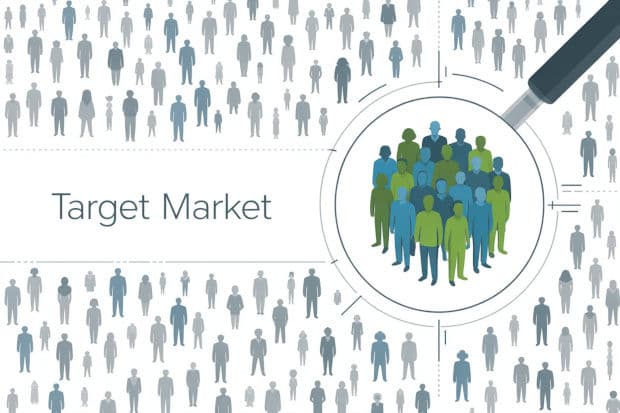
A target market is the specific group of consumers your product or service is designed for -- defined by shared characteristics like age, income, location, values, and buying behavior. It is the answer to the most fundamental marketing question: who are we actually serving?
Philip Kotler, widely regarded as the father of modern marketing, defines it plainly: a target market is a set of buyers who share common needs or characteristics that a company decides to serve. The key word is 'decides' -- targeting is a deliberate strategic choice, not an accident.
Kotler's STP Framework (Segmentation, Targeting, Positioning) is the classic model used by marketers worldwide. First you segment the total market into groups. Then you target which group(s) you will serve. Then you position your brand to resonate with that group. Target market sits squarely in the middle of this framework -- it is the hinge that connects research to messaging.
Market vs Audience vs Niche -- Quick Distinctions
These three terms are often confused. Your Target Market is the broad group of people who could buy your product. Your Target Audience is the specific subset you are actively speaking to in a particular campaign. A Niche is an even narrower slice -- a highly specific segment with specialized needs, often underserved by mass-market players.
TAM / SAM / SOM Framework
TAM (Total Addressable Market) is everyone who could theoretically buy your product globally. SAM (Serviceable Addressable Market) is the portion of TAM you can realistically reach with your current model. SOM (Serviceable Obtainable Market) is the realistic share you can capture given competition and resources.
A baby organic food startup illustrates this perfectly. TAM = all parents globally who buy baby food. SAM = parents in the US who buy organic baby food. SOM = urban millennial parents in 5 major cities willing to pay a premium price. That SOM is your actual target market -- specific, reachable, and worth building a strategy around.
Defining your target market is not about excluding potential customers. It is about concentrating your limited resources where they will generate the highest return.
The 4 Types of Market Segmentation
Markets do not segment themselves. Marketers do it using four well-established lenses. Each lens reveals a different dimension of who your customer is -- and the best strategies combine all four to build a complete picture.
1. Demographic Segmentation
Demographics are the most commonly used segmentation type -- and for good reason. They are measurable, readily available, and directly tied to purchasing power and life stage. Key variables include age, income, gender, education level, occupation, family size, and marital status.
Rolex is a textbook example. According to Bain & Company's Global Luxury Study, Rolex targets high-income professionals aged 35-60, typically earning $100,000+ annually, for whom a watch is a status symbol and a reward for achievement -- not just a timekeeping device.
Generation Z's economic footprint is now impossible to ignore. Statista 2025 data puts Gen Z's collective purchasing power at over $450 billion in the US alone -- making age-based demographic targeting more critical than ever for brands trying to stay relevant.
2. Geographic Segmentation
Where your customer lives shapes what they need, what they can afford, and how they behave. Geographic segmentation divides markets by country, region, city, climate zone, population density (urban vs rural vs suburban), and even neighborhood.
McDonald's is a masterclass in geographic adaptation. Per their published annual reports and franchise documentation, McDonald's offers the McAloo Tikki in India, the Teriyaki Burger in Japan, and the McRib in select US markets -- all tailored to local taste preferences while keeping the global brand intact.
Starbucks uses a density strategy in geographic targeting, identifying cities where coffee culture and disposable income align -- then deliberately over-saturating those markets with locations to block competitors and build habitual visits.
3. Psychographic Segmentation
Psychographics go deeper than demographics. They capture the why behind the buy -- values, lifestyle choices, personality traits, social class, interests, opinions, and attitudes. Two people with identical demographics (35-year-old, college-educated, $80K income) can have completely different psychographic profiles and buy entirely different products.
Patagonia's target market is not 'outdoor enthusiasts' -- it is eco-conscious outdoor enthusiasts who align with Patagonia's published mission: 'We're in business to save our home planet.' That values-driven positioning commands fierce loyalty and premium pricing that pure demographic targeting could never justify.
Apple targets creative, design-forward, and status-conscious consumers who value simplicity, aesthetics, and the identity signal of the Apple logo -- a psychographic profile that cuts across age groups and income brackets.
4. Behavioral Segmentation
Behavioral segmentation groups customers by what they actually do: their purchase frequency, brand loyalty, usage rate, benefits sought, buying occasions, and readiness to buy. It is the most directly predictive of future purchasing behavior.
Amazon's recommendation engine is behavioral segmentation at industrial scale. Per Amazon's published technology blog and AWS case studies, the engine analyzes past purchases, browsing history, and search patterns to serve hyper-relevant product suggestions -- behavioral data translated directly into revenue.
Netflix's approach is equally instructive. According to Netflix's published culture documentation and investor letters, their content recommendation system segments subscribers by viewing behavior -- not just what you watch, but how you watch (completion rates, time of day, device type) -- to determine what to recommend and what to produce.
| Segmentation Type | Key Variables | Best For | Example Brand |
| Demographic | Age, income, gender, education | Mass market products, financial services | Rolex, AARP |
| Geographic | Country, city, climate, density | Retail, food, regional services | McDonald's, Starbucks |
| Psychographic | Values, lifestyle, personality | Lifestyle brands, cause marketing | Patagonia, Apple |
| Behavioral | Purchase habits, loyalty, usage | E-commerce, SaaS, subscriptions | Amazon, Netflix |
Note: Most effective target market strategies use a combination of all four segmentation types, not just one.
The magic happens when you layer these four types. A fintech startup targeting 'financially anxious millennials (demographic) in Tier-1 US cities (geographic) who value financial independence (psychographic) and are already using budgeting apps (behavioral)' has a far sharper target market than one targeting '18-35 year olds who like saving money.'
Target Market vs Target Audience -- Why the Difference Matters
These two terms are used interchangeably in casual conversation -- but they mean different things, and confusing them leads to misaligned strategy. Understanding the distinction helps you build campaigns that speak to the right people at the right moment.
Target Market is the broader group of people your product is designed for. It is a strategic, long-term definition. It changes slowly, if at all. It is who your business fundamentally serves.
Target Audience is the specific subset of your target market you are reaching with a particular campaign, ad, or piece of content. It is tactical. It changes with each campaign. It is who you are talking to right now, through a specific channel, with a specific message.
Nike's target market (per their published brand strategy and annual reports) is fitness-conscious, aspirational consumers aged 18-45 who see sport as a core part of their identity. But when Nike runs a yoga apparel campaign on Instagram, their target audience is likely narrowed to women aged 22-28 who follow yoga influencers, practice regularly, and have shown interest in athleisure. Same brand, different zoom level.
| Dimension | Target Market | Target Audience |
| Scope | Broad -- everyone your product serves | Narrow -- who you reach in this campaign |
| Timeframe | Long-term, strategic | Short-term, campaign-specific |
| Changes How Often? | Rarely (only with pivots) | Every campaign |
| Used By | Product, strategy, brand teams | Marketing, advertising, content teams |
| Nike Example | Fitness-conscious consumers 18-45 | Women 22-28, yoga followers on Instagram |
Note: Always define your target market first. Target audience flows from it -- not the other way around.
A common mistake is defining your target audience without a clearly defined target market. The result is a series of disconnected campaigns with no strategic coherence. When every campaign speaks to a different audience with no common thread, brand identity dissolves.
How to Identify Your Target Market -- Step by Step
Identifying your target market is not a one-time guessing exercise. It is a structured research process that combines data analysis, customer empathy, and market intelligence. Here is the six-step process used by growth-oriented marketers.
Step 1 -- Identify Your Product's Problem and Solution
Start with radical honesty about what problem your product solves and for whom that problem is painful enough to pay to fix. Write it out as a simple problem statement: 'Our product helps [type of person] who struggles with [specific pain] to achieve [specific outcome].' If you cannot complete that sentence clearly, your target market work cannot begin.
Step 2 -- Analyze Your Current Customer Data
If you have existing customers, they are your single best source of truth. Pull data from Google Analytics (age, location, device, interests), your CRM (purchase frequency, deal size, churn patterns), and social media insights (follower demographics, engagement patterns). Look for clusters -- groups of customers who share characteristics and generate disproportionate value.
Step 3 -- Conduct Competitor Analysis
Study who your top three competitors are talking to. Analyze their ad copy, social content, case studies, and website messaging. Tools like SEMrush and SparkToro can reveal audience demographics and psychographics for competitor domains. You are not copying them -- you are mapping the territory to find underserved pockets or to validate that a segment is genuinely large and active.
Step 4 -- Create Detailed Buyer Personas
A buyer persona is a semi-fictional representation of your ideal customer built from real data and research. Give them a name, a job title, a salary range, daily frustrations, goals, preferred content channels, and the specific reason they would buy your product. 'Marketing Manager Maria, 31, earning $65K, frustrated with disorganized campaign reporting, wants to prove ROI to her CMO' is infinitely more useful than 'marketing professionals aged 25-40.'
Step 5 -- Test Your Market
Do not assume -- validate. Run a minimum viable test: a landing page targeting your hypothesized segment, a small paid social campaign, a survey through SurveyMonkey or Typeform, or a series of customer discovery calls. Measure click-through rates, conversion rates, and qualitative feedback. Markets reveal themselves through behavior, not surveys alone.
Step 6 -- Write Your Target Market Statement
Crystallize everything into a single written statement. The template: '[Product] is for [specific who] who [specific problem] because [specific solution] unlike [specific competitor alternative].' Example: 'Our budgeting app is for freelancers earning $30K-$80K per year who struggle with irregular income cash flow because our rolling 90-day forecast feature is built specifically for variable income patterns, unlike traditional budgeting apps designed for salaried employees.'
| Step | Action | Key Tool / Output |
| 1 | Define problem and solution | Problem statement document |
| 2 | Analyze customer data | Google Analytics, CRM, social insights |
| 3 | Competitor analysis | SEMrush, SparkToro, manual review |
| 4 | Create buyer personas | Named, detailed persona profiles |
| 5 | Test your market | Landing pages, surveys, discovery calls |
| 6 | Write target market statement | One-paragraph positioning statement |
Note: Revisit your target market statement at least once per year or after any significant product change.
This process is not linear in practice. You will loop back -- your customer data in Step 2 may reframe your problem statement from Step 1. That iteration is healthy. The goal is a target market definition that survives contact with real market behavior, not one that only exists in a strategy deck.
Real-World Examples -- How Top Brands Define Their Target Market
Theory becomes intuition when you study how successful brands actually define and communicate to their target markets. These five examples span different industries, price points, and go-to-market approaches -- but all share one thing: radical clarity about who they serve.
Nike -- The Aspirational Athlete
Target Market: Fitness-conscious, aspirational consumers aged 18-34 who treat sport as a core identity -- not a hobby. Per Nike's published annual reports and brand strategy documentation, Nike segments by both demographics (age, income) and psychographics (achievement mindset, self-improvement orientation). Their '$51B+ in fiscal 2025 revenue' is built on making everyone in that segment feel like a potential champion, not just a customer.
Apple -- The Creative Professional
Target Market: Creative professionals, tech-forward individuals, and design-conscious consumers who prioritize experience over specification sheets. Per widely published market analyses and Apple's own product communications, Apple targets people who value simplicity, aesthetics, and the status signal of premium technology. The ecosystem lock-in strategy is only possible because Apple knows exactly who wants to live inside it.
Spotify -- The Digital-Native Music Lover
Target Market: Music and podcast consumers aged 18-34, digitally native, drawn in by the freemium model and retained through personalization. Per Spotify's published investor relations data, Spotify reached 675 million monthly active users globally in 2025. Their behavioral segmentation (listening habits, genre preferences, skip rates) fuels the Discover Weekly and Wrapped features that drive legendary brand loyalty.
Dollar Shave Club -- The Frustrated Millennial Man
Target Market: Millennial men aged 22-35, frustrated by overpriced razor cartridges at retail and unimpressed by overly engineered shaving products. Per founding story documentation and the Unilever acquisition filing (Unilever acquired Dollar Shave Club for $1 billion in 2016), the brand was built entirely on a behavioral and psychographic insight: this customer resents being nickel-and-dimed and values irreverent humor over luxury positioning.
Glossier -- The Community-First Beauty Consumer
Target Market: Millennial and Gen Z women who believe in 'beauty in real life' over heavily edited, aspirational beauty standards. Per Glossier's published brand values and founder Emily Weiss's documented interviews, Glossier built their target market definition from community feedback first -- essentially co-creating the brand with the target market before products even launched. The result was a brand that felt less like advertising and more like a conversation.
| Brand | Core Target Market | Primary Segmentation Type | Key Insight |
| Nike | Fitness-conscious aspirational consumers 18-34 | Psychographic + Demographic | Sport as identity, not activity |
| Apple | Creative, design-forward premium buyers | Psychographic + Behavioral | Experience over specs |
| Spotify | Digital-native music lovers 18-34 | Behavioral + Demographic | Personalization drives loyalty |
| Dollar Shave Club | Millennial men frustrated by overpriced razors | Behavioral + Psychographic | Pain point + attitude = identity brand |
| Glossier | Millennial/Gen Z women, community-first beauty | Psychographic + Demographic | Community-built positioning |
Note: These brands succeed not by targeting everyone who could buy their product, but by deeply understanding the specific person who most needs it.
What these examples share is strategic specificity. None of them built their brand by saying 'our market is anyone who [uses shoes / has a phone / listens to music / shaves / wears makeup].' They each made a deliberate choice about who they were FOR -- and that choice shaped everything from product design to pricing to channel selection to tone of voice.
The Data -- Why Targeting Works
Intuition says targeting makes sense. Data confirms it decisively. The past few years of marketing research from major industry sources consistently show that precise targeting is not just a best practice -- it is a measurable competitive advantage that compounds over time.
| Source | Year | Finding |
| HubSpot State of Marketing | 2025 | Businesses with well-defined target markets achieve ~200% higher marketing ROI |
| Salesforce State of Marketing | 2025 | Personalized, targeted campaigns generate 56% higher engagement rates |
| Epsilon Marketing Research | 2025 | 80% of consumers are more likely to make a purchase when brands offer personalized experiences |
| Google Ads Performance Data | 2025 | Targeted Google Ads cost approximately 50% less per conversion vs. broad-match campaigns |
| McKinsey Next in Personalization | 2025 | 71% of consumers expect personalization -- 76% feel frustrated when they don't receive it |
| BCG Growth Strategy Report | 2025 | Companies that lead in targeted personalization grow revenues at 2x the rate of peers |
| Accenture Personalization Research | 2025 | 91% of consumers say they are more likely to shop with brands that recognize, remember, and provide relevant offers |
Note: All statistics are drawn from published research reports by the named organizations. Exact figures may reflect report publication windows within 2024-2025.
The pattern is unmistakable: every major marketing research organization studying this question in 2025 reaches the same conclusion. Targeting works. Personalization -- which is only possible when you have defined your target market -- drives higher engagement, lower costs, and faster growth.
The McKinsey finding is particularly striking. It is not just that personalization helps -- it is that the absence of personalization actively frustrates consumers. In an era of information overload, a message that feels irrelevant is not neutral. It is negative. It signals that a brand does not know or care who they are talking to.
For small and mid-sized businesses especially, precise targeting is the great equalizer. A $10,000 ad budget deployed against a tightly defined target market can outperform a $100,000 budget sprayed broadly. Efficiency is the competitive advantage available to every business willing to do the targeting work upfront.
The 6 Most Common Targeting Mistakes
Knowing what to do is half the battle. Knowing what NOT to do is the other half. These six mistakes account for the majority of failed targeting strategies -- and most of them are surprisingly common even among experienced marketers.
Mistake 1 -- 'Everyone Is My Customer'
This is the single most expensive targeting mistake a business can make. When your market is 'everyone,' your message resonates with no one. Your ad creative becomes generic. Your value proposition becomes vague. Your media spend gets diluted across channels and audiences that will never convert. Every marketing dollar spent on an undefined audience is a dollar that will not return.
Mistake 2 -- Demographics-Only Targeting
Targeting '18-35 year olds with college degrees earning $50K+' tells you almost nothing about why someone would buy your product. Two people who share those exact demographics may have completely different values, lifestyles, and purchase motivations. Demographics without psychographics and behavioral data produces targeting that is technically precise but commercially shallow.
Mistake 3 -- Founder Bias (You Are Not Your Customer)
Founders frequently assume they ARE the target market because they built the product to solve their own problem. Sometimes this is true. Often it is not -- especially as the company scales beyond early adopters. The discipline of customer research exists precisely to replace assumption with evidence. Build buyer personas from data, not from mirror-gazing.
Mistake 4 -- Copying Competitors' Targeting Blindly
Analyzing competitors is smart. Copying their target market definition wholesale is not. Your competitor may be targeting the wrong segment. They may be leaving a valuable adjacent segment unclaimed. They may have a different product, different strengths, and different unit economics that make their target market wrong for you. Use competitor analysis to map the territory -- not to dictate your strategy.
Mistake 5 -- Set-and-Forget Targeting
Markets evolve. Demographics shift. Values change. New platforms create new behavioral patterns. A target market definition built in 2020 may be dangerously outdated by 2025. Businesses that treat target market definition as a one-time exercise rather than an ongoing research practice find themselves increasingly misaligned with their actual customers -- and confused about why their marketing is underperforming.
Mistake 6 -- Gut Feeling Over Data
Intuition has a role in marketing strategy. But 'I feel like our customer is a 40-year-old suburban dad' is not a target market definition -- it is a hypothesis waiting to be tested. In 2025, the tools for target market validation are cheaper and more accessible than ever. There is no excuse for building a strategy on gut feeling when Google Analytics, Facebook Audience Insights, and SurveyMonkey are free or near-free.
| Mistake | Why It Happens | How to Fix It |
| 'Everyone is my customer' | Fear of exclusion, unclear product-market fit | Define ONE primary segment first, expand later |
| Demographics only | Easy to measure, feels concrete | Add psychographic and behavioral layers |
| Founder bias | Passion for the problem they solved for themselves | Run structured customer interviews outside your network |
| Copying competitors | Shortcut that seems logical | Use competitor data as context, not direction |
| Set-and-forget | Target market work feels 'done' after initial research | Schedule annual target market reassessment |
| Gut feeling over data | Overconfidence, data analysis perceived as complex | Start with free tools: Analytics, Insights, surveys |
Note: The most dangerous targeting mistakes are the ones that feel like good strategy -- especially 'everyone is my customer,' which often sounds like ambition but acts like paralysis.
Target Market Do's and Don'ts
Translating target market principles into daily decision-making is easier with a clear set of behavioral guidelines. The following do's and don'ts are drawn from documented best practices and common field mistakes.
Do's
Do define your target market in writing. A verbal consensus is not a target market. Write it down. Share it across your marketing, product, and sales teams. Revisit it quarterly.
Do use all four segmentation types. Layer demographic, geographic, psychographic, and behavioral data to build a multi-dimensional picture of your ideal customer.
Do create at least two buyer personas. A primary and secondary persona helps you account for nuance without losing focus. Give them names, jobs, and real frustrations.
Do validate with real data before scaling spend. Run small tests -- landing page variants, small paid campaigns, customer interviews -- before committing large budgets to a targeting hypothesis.
Do reassess your target market annually. Markets shift. Demographics change. New behaviors emerge. A once-a-year target market review keeps your strategy grounded in current reality.
Do align your product, pricing, and channel decisions to your target market. Your target market definition should influence more than ad copy -- it should shape every element of the marketing mix.
Do use your existing customers as primary research. Your best customers reveal your real target market. Analyze who they are, why they bought, and what they value most.
Don'ts
Don't target a market segment that is too small to be commercially viable. Niche is powerful; microscopic is not. Validate that your target market is large enough to support your revenue goals before committing.
Don't change your target market every quarter. Frequent pivots prevent you from ever building the deep market understanding that compounds into competitive advantage.
Don't confuse target market with total addressable market. Your TAM is an opportunity estimate, not your customer. Build strategy around your SOM -- the customers you can actually reach and convert.
Don't ignore market shifts because they contradict your existing strategy. If your data shows your actual buyers differ from your assumed target market, follow the data -- not the plan.
Don't build buyer personas from internal brainstorming alone. Personas built without customer interviews or behavioral data are fiction. They feel useful but mislead strategy.
Don't assume a target market that worked for a competitor will work for you. Different brand positioning, pricing, and product features attract different sub-segments even within the same category.
Don't neglect your secondary target market entirely. If a secondary segment consistently converts at high rates, it deserves dedicated strategy -- not just scraps from primary market campaigns.
Advantages and Limitations of Target Marketing
Target marketing is powerful, but it is not without trade-offs. Understanding both the upside and the constraints helps you deploy it strategically rather than dogmatically.
Advantages
Better Marketing ROI: Concentrated spend on the most receptive audience reduces wasted impressions and improves conversion rates across every channel.
Clearer Brand Messaging: When you know exactly who you are talking to, your copywriting becomes more specific, more resonant, and more persuasive. Vague audiences produce vague copy.
More Efficient Budget Allocation: Precise targeting reduces cost-per-acquisition by eliminating spend on audiences with low purchase intent -- a critical advantage for businesses with limited marketing budgets.
Stronger Brand Identity: Brands that consistently serve a defined audience build recognition, trust, and loyalty within that segment faster than brands that try to be everything to everyone.
Higher Customer Lifetime Value: Customers who feel genuinely understood by a brand buy more frequently, churn less, and refer others -- compounding the initial targeting investment over time.
Limitations
Risk of Too-Narrow Targeting: Hyper-niche targeting can limit growth potential. If your defined segment is too small or too difficult to reach at scale, even a 100% conversion rate will not produce meaningful revenue.
Market Shifts Can Invalidate Your Definition: Demographics age. Values evolve. Economic shocks change behavior. A target market that was accurate in 2022 may be significantly different by 2025, requiring ongoing reassessment.
Data Requirements: Effective target market definition requires access to customer data, market research tools, and the analytical capability to interpret them. Not all businesses -- especially early-stage startups -- have these resources from day one.
Segment Overlap and Cannibalization: When targeting multiple segments, messaging designed for one segment can unintentionally underperform for another -- or worse, actively alienate a secondary segment you intended to serve.
| Dimension | Advantage | Limitation |
| ROI | Up to 200% higher marketing ROI (HubSpot 2025) | Requires upfront research investment |
| Messaging | More specific, resonant copy | Wrong assumptions produce wrong messages |
| Budget | Lower cost-per-acquisition | Narrow segments may limit scale |
| Brand | Stronger identity and loyalty | Too-niche risks long-term growth ceiling |
| Data | Enables personalization | Requires data infrastructure and skills |
Note: The limitations of target marketing are manageable with ongoing research and periodic strategy review. The limitations of NOT having a target market are not manageable -- they compound into strategic drift.
Tools for Target Market Research
The good news: you do not need a large research budget to build a well-defined target market. The right combination of free and low-cost tools can generate powerful market intelligence. Here are the eight most effective tools for 2025.
| Tool | Cost | Best For | Key Feature |
| Google Analytics 4 | Free | Analyzing existing website audience | Age, location, interests, device, and behavior flow reports |
| Facebook / Meta Audience Insights | Free | Social audience research and validation | Demographics, page likes, and purchase behavior data for defined audiences |
| Google Trends | Free | Tracking search behavior and seasonal interest patterns | Comparative search volume and geographic distribution of queries |
| SEMrush | $130+/month | Competitor audience analysis and keyword research | Traffic analytics, audience overlap, and keyword gap tools |
| HubSpot CRM | Free tier | Customer segmentation from CRM data | Contact property segmentation and deal stage behavioral tracking |
| SurveyMonkey | $25+/month | Primary research surveys for validation | Audience panel targeting and pre-built survey templates for market research |
| Statista | $39+/month | Market size data and industry statistics | Pre-researched statistics, forecasts, and reports across 80,000+ topics |
| SparkToro | $50+/month | Audience intelligence and psychographic mapping | Reveals what your target audience reads, watches, follows, and engages with online |
Note: Start with the free tools (Google Analytics, Meta Audience Insights, Google Trends) before investing in paid platforms. The free tools alone can validate most target market hypotheses for early-stage businesses.
Tool selection should match your stage. A pre-launch startup needs primarily primary research tools -- SurveyMonkey and customer interviews -- plus Google Trends for demand validation. An established business with existing customers should start with Google Analytics and HubSpot CRM data before adding external research tools.
SparkToro deserves special mention for psychographic research. By analyzing what your target audience actually consumes online -- which podcasts, YouTube channels, subreddits, and newsletters -- it reveals psychographic profiles far richer than any survey could capture. For brands building content strategies around a target market, it is one of the highest-ROI research tools available.
Conclusion -- Your Target Market Is Your Most Important Strategic Decision
Every great marketing strategy begins with the same question: who are we for? Not who could theoretically buy from us. Who are we specifically, deliberately, and wholeheartedly for? The answer to that question shapes your product, your pricing, your channel mix, your creative, your brand voice, and ultimately your growth trajectory.
The art of marketing is the art of brand building. If you are not a brand, you are a commodity. And a commodity is defined by price alone. -- Philip Kotler, Marketing Management
Kotler's insight connects directly to target market strategy. A commodity has no target market -- it is for whoever will pay the lowest price. A brand has a target market -- a specific group of people for whom the brand holds genuine, differentiated value. Building that brand begins with defining that group.
The data is unambiguous: HubSpot's 2025 research shows 200% higher marketing ROI. BCG shows 2x revenue growth. McKinsey shows 71% of consumers expect personalization. The businesses capturing those returns are not doing anything mystical -- they are simply doing the foundational work of knowing who their customer is.
Your next action is clear: create your first detailed buyer persona this week. Give them a name. Define their job title, income range, biggest frustrations, and the specific reason your product solves a real problem for them. Write your target market statement using the template from Section 5. Share it with your team.
Knowing who your customer is makes every other marketing decision easier. Channel selection becomes obvious. Messaging writes itself. Budget allocation becomes logical rather than political. Product roadmap prioritization gets grounded in real customer need rather than internal opinion.
Start specific. Stay data-driven. And remember: the narrower your aim, the further your marketing travels.
Recommended for you

Needs, Wants, and Demands
Needs are what we lack or feel deprived of for survival or sustenance. These needs can be physical, mental, or social. Wants are the desires people express to fulfill their needs. These wants are often influenced by an individual's surroundings and many other factors. Demands occur when people have the purchasing power to satisfy their wants.
Business Law
Business Law: What It Is, Why It Matters, and Types You Must Know

Economics
Economics: What It Is, Why It Matters, and How It Shapes Our Lives

Investment
Investment: What It Is, Types, and Real Life Examples
Organization
What Is the International Monetary Fund (IMF)?

Accounting
GAAP: What It Is and Why It Matters in Accounting

Accounting
Accounting for Startups: A Complete Guide to Getting It Right

Accounting
Tax Rebate: Definition, Types, and How to Claim One

Accounting
Tax Planning and Strategies: A Comprehensive Guide

Agreement
General Agreement on Tariffs and Trade (GATT)