White Label vs Private Label E-Commerce: Which Model Is Right for You?
G
GeoRenus Editorial Team
487 views

GeoRenus Editorial Team
White label and private label are two popular e-commerce business models that let you sell products under your own brand name. White label involves rebranding generic products manufactured by a third party, offering faster time to market and lower costs. Private label means working with manufacturers to create custom, exclusive products, providing greater brand control and higher profit margins. This guide compares both models, examines their advantages, and helps you decide which approach fits your business goals.
Imagine you want to sell skincare products online, but you don't have a factory, a formulation team, or the time to develop products from scratch. What if you could take an existing product, slap your brand name on it, and start selling right away? That's essentially what white label e-commerce is.
White label e-commerce involves selling products manufactured by a third party under your own brand name. The manufacturer creates a generic product that multiple retailers can rebrand and sell as their own. Think of it like buying a plain white t-shirt from a factory and sewing your own logo on it.
This model is incredibly popular in industries like cosmetics, supplements, food products, and software. According to Grand View Research, the global white label market was valued at over $26 billion in 2023 and is growing rapidly. Many of the products you see on store shelves — from grocery store brands to Amazon Basics — are white label products.
For example, Costco's Kirkland Signature brand is one of the most successful white label brands in the world. They don't manufacture most of their products — they partner with established manufacturers who produce goods under the Kirkland name. Kirkland Signature generates over $60 billion in annual revenue.
The key characteristic of white labeling is that the same product may be sold by multiple different brands. The product itself doesn't change — only the packaging and branding differ.
One of the biggest advantages of white labeling is how quickly you can launch. Since the product already exists and has been tested, you skip the entire product development cycle. While developing a product from scratch can take 12-18 months, white label products can be market-ready in as little as 2-4 weeks.
This speed advantage is crucial in fast-moving markets where trends change quickly. If a particular ingredient or product type is trending, white labeling lets you capitalize on the demand before the trend fades.
Product development is expensive. Research, formulation, testing, quality control, and manufacturing setup can cost anywhere from $10,000 to $100,000+ depending on the product category. White labeling eliminates most of these costs because the manufacturer has already invested in product development.
You essentially share the development costs with other brands using the same manufacturer, making each unit significantly cheaper to bring to market.
Since white label products have already been manufactured and sold successfully, there's less risk of product failure. The formulations are proven, the manufacturing processes are established, and quality standards are already in place. This is especially valuable for new entrepreneurs who want to minimize their financial exposure.
White labeling frees you from the complexities of manufacturing and lets you focus on what matters most: marketing, customer service, and growing your brand. As entrepreneur Gary Vaynerchuk says, "Your brand is your reputation, and your reputation is your brand." With white labeling, you can dedicate all your energy to building that reputation.
Private label e-commerce takes the concept a step further. Instead of rebranding an existing generic product, you work with a manufacturer to create a custom product that is exclusively yours. You control the formulation, ingredients, design, packaging, and specifications. No other company sells the exact same product.
Think of brands like Amazon's private labels — AmazonBasics, Amazon Essentials, and Solimo. These aren't generic products with Amazon's label on them. They're specifically designed and manufactured to Amazon's specifications. Amazon has over 400 private label brands covering more than 240,000 products.
Private labeling is common in retail, fashion, beauty, and food industries. Major retailers like Target (with brands like Good & Gather and All in Motion) and Walmart (Great Value, Equate) have built multi-billion dollar businesses through private label products.
With private labeling, you have complete control over your brand identity. From the product formulation to the packaging design, everything reflects your vision. This level of control allows you to create a cohesive brand experience that resonates with your target audience.
Unlike white label products, private label goods are tailored to your exact specifications. You can adjust ingredients, sizes, colors, features, and packaging to meet your customers' specific needs. This customization is a powerful competitive advantage because it means no one else in the market offers the exact same product.
Private labeling allows you to build a diverse product portfolio under one brand umbrella. You can expand into different categories while maintaining brand consistency. Target's private label portfolio, for example, spans groceries, clothing, home décor, and electronics — all under distinctive Target-owned brands.
When customers love your private label product, they can only buy it from you. Unlike white label products that competitors might also carry, private label products create exclusivity that drives repeat purchases and brand loyalty. Studies show that private label products account for roughly 20% of total retail sales in the United States and over 30% in Europe.
Because you control the product and there's no direct comparison in the market, you have more freedom in setting prices. You can position your product as premium or budget-friendly based on your brand strategy. This pricing power often translates to higher profit margins — typically 25-30% higher than reselling national brands.
While both models involve selling products under your own brand, the differences are significant. Here's a side-by-side comparison:
The choice between white label and private label depends on your goals, budget, and timeline.
Choose white label if:
Choose private label if:
Many successful e-commerce entrepreneurs actually start with white label products to enter a market quickly and validate demand, then transition to private label as they grow and understand their customers better. It's not always an either-or decision — it can be a strategic evolution.
Both white label and private label e-commerce offer viable paths to building a successful online business. White labeling gets you to market faster with lower costs, while private labeling gives you greater control, exclusivity, and potentially higher margins.
The e-commerce landscape is competitive, and the model you choose will shape your business strategy. As Jeff Bezos famously said, "Your brand is what other people say about you when you're not in the room." Whether you go white label or private label, the ultimate goal is to build a brand that customers trust, remember, and keep coming back to.
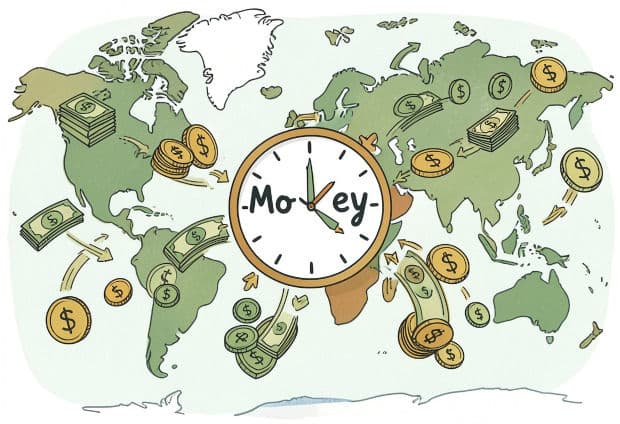
Every single day you go to a shop, hand over some notes, and walk away with what you need. The shopkeeper happily accepts those notes without any hesitation. But have you ever stopped and thought — why does that work? What is actually behind those pieces of paper that makes everyone willing to accept them? Why does a 500 taka note say "চাহিবামাত্র ইহার বাহককে দিতে বাধ্য থাকিবে" — meaning the bearer must be paid on demand? Money is so deeply embedded in our daily lives that most of us never question how it actually works. But understanding money — what it really is, how it functions, where it came from, and what different types exist — is the foundation of understanding any economy. At its core, money is simply a medium of exchange that people use to trade goods and services, repay debts, and measure value. It sounds simple. But the story behind it spans thousands of years and several fascinating transformations — from cowrie shells and whale teeth to gold coins, paper notes, and digital deposits.